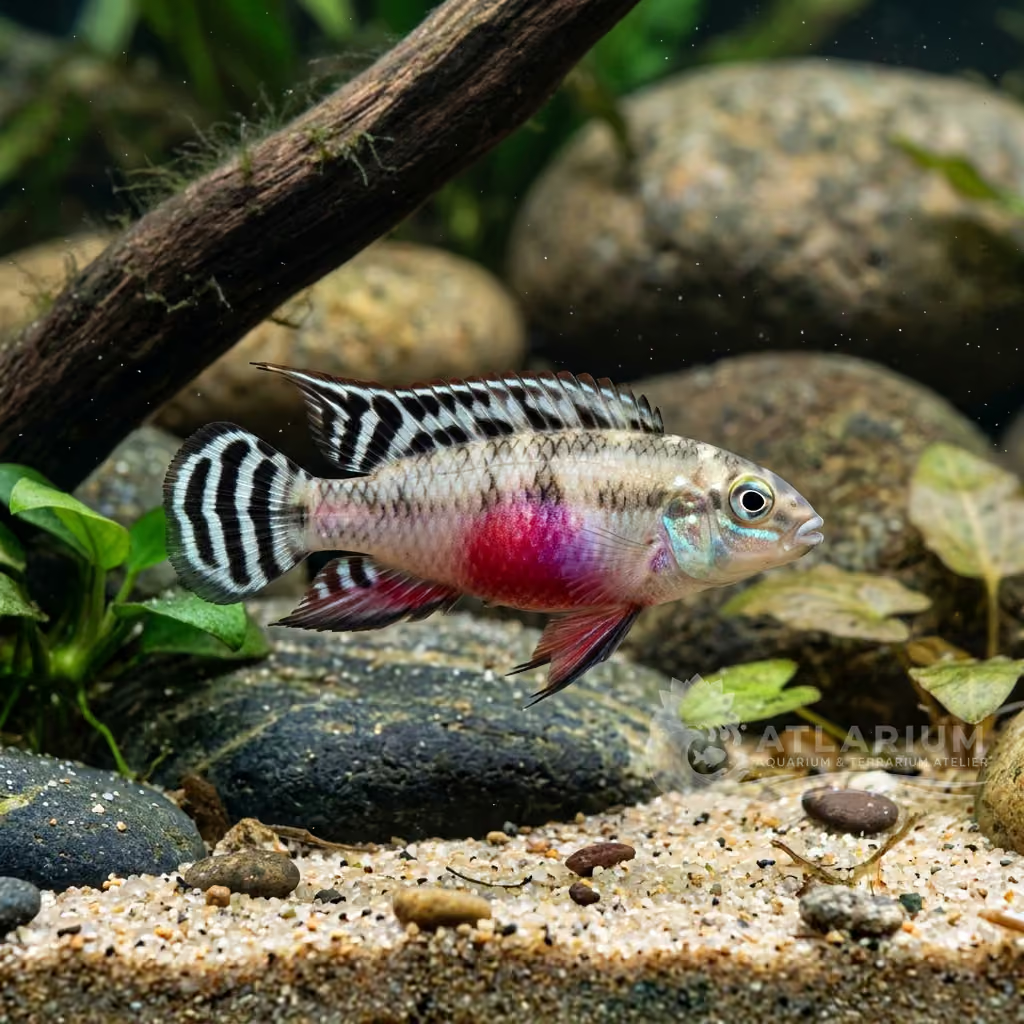
Spotted Severum (Notatus)
Heros notatus
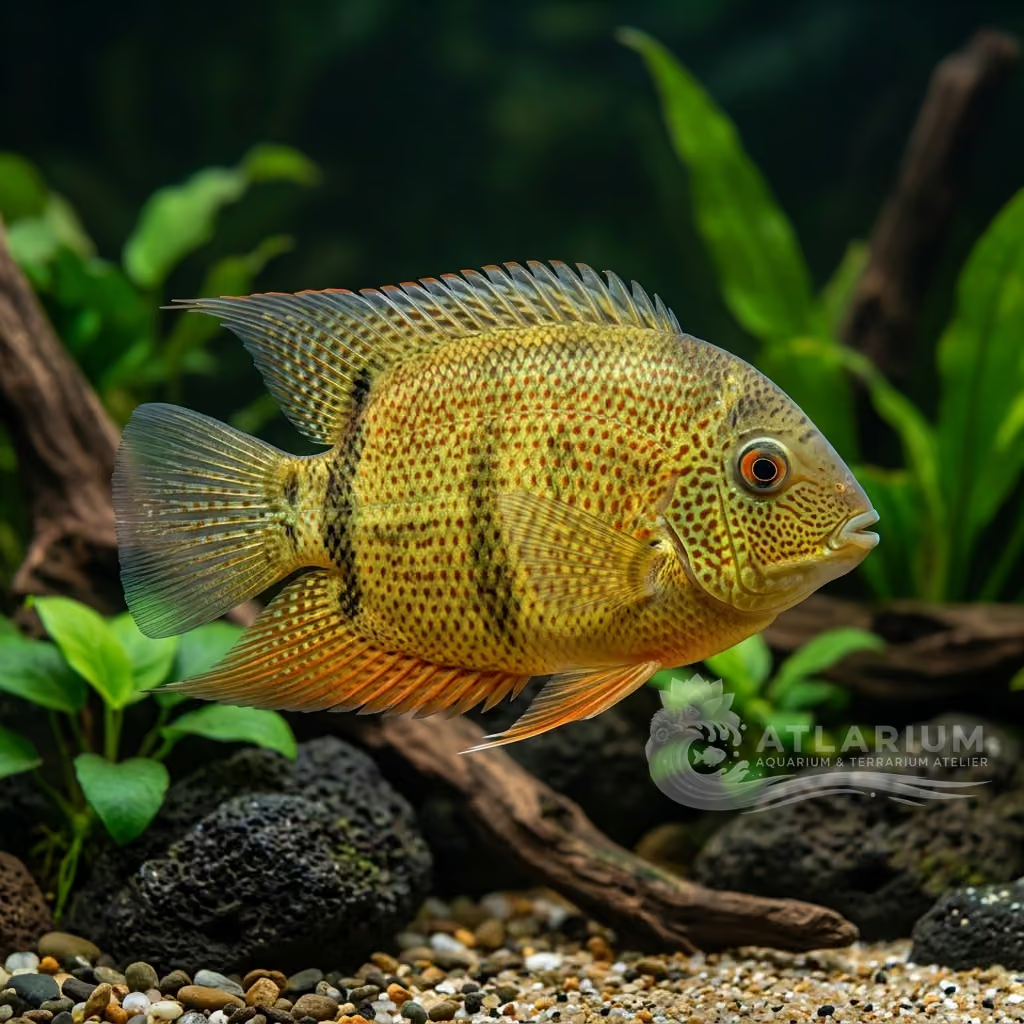
Majestic and peaceful discoid cichlid (25 cm), original variant of the Severum. Recognizable by the dense black spotting on the belly. Omnivore and placid roommate for giant fish (but devours live plants).
Water Temperature
24 - 30 °C
pH Value
5.5 - 7
Water type
Freshwater
Tank level
Bottom and middle
Adult size
25 cm
Minimum tank volume
>= 300 L
Minimum group
>= 1
GH
1 - 10 dGH
KH
1 - 5 dKH
TDS
25 - 200 ppm
Conductivity
39 - 313 uS/cm

Species description
Geographical Origin and Habitat: Endemic to the lower Rio Negro and Essequibo (Brazil/Guyana). Swims in typical Amazonian blackwater environments, among submerged roots and branches.
Taxonomy and Morphology: Spotted Severum (Heros notatus). The body shape is the classic Severum one: high, elliptical and laterally compressed. It differs by the unmistakable "dotted" spotting (notatus) on the entire lower half of the belly.
Social Behavior: Mild and composed, swims with monastic slowness. Tolerates other peaceful cichlids well, but its nature changes drastically during brooding, where the parents defend the territory with vehement assaults.
Coloration and Sexual Dimorphism: Cream-golden base coloration, sometimes pale green. The trademark are hundreds of dark red or black dots on the belly and throat, and the intense red facial vermiculations (typical of males, which are larger and more colorful).

Care, breeding and tankmates
Aquarium Setup: Dedicated tank (150 cm / 60 inches). Amber water and fine sand bottom are a must to reduce visual stress. Bare and twisted branches in abundance. Useless to plant: it devours and breaks Echinodorus, Vallisneria and floaters.
Diet and Feeding: Strongly oriented towards green. Offer Spirulina pellets, lettuce, blanched spinach and bottom tablets for Loricariids. Likes bloodworms and krill, but the abuse of animal proteins is lethal to the liver.
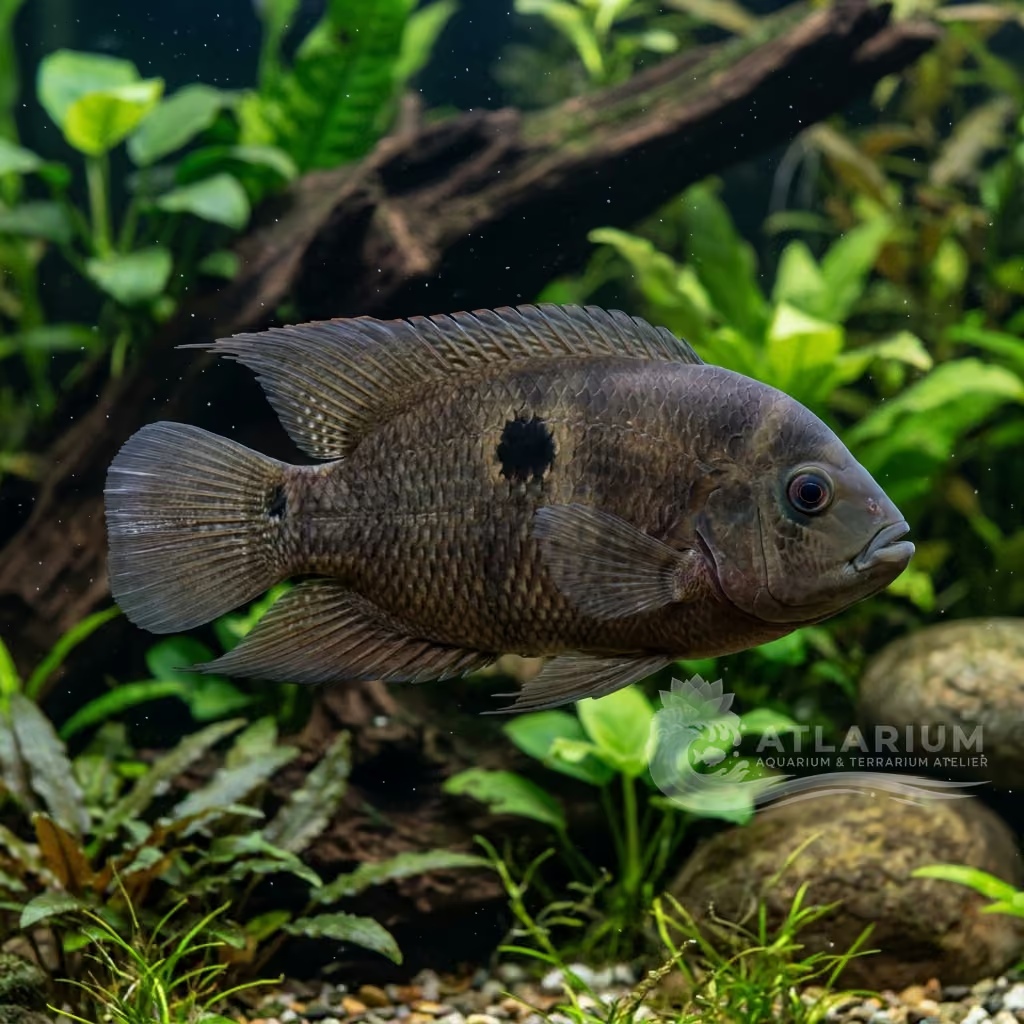
Water Quality: True Amazonian Blackwaters are acidic and soft (pH 5.5-6.5). An H. notatus bred in hard tap water will lose its characteristic spots, assuming a perennial pallor indicative of osmotic stress.
Compatibility and Cohabitation: Associate with schools of large Tetras (Bleeding Heart, Cardinals or Congo Tetras) or large Corydoras (C. sterbai). Adores the company of Uaru amphiacanthoides. Not recommended with Astronotus or Central American cichlids (they would kill it).
Aquarium Breeding: Classic flat substrate breeder. They clean a root, lay (up to 800 eggs) and defend the larvae with threatening displays. They are excellent parents and prolong parental care for weeks.
Risks and Diseases: Uncontrolled hybrids: in the European market you can often find "Spotted Severums" or hybrids (Heros appendiculatus x notatus) to create Red Spotted varieties. A true Wild H. notatus is a rare luxury for expert aquarists.

Geographic origin and distribution
Endemic to the lower Rio Negro and Essequibo (Brazil/Guyana). Swims in typical Amazonian blackwater environments, among submerged roots and branches.
Origin
Amazon, Orinoco, and Guianas

Fish profile
- Temperament
- Semi-aggressive
- They are renowned for their peaceful, almost dog-like temperament and intelligence. Severums quickly learn to recognize their owners and will often beg for food at the front of the glass. While peaceful, they have a robust build and will firmly defend themselves if bothered by aggressive fish. Their calm demeanor makes them a favorite among South American cichlid enthusiasts.
- Diet
- Omnivore
- Severums are omnivorous with a strong preference for plant matter in their daily diet. They will readily consume high-quality cichlid pellets, spirulina flakes, and fresh blanched vegetables like zucchini or peas. Meaty foods such as bloodworms and brine shrimp should be offered sparingly as treats. Live aquarium plants are often viewed as a food source and may be eagerly consumed.
- Life expectancy
- 10-15 years
- Adult size
- 25 cm
- Sex ratio
- Pair
- Sexing severums can be challenging, but mature males often develop distinct facial markings and extended fin trailers. Females are generally slightly smaller and have a plainer facial pattern without the intense worm-like markings. They are best kept in pairs or as a single focal point fish in a community setting. Keeping multiple males may lead to mild territorial posturing in smaller tanks.
- Feeding frequency
- Twice daily
- These cichlids thrive when fed one to two times a day with a carefully balanced diet. Offer only what they can consume within a few minutes to prevent food decay and water fouling. Growing juveniles can be fed slightly more often to support healthy development. Providing a scheduled fasting day once a week can help prevent digestive issues.
- Bioload
- Medium to High
- Severums are substantial fish that produce a considerable amount of waste as they grow. Adequate filtration, such as a large canister filter, is necessary to maintain excellent water quality. Weekly water changes of at least thirty percent are recommended to keep nitrates low. Proper tank maintenance ensures these cichlids do not suffer from stress-related illnesses.
- Flow
- Stagnant
- They prefer gentle to moderate water flow, mimicking the sluggish rivers and calm lakes of their native South America. Overly turbulent water can cause them stress and make it difficult for them to swim naturally. Standard filtration flow is usually adequate without the need for additional powerheads. Ensure there are calm areas decorated with driftwood for them to rest.
- Jump risk
- No
- Reproduction
- Oviparous
- Depending on the exact species, severums are either substrate spawners or specialized mouthbrooders. They form strong monogamous pairs and display intense parental care during the breeding process. Substrate spawners will clean a flat rock to lay eggs, while mouthbrooders will protect the fry inside their mouths. Breeding pairs can become territorial, so a separate breeding tank is often recommended.
- Compatibility & tankmates
- Semi-aggressive
- Unlike many large cichlids, severums are remarkably peaceful and make great additions to large community tanks. They can be safely housed with other peaceful to semi-aggressive fish of similar size. They generally ignore smaller fish, though extremely tiny species might occasionally be eaten by large adults. They pair well with peaceful catfish, large tetras, and other mild-mannered cichlids.
- Tank level
- Middle/Bottom
- Severums are versatile swimmers that utilize the middle and lower levels of the water column. They enjoy navigating through complex environments made of submerged branches, roots, and smooth rocks. They will occasionally venture to the surface during feeding time. Providing vertical structures gives them a sense of security and encourages natural behavior.

Scientific Parameters & Models
FishBase
Window to the official scientific data of the species
FishBase v25.04Data synced on: 06/15/2026
- Trophic level
- 2.8 ± 0.4 se
- Resilience
- High (less than 15 months)
- Phylogenetic uniqueness (PD50)
- 0.5312
- Bayesian Length-Weight
- a = 0.0389, b = 3.06
- VulnerabilityLow vulnerability (10 / 100)

Related species
Recommendations grouped by close relatives, companion choices, and similar care.