Red Head Tapajós Eartheater
Geophagus pyrocephalus
Instantly recognized by its vibrant crimson forehead, this robust Amazonian cichlid sifts mouthfuls of blinding white sand. A serene, gregarious giant that thrives in pristine, highly oxygenated waters.
Water Temperature
26 - 30 °C
pH Value
6 - 7.5
Water type
Freshwater
Tank level
Bottom and middle
Adult size
20 cm
Minimum tank volume
>= 180 L
Minimum group
>= 1
GH
2 - 10 dGH
KH
1 - 5 dKH
TDS
40 - 200 ppm
Conductivity
63 - 313 uS/cm

Species description
Geographical Origin and Habitat: Endemic to the Rio Tapajós, in Brazil. Swims in "clear" rivers (Clearwater) with a strong water flow, boundless bottoms of blinding white sand and few natural obstacles.
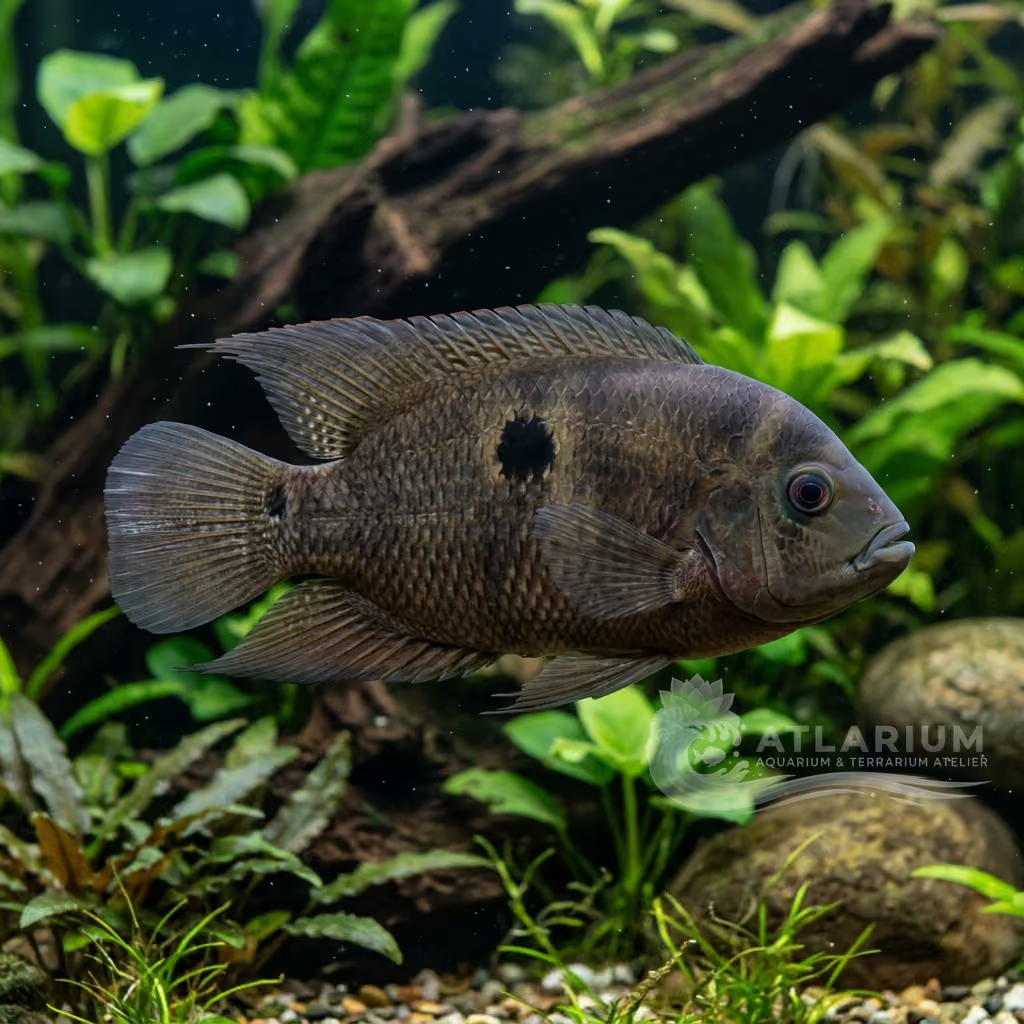
Taxonomy and Morphology: Red Head Tapajos (Geophagus sp. "Orange Head" / "Red Head"). One of the most sought after Geophagus. Massive morphology, steep head for digging. Presents very extensive pelvic and caudal filaments in healthy specimens.
Social Behavior: Peaceful, but "spectacular". A school (minimum 6-8 individuals) will give rise to continuous displays with spread fins, opening the mouth enormously and slapping the tail to visually dominate the opponents.
Coloration and Sexual Dimorphism: Mind-blowing: coppery base body, with a phosphorescent orange/bright red cap covering the entire nape of the adult fish (hence "Red Head"). The fins are an expanse of blue and red cobwebs. Males larger and with a more colored and pronounced head.

Care, breeding and tankmates
Aquarium Setup: Sand, sand, sand. An endless expanse of sugar sand, combined with round river pebbles and scattered smooth roots. No rough gravel, to avoid irreparable gill injuries. 150 cm (60 inch) tank.
Diet and Feeding: Swallows huge gulps of sand and filters them by expelling the grains from the gill slits. Offer cichlid feeds (very soft and sinking), frozen brine shrimp, krill. The intestine is long, avoid mammalian-based foods (beef heart).
Water Quality: The Tapajós is a warm river. This fish wastes away dramatically if the temperature drops below 26°C (79°F). The water must be perfect: nitrates instantly turn off its orange reflections.
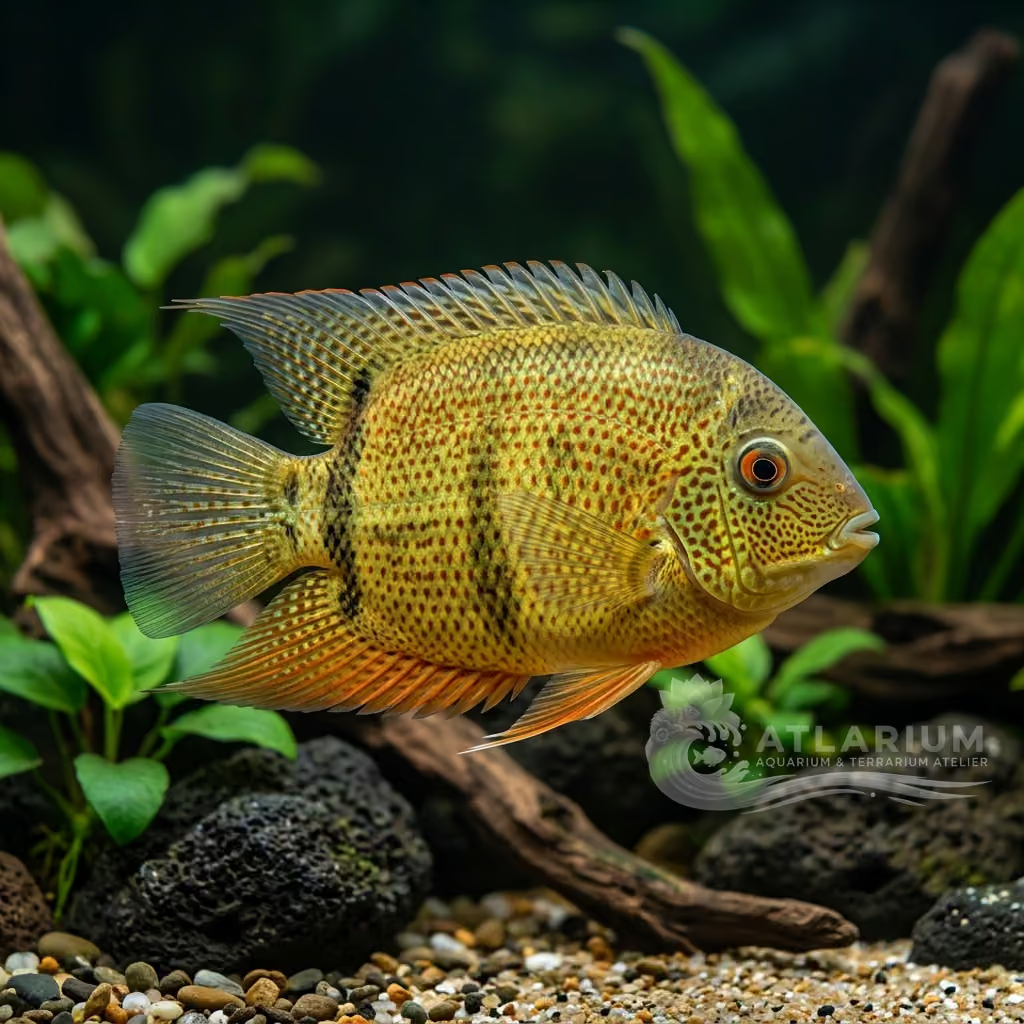
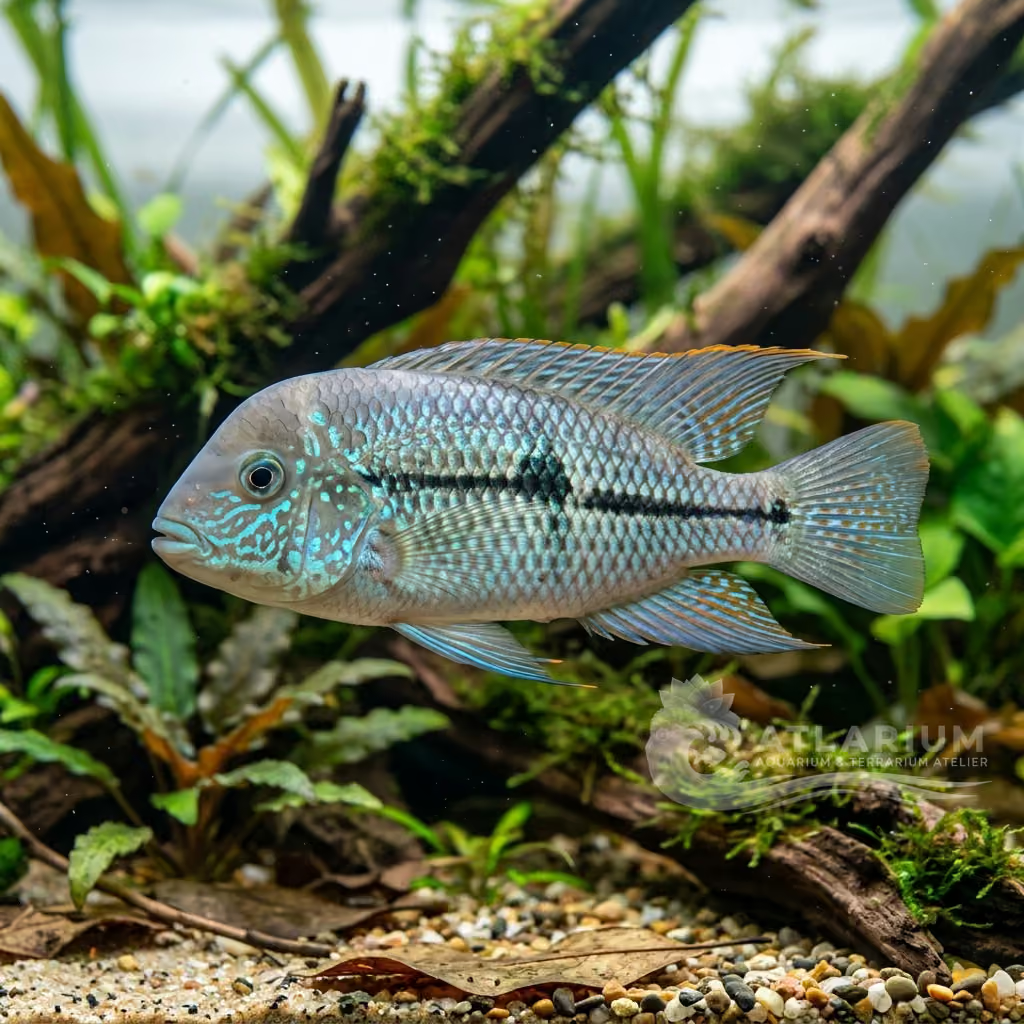
Compatibility and Cohabitation: Fabulous with large Amazonian characins (Bleeding Heart, Rummy-Nose), Angelfish or peaceful Cichlids like Uaru, Heros (Severum). Not to be joined with piranhas, Arowanas, or bellicose Central American Cichlids.
Aquarium Breeding: Delayed biparental mouthbrooder. The pair cleans a rock or flat wood, lays, and after 72 hours swallows the eggs ready to hatch or the larvae, keeping them in the jugular sac for two weeks in absolute fasting!
Risks and Diseases: Hole in the Head disease (HITH) is very frequent due to unclean sand and water pollution (nitrates). Stagnant water leads them to anoxia.

Geographic origin and distribution
Endemic to the Rio Tapajós, in Brazil. Swims in "clear" rivers (Clearwater) with a strong water flow, boundless bottoms of blinding white sand and few natural obstacles.
Origin
Tropical oceans and reefsAmazon, Orinoco, and Guianas

Fish profile
- Temperament
- Semi-aggressive
- Temperaments range from highly social to aggressive. Understanding innate behaviors is crucial. Proper care ensures a stress-free environment.
- Diet
- Omnivore
- Dietary requirements range widely. A species-appropriate diet is paramount. Foods must match natural adaptations.
- Life expectancy
- 8-10 years
- Adult size
- 20 cm
- Sex ratio
- Solitary
- The ideal sex ratio varies. Some are strictly solitary animals. Incorrect ratios lead to severe aggression.
- Feeding frequency
- Twice daily
- Feeding schedules depend on the species. Some need continuous grazing daily. Proper scheduling prevents dangerous obesity.
- Bioload
- Medium
- The bioload varies drastically. Filtration must be sized appropriately. Proper waste management is absolutely essential.
- Flow
- Stagnant
- Flow preferences depend on the habitat. Replicating natural hydrodynamics is key. This reduces stress significantly overall.
- Jump risk
- Yes
- Many animals are capable jumpers. A secure lid is best practice. Preventing escapes is a fundamental duty.
- Reproduction
- Oviparous
- Reproductive strategies are incredibly diverse. Breeding requires highly specific cues. Rearing offspring can be extremely challenging.
- Compatibility & tankmates
- Semi-aggressive
- Compatibility is highly variable. Extensive research is always required. Careful planning prevents severe injuries.
- Tank level
- Middle/Bottom
- Animals occupy different vertical niches. Knowing their preference is crucial. Proper spatial planning promotes natural behaviors.

Related species
Recommendations grouped by close relatives, companion choices, and similar care.