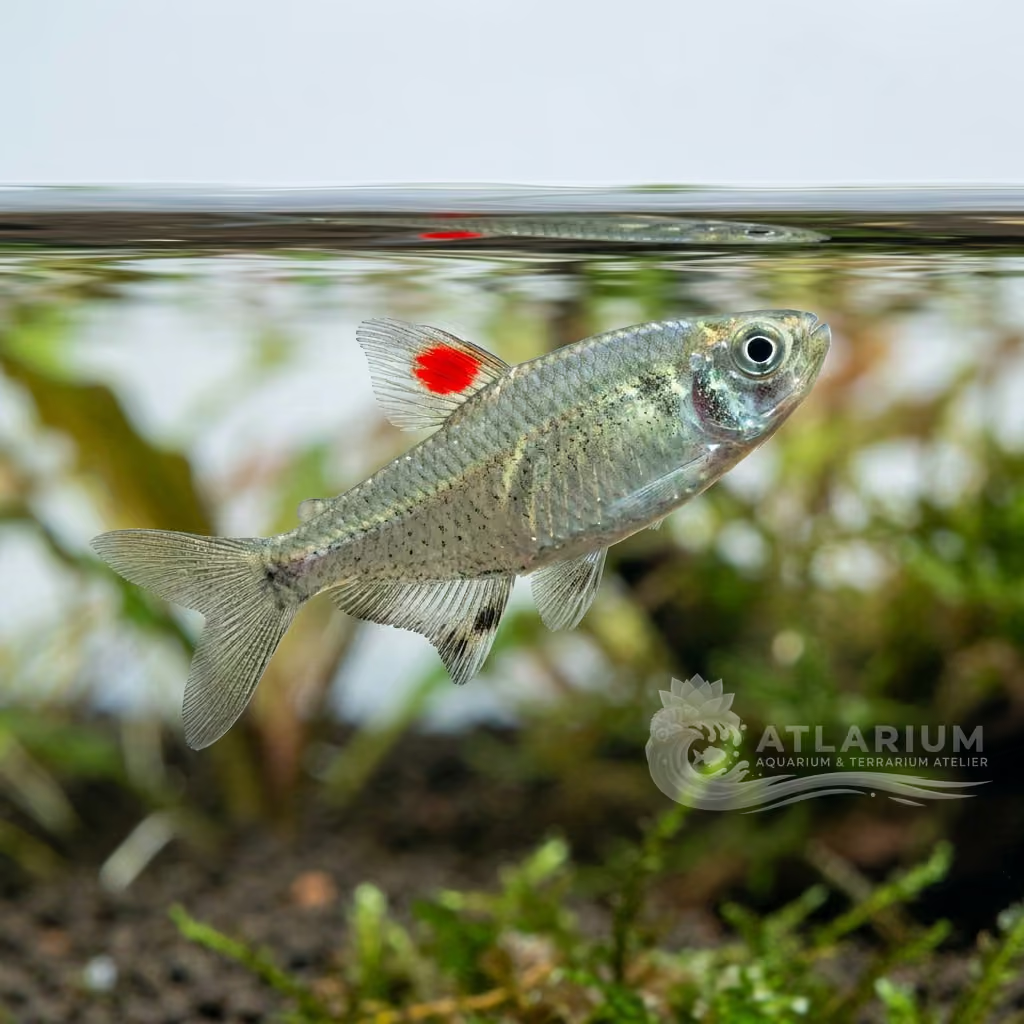
Dwarf rasbora
Boraras maculatus
One of the smallest fish in the trade (2–2.5 cm): a red-orange jewel with a large dark lateral spot on a translucent body. Native to blackwater peat swamps of the Malay Peninsula and Sumatra. In schools of 8–10+ the colorful micro-swarm is hypnotic. Requires soft, acidic water — loses color in hard water. Dark substrate and floating plants enhance colors. Micropredator with tiny mouth. Ideal for planted nano-aquariums. Longevity 2–5 years.
22 - 28 °C
4 - 6.5
Freshwater
Surface and middle
2.5 cm
>= 20 L
>= 8
1 - 8 dGH
7 - 14 dKH
85 - 260 ppm
133 - 406 uS/cm

Species description

Care, breeding and tankmates

Geographic origin and distribution
Origin

Fish profile
- Temperament
- Territorial
- Boraras maculatus is an exceptionally peaceful, shy, and gentle species that poses no threat to any tankmates. They are shoaling fish that feel secure only when kept in a group of their own kind. While they are generally peaceful, dominant males may exhibit minor territorial displays during spawning periods, which are harmless and involve no physical injury. Because of their timid nature, they can easily become stressed if housed with larger or overly active species.
- Diet
- Omnivore
- In the wild, Boraras maculatus is a micropredator feeding on small insects, worms, and micro-crustaceans. In the aquarium, they should be offered high-quality crushed flakes or micro-pellets as a staple. To ensure vibrant coloration and support overall health, their diet should be regularly supplemented with baby brine shrimp, Daphnia, or microworms. Due to their tiny mouths, all food items must be appropriately sized for easy ingestion.
- Life expectancy
- 3-5 years
- Adult size
- 2.5 cm
- Sex ratio
- Group
- This species does not require a specific male-to-female ratio for general aquarium keeping, but they must be kept in a group. A minimum shoal of eight to ten individuals is recommended to promote natural schooling behavior and reduce stress. Keeping a larger group allows males to display their most intense coloration as they compete for female attention. In a group context, their social hierarchy is established without causing harm to any individuals.
- Feeding frequency
- 2-3 times daily
- Due to their very small body mass and high metabolic rate, Boraras maculatus benefits from being fed small portions two to three times daily. This feeding schedule prevents digestive issues while ensuring they receive enough energy to remain active. Care must be taken not to overfeed, as uneaten food will quickly degrade the water quality in a nano aquarium. Feeding only what they can consume within one to two minutes is the best practice.
- Bioload
- Low
- Boraras maculatus has an extremely low individual biological load due to its miniature size of about two centimeters. However, because they must be kept in large groups, their collective waste should be managed with stable filtration. A gentle sponge filter or an air-powered filter is highly recommended to prevent these tiny fish from being sucked into the intake. Regular partial water changes are essential to keep nitrate levels low and maintain pristine water quality.
- Flow
- Strong
- This species originates from slow-moving, quiet forest streams and peat swamps with minimal current. Consequently, they prefer weak water flow in the aquarium, as strong currents can easily exhaust and stress them. Filtration should be designed to keep water movement gentle, utilizing sponge filters or filter outlets directed against the glass. Creating areas of calm water with dense planting allows them to swim comfortably and exhibit natural behaviors.
- Jump risk
- Yes
- Although Boraras maculatus is a very small fish, they are agile swimmers that can jump out of the aquarium when startled or stressed. A tight-fitting lid or cover glass is essential to prevent any tragic escapes from the tank. Floating plants can also help cover the water surface, making the fish feel secure and reducing their instinct to jump. Keeping the aquarium water level slightly below the rim provides an extra safety margin.
- Reproduction
- Oviparous
- Boraras maculatus is an egg-scattering species that exhibits no parental care, and they will readily consume their own eggs and fry. Breeding them is moderately challenging and is best accomplished in a dedicated, dimly lit breeding tank with soft, highly acidic water. The bottom of the breeding tank should be covered with spawning mops, Java moss, or a mesh grid to protect the eggs. After spawning occurs, the adult fish must be removed immediately to ensure the survival of the offspring.
- Compatibility & tankmates
- Community
- Due to their tiny size and timid nature, Boraras maculatus is not suitable for standard community aquariums with larger, active fish. They are best kept in a species-only setup or with other peaceful micro-fishes such as small danios, dwarf rasboras, and tiny catfish. They are also excellent companions for freshwater dwarf shrimp, as they are too small to harm juvenile shrimp. Avoid housing them with any species large enough to view them as potential prey.
- Tank level
- Top/Middle
- Boraras maculatus primarily occupies the middle and upper levels of the water column, where they actively swim in schools. They will frequently explore other areas of the tank, especially if dense vegetation is provided for cover. In a well-planted aquarium with floating plants, they are much more active and visible in the upper sections. Their presence in the middle-top zone makes them excellent companions for bottom-dwelling species like dwarf corydoras.

Scientific Parameters & Models
Window to the official scientific data of the species
- Trophic level
- 3.3 ± 0.4 se
- Resilience
- High (less than 15 months)
- Phylogenetic uniqueness (PD50)
- 0.5156
- Bayesian Length-Weight
- a = 0.00891, b = 3.02
- VulnerabilityLow vulnerability (10 / 100)

Image gallery
Licensed images linked to the species or, when marked, to the closest representative taxon.

Related species
Recommendations grouped by close relatives, companion choices, and similar care.