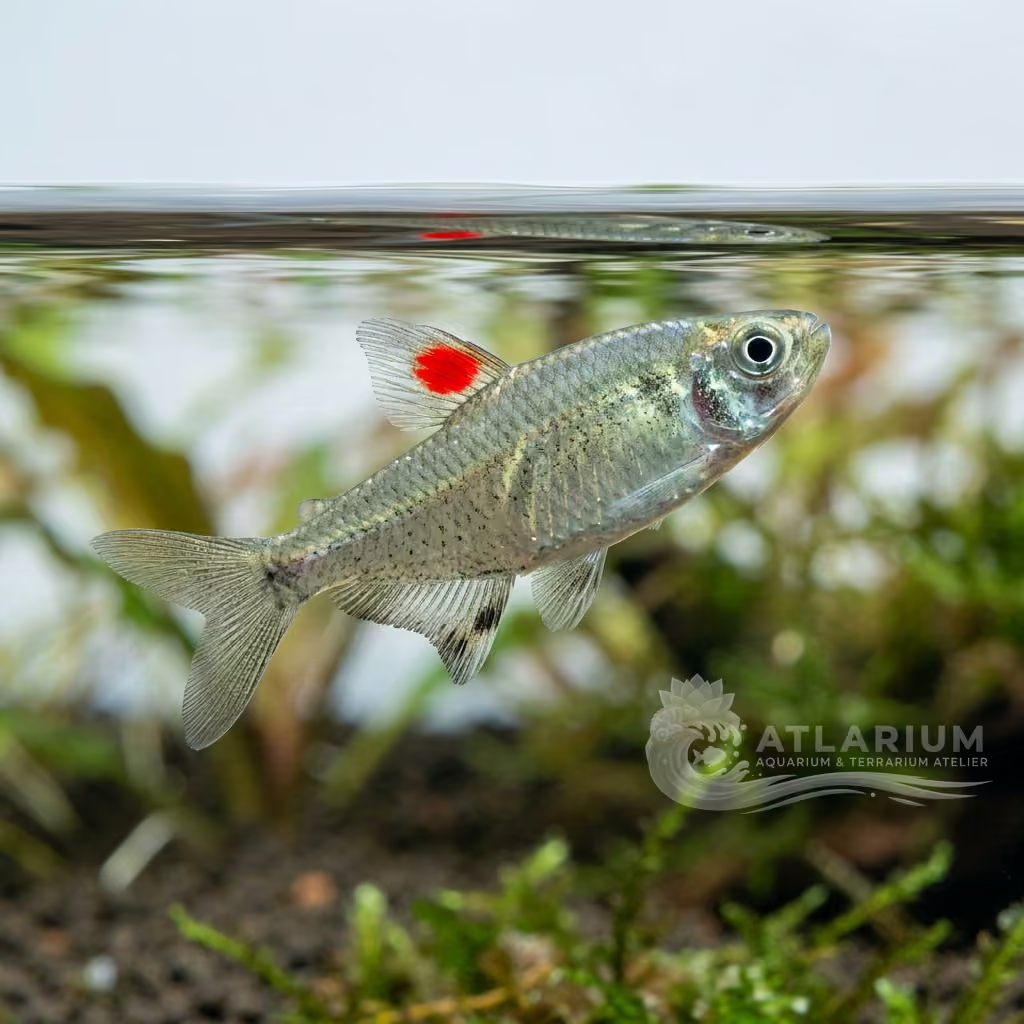
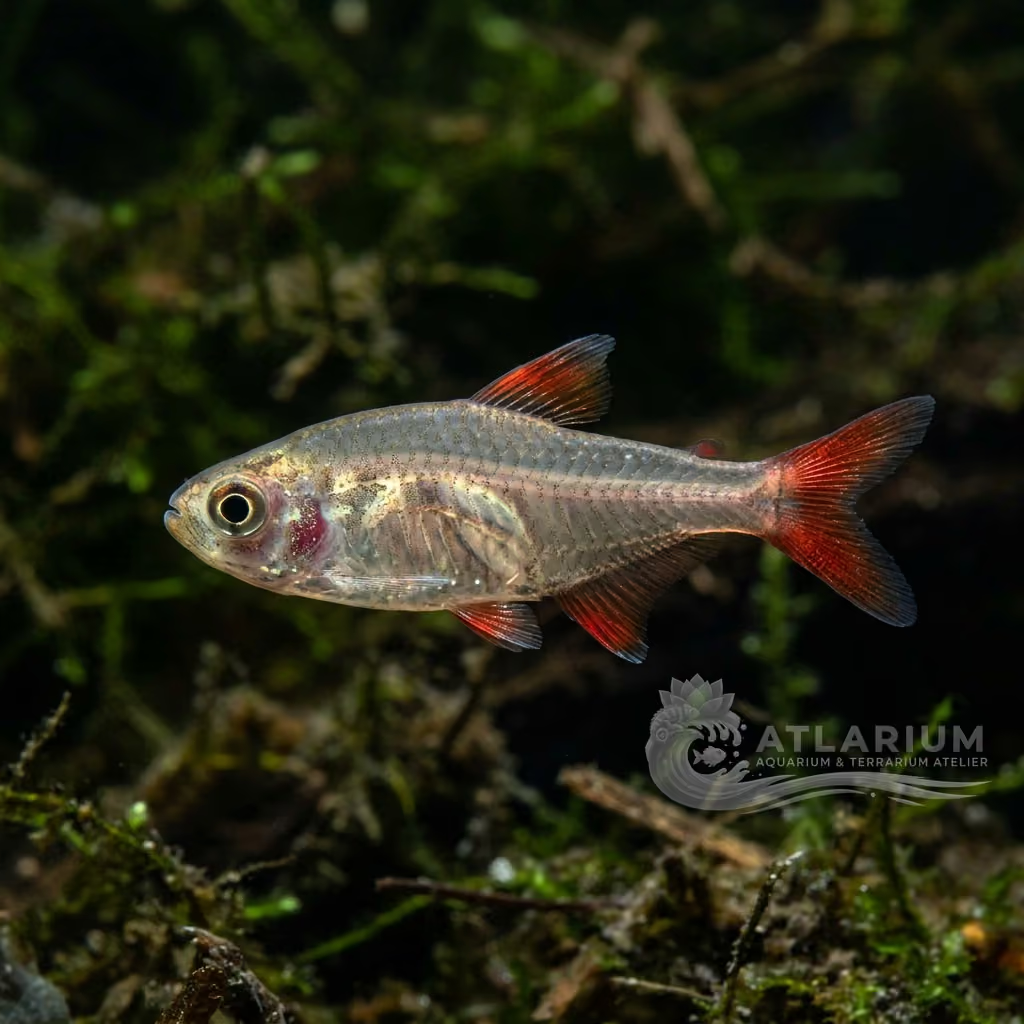
Chili Rasbora
Boraras brigittae
Chili Rasbora (Boraras brigittae) is a freshwater species with an adult-size reference of about 2 cm. It needs at least 30 litres and 10 individuals, with its social and territorial profile taken into account.
Water Temperature
24 - 28 °C
pH Value
4 - 7
Water type
Freshwater
Tank level
Surface and middle
Adult size
2 cm
Minimum tank volume
>= 30 L
Minimum group
>= 10
GH
1 - 10 dGH
KH
1 - 5 dKH
TDS
25 - 200 ppm
Conductivity
39 - 313 uS/cm

Species description
Geographical Origin and Habitat: A freshwater species; the enclosure should provide stability, oxygenation, space and shelter consistent with its behaviour without turning one habitat description into a mandatory recipe.
Taxonomy and Morphology: The accepted name is Boraras brigittae. The card retains the historically used family Cyprinidae, whereas FishBase v26.07 uses Danionidae; the conflict is disclosed rather than silently resolved. The other recorded ranks are: genus Boraras, family Cyprinidae, subfamily Rasborinae, order Cypriniformes.
Social Behavior: Chili Rasbora is gregarious and should be kept in a school. The minimum reference is 10 individuals; sex, maturity and available space can require a more conservative composition. Observe access to food, resting behaviour, chasing and use of shelter. Isolation, persistent competition or aggression means the number, composition or environment needs to be corrected.
Coloration and Sexual Dimorphism: Colour and shape can vary with age, sex, physiological state and environmental conditions. Identification and sexing require recognized species-level characters; one appearance or photograph is not enough.

Care, breeding and tankmates
Aquarium Setup: Chili Rasbora needs an aquarium of at least 30 litres, sized for adult body size and a minimum group of 10 individuals. Filtration, shelter and swimming room must match the species and the actual number kept. Volume alone does not make an enclosure suitable: tank shape and length, usable area, oxygenation and the ability to separate territories must reflect adult behaviour.
Diet and Feeding: The recorded diet is omnivorous. Offer appropriately sized foods varied within that category, and adjust quantity and frequency from actual intake, body condition and leftovers. One food or a fixed schedule is not suitable for every age and situation.
Water Quality: Maintain stable, well-oxygenated water appropriate to a freshwater species; the card's reference values are 24–28 °C, pH 4–7. Verify conditions with reliable tests and size maintenance and filtration to the actual load. Ranges are not automatic thresholds for treatment or rapid chemical correction.
Compatibility and Cohabitation: The cohabitation profile is suitable for a compatible community, with a generally peaceful temperament. Keep at least 10 individuals; tankmates, stocking density and decor must allow escape, rest and feeding without excessive competition. Watch interactions especially during feeding, maturity and breeding. Persistent chasing, injury or exclusion from food requires a change in stocking or layout, or separation of the animals.
Aquarium Breeding: The recorded reproductive profile is “oviparity”. Breeding should be attempted only with healthy adults, separation capacity and a plan for eggs or young. Do not treat unverified triggers, sex ratios or hatch times as universal for this species.
Risks and Diseases: Use a secure cover and close escape gaps. Prevent problems through quarantine of new arrivals, stable water, appropriate feeding and daily observation. Similar signs can have different causes, so check parameters, history and diagnosis before medication. Follow the product label and qualified aquatic-veterinary advice; there is no universal reduced dose for a species or family.

Geographic origin and distribution
A freshwater species; the enclosure should provide stability, oxygenation, space and shelter consistent with its behaviour without turning one habitat description into a mandatory recipe.
Origin
North AmericaSouth and Southeast Asia

Fish profile
- Temperament
- Peaceful
- Chili Rasbora has a generally peaceful temperament. Insufficient space, an unsuitable social ratio or incompatible tankmates can substantially change observed behaviour.
- Diet
- Omnivore
- An Australian government assessment describes B. brigittae as a pelagic omnivore feeding primarily on insects and other small arthropods, so the structured diet is corrected from micro-predator to omnivore. That evidence supports suitably small, varied food categories, not a universal commercial food, prey list, portion, feeding timetable or claim that leaf litter alone supplies adequate nutrition. Evaluate access, body condition and uneaten food in the actual system.
- Life expectancy
- 4-8 years
- Adult size
- 2 cm
- Sex ratio
- School
- Chili Rasbora is gregarious and should be kept in a school. The reference minimum is 10 individuals and must not be read as permission to overcrowd the aquarium.
- Feeding frequency
- Twice daily
- No taxon-specific source reviewed for this dossier validates a fixed daily frequency, fasting day, two-minute rule or automatic number of meals for B. brigittae. Its small size and documented food categories justify close observation of access and body condition, not a universal schedule. Set portions and timing from life stage, competition, appetite and the system's ability to process waste; investigate persistent refusal or loss of condition instead of treating it as a routine feeding issue.
- Bioload
- Low
- The low-bioload scalar follows the fish's small body size, but no reviewed source provides a taxon-specific waste-production measurement, filter rating or water-change percentage. It should be treated as a planning label rather than a licence to overstock a nano aquarium. Feeding amount, group size, plant and filter capacity, and measured ammonia, nitrite and nitrate determine management. Small fish can still be harmed by unstable water or accumulated waste.
- Flow
- Stagnant
- The reviewed government assessment describes slow-flowing, tannin-stained swamp water in the native range, while FishBase classifies the species as freshwater benthopelagic. This supports avoiding a layout dominated by forceful flow, but it does not establish one exact current, filter model or circulation rate. Provide usable calmer space while maintaining measured water quality, then adjust from the fishes' behaviour and system conditions rather than from a categorical flow label.
- Jump risk
- Yes
- No reviewed taxon-specific source establishes a jump rate, trigger or specialist escape tendency for B. brigittae. The current jump-risk scalar is therefore a precautionary catalog label, not a biological diagnosis. A secure cover can reduce accidental escape during maintenance, disturbance or social stress, but it does not demonstrate that every fish will jump or replace checking gaps around equipment and the observed behaviour of the group.
- Reproduction
- Oviparous
- FishBase reports up to 50 eggs deposited on the underside of leaves and larvae hatching after 48 hours. The Australian assessment describes external fertilisation and broadcast spawning, but also notes that detailed behavioural observations are lacking. Present these as source-reported observations, not a guaranteed home-aquarium protocol or output. The evidence does not establish a fixed spawning trigger, parent-removal rule, fry diet or survival rate for every group.
- Compatibility & tankmates
- Community
- The cohabitation profile is suitable for a compatible community, with a generally peaceful temperament. Keep at least 10 individuals; tankmates, stocking density and decor must allow escape, rest and feeding without excessive competition. Watch interactions especially during feeding, maturity and breeding. Persistent chasing, injury or exclusion from food requires a change in stocking or layout, or separation of the animals.
- Tank level
- Top/Middle
- FishBase classifies B. brigittae as benthopelagic. This supports use of the water column rather than a claim that the species is confined to the surface, middle, or bottom. In an aquarium, cover and feeding access should be available across the occupied space, while observation of the individual group remains more informative than a fixed vertical label. The record does not document a taxon-specific depth preference for a captive layout.

Scientific Parameters & Models
FishBase
Window to the official scientific data of the species
FishBase v25.04Data synced on: 06/15/2026
- Trophic level
- 3.4 ± 0.4 se
- Resilience
- High (less than 15 months)
- Phylogenetic uniqueness (PD50)
- 0.5156
- Bayesian Length-Weight
- a = 0.00891, b = 3.02
- VulnerabilityLow vulnerability (10 / 100)

Image gallery
Licensed images linked to the species or, when marked, to the closest representative taxon.

Related species
Recommendations grouped by close relatives, companion choices, and similar care.