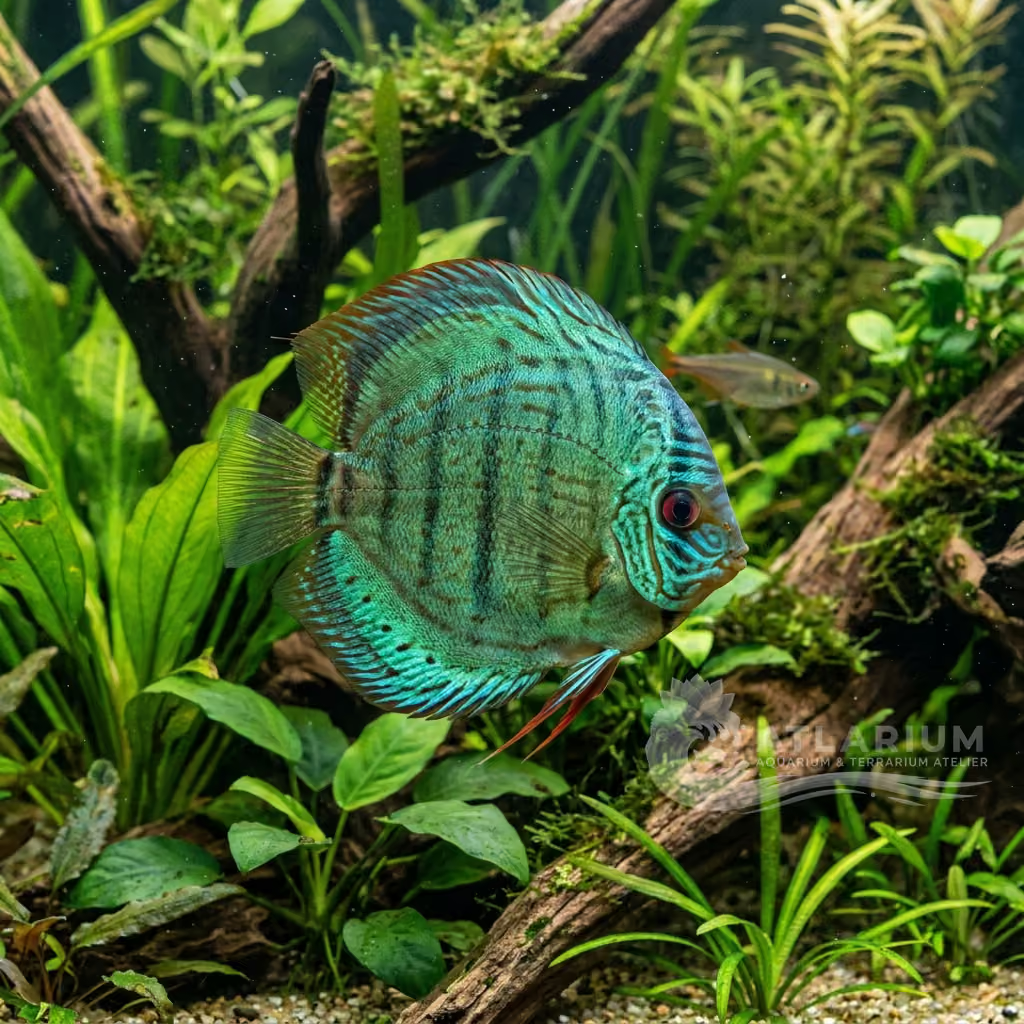
Axelrod's Rasbora
Sundadanio axelrodi
A microscopic neon gem. Exists in three incredible natural variants (iridescent blue, green, and red). A stunning but delicate inhabitant of acidic peat swamps, it tolerates absolutely zero organic pollutants in the water.
Water Temperature
23 - 26 °C
pH Value
4 - 6.5
Water type
Freshwater
Tank level
Middle
Adult size
2.5 cm
Minimum tank volume
>= 30 L
Minimum group
>= 1
GH
1 - 5 dGH
KH
1 - 2 dKH
TDS
25 - 95 ppm
Conductivity
39 - 148 uS/cm

Species description
Geographical Origin and Habitat: Widely distributed in the swampy zones of the Malay and Indonesian archipelagos (Bintan, Sumatra, Bangka, Borneo). Exclusively inhabits the infamous peat swamps, forest streams where the layer of decomposing leaves turns the water ink-black, with a pH so acidic (down to 4.0) that it inhibits bacterial growth.
Taxonomy and Morphology: Cyprinidae. Originally sold as Rasbora axelrodi, later promoted to the genus Sundadanio. A microscopic fish: males do not exceed 2.5 cm (1 inch) in length. They have a streamlined body, with male pelvic fins modified into a hook shape.
Social Behavior: Peaceful, highly gregarious, and perpetually displaying. Dominant males defend tiny patches of moss by engaging in spectacular fin-flaring challenges, accompanied (a very rare phenomenon) by small acoustic 'clicks' produced by their jaws to intimidate rivals.
Coloration and Sexual Dimorphism: Extraordinary. Depending on the island of origin, there are 'Blue' populations (blazing neon cyan on the belly and black sides), 'Green' populations (metallic emerald green), and 'Red' populations (fire red and black). All these dazzling colors are exclusive to the adult male. Females are tiny and a totally diaphanous pinkish-gray, with no luminescence.

Care, breeding and tankmates
Aquarium Setup: Being a nano-fish, a 30-40 liter (8-10 gallon) tank is perfect. There is no point keeping them in bright tanks: the neon will not show. Needs a heavy Blackwater layout: tangled roots, dozens of dried leaves and boiled alder cones, dense Java Moss. Filtered, shielded light. Zero water current.
Diet and Feeding: Micro-insectivore. They struggle to swallow crushed granules or flakes due to their microscopic mouths. They depend on tiny live food: baby brine shrimp, vinegar eels, daphnia, and micro-worms. Feed them twice a day in tiny doses.
Water Quality: This is the challenge. They are intolerant of tap water: minerals (Calcium and Magnesium) shut down their renal functions. They demand 100% reverse osmosis water slightly remineralized (GH 1-5) and pH kept strongly acidic (4.0-6.5) via driftwood and active peat in the filter.
Compatibility and Cohabitation: A species to keep isolated or with equally tiny, delicate companions. Perfect pairing with Boraras, micro-Otocinclus, Parosphromenus (Licorice Gouramis), and dwarf shrimp, whose babies they will completely ignore.
Aquarium Breeding: Difficult, as it requires rainy season simulations with icy rainwater (cold reverse osmosis water) to trigger spawning among the mosses, in a pH 5.0 environment where fungi cannot attack the eggs.
Risks and Diseases: Ostracization and death from stress if surrounded by chaotic fish (Guppies, Danios). They succumb to lightning-fast cutaneous bacterial diseases if the pH exceeds 7.0.

Geographic origin and distribution
Widely distributed in the swampy zones of the Malay and Indonesian archipelagos (Bintan, Sumatra, Bangka, Borneo). Exclusively inhabits the infamous peat swamps, forest streams where the layer of decomposing leaves turns the water ink-black, with a pH so acidic (down to 4.0) that it inhibits bacterial growth.
Origin
North AmericaSouth and Southeast Asia

Fish profile
- Temperament
- Semi-aggressive
- Their temperament is extremely peaceful, shy, and delicate. They rely on the safety of their shoal and will become stressed and prone to disease if kept in too small a group. When kept in appropriate conditions with calm tank mates, they are active and fascinating to observe.
- Diet
- Omnivore
- Being micro-predators, their diet in the wild consists of tiny insects and zooplankton. In captivity, they require very small foods such as micro-pellets, crushed flakes, and live or frozen baby brine shrimp. Offering a variety of appropriately sized live foods is crucial to bring out their best colors and ensure vibrant health.
- Life expectancy
- 3-5 years
- Adult size
- 2.5 cm
- Sex ratio
- School
- It is highly recommended to keep them in a school of at least 8 to 10 individuals to reduce stress. A mixed group is fine, though keeping a ratio of more females to males can help disperse any minor male-to-male sparring. Males will naturally display their best colors when competing for female attention in a large group.
- Feeding frequency
- Twice daily
- Due to their small stomachs, it is best to feed them small amounts two to three times a day. Overfeeding can lead to water quality issues, so only offer what they can consume in a minute or two. Frequent, small meals closely mimic their natural foraging behavior in the wild.
- Bioload
- Low
- Axelrod's Rasbora is a very small fish, meaning it produces an extremely low bioload. They are perfect for nano aquariums or heavily planted setups where their minor waste output is easily absorbed by plants. Regular, small water changes are still necessary to maintain the pristine water quality they require.
- Flow
- Stagnant
- They originate from slow-moving blackwater streams and peat swamps, so they prefer very gentle water movement. Strong currents will exhaust them and cause significant stress, leading to poor health. A sponge filter or a baffled hang-on-back filter provides the ideal combination of gentle flow and filtration.
- Jump risk
- Yes
- While not notorious jumpers, their small size and skittish nature mean they can easily be startled right out of the water. A tight-fitting lid is highly recommended, especially in nano tanks where the water level is close to the rim. Keeping the tank in a quiet area reduces sudden scares that might prompt jumping.
- Reproduction
- Oviparous
- Breeding is possible but requires a dedicated setup with very soft, acidic blackwater conditions. They are egg scatterers and offer no parental care, often eating their own eggs if given the chance. A breeding tank with dense moss or a spawning mop is required to protect the eggs and raise the tiny fry.
- Compatibility & tankmates
- Peaceful
- They are incredibly peaceful but timid, making them suitable only for very tranquil micro-community tanks. They should be kept with other diminutive, peaceful species like small tetras, Corydoras, or dwarf shrimp. Avoid any large, fast, or aggressive fish that could easily intimidate or consume them.
- Tank level
- Middle
- They are predominantly mid-level dwellers, often hovering gracefully in the middle of the water column. They will occasionally venture to the surface for food or retreat to the bottom when frightened. Providing dense planting and floating plants gives them the security to swim out in the open.

Scientific Parameters & Models
FishBase
Window to the official scientific data of the species
FishBase v25.04Data synced on: 06/15/2026
- Trophic level
- 3 ± 0.2 se
- Phylogenetic uniqueness (PD50)
- 0.5059
- Bayesian Length-Weight
- a = 0.01122, b = 3.04
- VulnerabilityLow vulnerability (10 / 100)

Related species
Recommendations grouped by close relatives, companion choices, and similar care.