Boddart's mudskipper
Boleophthalmus boddarti
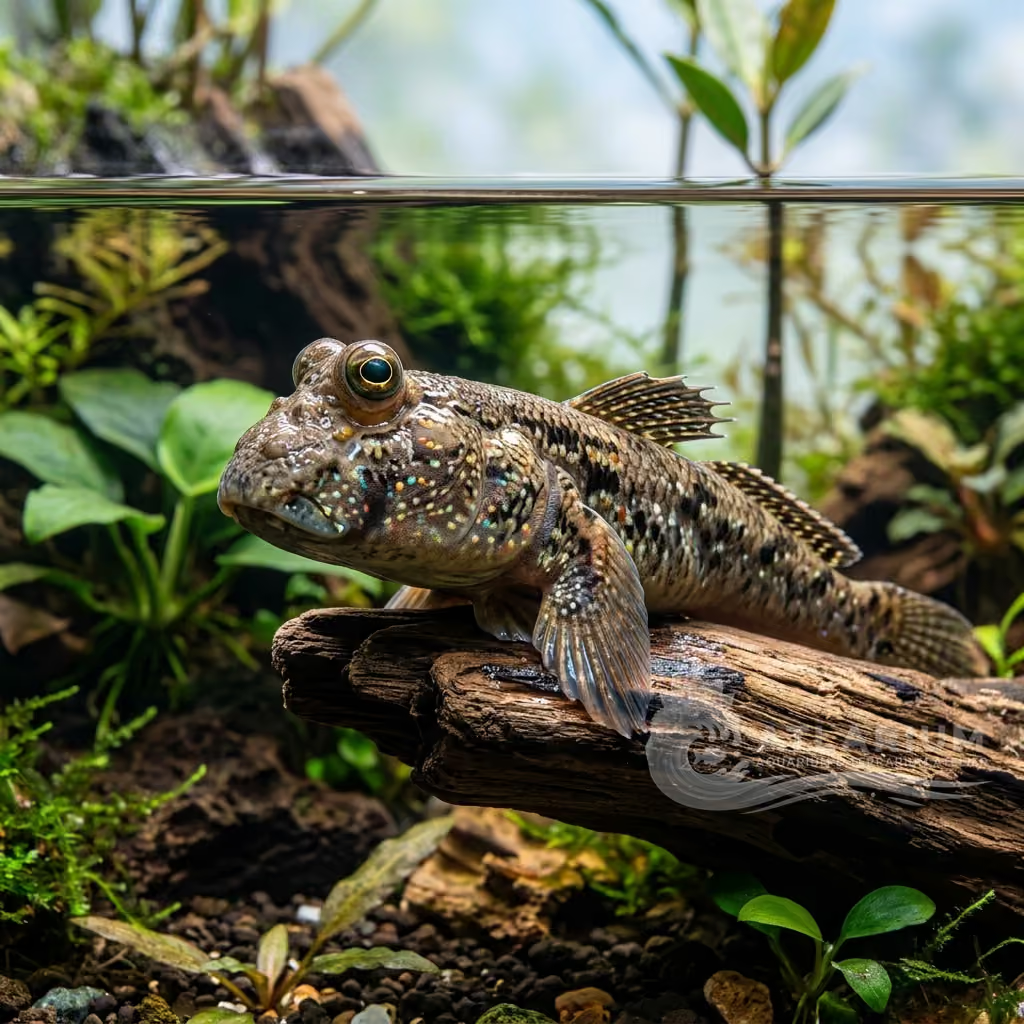
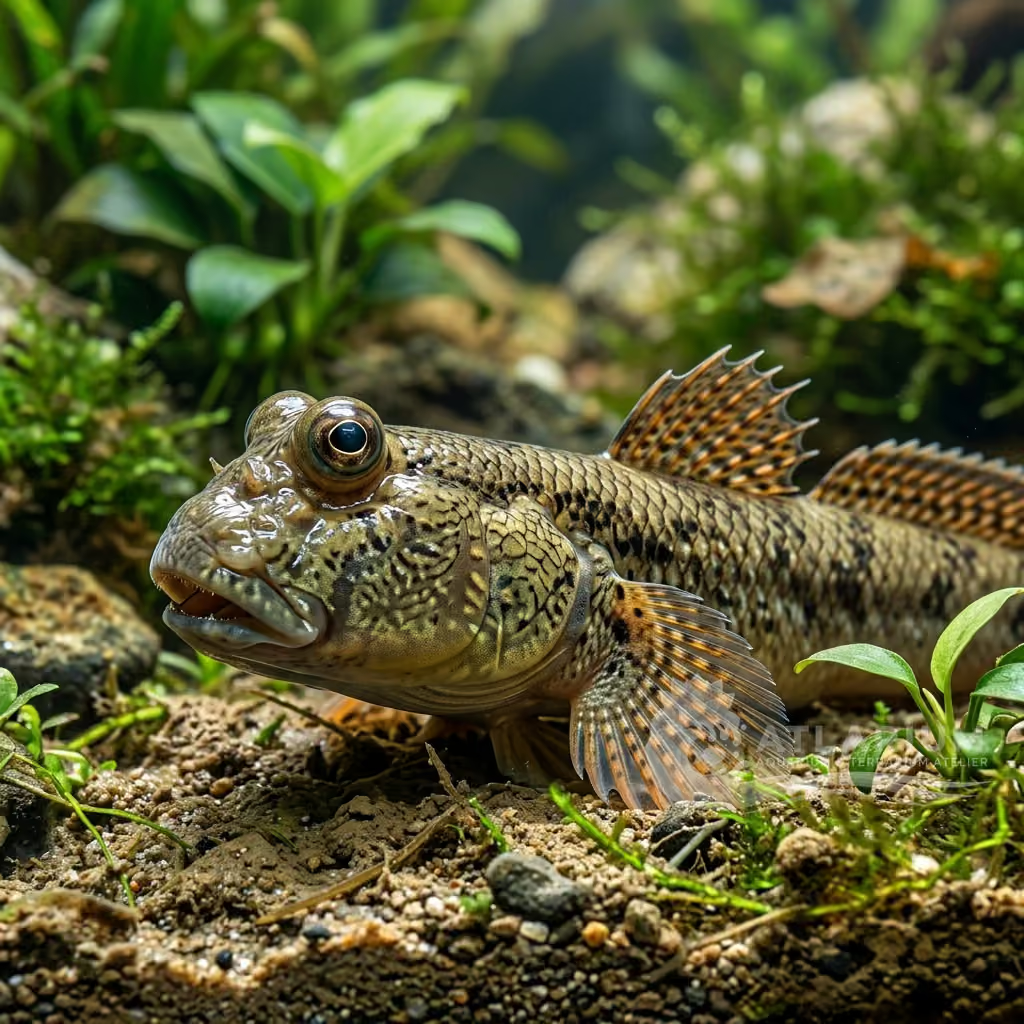
Boddart's Goggle-Eyed Goby is an extraordinary amphibious fish that walks on mudflats. It requires a specialized brackish paludarium with deep mud and high humidity to thrive.
Water Temperature
24 - 28 °C
pH Value
7.5 - 8.5
Water type
Brackish
Tank level
Bottom
Adult size
22 cm
Minimum tank volume
>= 250 L
Minimum group
>= 1

Species description
Geographical Origin and Habitat: Boleophthalmus boddarti is native to the western Indo-Pacific region, spanning the coastal mudflats of India, Bangladesh, Thailand, Indonesia, Malaysia, and Vietnam. It inhabits intertidal mudflats, brackish river estuaries, and mangrove swamps where tidal cycles regularly expose vast areas of nutrient-rich wet mud.
Taxonomy and Morphology: Belonging to the family Gobiidae and the subfamily Oxudercinae, this species features an elongated body, bulbous eyes set high on the head that move independently, and highly muscular pectoral fins modified to act like limbs for walking on land. Adults reach a maximum length of 15-20 cm.
Social Behavior: Diurnal, active, and highly territorial. They excavate complex burrow systems in deep mud, which they defend aggressively from rivals by flashing and waving their large, sail-like dorsal fins. They spend most of their time out of water on the mud flats, returning to the water periodically to moisten their skin.
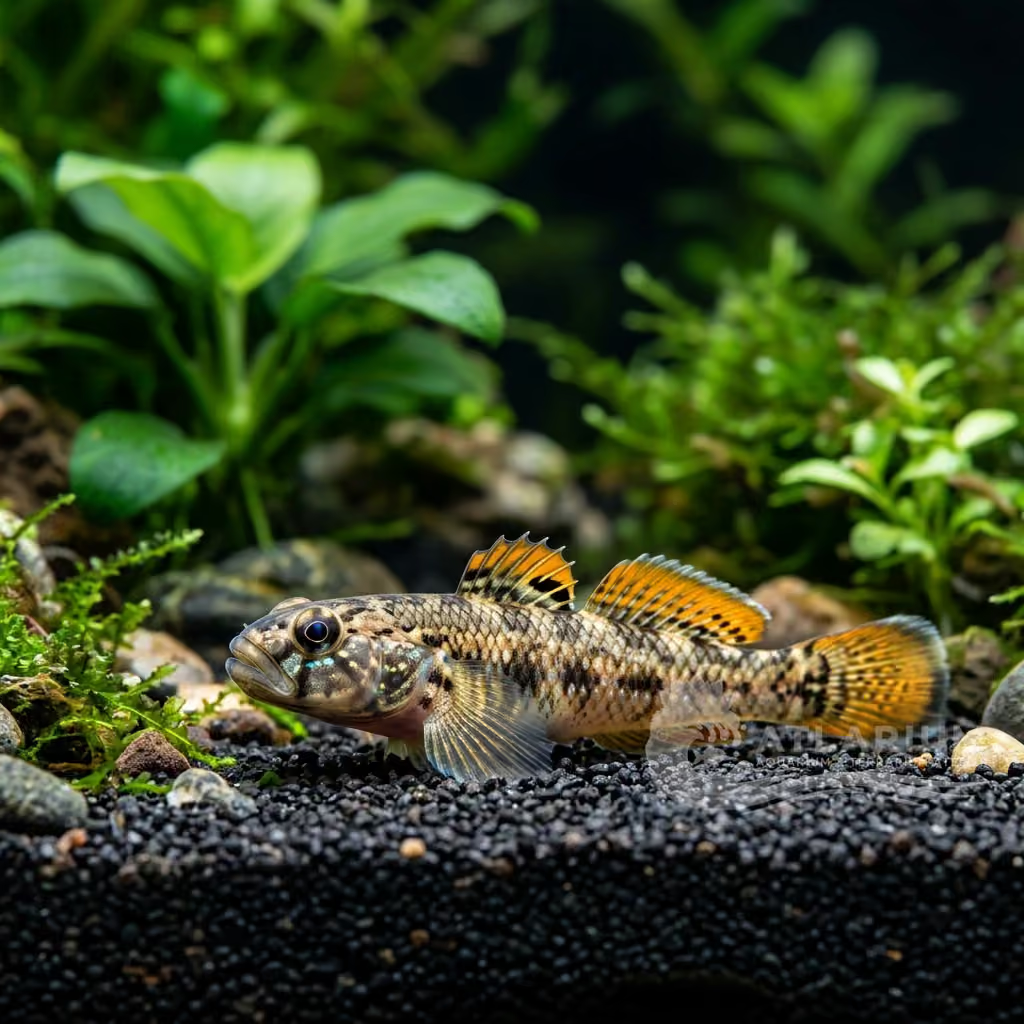
Coloration and Sexual Dimorphism: The body features a greyish-green or bluish base color, marked with dark oblique bands along the sides and scattered with brilliant metallic blue spots. The dorsal fin is highly ornate with blue spots and dark borders. There is no obvious external sexual dimorphism between males and females.

Care, breeding and tankmates
Aquarium Setup: A specialized paludarium or aquaterrarium is mandatory; this species cannot survive in a standard fully submerged aquarium. Provide a dominant land area composed of deep mud or fine wet sand sloping into a shallow brackish water section. Add smooth rocks and mangrove roots. The enclosure must be covered.
Diet and Feeding: Primarily a herbivore and detritivore. In the wild, it feeds by scraping diatoms, microalgae, and organic detritus off the mud surface using its modified teeth. In captivity, feed spirulina wafers, plant-based pellets, and fresh algae, supplemented with small frozen or live foods like brine shrimp and bloodworms.
Water Quality: The water section must be brackish, with specific gravity kept stable between 1.005 and 1.010 using quality marine salt. Maintain air and water temperatures between 25°C and 30°C (77-86°F). High air humidity (70-80%) inside the paludarium is critical and can be maintained by regular misting and keeping the tank sealed.
Compatibility and Cohabitation: Highly recommended for a species-only setup due to their unique habitat needs. In very large enclosures, they can cohabitate with fiddler crabs (Uca species) and other small, non-aggressive brackish water species. Avoid housing them with large predatory or territorial tankmates.
Aquarium Breeding: Breeding in home aquariums is virtually impossible. In nature, they dig deep, Y-shaped tunnels in the mud where spawning occurs in a dedicated air-filled chamber. The male actively transports air bubbles in its mouth into the chamber to oxygenate the eggs until they hatch.
Risks and Diseases: Dehydration is the greatest risk; if the air humidity is too low or the fish cannot access wet areas, it will dry out and die. They are excellent climbers and jumpers, capable of scaling damp glass surfaces, meaning the aquarium must have a completely sealed lid with no open gaps.

Geographic origin and distribution
Boleophthalmus boddarti is native to the western Indo-Pacific region, spanning the coastal mudflats of India, Bangladesh, Thailand, Indonesia, Malaysia, and Vietnam. It inhabits intertidal mudflats, brackish river estuaries, and mangrove swamps where tidal cycles regularly expose vast areas of nutrient-rich wet mud.
Origin
Tropical oceans and reefsSouth and Southeast AsiaEast Asia

Fish profile
- Temperament
- Semi-aggressive
- They are relatively peaceful for a mudskipper. They spend most of their time grazing rather than fighting. Males will defend their grazing patches with display behaviors.
- Diet
- Herbivore
- Unlike most mudskippers, they are primarily herbivorous. They graze on benthic algae and diatoms on the mud surface. Algae wafers and spirulina should be provided in captivity.
- Life expectancy
- 5 years
- Adult size
- 22 cm
- Sex ratio
- Group
- They can be kept in small groups if space permits. Males will display to each other but are less violent than carnivorous mudskippers. A large surface area minimizes conflicts.
- Feeding frequency
- 3-4 times daily
- They need constant access to algae-covered surfaces. Supplemental feeding with sinking vegetable pellets should happen daily. They use their specialized teeth to scrape food from the mud.
- Bioload
- Medium
- The bioload is moderate. They graze constantly and produce a steady stream of waste. Good water quality and clean substrate are important.
- Flow
- Strong
- Very low flow in the shallow water section is ideal. They inhabit calm, muddy tidal flats. Strong water movement will disrupt their grazing behavior.
- Jump risk
- Yes
- They can jump, though not as acrobatically as other mudskippers. They still require a secure lid to prevent accidents. Escapes are often fatal due to drying out.
- Reproduction
- Oviparous
- Captive breeding has not been documented. They construct complex polygonal territories in the mud for mating. These behaviors are impossible to replicate in standard aquariums.
- Compatibility & tankmates
- Species only
- They can be kept with peaceful mudskippers of similar size. Avoid aggressive or predatory species. They generally ignore other peaceful inhabitants.
- Tank level
- Bottom
- They are amphibious, spending significant time on wet mud. They do not need deep water. A sloping beach setup is the most appropriate environment.

Scientific Parameters & Models
FishBase
Window to the official scientific data of the species
FishBase v25.04Data synced on: 06/15/2026
- Trophic level
- 2 ± 0 se
- Resilience
- High (less than 15 months)
- Generation time
- 1.4 years
- Phylogenetic uniqueness (PD50)
- 0.5156
- Bayesian Length-Weight
- a = 0.00794, b = 2.93
- VulnerabilityLow vulnerability (17 / 100)

Related species
Recommendations grouped by close relatives, companion choices, and similar care.