Opportunistic aquatic pseudomonads
Pseudomonadaceae
Aquatic pseudomonads is a group-level label for Pseudomonas bacteria, not a species identification or a fish diagnosis. Some isolates are associated with bacterial septicaemia in stressed fish, but this condition cannot generally be distinguished from Aeromonas septicaemia by signs alone. A water, biofilm or lesion observation cannot establish cause. Use affected-tissue diagnostics, immediate husbandry correction and qualified fish-health advice; no universal antimicrobial, control or prevention regimen follows from the label.
Freshwater / Brackish / Marine
Gammaproteobacteria
Functional group
Low
Decomposer, Potential pathogen
Context-dependent
Not cultured
0.5 µm – 5 µm
Varies by taxon or life stage
1000× shows cells or aggregates but does not identify the taxon

Identity, habitat, and ecological role

Observation, culture, and ecological relationships

Identification and observation data
- Record type
- Functional group
- Aquatic pseudomonads is a functional-group entry for Pseudomonas bacteria, not a species record or a diagnosis. The group can help interpret a qualified report, but it cannot name an isolate, predict virulence or choose treatment from water, biofilm or a photograph. Pseudomonas is the genus stored for taxonomic navigation; no species-level scientific name is asserted. A fish-health conclusion requires the sample, affected tissue, method and clinical context to support it.
- Recognition confidence
- Low
- Identification confidence remains low for an aquarium observation. Ordinary microscopy may reveal bacterial cells but cannot distinguish Pseudomonas, a species, virulence or a causal role in a lesion. A causal conclusion needs affected-tissue sampling, pure-culture isolation, identification and interpretation against compatible signs and alternatives. Sample site and method matter. Do not promote a water result, a biofilm image or a group label into pseudomonosis or an antimicrobial decision.
- Biological group
- Gammaproteobacteria
- Pseudomonas is a bacterial genus in Pseudomonadaceae, Gammaproteobacteria and Pseudomonadales. This card retains a broader functional label because it does not assert one species or strain. The bacteria-and-archaea grouping helps microscopy navigation but does not establish a fish pathogen in a sample. Similar cell forms and environmental DNA overlap with other aquatic bacteria; taxonomic and disease claims must remain at the resolution the diagnostic method supports.
- Ecological functions
- Decomposer, Potential pathogen
- The documented roles are decomposer and potential pathogen, neither inferred from simple presence. Environmental pseudomonads can participate in organic-matter processing, while some isolates have clinical relevance in stressed fish. FAO describes Pseudomonas fluorescens and Pseudomonas putida as casual pathogens in fish stocks and notes the associated septicaemia generally cannot be distinguished from Aeromonas septicaemia. Link a role to a case only with appropriate tissue evidence and interpretation.
- Aquarium impact
- Context-dependent
- Impact is context dependent. An environmental detection can be ordinary, whereas compatible disease in fish requires timely diagnostic attention. Stress, poor water quality, organic loading, handling, temperature change, hypoxia and trauma may predispose hosts but do not identify the agent. The group label does not establish contagion, a named disease or a medicine. Correct documented stressors, protect biosecurity and keep observed signs separate from a confirmed causal isolate.
- Culture and management
- Not cultured
- This group is not for home culture. Isolation of possible fish pathogens requires clean affected-tissue sampling, containment, pure-culture practice and qualified interpretation. Do not culture or exchange unknown bacteria from water, filters or lesions. Aquarium management should instead prioritize fish welfare, appropriate separation of suspect animals, dedicated equipment and water-quality correction. Laboratory culture is a diagnostic tool, not an aquarium treatment or propagation protocol.
- Typical size
- 0.5 µm – 5 µm
- The displayed 0.5–5 μm range is a broad bacterial-cell guide, not a species boundary or diagnostic measurement. Cell dimensions overlap among Pseudomonas and other aquatic bacteria and can vary with growth state and preparation. A cell in this range cannot by itself establish genus, infection or antimicrobial susceptibility. Record scale and preparation with the observation, then use validated culture and identification methods when a diagnosis is needed.
- Visible to the naked eye
- Varies by taxon or life stage
- Individual bacterial cells are not visible to the naked eye. Visible biofilm, cloudy water, a lesion or a fish response does not identify Pseudomonas. Record where and when a visible change occurs, the water values and recent stressors rather than treating surface appearance as proof. Such material can contain many organisms and nonliving debris. Tissue-based diagnostics are needed before associating a visible sign with a named bacterial disease.
- Useful starting magnification
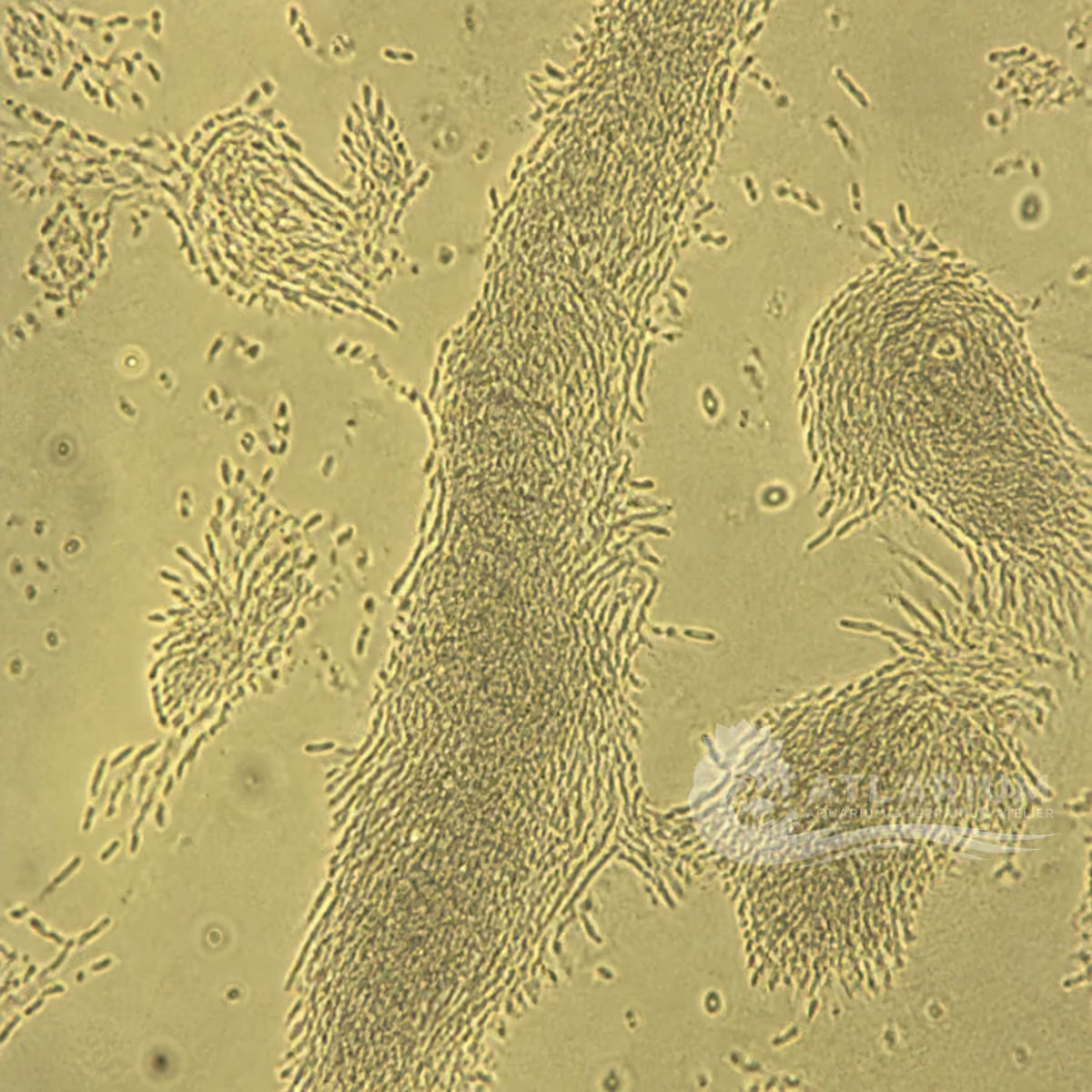
- 1000× shows cells or aggregates but does not identify the taxon
- Around 1000× with suitable stain can reveal bacterial cells, but it cannot confirm Pseudomonas, a species, virulence or causation in fish disease. Record the magnification, stain, sample site and fish signs so a diagnostician can interpret the result. Affected-tissue culture, identification and susceptibility testing are required before an antimicrobial decision. Microscopy is an observation step, not a treatment trigger or a substitute for the host and system context.

Links to Aquarium SOS

Microworld ecological network
Links based on documented kinship, food webs, biofilms, and ecological functions.