Detritus worms (aquatic oligochaete operational group)
Più famiglie
In sediment, filter debris or a neglected corner, a pale thread may be an ordinary member of the benthos rather than a named pest. “Detritus worms” is an operational aquarium label for observations that can include several aquatic worm taxa. Record the microhabitat and the animal’s form before assigning identity or meaning; a change in abundance is a prompt to inspect local resources and conditions, not a diagnosis of pollution or fish disease.
Water type
Freshwater / Brackish / Marine
Biological group
Più famiglie
Record type
Functional group
Recognition confidence
Low
Ecological functions
Decomposer, Biological indicator
Aquarium impact
Context-dependent
Culture and management
Passive aquarium growth
Typical size
500 µm – 50,000 µm
Visible to the naked eye
Varies by taxon or life stage
Useful starting magnification
20× to begin observation

Identity, habitat, and ecological role
Identity and taxonomic resolution: “Detritus worms” is an operational aquarium label, not a species, genus, family or formal ecological guild. It may include free-living aquatic oligochaetes and other worm-like animals seen around detritus, while similar threads can be unrelated organisms or non-living material. Tubifex tubifex and Branchiura sowerbyi are named aquatic oligochaetes with separate species profiles; neither name can be assigned from this label.
Morphology and dimensions: The catalogue’s 500–50,000 μm interval is intentionally an observation guide for a mixed label, not a measurement for one species. Record an intact specimen with a scale, its segmentation or setae if visible, diameter, colour, motion, and whether it is free-living or attached. Nematodes, leeches, insect larvae, flatworms and threadlike debris remain look-alikes; posture or a blurred photograph cannot settle the distinction.
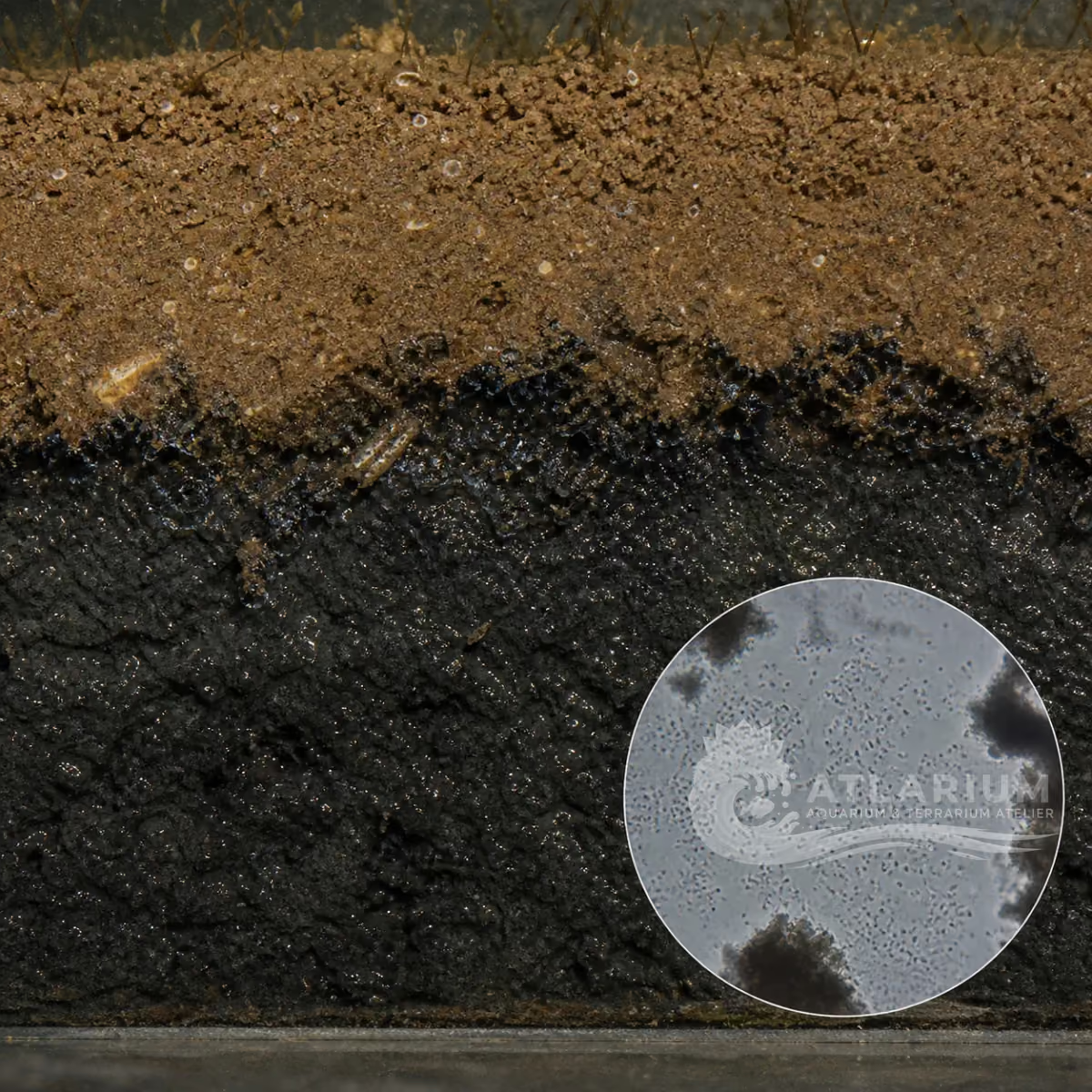
Habitat and microhabitat: The group is placed as benthic microfauna because observations commonly come from sediment, trapped detritus, plant bases and filter-associated material. Those sites are not interchangeable: particle size, oxygen, flow, organic input and salinity select different communities. Named oligochaetes can be freshwater benthic deposit feeders, but that example does not make every detritus-associated worm freshwater or assign one water type to an unknown sample.
Role in the food web: Some named aquatic oligochaetes feed in or rework sediment, and endobenthic oligochaetes are studied as a defined test group. That supports a possible decomposer and local-indicator role for a documented specimen, not a claim that every visible worm has the same diet or environmental meaning. Abundance can respond to material, oxygen, flow, predators and disturbance together. A count therefore cannot prove pollution, poor care, or a fish-health cause.

Observation, culture, and ecological relationships
Where to look and how to sample: Inspect and record the exact place where the animals occur: the surface of substrate, a filter compartment, plant bases, hardscape seams or suspended debris. Take a small intact sample with a clean pipette or spoon and label its site; keep separate sites separate. A free-water drop, a scrape and a sediment sample retain different fractions, so an unstructured sample cannot establish abundance in the benthos or prove absence elsewhere.
How to observe and identify: Observe living material first with side lighting and low magnification, then increase magnification only to document useful characters. Named species profiles use specific characters; a household image rarely supplies enough evidence for that resolution. Stop at the functional group when the diagnostic features are not available. Do not convert a visual match into a parasite name, a disease conclusion or a treatment choice.
Presence and meaning in the aquarium: Compare the same sites over time instead of treating one count as a verdict. A local increase may coincide with retained food, fine debris, changed circulation, substrate disturbance or reduced predation, but it does not reveal which factor caused it. Inspect feeding, detritus retention, filtration, flow and measured water conditions in parallel. Fish distress, lesions or mortality need their own assessment because a visible free-living worm does not establish the cause.
Culture, maintenance or use: This record describes observation and local habitat management, not a culture recipe. Research and aquaculture discussion of named oligochaete feed organisms applies to those named organisms and controlled production contexts. An unidentified aquarium mixture has unknown taxonomy, associated organisms and history. Do not move it or its substrate between systems as live feed, a starter culture or a cleanup crew.
Documented ecological relationships: The documented direction here is conditional: a named benthic deposit feeder can use sediment-associated material and rework sediment; it can also be prey within a local food web. A USGS profile discussing one named oligochaete’s particular disease context is not evidence that a mixed detritus-worm sighting is a vector. Keep organism identity, host, substrate, water type and observed interaction together before asserting an ecological link.
Risks, biosecurity and limits: Do not use the group label to diagnose a fish pathogen, zoonosis or harmlessness. This card gives no chemical, salinity, temperature, predator, eradication or transfer protocol. Seek aquatic veterinary or laboratory support for progressive illness, unusual organisms attached to animals, a quarantine decision, or a finding that would change animal movement. Uncertainty is a reason to improve observation, not to apply indiscriminate control.

Geographic origin and distribution
Origin
Selective breeding and cultivarsNorth America

Identification and observation data
- Record type
- Functional group
- This is a functional-group record for detritus-associated aquatic worms, not a taxon. The label is retained because it describes a common aquarium observation, while the card explicitly withholds species, family, origin, parasite status and husbandry value unless a specimen and its context support them.
- Recognition confidence
- Low
- Confidence from a casual image is low. Useful evidence includes a scale, live movement, body segmentation or setae where visible, the exact substrate or filter site, salinity context, and whether the animal is attached. Similar-looking worms, larvae and debris can overlap, so retain the operational group name when those characters are incomplete.
- Biological group
- Più famiglie
- The card is placed with benthic microfauna because the observation commonly concerns sediment, detritus and filter-associated microhabitats. This is ecological placement rather than a biological classification. Named freshwater oligochaetes illustrate one possible component, but fresh, brackish and marine observations should not be merged into one taxon or population.
- Ecological functions
- Decomposer, Biological indicator
- The supported roles are decomposer and indicator, both conditional on the organism and microhabitat. Some named oligochaetes deposit-feed and rework sediment, yet a mixed observation cannot establish one diet or process. Abundance can flag a local habitat change, but it is not a standalone test of pollution, water quality or animal health.
- Aquarium impact
- Context-dependent
- Impact is context-dependent. A small local population may be part of ordinary benthic processing, while a visible increase can justify checking resources, substrate and circulation. It does not prove poor care or disease, and a free-living sediment observation must not be relabelled as a gill, skin or intestinal parasite without contextual examination.
- Culture and management
- Passive aquarium growth
- The appropriate mode is passive observation and habitat management, not cultivation. Named oligochaete production and live-feed literature does not validate moving an unknown aquarium mixture. Keep animals and their substrate in their source system unless a properly identified, purpose-specific protocol provides a reason to do otherwise.
- Typical size
- 500 µm – 50,000 µm
- The 500–50,000 μm range is deliberately broad because the label can cover more than one taxon, stage and body posture. It helps locate a specimen but is not a species character. Measure an intact animal with a scale and state whether its full body, a contracted body or only a visible portion was measured.
- Visible to the naked eye
- Varies by taxon or life stage
- Some detritus-associated worms are visible to the naked eye when they emerge from glass-adjacent substrate or move through debris. Visibility does not make identification reliable: thin larvae, flatworms, nematodes and non-living threads can look similar. Low-power observation documents useful form, while microhabitat remains essential to interpretation.
- Useful starting magnification
- 20× to begin observation
- Begin around 20× to locate the entire animal and its relation to sediment or filter debris, then use higher magnification for segmentation, setae and body ends when visible. More magnification alone does not identify a species. Several intact specimens, scale and specialist examination may still be needed when the distinction affects health, quarantine or movement.

Links to Aquarium SOS

Microworld ecological network
Links based on documented kinship, food webs, biofilms, and ecological functions.