Epistylis spp.
Epistylis
Epistylis is a genus of sessile peritrich ciliates that forms stalked colonies and may attach to fish skin or gills as an epibiont. It filters suspended microorganisms rather than feeding on the host, so a visible colony can be clinically relevant without proving primary causation. Diagnose from suitable live material and interpret the finding with host signs, water conditions and differentials. There is no universal home-aquarium treatment regimen.
Freshwater / Brackish
Oligohymenophorea
Genus
Low
Grazer, Potential pathogen
Context-dependent
Not cultured
No value supported by reliable evidence
Yes, as an individual
No universal threshold supported by reliable evidence

Identity, habitat, and ecological role

Observation, culture, and ecological relationships

Geographic origin and distribution
Origin

Identification and observation data
- Record type
- Genus
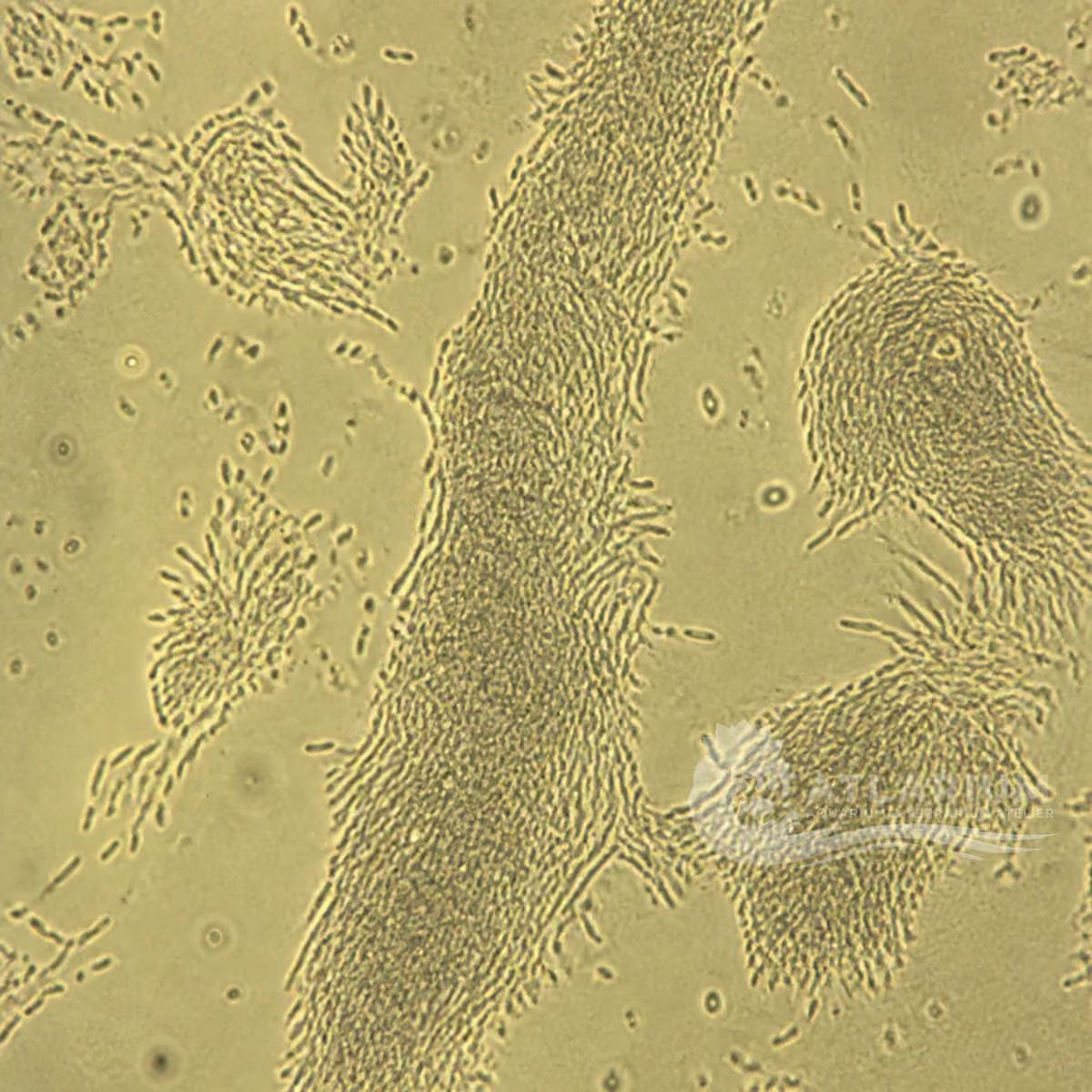
- Epistylis can be identified at genus level; this is not a species diagnosis or a named fish syndrome. Examination of live stalked colonies can support that genus-level identification, but cannot distinguish every similar sessile peritrich. Assigning a species and concluding disease causation require evidence beyond a photograph or a single visual observation.
- Recognition confidence
- Low
- Identification confidence is low from household images. A fresh wet mount of the relevant skin or gill material can document stalked zooids and colony form, but visible growth may overlap with other sessile ciliates, biofilm, fungi-like material or debris. Preserve the host, sample site, scale and live behaviour; seek qualified diagnostic assessment if the result changes health management.
- Biological group
- Oligohymenophorea
- Epistylis is a sessile peritrich ciliate among the protists and infusoria. That broad biological grouping does not replace a specimen-level identification. The documented fish-health context is freshwater, and a genus-level identification does not make observations from different hosts, systems or salinities interchangeable. No single geographic origin can be assigned because the genus-level fish-health evidence does not establish one defensible native origin.
- Ecological functions
- Grazer, Potential pathogen
- Epistylis can act as a microbial grazer because attached zooids filter bacteria and small microorganisms from the water column. It can also be clinically relevant on fish, and may therefore act as a context-dependent pathogen. Attachment alone does not prove parasitism or primary disease: colony burden, tissue condition, host status and concurrent agents remain decisive.
- Aquarium impact
- Context-dependent
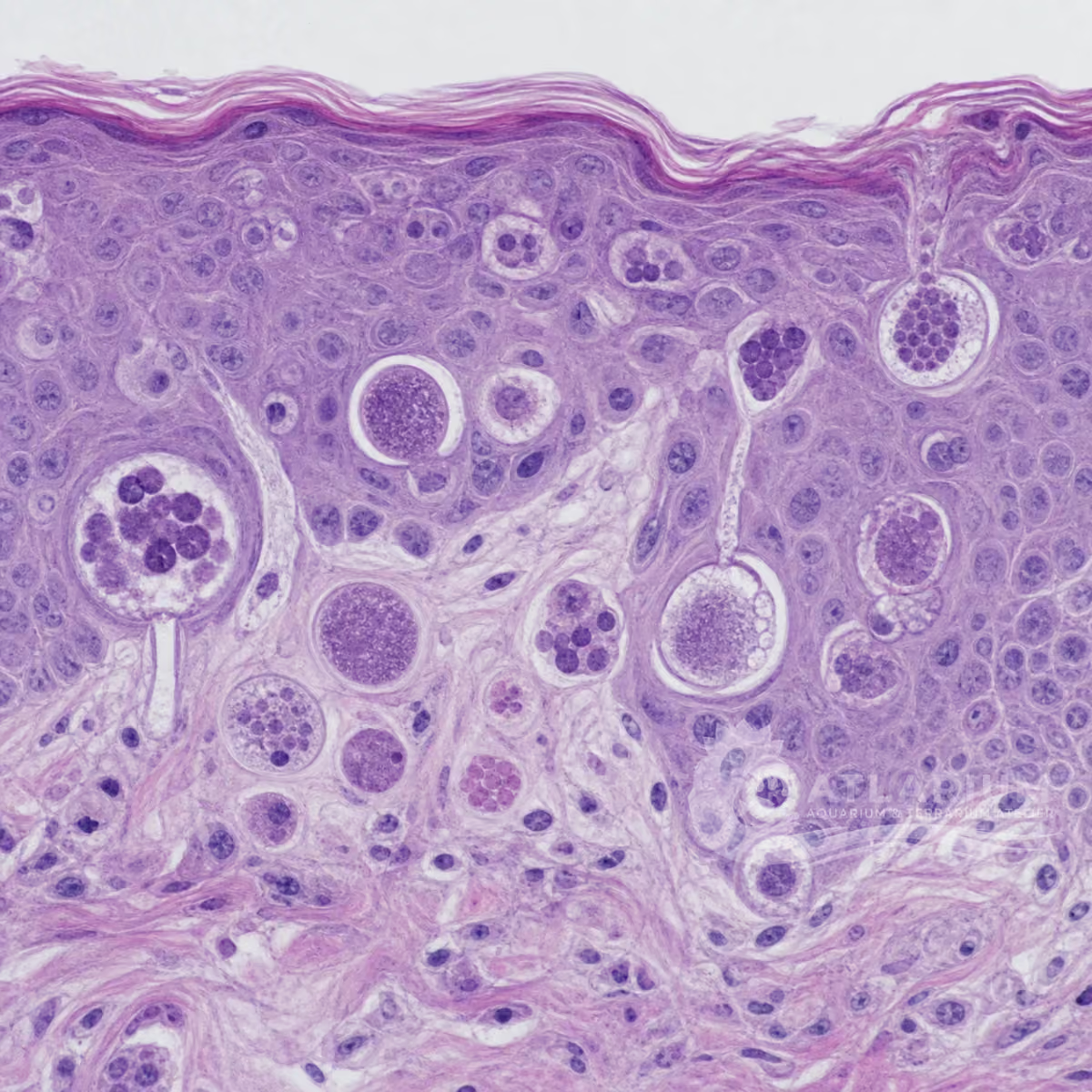
- A colony on glass or equipment can be an ecological observation. Colonies on skin or gills warrant prompt diagnostic assessment of the affected tissue and host, especially when tissue changes or respiratory signs are present, but they do not prove that Epistylis is the primary cause. Review host signs, organic load, water quality and differential diagnoses before selecting any intervention or drawing a causal conclusion.
- Culture and management
- Not cultured
- Epistylis is not offered for home culture. No propagation recipe, starter culture, transfer method or household containment protocol is provided for a host-associated colony. Preserve diagnostic context instead: document the relevant live sample and associated conditions, then seek qualified fish-health assessment when the finding is linked to progressive disease or mortality.
- Typical size
- No value supported by reliable evidence
- Size is an observation aid, not a genus-level health diagnosis. Colony appearance can vary with species, preparation, contraction, attachment and which structure is measured. Document a scale with fresh material and do not use a size estimate alone to identify Epistylis, determine whether a colony is clinically important, or select treatment or control. The reviewed sources do not establish a universal 30–400 µm interval for this genus.
- Visible to the naked eye
- Yes, as an individual
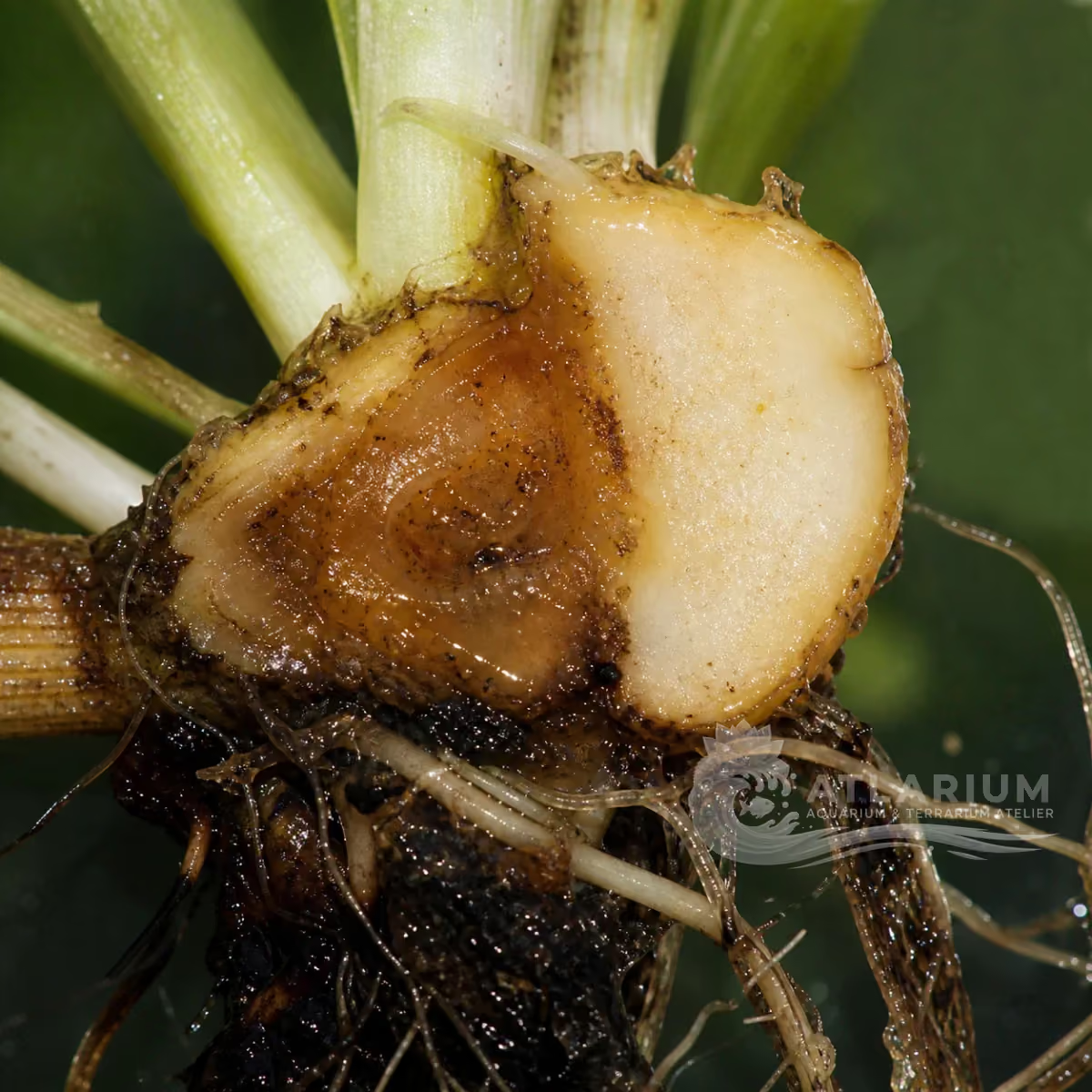
- Dense host-associated colonies can be noticed as a pale or grey growth, while diagnosis depends on magnified live material. A visible tuft is not specific: biofilm, fungi-like growth, other ciliates and debris can look similar. Use the visible finding to direct a wet-mount examination and host assessment, not to label a named infection or choose a chemical response.
- Useful starting magnification
- No universal threshold supported by reliable evidence
- Use magnification sufficient to inspect live colony form, stalk behaviour and zooids in a fresh wet mount; no single magnification establishes the genus or clinical cause. The required detail depends on sample quality and the differential. Microscopy shows morphology, whereas a disease decision also needs host signs, tissue context and, when indicated, qualified fish-health assessment. The reviewed sources do not establish 100× as a universal diagnostic magnification.

Links to Aquarium SOS


Microworld ecological network
Links based on documented kinship, food webs, biofilms, and ecological functions.