Tetrahymena ciliates
Tetrahymena
Tetrahymena is a genus of small, free-living freshwater ciliates. Some species, notably T. corlissi, can become invasive opportunists in debilitated fish, particularly in organically rich systems. A free-swimming ciliate or a white lesion does not identify the genus by itself. Confirm a relevant fresh wet mount, distinguish external from internal involvement and address sanitation, organic loading and host condition alongside any veterinary decision.
Water type
Freshwater
Biological group
Oligohymenophorea
Record type
Genus
Recognition confidence
Low
Ecological functions
Grazer, Potential pathogen
Aquarium impact
Context-dependent
Culture and management
Not cultured
Typical size
30 µm – 80 µm
Visible to the naked eye
No, not as an individual
Useful starting magnification
400× to begin observation

Identity, habitat, and ecological role
Identity and taxonomic resolution: Tetrahymena is retained at genus level because species differ in ecology and pathogenic potential. Free ciliates occur in organic-rich water, while some invade compromised fish; movement or a lesion proves neither genus nor cause. Tetrahymena must also be distinguished from marine scuticociliates such as Uronema and Miamiensis. A finding needs fresh tissue, morphology and host context.
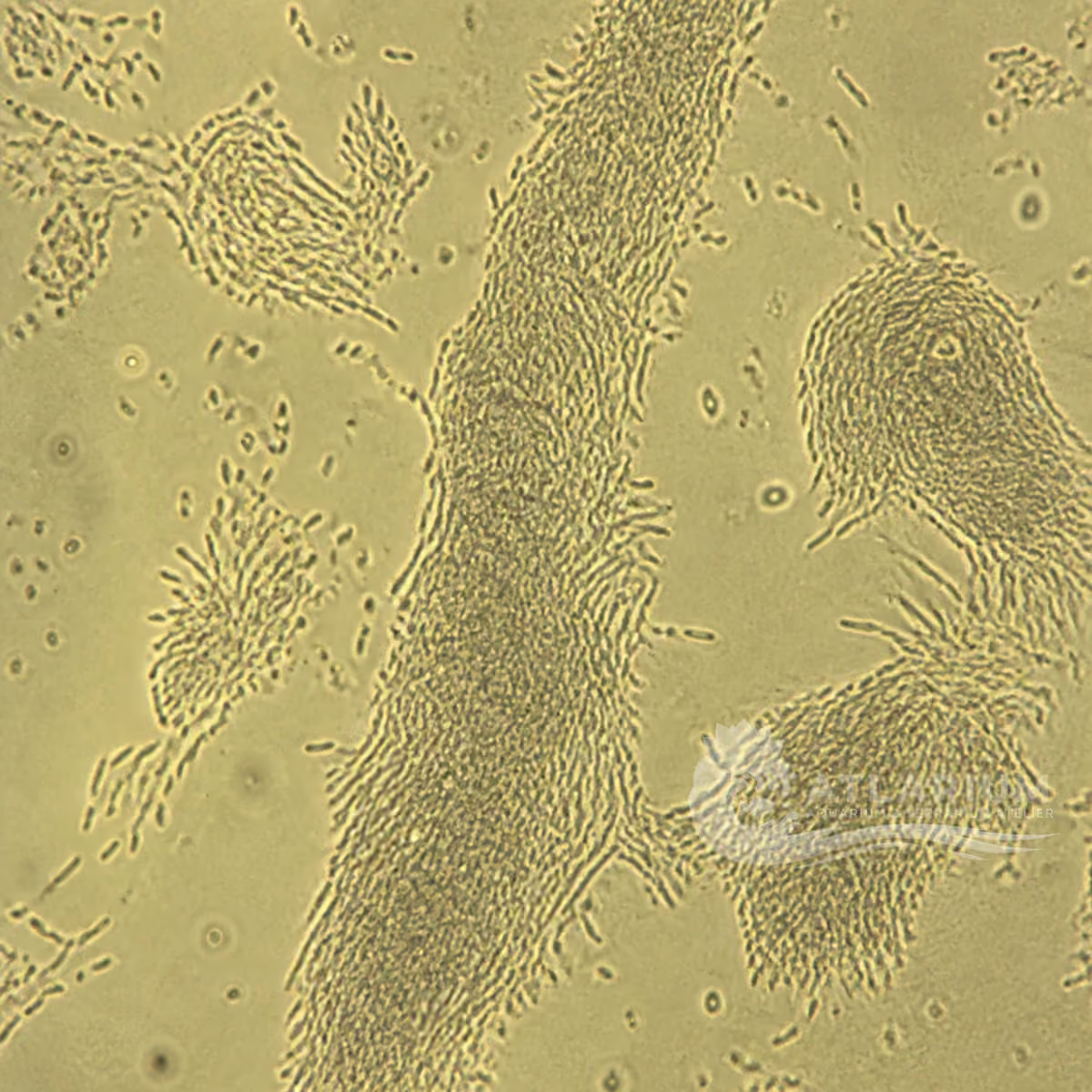
Form, movement and dimensions: Tetrahymena spp are small motile ciliates with longitudinal ciliary rows. This card retains a broad 30–80 μm observation range, while veterinary descriptions of some fish-associated forms are smaller. Fresh samples and a scale matter because mucus, debris and other ciliates resemble candidates. Record movement, site and whether the organism is external or in a lesion. Size and motion can orient a differential but cannot establish tissue invasion, species or disease severity.
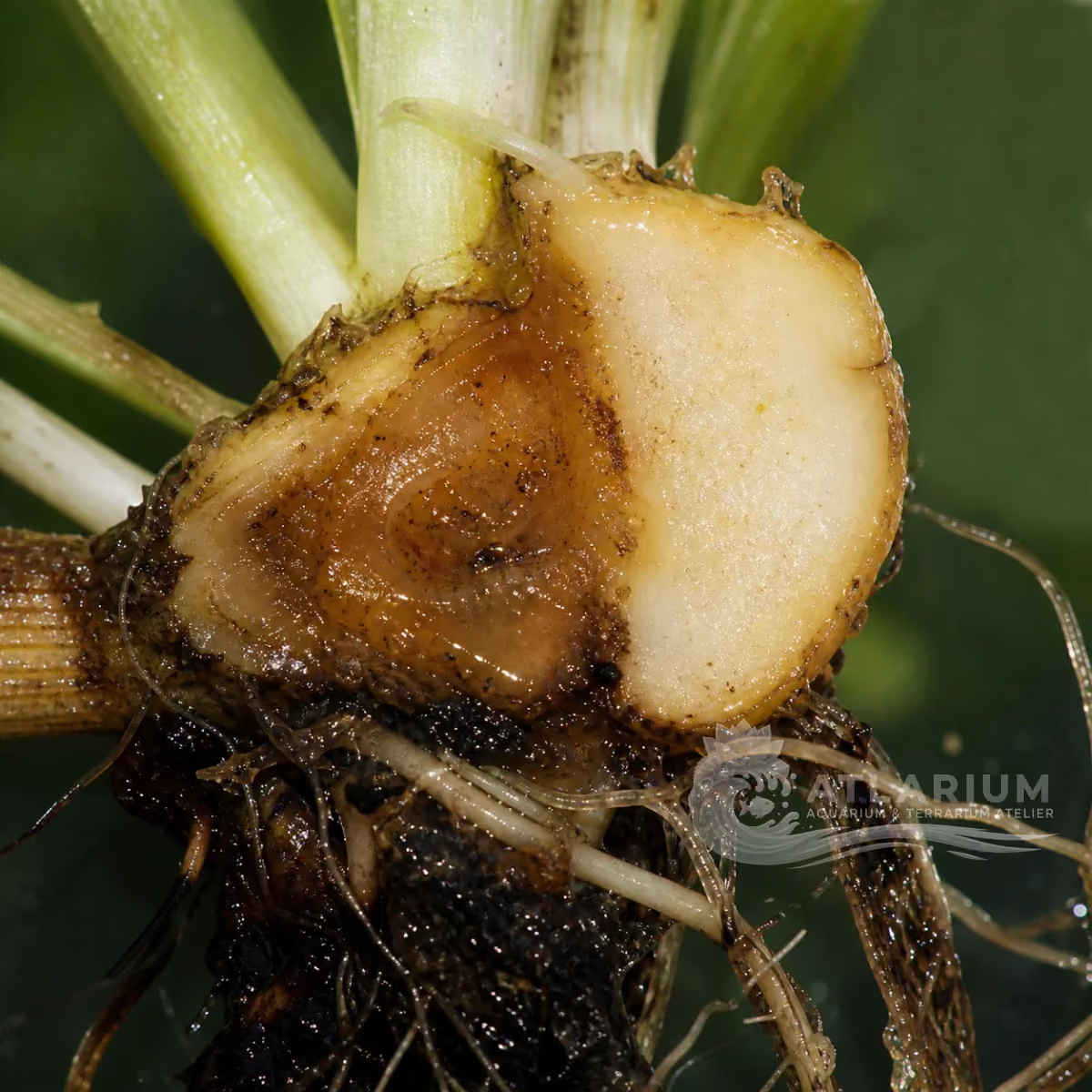
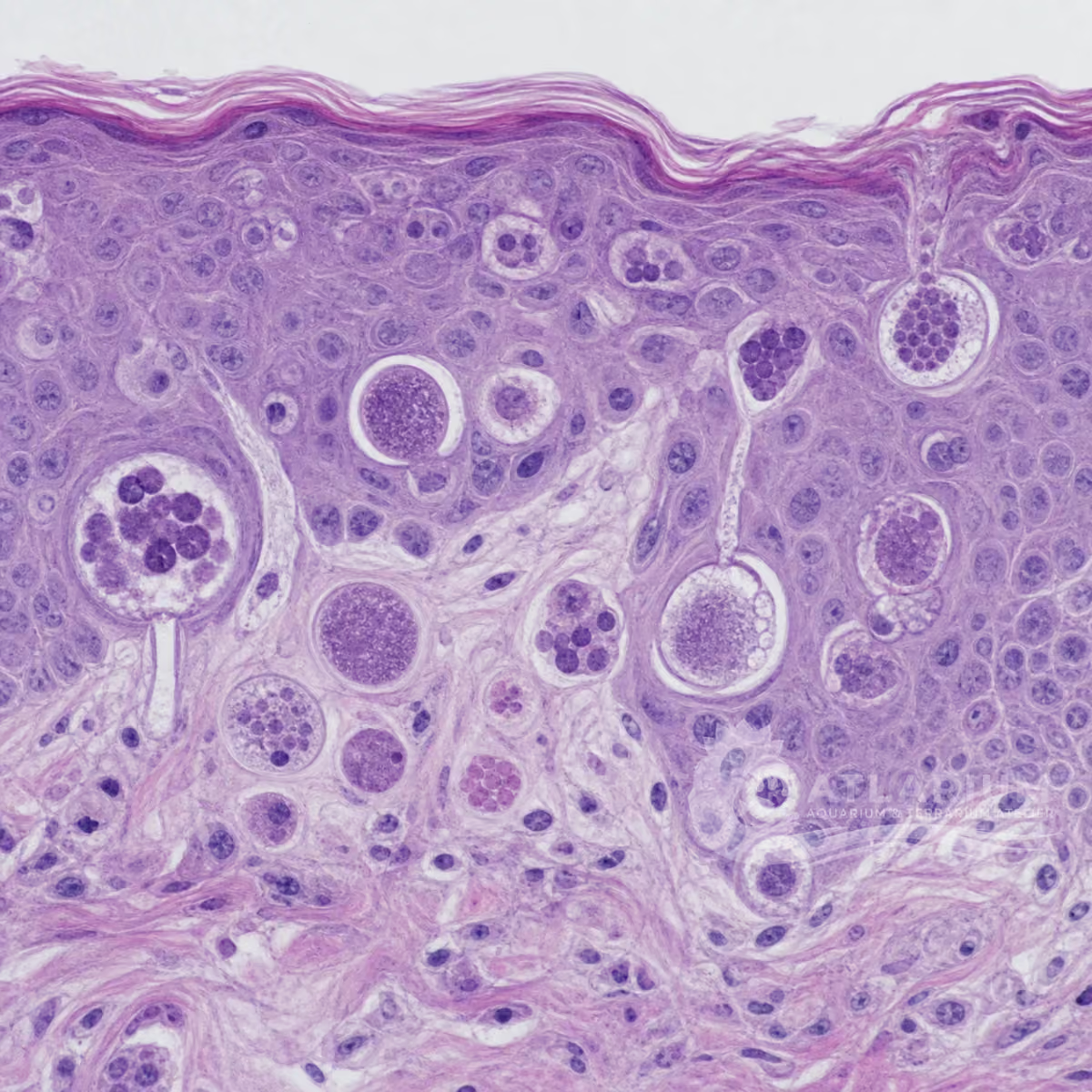
Host sites and clinical context: In fish, Tetrahymena may be found on the skin, gills or fins and, when infection becomes invasive, within deeper sites such as muscle, the coelom and ocular fluids. Compatible but non-specific signs include excess mucus, flashing, ulcerated skin, white nodules, ocular lesions and exophthalmos. External ciliates often occur on moribund fish in organic-rich systems. Internal disease has a different prognosis; surface findings cannot explain every eye or internal problem.
Burden, environment and relevance: Organic loading, poor sanitation, crowding and host debility can favour opportunistic ciliate problems. Before linking a microscopic finding to disease, record water quality, stocking, feeding, detritus, affected taxa, sampled tissue and sign trends. A few free-living cells in water are not the same as invasive infection. Limit transfers, remove excess organics and seek assessment for progressive or ocular disease; improvement of external signs does not rule out internal invasion.

Observation, culture, and ecological relationships
Where to look and how to sample: Sample the exact external lesion, gill, fin, eye fluid or other affected tissue with host context, not only nearby water. Record fish species, date, tank, stocking, water quality, feeding, organic debris and recent losses. Prepare fresh wet mounts with dedicated tools. A water-column sample can show free ciliates but does not establish invasion. Negative or external samples cannot exclude focal internal disease; positives do not generalize to every fish.
How to observe and identify: Begin at low power, then use about 400× to inspect small motile ciliates across several fields and relevant tissue sites. Compare ciliary pattern, shape, behavior and associated damage with other ciliates and debris. Wet mounts support suspicion when tissue and signs agree, but identity or internal disease may require professional review. Stop at the supported level instead of calling every teardrop-shaped ciliate Tetrahymena.
Immediate management and containment: Isolate affected fish or the system as safely practical and do not share water, nets, filter media, plants or equipment. Reduce avoidable handling, remove dead fish promptly and review oxygenation, ammonia, nitrite, temperature, feeding, sanitation, stocking and accumulated organic material. These steps limit exposure but do not turn an environmental observation into confirmed invasion.
Treatment and professional limits: Veterinary guidance distinguishes external Tetrahymena infestation, which may respond to chemical treatment plus sanitation, from established internal infection, for which no effective treatment is documented. Product choice, tolerance, tissue site and diagnosis matter. This card gives no chemical name, dose, duration or combination regimen. Use only authorised or veterinary-directed treatment for confirmed external disease; it may not reach internal or ocular invasion.
Control, follow-up and prevention: Reassess the fish, water quality, organic material and relevant wet mounts after management or treatment as directed by a clinician. Persistent signs warrant reassessment of site, burden, co-infections and alternatives. Prevention emphasizes quarantine and observation of new fish, dedicated tools, sanitation, appropriate stocking and control of excess organics. Preventive medication without diagnosis is not a substitute for correcting the conditions that favour opportunistic ciliates.
Risks, biosecurity and limits: Do not diagnose Tetrahymena, tissue invasion or a contagious outbreak from a photograph alone. Do not transfer suspect fish or material between systems, and use product safety measures if a professional directs treatment. Seek aquatic-veterinary or laboratory input for eye involvement, ulcers, rapid decline or mortality. Genus, species and external-versus-internal status remain conditional until evidence and alternatives agree.

Geographic origin and distribution
Origin
Cosmopolitan or introducedNorth America

Identification and observation data
- Record type
- Genus
- This is a genus-level record for Tetrahymena. Free-living species and fish-associated opportunists do not all have the same host range or invasive potential. A moving small ciliate, a white lesion or an organic-rich aquarium does not establish the genus or a disease cause. The record therefore requires a relevant fresh tissue finding and retains species certainty only when specialist evidence supports it.
- Recognition confidence
- Low
- Microscopy of a fresh wet mount can support a careful ciliate or Tetrahymena suspicion, but small motile forms overlap with mucus, debris and other ciliates. Inspect several fields, record the tissue site and connect morphology to host signs. External surface observation cannot exclude focal internal disease. Histology, culture, molecular work or veterinary assessment may be needed when lesions, eye involvement or mortality make the distinction consequential.
- Biological group
- Oligohymenophorea
- Tetrahymena is a ciliate within Oligohymenophorea. The protist-and-infusoria group label provides functional navigation, not a synonym for every motile microorganism. Its cilia and free-living ecology help explain its occurrence in organic-rich water, while selected species can become invasive opportunists. The label must not merge freshwater Tetrahymena with marine scuticociliates or turn a broad group observation into a species diagnosis.
- Ecological functions
- Grazer, Potential pathogen
- The recorded roles are grazer and potential pathogen. As free ciliates, members of the genus participate in microbial food webs; in certain host and environmental circumstances some forms can invade fish tissue. The shift from ecological presence to clinical relevance depends on species, tissue site, burden, host condition and sanitation. A water finding alone does not establish infection, and a lesion does not identify the responsible ciliate without compatible evidence.
- Aquarium impact
- Context-dependent
- The impact is context-dependent. A few free ciliates may be part of ordinary micro-life, whereas excessive organic matter, host debility and tissue invasion can create serious fish-health risk. Action should focus on relevant samples, isolation, sanitation and water-quality review. Do not infer pathology or safety from abundance alone, and do not use a general ciliate label as a reason for indiscriminate chemical treatment.
- Culture and management
- Not cultured
- No culture or propagation method is provided because Tetrahymena includes fish-associated opportunists and unknown aquarium isolates have biosecurity significance. Diagnostic handling belongs with qualified veterinary or laboratory services. Do not transfer suspect fish, water, lesions, filter media, plants or shared tools between systems. A casual observation should be documented and contained, not grown, exchanged or used as starter material.
- Typical size
- 30 µm – 80 µm
- The 30–80 μm range is a broad observation guide for Tetrahymena-like forms in this catalogue, not a species-level measurement. Fish-associated forms described in veterinary references can be smaller, and size depends on preparation and the organism actually present. Use a calibrated scale, preserve fresh material and state the tissue site. Dimensions alone cannot distinguish a ciliate, prove invasion or determine clinical significance.
- Visible to the naked eye
- No, not as an individual
- Individual Tetrahymena cells are not identifiable with the naked eye. Mucus, a white nodule, ulcerative skin change or eye swelling may be visible clinical clues, but none is a direct view of a named organism. Relevant fresh wet mounts are needed to observe candidate ciliates, and confidence depends on morphology, tissue, burden and host context. Visible changes must remain open to differentials until examined.
- Useful starting magnification
- 400× to begin observation
- Begin at low power to find relevant fresh tissue, then use around 400× to inspect motile ciliates, ciliary pattern and associated damage across several fields. This supports a presumptive orientation when morphology and host signs agree. It does not resolve all species or reliably determine internal invasion. Histology, culture, molecular methods or professional assessment may be required for diagnosis and treatment decisions.

Links to Aquarium SOS

Microworld ecological network
Links based on documented kinship, food webs, biofilms, and ecological functions.