Ichthyobodo necator
Ichthyobodo necator
Ichthyobodo necator, formerly Costia necatrix, is a very small flagellated ectoparasite of fish skin and gills. The name is retained at species level only with diagnostic limits: related Ichthyobodo lineages can differ, and compatible signs are not confirmation. Fresh skin or gill wet mounts, prompt microscopy and fish-health context guide diagnosis. Treatment, control and prevention are documented but remain conditional on the host, system and approved veterinary product.
Water type
Freshwater
Biological group
Kinetoplastea
Record type
Species
Recognition confidence
Medium
Ecological functions
Parasite, Potential pathogen
Aquarium impact
Potentially harmful
Culture and management
Not cultured
Typical size
8 µm – 20 µm
Visible to the naked eye
No, not as an individual
Useful starting magnification
400× to begin observation

Identity, habitat, and ecological role
Identity and diagnostic scope: Ichthyobodo necator is a flagellate parasite associated with ichthyobodosis in freshwater and marine fish. Costia necatrix is a historical search name. The genus contains related lineages, so a small external flagellate is not automatically I. necator. Wet-mount findings provide diagnostic context, but identification and the clinical conclusion must remain proportionate to the sample, host tissue and evidence available.
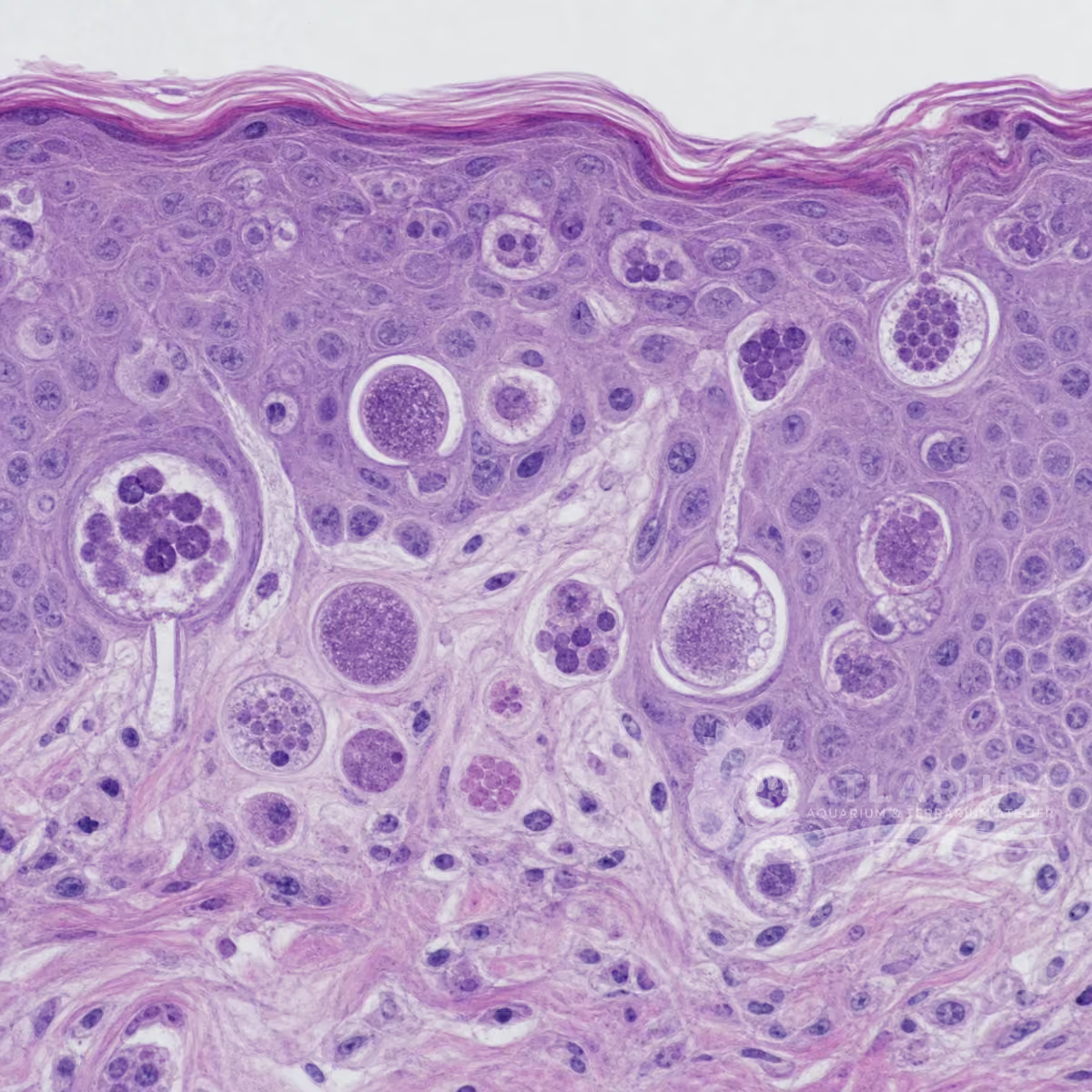
Host tissue and clinical context: External Ichthyobodo can involve skin, gills and fins. Excess mucus, grey-blue skin, flashing, lethargy, respiratory signs and losses may be compatible, but none is a species fingerprint. Interpret signs with the affected fish, burden, tissue findings, onset and measured water conditions. Other parasites, bacterial disease, injury and water-quality stress remain real alternatives; visible change alone cannot establish causation.
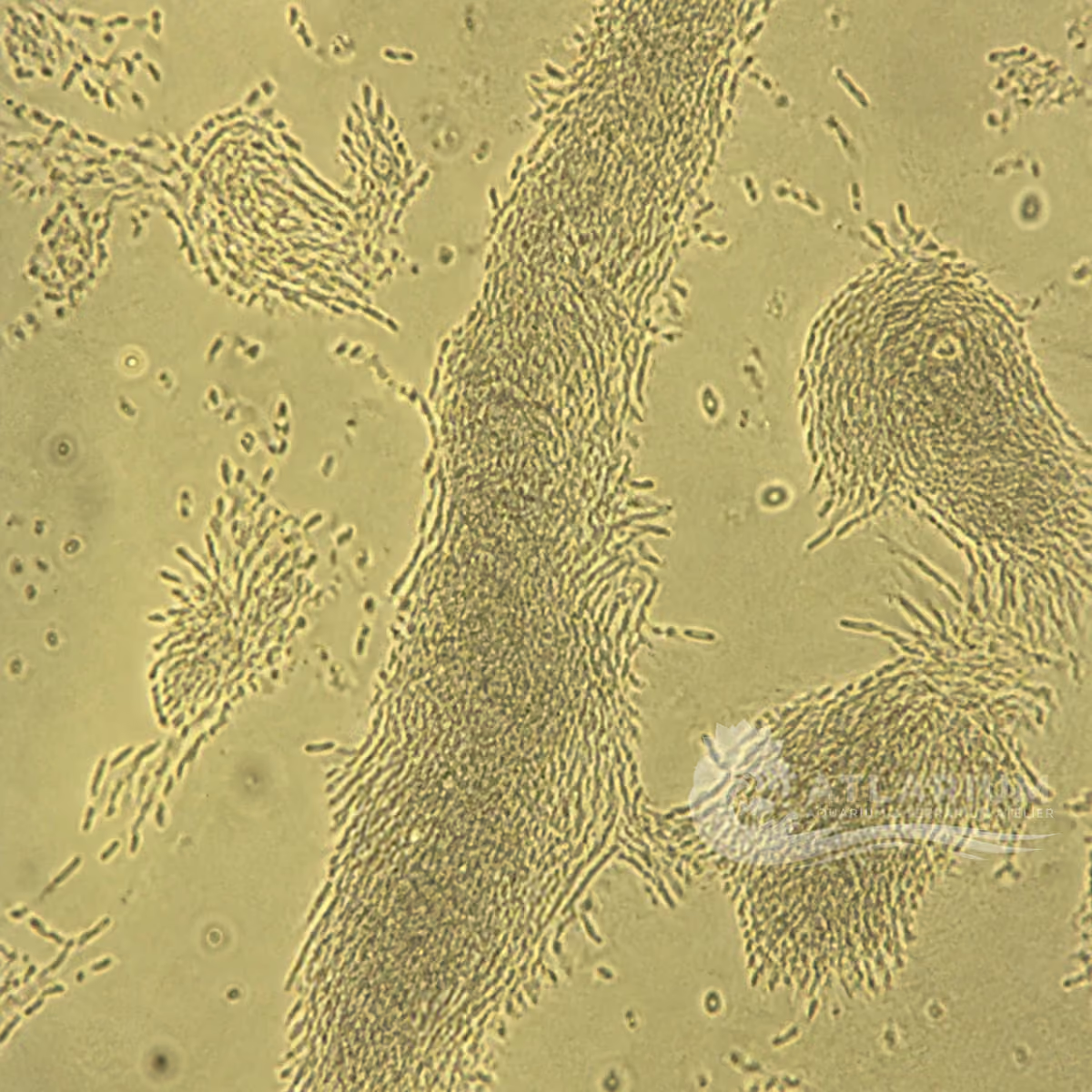
Limits of prompt fresh wet-mount examination: Examine suitable skin or gill material promptly as a wet mount and retain the sample method with the result. Small moving flagellates, including flickering movement near 400×, can support a compatible finding but do not independently prove species or infestation. Delay, drying, compression, sample site and preparation change what is visible. A photograph, water sample or single cell cannot replace appropriate examination when consequences are clinical.
Evidence and treatment limit: The evidence supports a fish-health assessment, not a universal medicine rule. Recent phylogeny supports caution around a multi-species Ichthyobodo complex; compatible wet-mount evidence can guide further assessment while strain, burden and causation remain unresolved. Formalin, copper sulfate, potassium permanganate or salt are documented conditional options, not a product choice, dose, schedule, host-safe plan or prophylactic treatment.

Observation, culture, and ecological relationships
Case sampling and documentation: For compatible skin or gill disease, obtain fresh material from the affected fish and examine a wet mount promptly. Note host, tissue, signs, onset, mortality trend, recent transfers and measured water conditions before changing several variables. A water drop and tissue wet mount answer different questions. Keep tools separate and retain the sampling method with the result; a negative, delayed or poor sample does not prove absence of infection.
Diagnosis and differentials: Read the wet mount with burden, host signs, tissue distribution and the quality of preparation. Small moving flagellates may be compatible with Ichthyobodo, but other external parasites, bacterial conditions, trauma and water-quality injury can produce overlapping signs. Do not name I. necator from a photograph, water sample, movement pattern or single cell alone. Escalate to qualified fish-health examination when findings will direct treatment or mortality decisions.
Immediate support and containment: While the diagnostic question is resolved, correct documented husbandry failures and support oxygenation without treating either step as proof of a parasite. Limit movement of suspect fish where appropriate, avoid transfers from the system and use dedicated nets, containers and tools. Note changes in signs, gill function and losses. Progressive respiratory disease, marked losses or worsening tissue signs require prompt qualified assessment rather than repeated visual checks.
No propagation or home culture: Ichthyobodo is not a culture organism and no propagation method is provided. Do not maintain, multiply, share or transfer suspect skin, gill, water, plant or filter material between aquariums. Contain diagnostic material, avoid aerosol exposure and protect broken skin and mucosa during handling. Controlled isolation and any laboratory work belong to qualified facilities with suitable fish-health, biosafety and disposal practice.
Treatment boundary: After a compatible diagnosis and correction of underlying conditions, veterinary references list formalin, copper sulfate, potassium permanganate and salt as conditional options. They do not establish one product, dose, duration, schedule, host-safe choice or prophylactic medication. Any selection requires the affected host, tissue findings, water chemistry, product authorization and qualified oversight. Do not medicate solely because signs, a water sample or a moving flagellate are suspected.
Control and prevention: Control and prevention are diagnosis- and husbandry-contextual. Quarantine incoming fish where appropriate, maintain hygiene, avoid crowding, correct documented sanitation or overfeeding problems and prevent unassessed animal or water transfers. These actions may reduce opportunity for spread or disease expression, but do not certify a system free of Ichthyobodo or replace fresh examination. Reassess recurring disease or mortality with qualified fish-health direction.

Identification and observation data
- Record type
- Species
- Ichthyobodo necator, formerly called Costia necatrix, is a flagellate species. A species-level diagnosis requires supporting fish-health evidence, but research shows that Ichthyobodo contains related lineages with differing host and environmental associations. A generic flagellate finding should remain at the resolution actually established by fresh morphology, host context and, when needed, molecular evidence. For Ichthyobodo necator, no single geographic origin is shown because the available taxon-specific evidence does not establish one reliable origin.
- Recognition confidence
- Medium
- The organism is small and can be missed or altered when a mucus sample dries or is delayed. Fresh skin or gill wet mounts examined at around 400× may show compatible flickering or spiral movement, but attached stages can be difficult to see. Note host, tissue, timing and scale. A photograph alone does not distinguish I. necator from all related flagellates; diagnostic work must match the consequence of the result.
- Biological group
- Kinetoplastea
- Ichthyobodo necator is a kinetoplastid flagellate, not a ciliate or a generic infusorian. It is a protist and a fish ectoparasite. Free and attached forms can look different. The species is documented from freshwater and marine fish, so a water type alone must not identify a similar organism or determine treatment. No order is shown because the available taxon-specific evidence does not establish one reliable order.
- Ecological functions
- Parasite, Potential pathogen
- It is a fish ectoparasite and potential pathogen. It attaches to skin and gills; heavy infestations can impair tissue and breathing. Presence, however, is not identical to causation: burden, host condition, lesions and alternatives determine clinical relevance. It must not be assumed that every flashing or grey fish has Ichthyobodo or that every detection has the same outcome.
- Aquarium impact
- Potentially harmful
- A confirmed heavy infestation can be serious, particularly where gills are involved, but signs such as excess mucus, grey-blue skin, flashing, lethargy or piping overlap with other conditions. Treat the finding as a reason to seek a separate diagnostic assessment, improve oxygenation and obtain appropriate examination. It is not evidence for a universal medication plan or for blaming a single water parameter.
- Culture and management
- Not cultured
- Ichthyobodo necator is not a culture organism. Do not maintain, propagate or transfer suspected material between aquariums. Keep skin and gill diagnostic samples contained, use dedicated nets and tools, and prevent water, plants or filter media from moving from a suspect system to others. Any controlled work belongs in qualified facilities with appropriate fish-health and biosecurity oversight.
- Typical size
- 8 µm – 20 µm
- The 8–20 μm guide spans documented small Ichthyobodo forms and is intended to guide microscopic examination, not a diagnostic boundary. A recent wet-mount study reported 8–18 μm cells; other references describe approximate 5–18 μm ranges. Size varies with stage, attachment, fixation and measurement plane, so a scale must accompany the observation.
- Visible to the naked eye
- No, not as an individual
- Individual cells are not visible to the naked eye. A fish may show grey-blue mucus, irritated skin or respiratory change, but these are host signs rather than a view of the parasite. Only prompt microscopic examination of a suitable fresh wet mount can demonstrate compatible organisms; a visible lesion or the appearance of the water cannot identify Ichthyobodo.
- Useful starting magnification
- 400× to begin observation
- Use about 400× on a fresh skin or gill wet mount to look for the small, moving flagellate and its characteristic flickering or spiral motion. Begin promptly because delayed mucus samples reduce visibility. Higher magnification, careful preparation and expert review may be needed for morphology. Magnification alone never proves species identity or clinical causation.

Links to Aquarium SOS

Microworld ecological network
Links based on documented kinship, food webs, biofilms, and ecological functions.