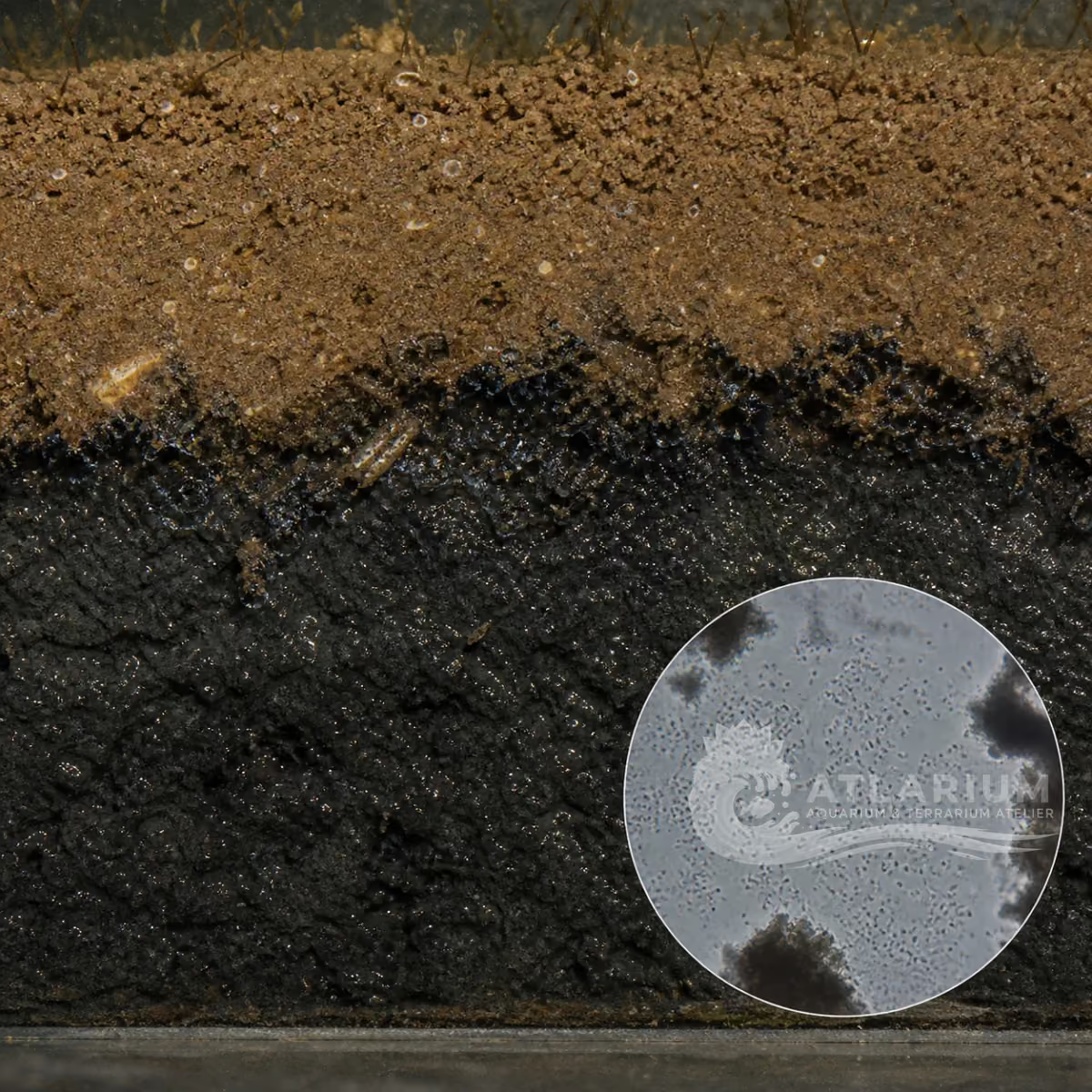
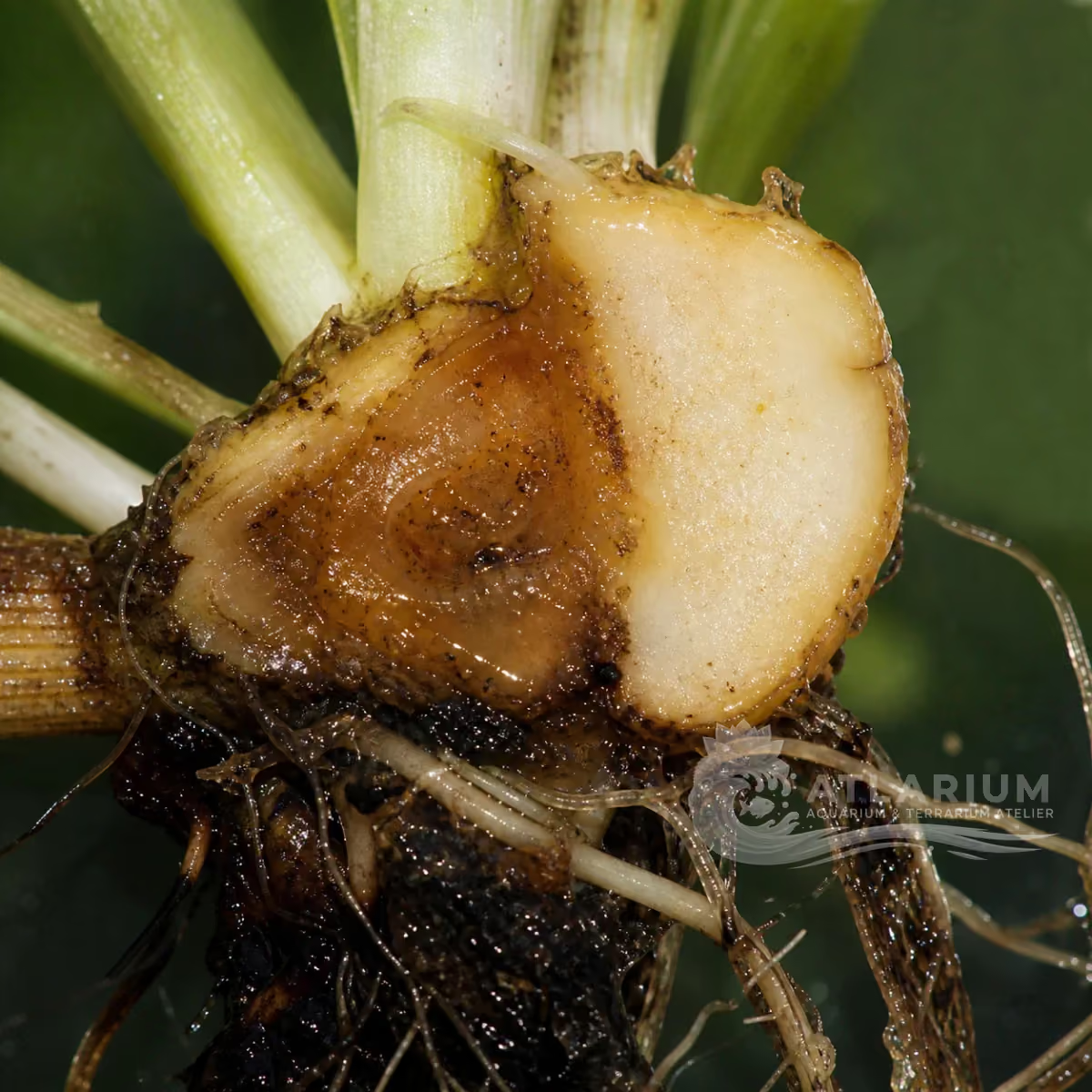
Aquatic rhizosphere
Comunità microbica associata alle radici
The aquatic rhizosphere is the root-influenced substrate and microbial community around an aquatic plant, not a species or a standard filter. Root surfaces, nearby sediment and bulk substrate can differ sharply in oxygen, organic compounds and microbial membership. Studies in freshwater, brackish and marine rooted systems support conditional nutrient-cycle roles, but a visible root zone cannot prove a particular taxon, pathway, water-quality benefit or treatment need.
Freshwater / Brackish / Marine
Comunità microbica associata alle radici
Community
Medium
Decomposer, Nitrifier, Denitrifier, Symbiont
Context-dependent
Passive aquarium growth
Value not applicable
No, not as an individual
No universal threshold supported by reliable evidence

Identity, habitat, and ecological role

Observation, culture, and ecological relationships

Identification and observation data
- Record type
- Community
- This is a community-level entry for the aquatic rhizosphere: the root-influenced sediment or substrate and its associated microorganisms. It is not a species, strain, or fixed microbiome. Root surface, adjacent rhizosphere and bulk sediment can differ within one planted system. A plant name, brown root coating, or visible debris therefore cannot identify all members or assign a community function.
- Recognition confidence
- Medium
- Medium confidence applies only to recognising the root-associated community context from a documented sample. Community composition, activity, and plant association need a stated root zone, comparison material, and method. Microscopy can show larger components but cannot identify the full bacterial, archaeal, or fungal community. Sequence data recover genetic material, not an automatic proof that a pathway is active.
- Biological group
- Comunità microbica associata alle radici
- Aquatic rhizosphere belongs in microbial communities and symbioses as an ecological navigation group, not a taxonomic rank. It joins roots, local substrate, water chemistry, and variable bacteria, archaea, fungi, protists, and other organisms. Freshwater duckweed, coastal wetland macrophytes, and marine seagrasses each support root-associated communities, but their members and processes are not interchangeable.
- Ecological functions
- Decomposer, Nitrifier, Denitrifier, Symbiont
- Decomposer, nitrifier, denitrifier, and symbiont are conditional community roles rather than a required roster. Studies show root-driven oxygen and exudate gradients can select microbial populations and can affect nitrogen transformations in defined plant systems. Which process occurs depends on the plant, location, redox state, resources, and measured activity. The presence of roots alone does not prove any one pathway.
- Aquarium impact
- Context-dependent
- Impact is context dependent. A planted aquarium has root-associated microhabitats, but their composition and activity cannot be read from root colour, plant growth, or a visible film. This card does not treat a rhizosphere observation as proof of a mature substrate, nutrient removal, water quality, disease, or contamination. Interpret it with the plant, precise root zone, system trend, and measurements matched to the question.
- Culture and management
- Passive aquarium growth
- PASSIVE means the card describes an in-place root-associated community, not a culture of one identified organism. Research on particular duckweed, macrophyte, or seagrass systems does not provide a universal inoculation, fertilisation, oxygenation, transfer, or maintenance recipe. A root-zone sample is an observation whose composition changes with plant, substrate, water setting, and time; it is not an authenticated starter culture.
- Typical size
- Value not applicable
- No single size range applies because the rhizosphere includes microbial cells, root tissues, particles, matrix, and occasionally larger associates at different scales. A root diameter, a coating thickness, or one cell measurement describes only the sampled feature. Retain scale and the exact root zone for observation, without converting a dimension into evidence of a taxon, nitrogen pathway, plant benefit, or aquarium performance.
- Visible to the naked eye
- No, not as an individual
- The rhizosphere is not reliably visible as one separate object. Roots, substrate, attached particles, and sometimes a coating can be seen, but they do not reveal the community's members, abundance, or activity. Similar-looking root zones can differ across plant species, sites, oxygen conditions, and organic inputs. Visibility can locate a sample; it cannot prove nitrification, denitrification, symbiosis, disease, or a management need.
- Useful starting magnification
- No universal threshold supported by reliable evidence
- No universal first magnification is assigned because the method must follow the component and question. Low-power observation can document roots and attached material; microscopy may examine selected larger components; microsensors, chemical measurements, functional genes, sequencing, or process assays address other questions. None alone identifies the complete community. Record the root zone and method before making a narrower conclusion.

Links to Aquarium SOS

Microworld ecological network
Links based on documented kinship, food webs, biofilms, and ecological functions.