Encyclopaedia

Curated profiles for plankton, microfauna, microbes, and aquarium communities.

Copy the link or share this page so you can easily find it again.

MicrolifeFreshwaterBrackishMarineBacteria and archaea

Nitrobacter winogradskyi

Nitrobacter winogradskyi

Nitrobacter winogradskyi is presented at species resolution, with explicit limits on what can be inferred from appearance alone. It occurs in freshwater, brackish water, marine water contexts and may act as nitrifier. The card separates biological identity, observation, ecological role and aquarium meaning from clinical diagnosis, so a visual resemblance never becomes automatic proof of cause, risk or treatment.

Water type

Freshwater / Brackish / Marine

Biological group

Alphaproteobacteria

Record type

Species

Recognition confidence

Low

Ecological functions

Nitrifier

Aquarium impact

Context-dependent

Culture and management

Specialist culture

Typical size

Varies by taxon or life stage

Visible to the naked eye

No, not as an individual

Useful starting magnification

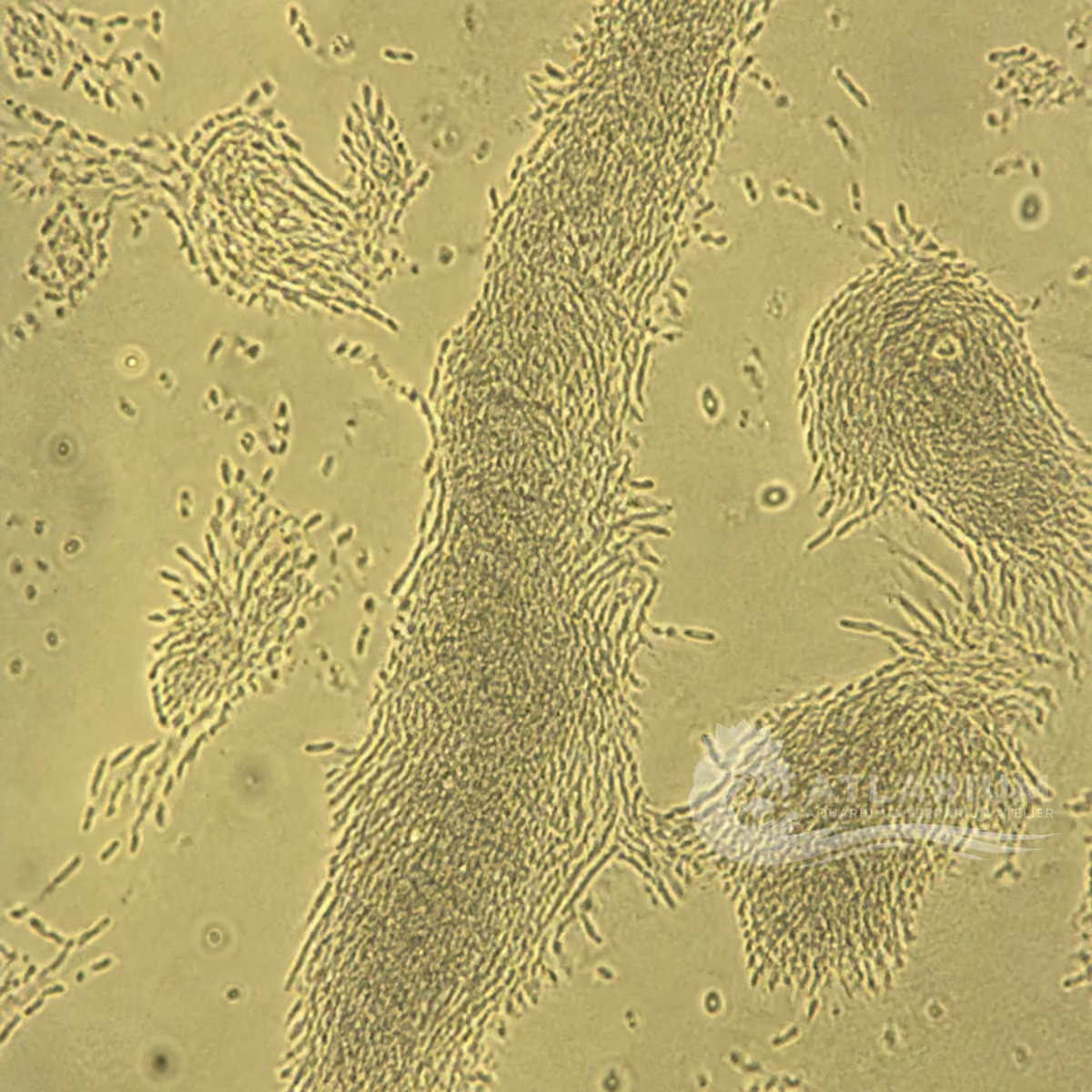
1000× shows cells or aggregates but does not identify the taxon

Identity, habitat, and ecological role

Identity and taxonomic resolution: Nitrobacter winogradskyi is treated at species level. The accepted name, synonyms and biological group are search aids, not permission to identify an unknown sample from color alone. A defensible identification combines sample origin, intact diagnostic characters, life stage and, where morphology overlaps, validated laboratory methods. The confidence label describes the resolution supported by the evidence and must not be silently promoted to species certainty.
Morphology and dimensions: The relevant form must be observed with a scale and without excessive compression or deterioration. Size, movement, attachment, cellular organization and reproductive structures can narrow the possibilities, but each varies with stage and preparation. Similar-looking debris, biofilm members or unrelated organisms remain part of the differential. Photographs should preserve magnification, orientation and the exact structure measured so another observer can evaluate the same evidence.
Habitat and microhabitat: Documented aquatic scope is freshwater, brackish water, marine water. Water column, substrate pores, filter media, plant surfaces and host tissue are different microhabitats even inside one aquarium. Flow, oxygen, light, organic load, salinity and host condition select different populations. A record from one location therefore cannot be generalized to the whole tank, and populations from different salinity regimes are not automatically interchangeable.
Role in the food web: The ecological roles recorded here are nitrifier. Their actual expression depends on abundance, resources, stage and interactions with bacteria, protists, grazers, predators or hosts. Presence may be beneficial, neutral, contextual or harmful without changing the organism's taxonomy. Clinical relevance requires compatible signs and confirmation; an environmental detection alone does not establish infection or causal responsibility.

Observation, culture, and ecological relationships

Where to look and how to sample: Sample the exact water, surface, sediment or host site where the observation occurred and record date, aquarium, location, volume or area, recent changes and water parameters. Use separate clean tools and preserve an uncontaminated comparison when possible. A concentrated net sample, scrape and free-water drop select different fractions, so the method must travel with the result and absence must not be claimed for organisms the method could not retain.
How to observe and identify: Begin with live behavior and low magnification, then move to the magnification and preparation needed for the discriminating character. Compare several fields, stages and look-alikes rather than one striking image. Microscopy can orient identification, while histology, culture, staining, molecular assays or professional examination may be required for a causal diagnosis. Stop at genus, group or functional level whenever the available character does not support a more precise name.
Presence and meaning in the aquarium: Read the finding together with its abundance, trend, location, animal behavior and ammonia, nitrite, temperature, pH and oxygenation. A stable low-density population may be normal whereas a sudden bloom may indicate newly available resources or system instability. The same visual phenomenon can have several causes, so safe immediate husbandry and documentation come before aggressive control or medication.
Culture, maintenance or use: Management concerns the microhabitat and contamination controls; parameters from one strain are not universal culture limits. Never transfer unknown material between aquariums, aerosolize it or expose wounds and mucosa. Dedicated tools, backups and disposal appropriate to the biological risk prevent an observation exercise from becoming a route of spread.
Documented ecological relationships: Each cross-link distinguishes causative agent, contributor, look-alike, indicator and ecological context, and carries an explicit confidence. These relations describe evidence and direction: who consumes, colonizes, transforms or resembles whom. They are not stocking recommendations. A contributor can be common without being sufficient, and a look-alike warning exists precisely because visual similarity is not a diagnosis.
Risks, biosecurity and limits: Do not infer species, contagion or therapy from a photograph alone. Protect people and animals by isolating suspect hosts when appropriate, using gloves over broken skin, disinfecting dedicated tools and consulting an aquatic veterinarian or qualified laboratory for progressive disease or mortality. Scientific names are retained only at the supported resolution, and uncertain or syndrome-level associations remain explicitly conditional.

Geographic Origin and Distribution

Origin

Selective breeding and cultivarsNorth America

Identification and observation data

Record type
Species
Il nome scientifico indica una specie precisa. Per usarlo su un organismo trovato in vasca devono però coincidere i caratteri diagnostici, non soltanto il colore o la forma generale. Specie NOB di Alphaproteobacteria. Va presentata come organismo modello, non come presenza presunta in ogni prodotto o biofiltro.
Recognition confidence
Low
Il riconoscimento al microscopio domestico resta prudente: movimento e forma suggeriscono una funzione o un grande gruppo, non un'identità certa. Negli acquari sono state documentate Nitrospira anche in assenza di Nitrobacter: il vecchio binomio non è una regola.
Biological group
Alphaproteobacteria
Dal punto di vista biologico appartiene a Alphaproteobacteria; per comprenderne il ruolo viene osservato nel contesto di batteri e archei. I nomi funzionali ammonio-ossidante, nitrito-ossidante, denitrificante o eterotrofo non identificano automaticamente una specie. Morfologia ottica e andamento dell'azoto descrivono attività o biomassa, mentre l'attribuzione tassonomica richiede marcatori molecolari appropriati. È stato documentato in acqua dolce, acqua salmastra, ambiente marino, ma popolazioni provenienti da salinità diverse non sono automaticamente intercambiabili.
Ecological functions
Nitrifier
Nella rete microscopica può agire come nitrificante. Ossida nitrito a nitrato ed è chemio-lito-autotrofo facoltativo. Il ruolo effettivo cambia con stadio, densità, risorse disponibili e identità dell'organismo osservato.
Aquarium impact
Context-dependent
Un filtro che processa nitrito può farlo senza Nitrobacter, grazie a Nitrospira o altri NOB. L'effetto dipende dal contesto: la stessa presenza può essere parte della rete ecologica o segnalare risorse eccessive.
Culture and management
Specialist culture
Coltura specialistica; non fornire parametri di allevamento domestico generalizzati. La coltura è specialistica e richiede ceppo noto, mezzo appropriato e controlli che superano una pratica domestica generica.
Typical size
Varies by taxon or life stage
La morfologia batterica non consente identificazione domestica della specie. Le dimensioni cambiano troppo fra specie, stadi o componenti della comunità per essere racchiuse in un unico intervallo utile.
Visible to the naked eye
No, not as an individual
Il singolo organismo non è normalmente distinguibile a occhio nudo. Una sospensione colorata, una patina o un aggregato possono diventare visibili senza rivelare quale specie li abbia prodotti.
Useful starting magnification
1000× shows cells or aggregates but does not identify the taxon
La specie richiede coltura, FISH o dati molecolari; 1000× mostra soltanto cellule compatibili con molti batteri. A 1000× si possono vedere cellule, aggregati o morfotipi, ma non confermare un batterio, un archeo o una funzione metabolica. Per farlo servono colorazioni mirate, FISH, qPCR, sequenziamento o misure del processo.
Last updated: 08/20/2026