Nitrosomonas europaea
Nitrosomonas europaea
Nitrosomonas europaea is an ammonia-oxidizing bacterial species used in nitrification research, not the default identity of an aquarium biofilter. It gains energy and reductant by oxidizing ammonia to nitrite and meets nearly all carbon demand through carbon-dioxide fixation. An ammonia result documents a nitrification process, not this species: established aquarium filters can contain ammonia-oxidizing archaea as well as bacteria.
Water type
Freshwater / Brackish / Marine
Biological group
Betaproteobacteria
Record type
Species
Recognition confidence
Low
Ecological functions
Nitrifier
Aquarium impact
Context-dependent
Culture and management
Specialist culture
Typical size
1 µm – 2 µm
Visible to the naked eye
No, not as an individual
Useful starting magnification
1000× shows cells or aggregates but does not identify the taxon

Identity, habitat, and ecological role
Identity and taxonomic resolution: Nitrosomonas europaea is an ammonia-oxidizing bacterial species. DSMZ records the type strain as DSM 28437 / ATCC 25978 (Nm50), a defined reference culture rather than a name for any aquarium nitrifier. The name Nitrosomonas can describe a genus, whereas this card concerns one species. A process measurement cannot establish that the type strain or this species occurs in an individual filter.
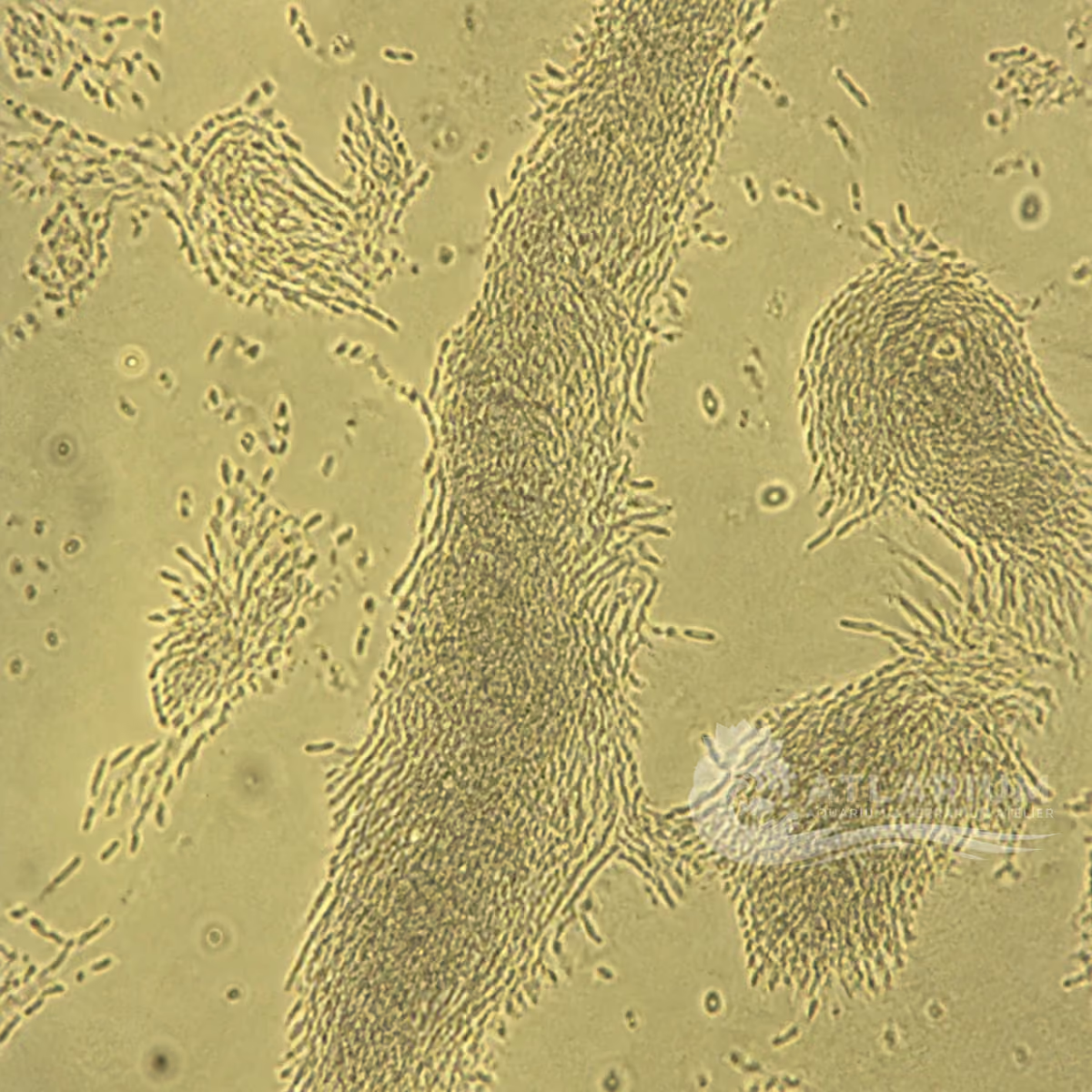
Morphology and dimensions: N. europaea is Gram-negative and rod-shaped; primary and institutional references describe cells about 0.8–0.9 µm wide and 1–2 µm long. This card stores 1–2 µm as a length guide, not a diagnostic boundary. Cells and matrix are not species-specific evidence in a mixed biofilter. Microscopy records preparation and structure, but cannot show ammonia oxidation, distinguish N. europaea, settle taxonomy or show activity.
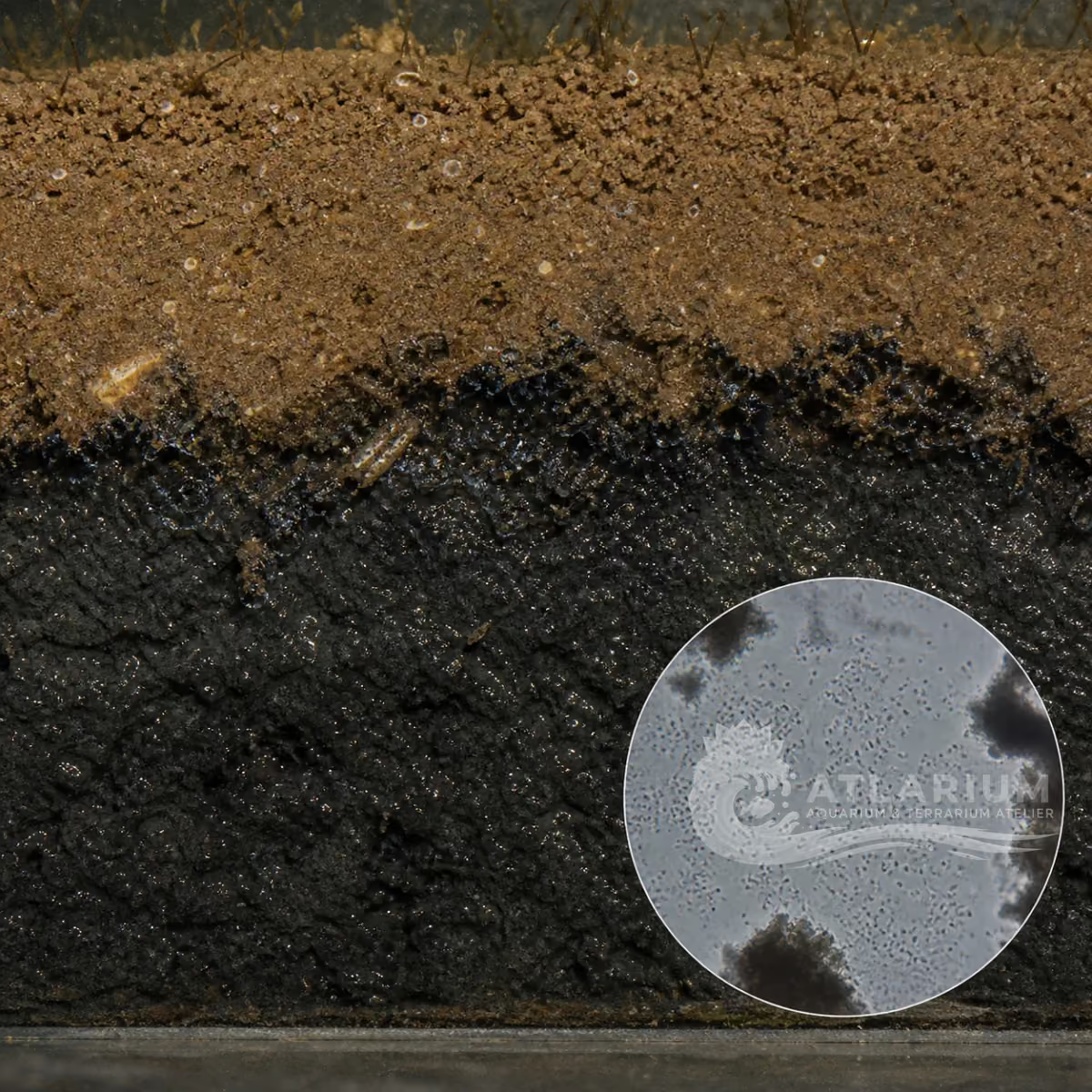
Habitat and microhabitat: The cited aquarium study sampled established freshwater and saltwater biofilters, not a universal distribution for N. europaea. Its results distinguish the communities measured in those filters from the identity of this species. A filter sample, water result or biofilm observation must retain its system and sample context. Neither the documented type strain nor the sampled aquarium communities establishes presence in another aquarium.
Role in the food web: N. europaea is an obligate chemolithoautotroph: it gains energy and reductant from ammonia oxidation to nitrite, while nearly all carbon demand is met by carbon-dioxide fixation. This defines an ammonia-oxidizing role in nitrification. Nitrite is the immediate product, and its later fate is a separate process. Ammonia decline can show nitrification performance, but cannot identify the organism, abundance or activity responsible.
Observation, culture, and ecological relationships
Where to look and how to sample: Ask first whether the question concerns nitrification performance or species identity. Ammonia and nitrite measurements address process performance; they do not identify N. europaea. A taxonomic investigation needs a defined sample and method that can distinguish the target from other ammonia oxidizers. Record the system, sampling location and timing so that a result remains tied to the material actually examined.
How to observe and identify: Routine microscopy can document cells and biofilm structure but is not a species test for N. europaea. The genome and aquarium sources do not make cell appearance a diagnostic character. Species-level attribution therefore requires a method validated for that taxonomic question, with its target and limits reported. When such evidence is absent, retain the conclusion at process, ammonia-oxidizer or broader taxonomic level.
Presence and meaning in the aquarium: Sauder and colleagues found ammonia-oxidizing archaea dominant in most sampled established freshwater filters. Their sampled saltwater filters showed variable proportions of ammonia-oxidizing archaea and bacteria. These results show why an ammonia decline or operating biofilter cannot confirm N. europaea. Interpret the measurement as evidence that nitrification occurred in that system, not as a species record.
Culture, maintenance or use: DSMZ documents DSM 28437 / ATCC 25978 (Nm50) as a type strain maintained under controlled collection conditions. That record identifies a reference culture and its specialist setting; it does not describe an aquarium protocol or identify an environmental filter community. Research that needs N. europaea should keep the question at strain level and use the current collection record. An aquarium process result cannot substitute for an authenticated culture.
Documented ecological relationships: Ammonia is the substrate oxidized by N. europaea and nitrite is the immediate product. This directional transformation is evidence for an ammonia-oxidizing role, not proof that a photographed biofilm contains the species. The aquarium study separately measured ammonia-oxidizing archaeal and bacterial groups in filters. A nitrogen result therefore cannot assign the process to one named organism without taxon-targeted evidence.
Risks, control and limits: N. europaea is not an animal disease diagnosis, so its detection or suspected presence does not create a therapy indication. The cited evidence supports a narrower control point: keep a nitrification result distinct from a species conclusion and retain the measured system context. It does not provide a universal aquarium intervention or preventive protocol. Any species claim must remain limited to evidence that can distinguish N. europaea from other ammonia oxidizers.
Geographic origin and distribution
Origin
Europe, Mediterranean, and West Asia
Identification and observation data
- Record type
- Species
- This is a species card for Nitrosomonas europaea, whose DSMZ type strain is DSM 28437 / ATCC 25978 (Nm50). The name must not stand in for all ammonia oxidizers or all filter biofilms. A functioning nitrification process does not, by itself, establish this species in an aquarium.
- Recognition confidence
- Low
- Confidence is low for an aquarium observation because microscopy and nitrogen chemistry cannot resolve Nitrosomonas europaea. Reliable attribution requires an authenticated culture or a validated taxon-targeted FISH or molecular assay, with recorded sample origin, extraction and controls. A compatible rod or the 1–2 µm length guide cannot be promoted to species certainty or biofilm activity.
- Biological group
- Betaproteobacteria
- Nitrosomonas europaea is an ammonia oxidizer whose reviewed metabolism is species-specific. An ammonia-oxidizing functional label identifies a nitrogen-cycle transformation, not this species in an unknown filter. The cited aquarium study measured ammonia-oxidizing archaea and bacteria in particular freshwater and saltwater filters; it does not establish N. europaea in an individual aquarium.
- Ecological functions
- Nitrifier
- The reviewed role is nitrifier: N. europaea oxidizes ammonia to nitrite and fixes carbon dioxide during obligate chemolithoautotrophic growth. This is directional chemistry, with nitrite then available to another nitrifying community. It does not show that an unknown film is active or that every ammonia-oxidizing biofilter contains this species.
- Aquarium impact
- Context-dependent
- Ammonia oxidation is important to aquarium function, but a stable ammonia decline does not identify Nitrosomonas europaea. Freshwater biofilter research found ammonia-oxidizing archaea dominant in most sampled established filters, while saltwater systems had variable AOA and AOB proportions. Read chemistry as performance, not as species confirmation.
- Culture and management
- Specialist culture
- Culture is specialist and strain-specific. DSMZ documents the type strain under controlled collection conditions; an active aquarium filter is not evidence of type-strain establishment. Research use requires an authenticated strain and the current collection record, rather than treating a nitrification measurement as a culture or identity result.
- Typical size
- 1 µm – 2 µm
- The stored 1–2 µm interval is a length guide for published Nitrosomonas europaea rods, which are also described as about 0.8–0.9 µm wide. It helps report a compatible measured cell, not identify the species. In a mixed aquarium biofilm, dimensions overlap other bacteria and archaea and cannot show ammonia-oxidizing activity. Keep preparation, scale, sample site and method with any measurement; species and activity need taxon-targeted evidence.
- Visible to the naked eye
- No, not as an individual
- Individual cells are not visible to the naked eye. A biofilter observation cannot establish Nitrosomonas europaea from appearance, because the cited evidence does not make a visible character diagnostic for the species. Nitrogen measurements document a process; species attribution requires taxon-targeted evidence rather than ordinary visual inspection.
- Useful starting magnification
- 1000× shows cells or aggregates but does not identify the taxon
- Microscopy can document prepared cells and biofilm structure but cannot confirm Nitrosomonas europaea or ammonia-oxidizing activity. Species-level attribution needs validated culture, FISH or molecular testing with controls. Imaging provides sample context and compatible morphology; it is not a replacement for a taxon-specific assay.
Links to Aquarium SOS

Microworld ecological network
Links based on documented kinship, food webs, biofilms, and ecological functions.