Sulfate-reducing bacteria
Sulfate-reducing bacteria is a functional metabolic group, not a single taxon. In suitable anoxic microhabitats, members can use sulfate or sulfite as electron acceptors and form sulfide, but the meaning of an observation depends on local chemistry, substrate, community and measurement. A film, odour or microscope image does not confirm activity, cause, hazard or treatment. Document the context, correct a demonstrated problem and seek qualified help when animal welfare or a significant water-quality risk is involved.
Freshwater / Brackish / Marine
Bacteria and archaea
Functional group
Low
Decomposer, Biological indicator
Context-dependent
Passive aquarium growth
Value not applicable
Varies by taxon or life stage
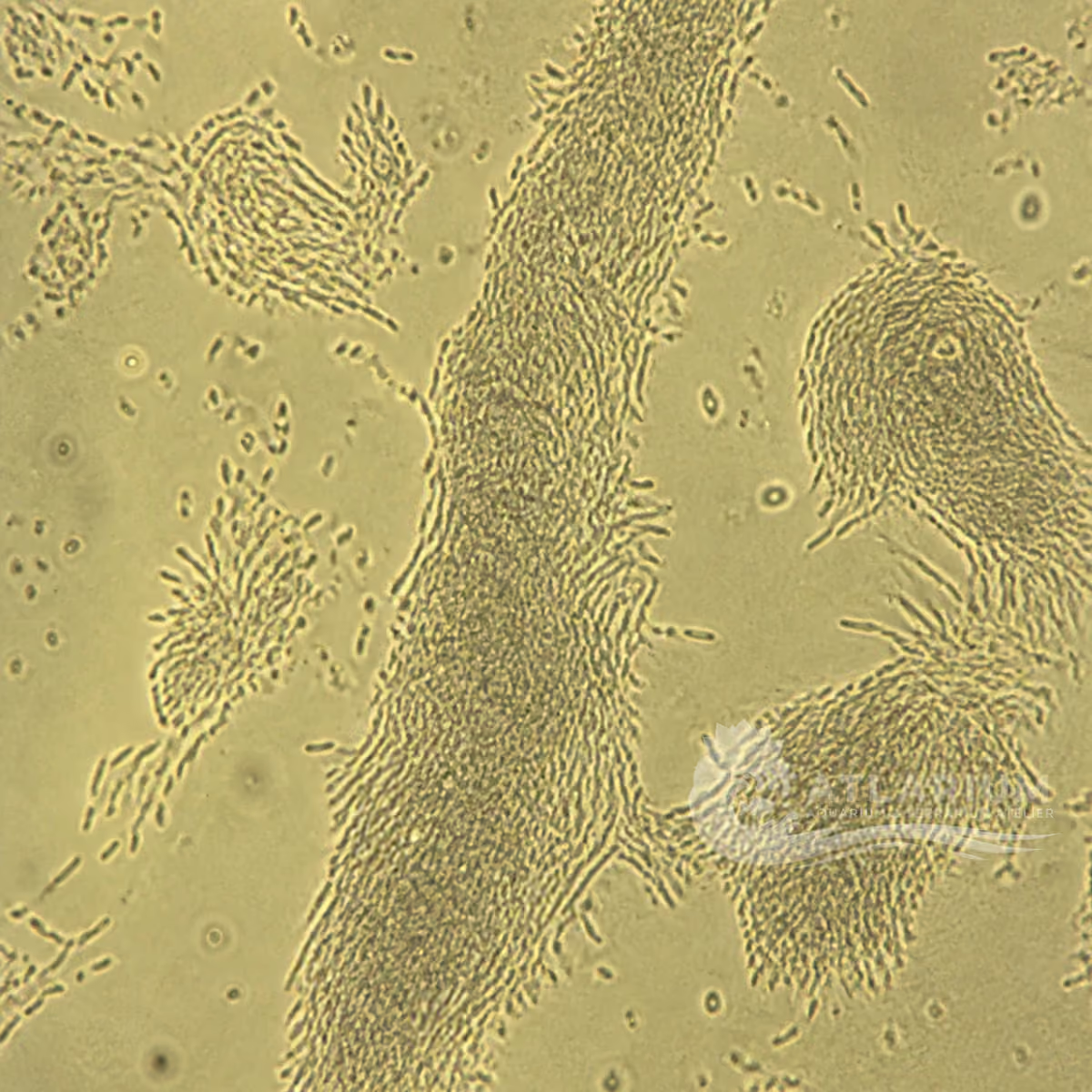
1000× shows cells or aggregates but does not identify the taxon

Identity, habitat, and ecological role

Observation, culture, and ecological relationships

Geographic origin and distribution
Origin

Identification and observation data
- Record type
- Functional group
- This card represents a functional group rather than an identified organism. The same metabolic label can cover organisms from different lineages, so it cannot supply one scientific name, family, class, order, genus or geographic origin. Preserve the sample, microhabitat and method with an observation, and do not turn a colour, odour, film or familiar appearance into a species-level identification.
- Recognition confidence
- Low
- Confidence remains low for a home observation because microscopy can describe morphology but cannot demonstrate sulfate reduction, metabolic activity, strain identity or causal responsibility. The evidence needed rises with the consequence of the conclusion: retain scale and sampling context for ordinary observation, and use targeted molecular or process methods with qualified interpretation when animal health, toxin concern or major management action is at stake.
- Biological group
- Bacteria and archaea
- Sulfate-reducing bacteria is a descriptive functional group spanning diverse bacterial and archaeal lineages with potential for dissimilatory sulfate or sulfite reduction. It is not a replacement for taxonomy. Water type, local oxygen conditions, substrate, donor availability and the method used to observe a sample all limit what may be inferred responsibly from a single aquarium finding.
- Ecological functions
- Decomposer, Biological indicator
- The record uses decomposer and contextual-indicator roles because members can participate in anaerobic sulfur transformations and can form sulfide in suitable niches. These roles are possibilities, not a promise of activity in every tank. Density, organic inputs, sulfate, oxygen, substrate and community interactions alter the practical outcome. Read the group with measured local conditions instead of treating the label as an independent diagnosis.
- Aquarium impact
- Context-dependent
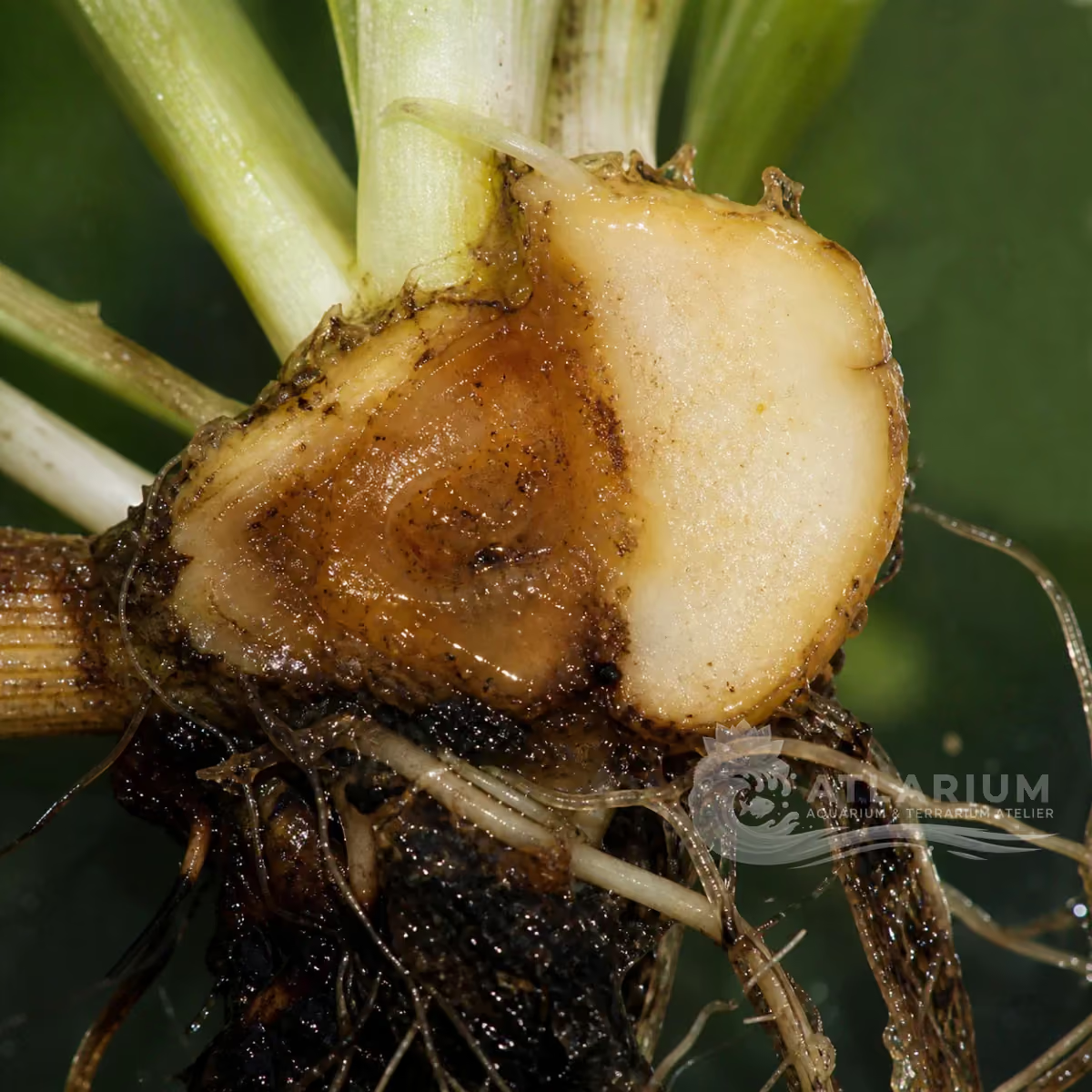
- Impact is context dependent. A dark patch, smell, visible film or group-level observation does not establish sulfide concentration, toxic exposure, a causal organism or a treatment need. Hydrogen-sulfide significance depends on chemistry and exposure context. Compare repeat observations with water measurements, animal condition and microhabitat before assigning meaning, and avoid indiscriminate chemicals or transfers based on the label alone.
- Culture and management
- Passive aquarium growth
- Passive management means observing and adjusting the documented context rather than maintaining an isolated home culture. This entry does not endorse deliberate propagation, inoculation or transfer of unknown material. A verified collection strain or laboratory culture has a different identity and evidence basis from a spontaneous aquarium observation. Keep tools and workflows orderly so exploratory sampling does not create unnecessary cross-system transfer.
- Typical size
- Value not applicable
- No single size range is applicable to this functional group. It spans multiple lineages, while apparent dimensions vary with the organism, stage, preparation and whether a cell, aggregate, biofilm or substrate particle is measured. Use a scale reference as an observation aid, not an identification key. Size alone cannot establish taxonomy, sulfate reduction, viability, origin or ecological significance.
- Visible to the naked eye
- Varies by taxon or life stage
- Individual cells are not reliably visible to the naked eye across this functional group. A visible coating, colony-like patch, sediment change or moving aggregate records biomass or material, not a confirmed identity or metabolic process. Suitable microscopy and preparation may reveal morphology, yet visibility alone cannot establish a source, health consequence, sulfide exposure or management response for a particular aquarium.
- Useful starting magnification
- 1000× shows cells or aggregates but does not identify the taxon
- A routine magnification such as 1000× can document cells, aggregates and contextual morphology, but it cannot confirm sulfate reduction, a specific lineage, a strain or activity. Examine more than one field and preserve the sampling location and preparation. When a functional conclusion would affect animal welfare, toxin assessment or a major intervention, use targeted molecular or process measurements with qualified interpretation.

Links to Aquarium SOS

Microworld ecological network
Links based on documented kinship, food webs, biofilms, and ecological functions.