

Substrate Compaction & H2S
Root asphyxiation occurs when the aquarium substrate becomes excessively anoxic (oxygen-deprived). In deep sand beds or very fine, undisturbed substrates, the lack of water circulation favors the settlement of anaerobic bacteria that produce hydrogen sulfide (H2S), a highly toxic gas. Plant roots trapped in these zones rot, turning black and mushy. Hydrogen sulfide typically smells like 'rotten eggs', and if released in large quantities into the water column, it can instantly kill fish and invertebrates.
Plant profile
Resolution Difficulty
Observe and distinguish
Identification and context
Signs and distribution
Plants suddenly stop growing. Upon gently uprooting the plant, the roots appear black, slimy, and rotting (instead of white or cream). Gas bubbles may rise from the substrate emitting a strong rotten egg odor. Lower leaves turn yellow rapidly and fall off, while the stem near the base may turn black and rot.
Affected tissue and growth
Plants suddenly stop growing. Upon gently uprooting the plant, the roots appear black, slimy, and rotting (instead of white or cream). Gas bubbles may rise from the substrate emitting a strong rotten egg odor. Lower leaves turn yellow rapidly and fall off, while the stem near the base may turn black and rot.
Physiology or exposure
Root asphyxiation occurs when the aquarium substrate becomes excessively anoxic (oxygen-deprived). In deep sand beds or very fine, undisturbed substrates, the lack of water circulation favors the settlement of anaerobic bacteria that produce hydrogen sulfide (H2S), a highly toxic gas. Plant roots trapped in these zones rot, turning black and mushy. Hydrogen sulfide typically smells like 'rotten eggs', and if released in large quantities into the water column, it can instantly kill fish and invertebrates.
Verify before intervening
Confirmation and decisions
Differential diagnosis
Compare sign distribution, leaf age, mechanical damage, emersed-to-submersed adaptation, algae, pests and multiple concurrent deficiencies.
How to verify
Confirm with a photographic timeline, repeated measurements and one controlled change at a time; an isolated leaf sign does not automatically identify the cause.
Proportionate actions
Management and monitoring
What to do now
Stabilize light, CO₂, temperature and water quality; remove only decaying tissue. Avoid concentrated corrections or several simultaneous changes.
Controlled correction
Act with extreme caution: deep vacuuming an anoxic substrate can release lethal pockets of H2S gas! The correct approach involves partial water drainage, extracting affected plants, and trimming rotting roots up to healthy tissue. If the substrate is completely black and foul-smelling, a complete breakdown may be necessary. For mild cases, gently poke the substrate with a chopstick to release gas slowly, paired with large water changes.
New-growth response
Avoid fine sand layers thicker than 4-5 cm. If a thick substrate is needed for aquascaping, build a base layer with crushed lava rock or pumice to promote water flow. Introduce burrowing snails like Malaysian Trumpet Snails to constantly stir the substrate, preventing anoxic pockets.
Prevention
Avoid fine sand layers thicker than 4-5 cm. If a thick substrate is needed for aquascaping, build a base layer with crushed lava rock or pumice to promote water flow. Introduce burrowing snails like Malaysian Trumpet Snails to constantly stir the substrate, preventing anoxic pockets.
When to escalate
Escalate if deterioration is rapid, involves the rhizome or stem, produces foul odor, or coincides with animal distress or detectable ammonia/nitrite.
Biological identity
Linked organisms in the Micro World
Learn how to recognize them and what role they may play in the aquarium.
 ecological context · medium
Denitrifying microorganisms
Describes ecological context without automatically assigning causality.
Open profile ecological context · medium
Substrate microbiome
Describes ecological context without automatically assigning causality.
Open profile ecological context · medium
Aquatic rhizosphere
Describes ecological context without automatically assigning causality.
Open profile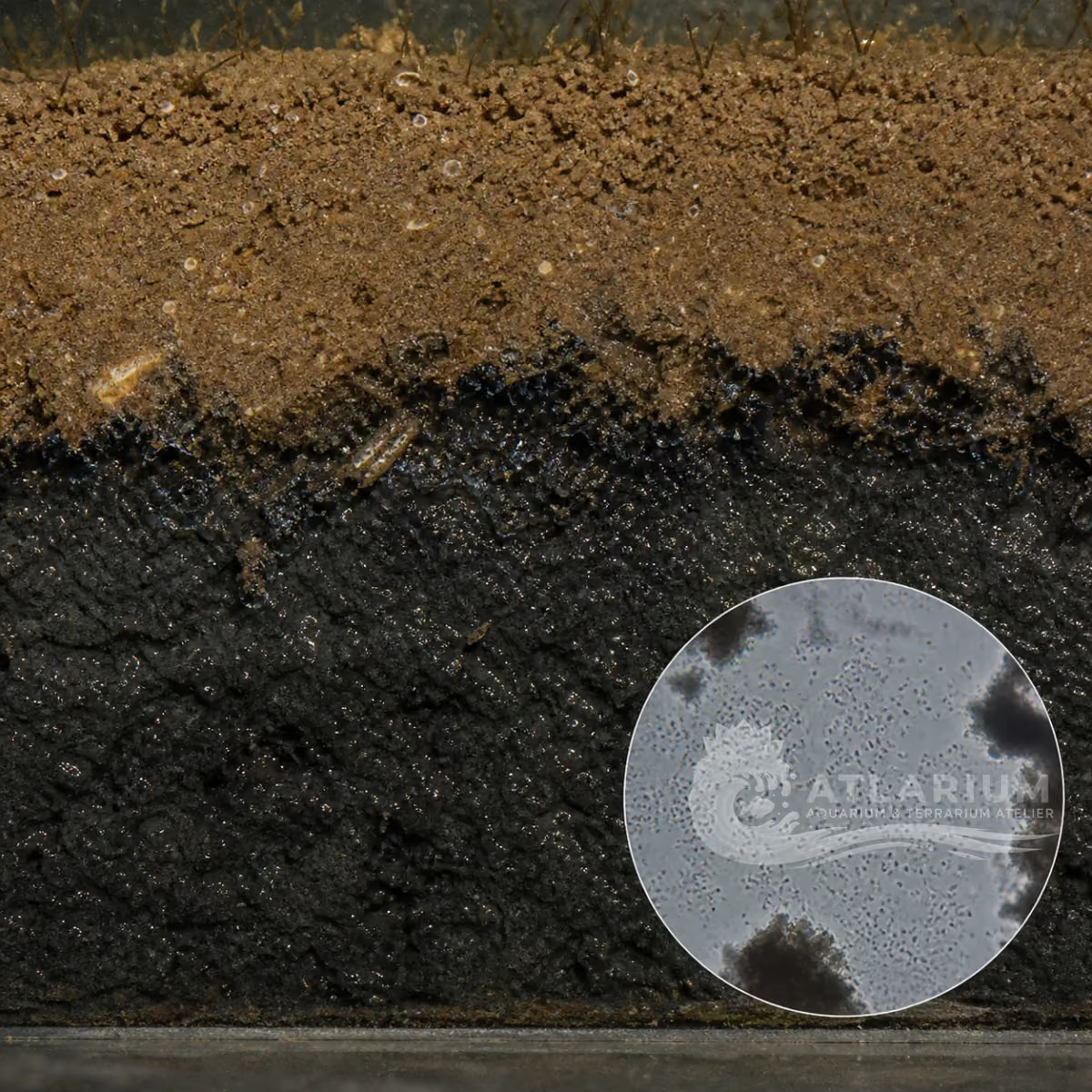 possible contributor · medium
Sulfate-reducing bacteria
May contribute to the phenomenon, but presence alone does not prove cause or disease.
Open profile