Marine interstitial worms
Marine interstitial worms are a community of small worm-like animals living between sediment grains, not one species. It chiefly covers annelid-like meiofauna while retaining confusion with flatworms, gastrotrichs and other groups. Members can graze microbes, process detrital material or become prey, but none of these roles is universal. Observe live material with scale and substrate context; do not call every thread-like animal a pest, parasite or safe live food.
Water type
Marine
Biological group
Microfauna and microscopic metazoans
Record type
Community
Recognition confidence
Low
Ecological functions
Grazer, Decomposer, Live food
Aquarium impact
Context-dependent
Culture and management
Passive aquarium growth
Typical size
Value not applicable
Visible to the naked eye
No, not as an individual
Useful starting magnification
40× to begin observation

Identity, habitat, and ecological role
Community identity and limits: Marine interstitial worms are presented as a community observation, not as a species or one taxonomic lineage. The card mainly concerns small annelid-like animals between marine sediment grains, with look-alike meiofauna. Shape, movement and habitat can support an orientation but not a certain name. Use a species-level label only when diagnostic anatomy and appropriate expertise support it. A thread-like animal, tube or photograph does not establish diet, compatibility, parasite status or risk.
Form, scale and visibility: Slender flexible bodies may move through sediment pores, but segmentation, bristles, ciliation, mouthparts and body ends vary among groups and are often hidden by debris. Many members are meiofaunal; others can exceed 1 mm, so no single size range is reliable for the community. Record scale, posture and sample preparation. The community is not a naked-eye object: a visible thread, film or tube can be an animal, detritus or another organism. Around 40× begins useful live observation.
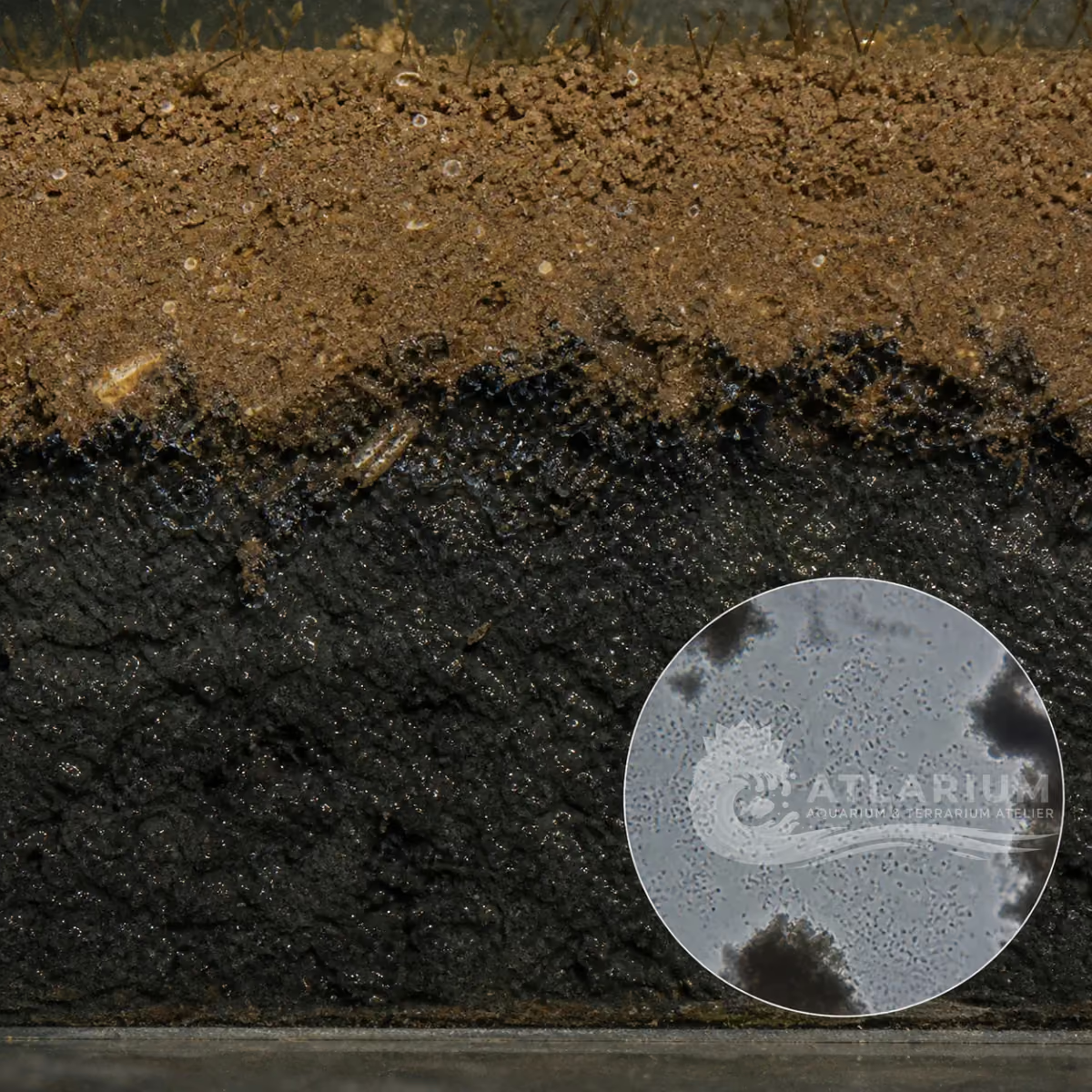
Marine microhabitat: Interstitial animals occupy pores in oxygenated marine sand, detritus, biofilm, live rock and algal-associated sediment. Grain size, flow, oxygen, organic material, light and disturbance create local conditions. A finding in one sand patch or on the glass is not a census of the aquarium. Populations moved among systems with different salinity, substrate or oxygen regimes may not persist. Interpret the observation with the exact microhabitat rather than treating all marine sediment as equivalent.
Food-web roles and meaning: The recorded roles are grazer, decomposer and live-food resource, but roles depend on the taxa and conditions present. Community members may consume bacteria, microalgae, detritus, protists or other meiofauna, and may themselves be prey. A small population can be normal benthic diversity; a local increase can reflect resources, predation or sediment disturbance. The card does not treat worm-like animals as automatic cleaners, pests or parasite evidence without identification and system context.

Observation, culture, and ecological relationships
Sample without spreading: Observe a small amount of the exact sand, detritus or rock-associated material in its own marine water. Record location, depth, grain size, light, flow, recent changes and sample amount. Use dedicated tools and do not move sample water, sediment or animals to another aquarium. Gentle extraction preserves movement and body form, while the recorded microhabitat makes the finding more meaningful than a detached photograph or a mixed sample.
Observe before naming: Begin with live movement at low power, then use around 40× or higher to compare several bodies, ends, segmentation, bristles and ciliation. Photograph with scale and avoid excessive compression. A single view cannot separate annelids from flatworms, gastrotrichs or debris. Report a community or broad group when the characters do not support more precision, and use specialist identification if the result would change a management or biosecurity decision.
Interpret presence cautiously: A few animals in live sand or rock can be ordinary microbenthic diversity. Check food input, detritus, oxygen, flow, sediment disturbance and predation before calling a local increase an outbreak. Do not medicate, remove all sediment or add predators from a presumed name. First establish whether the objects are alive, which broad group is supported and whether there is a genuine aquarium problem beyond their visibility.
Passive habitat management: There is no universal culture protocol because several species share the habitat and respond differently to grain size, oxygen and food. Maintain the wider marine system safely rather than trying to isolate unknown worms. Do not add wild material or transfer cultures between aquariums. Stable sediment conditions can support a diverse community, but survival never proves taxonomic purity, safe live-food value or a particular ecological service.
Documented relationships: Interstitial animals can link sediment microbes, detritus and larger consumers, but direction and strength depend on taxon and life stage. Record grazers, decomposers and prey as contextual roles, not as promises that a population will clean sand or feed a fish. A relationship should retain its source, habitat and confidence. Do not combine organisms merely to recreate a food web; mixed samples can carry unwanted competitors, predators or pathogens.
Biosecurity and escalation: Keep unfamiliar live sand, water and tools separate from display systems and avoid collecting from protected or unknown habitats. Seek specialist help for a needed species identification, unexplained sediment failure, research use or a suspected parasite in a host. Do not infer contagion or treatment from body shape. This card supports observation and careful husbandry; it is not a propagation, medication or intervention guide for an unnamed community.

Geographic origin and distribution
Origin
Tropical oceans and reefs

Identification and observation data
- Record type
- Community
- This is a community record for marine interstitial worms, not a species or a single taxon. It mainly covers small annelid-like animals living between marine sediment grains while retaining confusion with flatworms, gastrotrichs and other meiofauna. Form, diet, size and compatibility vary across the community. A worm-like observation is therefore a starting point for description, not a diagnosis or a claim about one named organism.
- Recognition confidence
- Low
- Home microscopy can support a low-confidence orientation from movement, body form, segmentation or bristles, but it cannot reliably identify the community's components. Cryptic diversity is high and unrelated animals overlap in outline. Observe several live individuals with scale, substrate and behaviour, then stop at the group level whenever diagnostic anatomy is unavailable. A general name must not be promoted into one diet, one risk or a species certainty.
- Biological group
- Microfauna and microscopic metazoans
- Marine interstitial worms are navigated as benthic microfauna: a functional habitat grouping, not a taxonomic unit. Oxygenated sand pores, detritus, biofilm and rock-associated sediment can contain several animal lineages at once. Marine origin does not make populations interchangeable among salinity, grain-size or flow regimes. The group label helps distinguish a community observation from a named annelid, flatworm or parasite.
- Ecological functions
- Grazer, Decomposer, Live food
- The recorded roles are grazer, decomposer and live-food resource, each conditional on the actual taxa present. Community members may consume bacteria, microalgae, detritus, protists or other meiofauna and may be prey for compatible fish or larger invertebrates. Density, oxygen, particle size, food and predation change the outcome. A moving worm is not evidence that one role, diet or food-web service applies to every individual.
- Aquarium impact
- Context-dependent
- Impact is context dependent. Small interstitial animals can arrive with live sand or rock and be part of normal marine benthic diversity; their shape alone does not establish a parasite or infestation. Empty tubes, detritus and unrelated organisms can also be mistaken for worms. Interpret a local increase with food availability, sediment disturbance, oxygen and predation before intervening. Confirm identity and system context before assigning harm or benefit.
- Culture and management
- Passive aquarium growth
- Management is passive rather than a protocol for isolating worms. Survival and composition depend on grain size, oxygen, food, flow and the several species sharing the habitat. Do not collect or transfer unknown sand, water or animals between aquariums in an attempt to culture them. A stable sediment community is not taxonomically pure, and a visible increase does not make it a suitable starter culture or a safe feed source.
- Typical size
- Value not applicable
- No single working size is retained because the community spans species and life stages with incompatible dimensions. Many members fall within meiofaunal scales, while some extend beyond 1 mm. Measure each animal with a scale, stating whether the body is contracted, stretched or incomplete. Length alone cannot distinguish an annelid from a flatworm or gastrotrich, establish diet, or determine whether a particular animal is part of the intended community.
- Visible to the naked eye
- No, not as an individual
- The community is not a discrete naked-eye object. A thread-like movement, surface film, tube or detrital clump may suggest a microhabitat worth observing, but none identifies its members. Many individuals need magnification and some may be visible only when they leave sediment. Do not use apparent visibility as proof of abundance, parasite status, safety or a single taxonomic identity.
- Useful starting magnification
- 40× to begin observation
- Around 40× can reveal live movement and broad body form in sediment extracts; 40–100× or more may be needed for segmentation, setae, ciliation and mouthparts. Compare multiple specimens and views without crushing them. Magnification can support a cautious benthic-meiofauna orientation but cannot resolve every lineage or ecological role. Specialist anatomy or molecular work is needed where a precise taxon would change a management decision.

Links to Aquarium SOS

Microworld ecological network
Links based on documented kinship, food webs, biofilms, and ecological functions.