Heterotrophic microorganisms
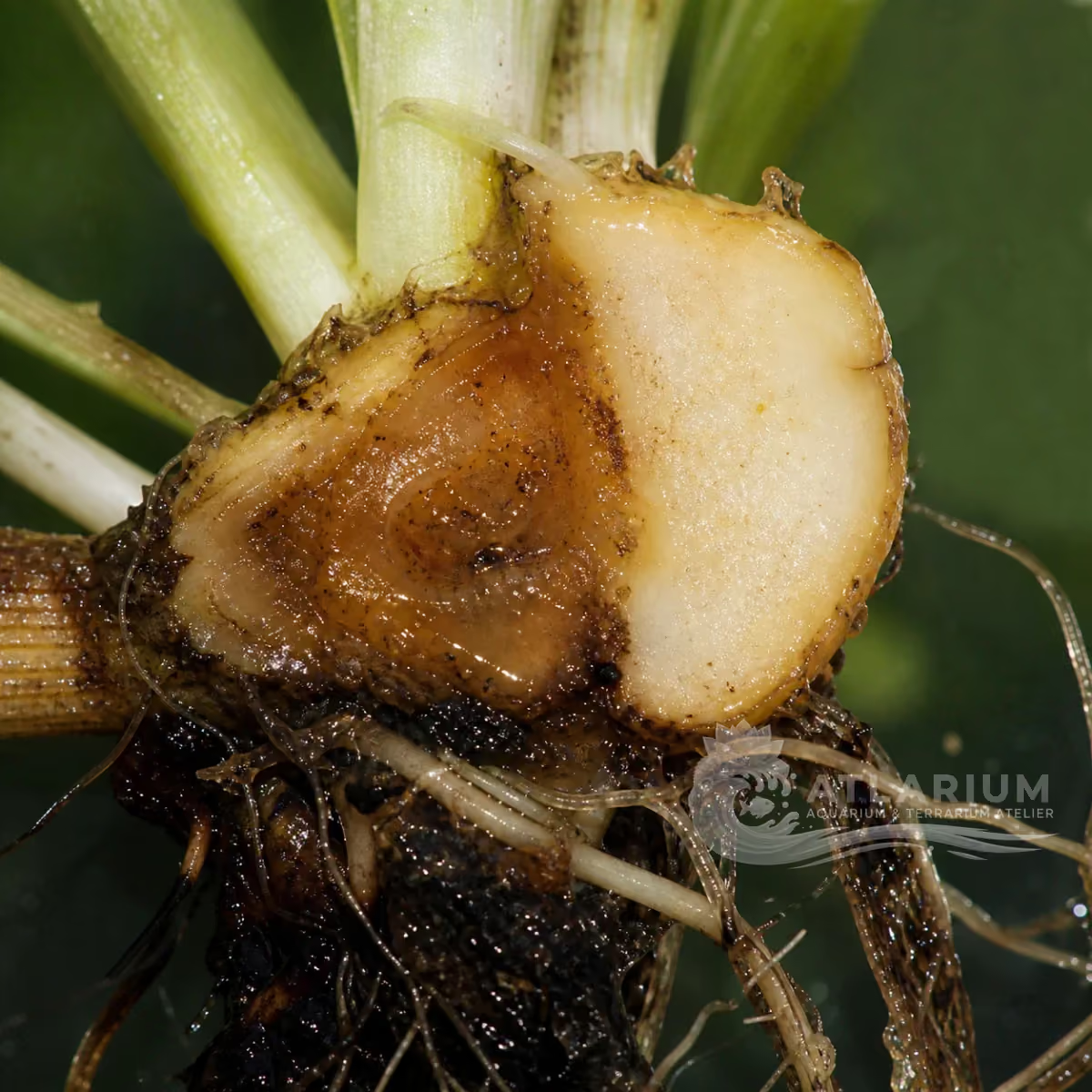
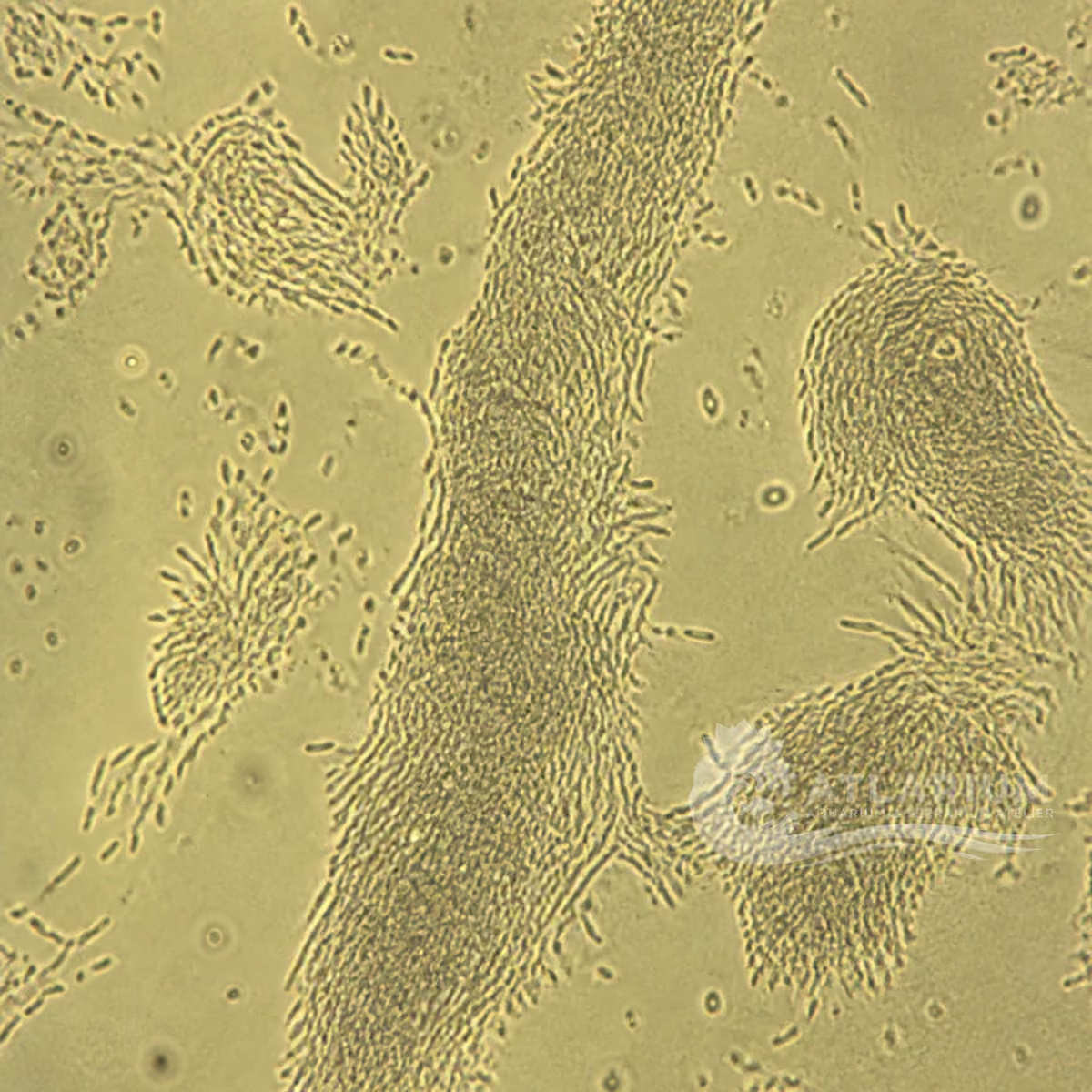
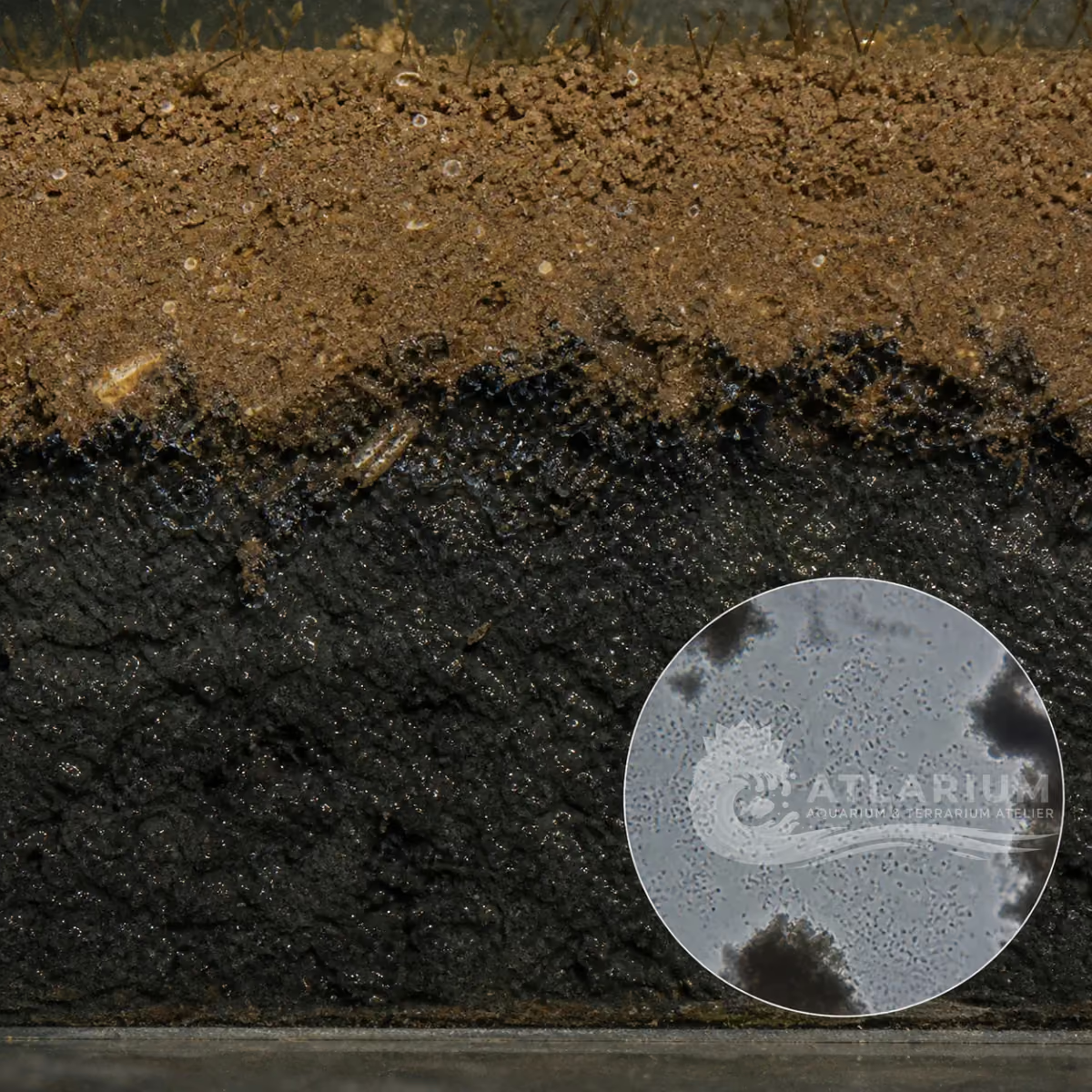
Heterotrophs are organisms that use organic compounds for carbon and energy, not one bacterium to add or remove from an aquarium. They process dissolved and particulate organic matter in water and attached microbial material, and their biomass can enter the microbial food web. Their abundance and effects depend on available resources, oxygen and community composition. A cloudy bloom, deposit or microscope image does not identify a species, establish a cause or prescribe a treatment.
Freshwater / Brackish / Marine
Bacteria and archaea
Functional group
Low
Decomposer
Context-dependent
Passive aquarium growth
Value not applicable
Varies by taxon or life stage
1000× shows cells or aggregates but does not identify the taxon

Identity, habitat, and ecological role

Observation, culture, and ecological relationships

Identification and observation data
- Record type
- Functional group
- This entry is a functional group, not a taxonomic species. It gathers microbial populations that use organic compounds as carbon and energy sources, even though the organisms can have different identities and physiological capabilities. The label supports discussion of a documented process in a sample; it does not identify a strain, a commercial product or a predictable outcome in an aquarium.
- Recognition confidence
- Low
- Confidence is medium because heterotrophy is a metabolic property, not a visible character. Microscopy can document cells, particles or attached material, and water chemistry can document a trend, but neither establishes carbon use by one organism. Culture, sequencing, functional assays and process measurements answer different questions and require suitable controls and sample context.
- Biological group
- Bacteria and archaea
- The catalog places this entry in the broad bacteria-and-archaea navigation group, while heterotrophy itself is not a taxonomic diagnosis. Aquatic heterotrophic populations have diverse identities, substrates and physiological capabilities. A broad functional label therefore describes a way of using organic material, not a shared appearance, a specific organism or a universal interpretation of a visible deposit.
- Ecological functions
- Decomposer
- The recorded role is decomposer. Heterotrophic microbes process dissolved and particulate organic matter into biomass, carbon dioxide and inorganic nutrients, and that biomass can then be consumed in the microbial food web. This role depends on the sampled population, substrate quality, nutrient context and oxygen availability. The label alone does not prove mineralization, ammonia release or improved water quality in one aquarium.
- Aquarium impact
- Context-dependent
- Impact is context dependent. Research on recirculating systems shows that organic suspended material can support heterotrophic bacterial growth, but a visible deposit or cloudy water is not a taxonomic or causal diagnosis. Interpret observations with sampling location, measured water conditions and time. The presence or absence of a generic heterotroph label does not identify a safe corrective action.
- Culture and management
- Passive aquarium growth
- This entry does not provide a home-culture recipe. Culture methods select for organisms under their own conditions, while material from a filter or water sample is a mixed community at one time and location. A functional label does not identify a strain, a medium or an expected outcome. Any deliberate change to microbial biomass needs a defined objective, suitable evidence and measured system context.
- Typical size
- Value not applicable
- No single size range is meaningful because heterotrophic populations include organisms with different identities and forms. Dimensions vary with the observed material, its condition and sample preparation. Retain a scale when documenting cells, particles or aggregates, but do not use size to infer metabolism, viability, pathogenicity or a taxonomic identity from an aquarium observation.
- Visible to the naked eye
- Varies by taxon or life stage
- Individual heterotrophic microorganisms are not identifiable to the naked eye. A visible deposit, haze, detrital clump or filter coating is mixed biomass, matrix and particles, not proof of a particular organism or metabolism. Visibility can identify material worth documenting or sampling, but it cannot establish a diagnosis, a causal role or a treatment need.
- Useful starting magnification
- 1000× shows cells or aggregates but does not identify the taxon
- No fixed magnification confirms heterotrophic metabolism. Microscopy can record compatible cells, particles and attached aggregates with a scale, but it cannot identify a strain or a functional role. Reliable conclusions require methods matched to the question, such as controlled chemistry, cultivation with its selection limits, targeted assays or sequencing, interpreted with sample location and system conditions.

Links to Aquarium SOS


Microworld ecological network
Links based on documented kinship, food webs, biofilms, and ecological functions.