Ammonia-oxidizing archaea
Ammonia-oxidizing archaea (AOA) are presented as a functional microbial group, not a single taxon. Their ammonia-to-nitrite role can contribute to nitrification, but nitrogen tests, cell size and routine microscopy do not identify an AOA lineage or prove activity in one aquarium sample. Interpret an observation with its microhabitat and method, and do not turn the label into a diagnosis or a universal treatment instruction.
Freshwater / Brackish / Marine
Bacteria and archaea
Functional group
Medium
Nitrifier
Context-dependent
Specialist culture
No value supported by reliable evidence
Varies by taxon or life stage
1000× shows cells or aggregates but does not identify the taxon

Identity, habitat, and ecological role

Observation, culture, and ecological relationships

Identification and observation data
- Record type
- Functional group
- This is a functional-group card for ammonia-oxidizing archaea, not a species or strain card. The label describes a possible shared metabolic role, while taxonomy, ecology and activity can differ among AOA lineages and samples. Keep an observation at the resolution supported by its sample and method. A familiar-looking cell, a nitrogen result or a group label cannot supply a scientific name, an activity measurement or a diagnosis.
- Recognition confidence
- Medium
- Confidence is limited to a cautious functional-group orientation unless appropriate molecular evidence is available. Routine microscopy, cell size and nitrogen chemistry do not identify one archaeal lineage or demonstrate that it is oxidizing ammonia in the sampled aquarium. Record sample origin, preparation and scale. Escalate to suitable specialist methods when the conclusion could direct animal-health, treatment or consequential management decisions.
- Biological group
- Bacteria and archaea
- This navigation group is limited to ammonia-oxidizing archaea, not all archaea and not one formal taxon. Published work resolves multiple AOA clades and named taxa. It is therefore useful for describing a possible nitrifying function, but not for assigning a family, class, order or genus. Water type, microhabitat and the observation method limit what can responsibly be inferred from a single sample.
- Ecological functions
- Nitrifier
- Nitrifier is a context-bound functional role here. Ammonia-oxidizing microorganisms convert ammonia to nitrite during nitrification, but a routine aquarium observation cannot prove that a particular archaeal lineage is active or determine its contribution relative to other guilds. Interpret the stored role with the measured process, substrate, community and system conditions, rather than as a promise of ammonia control or a stand-alone diagnosis.
- Aquarium impact
- Context-dependent
- Aquarium impact is context dependent. An AOA detection, a biofilm appearance or an abundance result alone does not establish a problem, a cause, dominance or a need to intervene. Engineered-system studies show that microbial guilds and their roles vary with conditions, so compare a defined observation with repeated measurements and husbandry context. Do not use a presumed AOA label to justify indiscriminate treatment, sterilisation or transfer.
- Culture and management
- Specialist culture
- Culture is specialist at this resolution. A mixed aquarium sample does not establish a strain, a verified AOA lineage or the conditions required to maintain it. Stable surfaces and measured system care can support a broader nitrifying community without becoming a culture recipe for this group. Keep observation and maintenance separate from deliberate propagation, and do not move unverified material between systems.
- Typical size
- No value supported by reliable evidence
- No group-wide size range is assigned. AOA research resolves different lineages and uses different methods, while a cell measurement cannot identify one lineage or prove ammonia-oxidizing activity in a mixed aquarium sample. Size remains a scale observation rather than an identification key. Retain the image scale, preparation and sample location, and distinguish a measured cell or aggregate from a verified taxonomic or functional conclusion.
- Visible to the naked eye
- Varies by taxon or life stage
- Individual cells are not reliably identifiable as AOA to the naked eye. A visible film, aggregate or changing patch may contain substrate, biofilm and more than one organism, so it documents material rather than taxonomic identity. Use visibility to locate and record the sample. It cannot establish an AOA lineage, nitrification activity, health relevance or a management response for a particular aquarium.
- Useful starting magnification
- 1000× shows cells or aggregates but does not identify the taxon
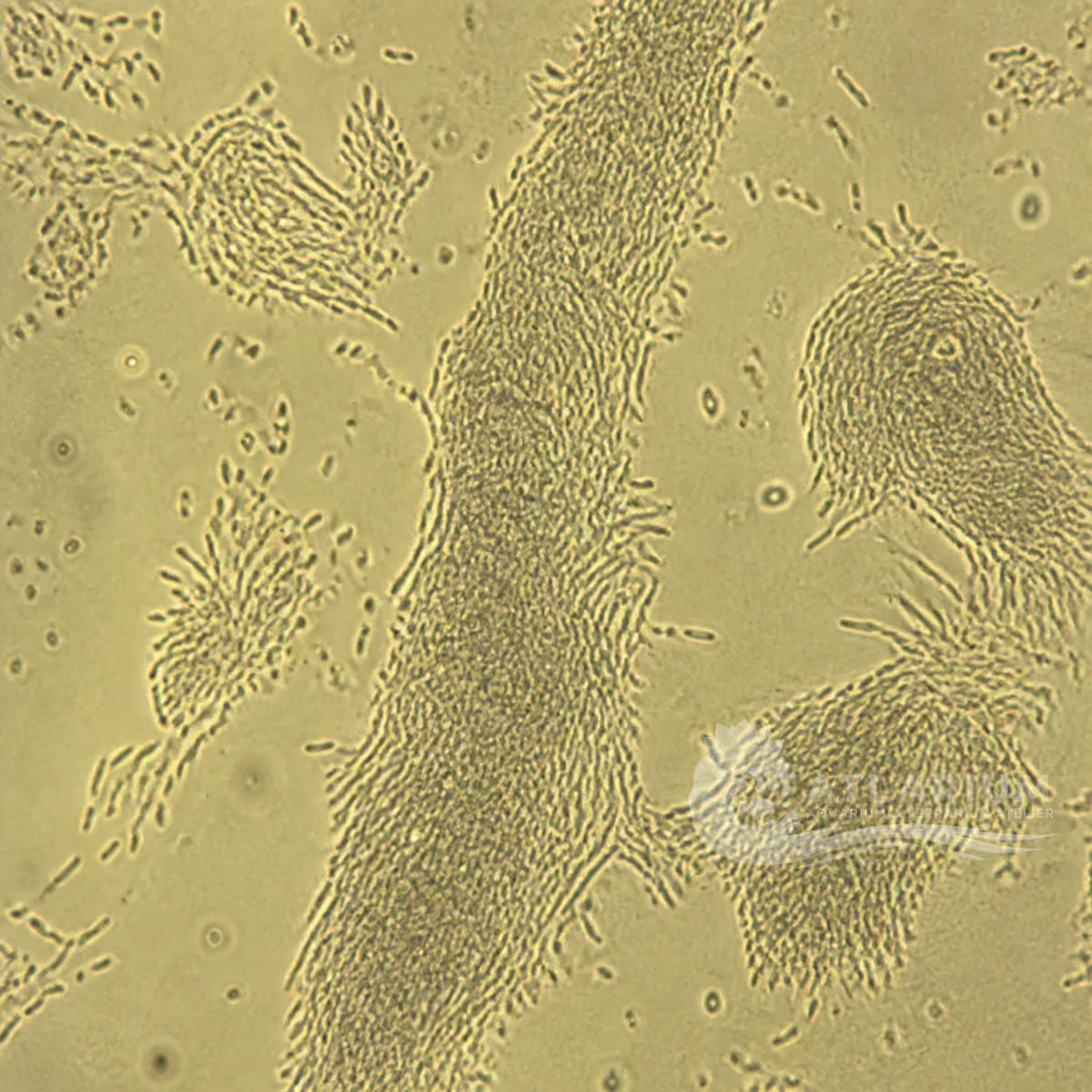
- The stored 1000× magnification is an orientation level for seeing cells or aggregates in a prepared sample; it is not a threshold that confirms archaeal ammonia oxidation. Magnification documents form and context, not a scientific name, lineage or metabolic process. Examine more than one field and retain sample details. Use suitable molecular or specialist methods when the intended conclusion exceeds routine observation.

Links to Aquarium SOS

Microworld ecological network
Links based on documented kinship, food webs, biofilms, and ecological functions.