Nitrospira defluvii
Nitrospira defluvii
The A17 lineage is represented by the pro-correct name “Candidatus Nitrospira defluvii”, while Nitrospira defluvii remains in use; this nomenclatural conflict is unresolved. A17 was recovered from an activated-sludge enrichment and is not a catch-all name for aquarium Nitrospira or comammox. Genome evidence supports nitrite oxidation, carbon fixation and a possible mixotrophic lifestyle. An aquarium detection does not demonstrate this particular lineage or culture.
Freshwater
Nitrospiria
Species
Low
Nitrifier
Context-dependent
Specialist culture
No value supported by reliable evidence
No, not as an individual
No universal threshold supported by reliable evidence

Identity, habitat, and ecological role
Observation, culture, and ecological relationships
Identification and observation data
- Record type
- Species
- Nitrospira defluvii refers here to lineage A17, not a generic Nitrospira observation. LPSN lists the pro-correct “Candidatus Nitrospira defluvii” form with nomenclatural type A17; that is an unresolved nomenclatural conflict, so the nomenclatural discrepancy must be retained. A genus-level aquarium detection cannot be promoted to this lineage.
- Recognition confidence
- Low
- Confidence is low for an aquarium observation because microscopy, nitrogen chemistry and a generic biofilm image cannot resolve the A17 lineage. Lineage attribution needs validated lineage-appropriate molecular evidence with controls and sample context. Functional evidence is separately needed to call a Nitrospira result comammox; taxonomy alone does not establish that metabolism.
- Biological group
- Nitrospiria
- The A17 lineage belongs to Nitrospiria and is a canonical nitrite-oxidizing lineage. A freshwater association is not evidence of this activated-sludge lineage’s aquarium distribution, salinity tolerance or presence in a particular filter. Nitrospiria provides useful context for nitrogen cycling but is not an identity test. No geographic origin is assigned because the available evidence shows that the setting in which strain A17 was isolated does not establish a reliable native origin for the lineage.
- Ecological functions
- Nitrifier
- Its documented role is nitrification: genome evidence supports nitrite oxidation to nitrate and carbon-dioxide fixation. The same evidence suggests possible mixotrophy using organic compounds alongside nitrite and carbon dioxide, but it does not demonstrate independent heterotrophic growth. Comammox ammonia oxidation belongs to other Nitrospira lineages unless functional evidence identifies it.
- Aquarium impact
- Context-dependent
- Nitrospira can be important in aquarium nitrification, yet a Nitrospira signal does not identify the A17 lineage or comammox. Aquarium studies detected canonical and comammox Nitrospira genes in biofilters. Interpret nitrite and nitrate trends as system performance, then apply lineage and functional testing only when the question requires it.
- Culture and management
- Specialist culture
- Culture is specialist and lineage-specific. DSM 118082 A17 is a slow collection culture derived from activated sludge and requires controlled research conditions. Neither a product label nor an active aquarium filter proves that the lineage is established. Aquarium management should protect overall attached nitrifying function rather than attempt a home culture of a presumed strain.
- Typical size
- No value supported by reliable evidence
- No diagnostic size range is given because cell dimensions cannot distinguish the A17 lineage from other Nitrospira, comammox bacteria or unrelated biofilm members. Any cell measurement must retain sample preparation and method, but it cannot transform a compatible shape into lineage identification, nitrite oxidation or comammox evidence. No taxon-wide minimum or maximum size is shown because the available evidence for the A17 strain and related lineages does not establish a reliable universal size range.
- Visible to the naked eye
- No, not as an individual
- Individual cells are not visible to the naked eye. A film, flock or cloudiness can contain many organisms and nonliving material, so it is not a specific sign of the A17 lineage, nitrite oxidation or comammox. Relevant evidence comes from measured chemistry for process and targeted molecular testing for taxonomy and function.
- Useful starting magnification
- No universal threshold supported by reliable evidence
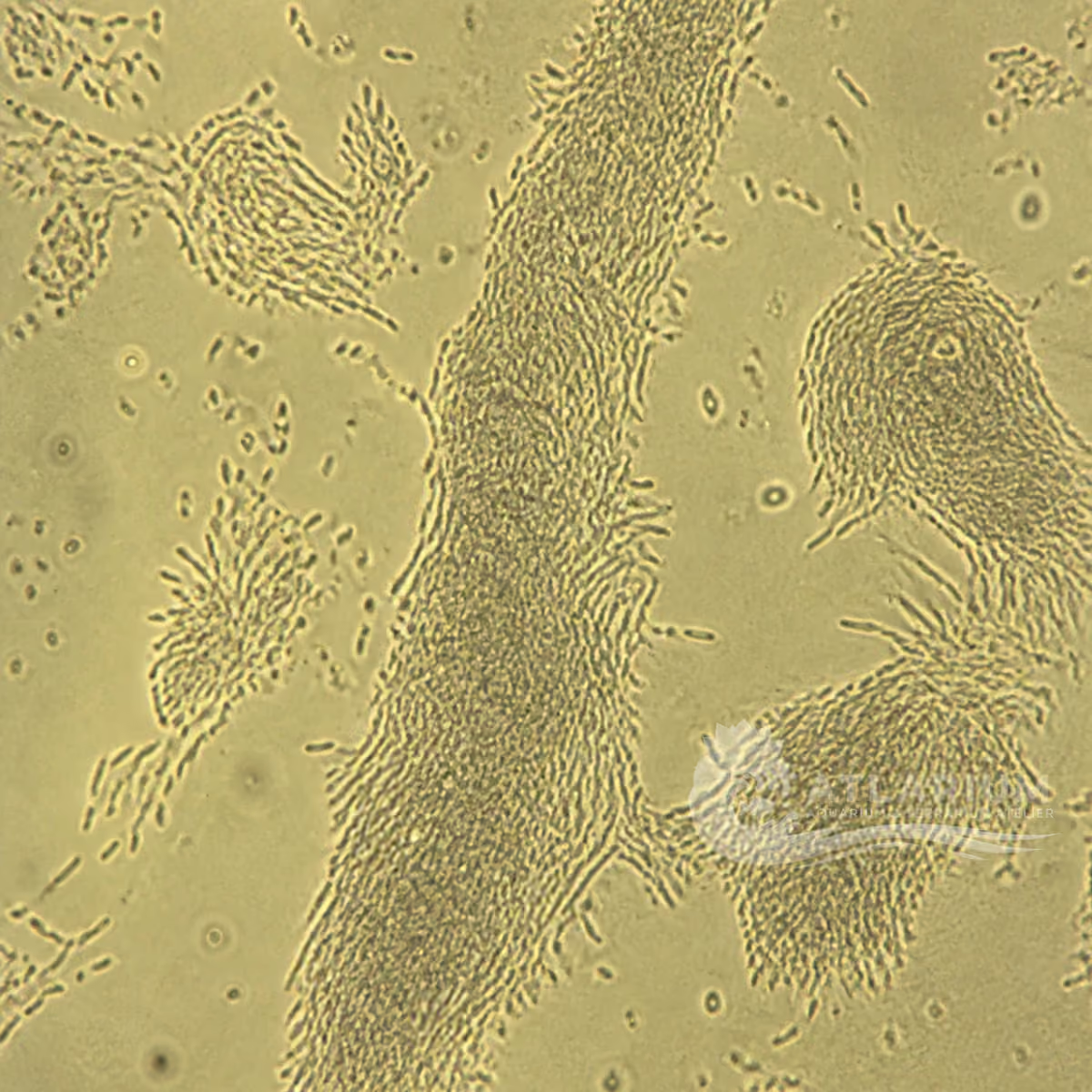
- Microscopy can document prepared cells and matrix but cannot confirm the A17 lineage, canonical nitrite oxidation or comammox. The reviewed sources do not establish 1000× as a universal diagnostic magnification. Taxonomy needs validated lineage-appropriate molecular evidence; functional assignment needs evidence appropriate to that question. Imaging supplies location and compatible morphology, never a replacement for these molecular distinctions.
Links to Aquarium SOS

Microworld ecological network
Links based on documented kinship, food webs, biofilms, and ecological functions.