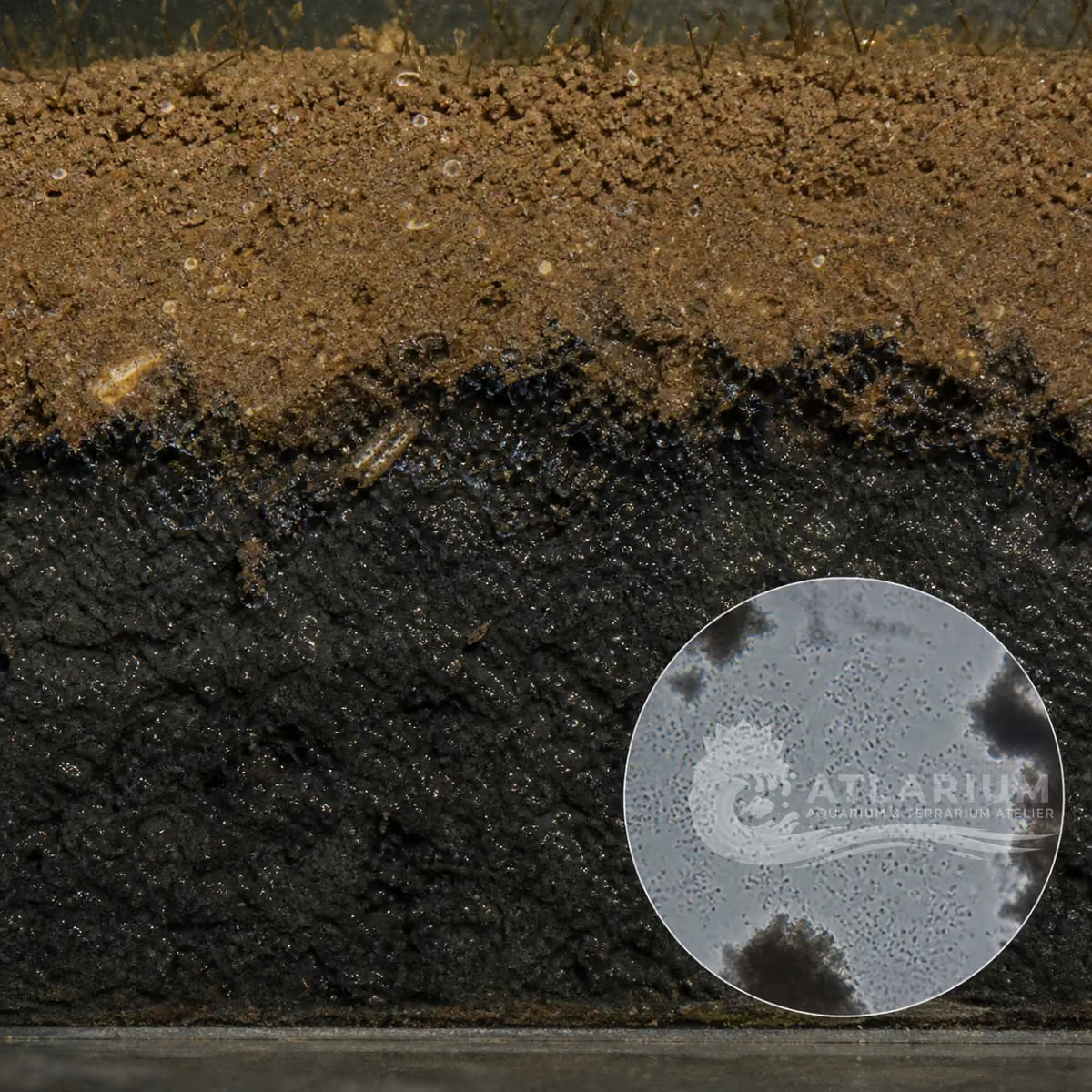
Mature biofilm
Comunità multispecie
A mature biofilm is an attached, changing multispecies community in a matrix, not a species, a fixed number of days or a certificate of safe filtration. Its structure and processes vary across microscale conditions and through succession. A visible coating can support a community observation, but it cannot identify its members, prove nitrification or diagnose an aquarium problem.
Water type
Freshwater / Brackish / Marine
Biological group
Comunità multispecie
Record type
Community
Recognition confidence
Medium
Ecological functions
Primary producer, Decomposer, Nitrifier, Grazer
Aquarium impact
Context-dependent
Culture and management
Passive aquarium growth
Typical size
Value not applicable
Visible to the naked eye
Yes, as an aggregate or structure
Useful starting magnification
No universal threshold supported by reliable evidence

Identity, habitat, and ecological role
Identity and taxonomic resolution: Mature biofilm is a community description, not a taxon or a named culture. Cells, extracellular matrix and particles occur in variable combinations on an immersed surface. “Mature” describes a succession state in context; it does not name a fixed membership, age or function. A coating on glass, rock or filter material therefore cannot establish a species, strain or a complete nitrogen-processing community. Identification remains at community level unless a component is independently supported.
Morphology and dimensions: A biofilm can appear as a transparent, coloured or uneven attached layer, but colour, thickness and texture describe the aggregate rather than a diagnostic organism. Microscale studies show internal gradients and spatial structure, so the outer surface need not represent deeper material. No single cell size or film thickness defines maturity. A visible layer can orient documentation of a surface, while it cannot establish composition, activity, stability or a safe filtration capacity.
Habitat and microhabitat: Biofilms form on immersed supports, including glass, rock, wood, plants and filter media. Water movement, light, oxygen, resources and surface material can produce different local conditions within and between films. Aquarium biofilter studies document succession, rather than one universal endpoint. The stored freshwater, brackish and marine labels describe broad community settings; they do not make a local biofilm transferable across salinities, systems or substrates.
Role in the food web: A community may include autotrophic and heterotrophic processes, attached consumers and nitrogen transformations in different microsites. Reviews of periphytic biofilms support possible primary production, organic-matter degradation and nutrient mineralization. Primary producer, decomposer, nitrifier and grazer are therefore conditional record labels. A visible mature film does not prove that each process is present, beneficial or sufficient in an aquarium.

Observation, culture, and ecological relationships
Where to look and how to sample: Document the exact immersed surface, position, water setting, date and visible form before interpreting an attached film. A scrape, swab, small support piece and water sample recover different fractions, so the method must remain with the observation. Material from the outside of a film cannot automatically represent internal microsites. Repeated observations can record change at a defined location, but they do not establish species composition, functional capacity or a universal maturity stage.
How to observe and identify: Observe the intact surface and aggregate form first, then retain scale, location and preparation with the record. Microscopy can document cells, matrix and spatial structure, but it does not certify maturity, nitrification or community safety. The useful method depends on the component and question; a visual film cannot be promoted to a named organism or process. Keep the conclusion at community level when the available observation cannot distinguish its members or their activity.
Presence and meaning in the aquarium: A mature-looking film can be ordinary attached community material, useful in one context or unwanted at a display surface. It is not by itself evidence that an aquarium is cycled, clean, polluted, stable or diseased. Interpret it with the specific surface, trend and independently measured system condition. Aquarium biofilter succession shows that communities change through time, so age or appearance cannot substitute for evidence of the process being asked about.
Culture, maintenance or use: This entry describes passive colonisation and succession, not a culture recipe. Surface material and local conditions can alter community structure and function, so a method that grows one film is not a general inoculation or maintenance protocol. An attached sample does not establish a transferable starter culture or safe live-food material. Observation of a defined surface is appropriate; propagation, transfer or deliberate use need evidence for the identified components and stated purpose.
Documented ecological relationships: Periphytic reviews describe autotrophic members, heterotrophic organic-matter processing and nutrient mineralization; microscale gradients can separate processes within the same matrix. Aquarium biofilters also undergo microbial succession. These facts support conditional food-web and nitrogen-cycle roles, not a claim that all biofilms clean water or contain a required pair of organisms. The actual relationship depends on the components and microhabitat.
Risks, biosecurity and limits: A mature biofilm is not a disease diagnosis and this card supplies no medicine, universal removal method, inoculation, transfer or preventive protocol. Appearance and age cannot establish a hazardous organism, contamination, nitrification capacity or treatment need. Define the surface and management question before acting, and use separate evidence for an animal-health concern, water-quality failure or identified organism.

Geographic origin and distribution
Origin
Tropical oceans and reefs

Identification and observation data
- Record type
- Community
- This is a community-level entry for mature biofilm, not a species, strain or fixed list of organisms. It concerns attached cells, matrix and associated material whose composition changes with surface, resources and succession. The word mature does not identify a date, a universal endpoint or a complete community. A visible film can document an aggregate, but cannot establish all of its taxa, processes or aquarium effect.
- Recognition confidence
- Medium
- Confidence is medium only for a community observation on a defined immersed surface. Film colour, texture and age can orient a record but cannot identify cells, strains or functional pathways. Microscale structure means one visible portion may not represent the whole matrix. Keep location, surface and observation method with the result, and do not promote appearance to proof of nitrification, stability, safety or a diagnosis.
- Biological group
- Comunità multispecie
- Mature biofilm is placed with microbial communities and symbioses as an ecological navigation group, not a taxonomic rank. It can combine bacteria, archaea, microalgae, fungi, protists, particles and consumers in variable proportions. This label distinguishes an attached community from one organism, but does not make biofilms from different surfaces, salinities or systems equivalent in composition, function or management.
- Ecological functions
- Primary producer, Decomposer, Nitrifier, Grazer
- Primary producer, decomposer, nitrifier and grazer are conditional community roles. Periphytic biofilm literature supports possible autotrophic production, heterotrophic processing and nutrient mineralization, while biofilter research documents changing nitrifier communities. These findings do not prove that every visible film performs every role or provides a cleaning service. Components, resources, oxygen conditions and microsite structure determine the realised function.
- Aquarium impact
- Context-dependent
- Impact is context dependent. An attached film may be ordinary community material or unwanted at a particular surface, but it does not prove aquarium maturity, water quality, contamination, disease or benefit. Succession and local gradients mean that similar-looking films can differ in membership and activity. Record the surface and system trend, then use evidence matched to the specific water-quality or animal-health question.
- Culture and management
- Passive aquarium growth
- The appropriate mode is passive colonisation of a defined surface, not culture of one presumed biofilm organism. Local resources, surface material and succession alter community structure, so there is no defensible universal maturity date, inoculation method or transfer recipe. A colonised support remains an observation sample unless its components and purpose are independently established. Do not treat a visible film as an authenticated starter culture.
- Typical size
- Value not applicable
- No single size range applies because mature biofilm is an aggregate of cells, matrix and particles rather than one body. Film thickness and patch size describe the sampled community, not a diagnostic measurement or maturity threshold. Different microsites can contain different structure and chemistry. Retain a scale and the exact surface when documenting an observation, without turning one dimension into evidence of taxon, function or filtration capacity.
- Visible to the naked eye
- Yes, as an aggregate or structure
- A mature biofilm can be visible as a coating, film or uneven attached layer, but what is visible is the aggregate rather than a census of its members. Similar coatings can differ in matrix, cells and activity. Visibility helps locate and document a surface; it does not prove that nitrification, decomposition, primary production, contamination or a treatment need is present. Use independent evidence for any narrower claim.
- Useful starting magnification
- No universal threshold supported by reliable evidence
- No universal starting magnification is assigned because the appropriate method depends on the component and question. Microscopy can reveal cells, matrix and local structure, but cannot alone certify maturity, process activity or safety. Record the surface, preparation and scale, and keep conclusions at community level unless evidence supports a component-specific result. Magnification is an observation setting, not a maturity or filtration threshold.

Links to Aquarium SOS


Microworld ecological network
Links based on documented kinship, food webs, biofilms, and ecological functions.