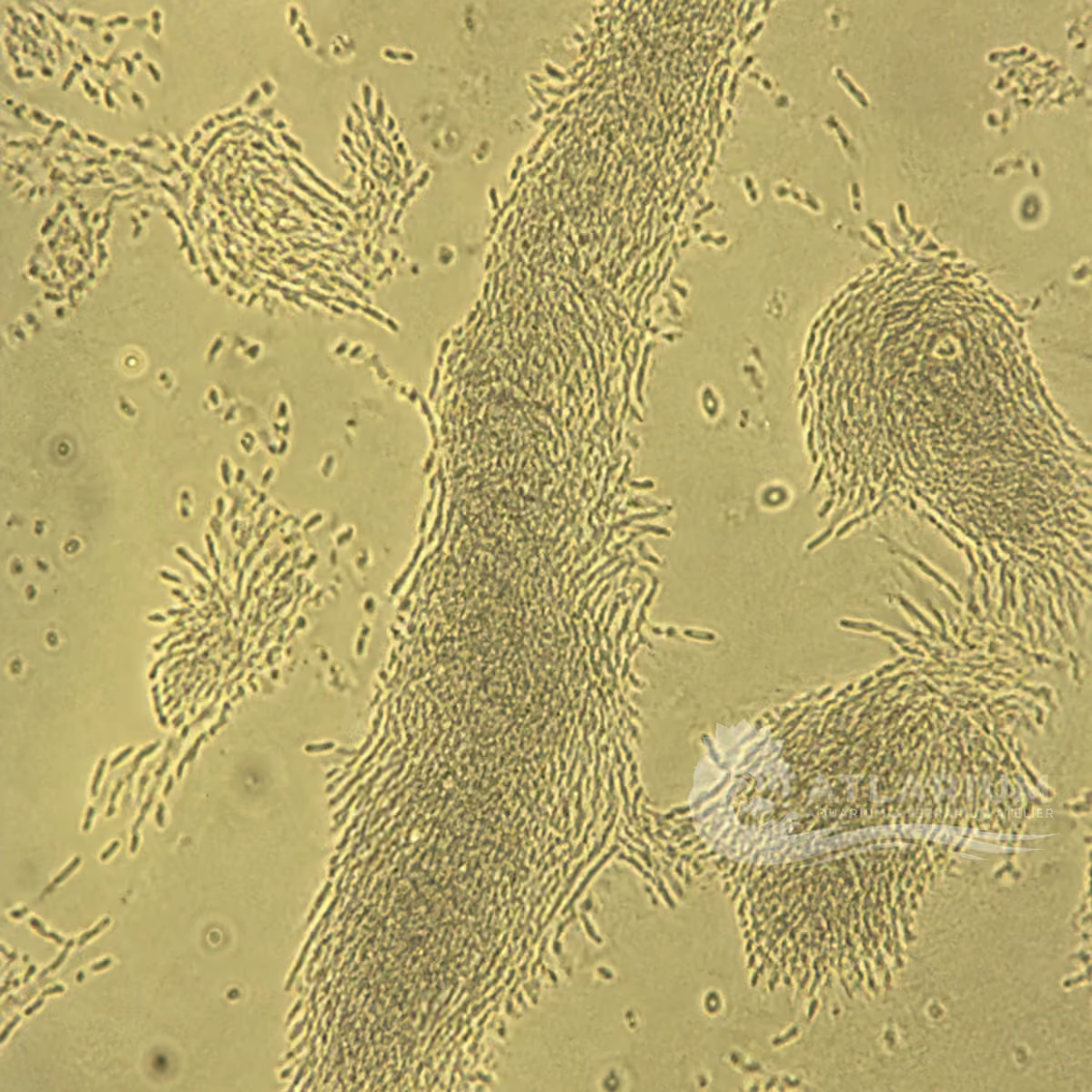
Aquatic dinoflagellates
Dinoflagellata — più famiglie
Aquatic dinoflagellates are a broad taxon-group label, not a confirmed species, toxin result or aquarium diagnosis. NOAA identifies dinoflagellates among common harmful-algal-bloom species in marine and brackish waters, while toxins and impacts vary by species and region. A colour, film, density change or group-level observation therefore cannot establish a hazard, a treatment need or a universal management action.
Water type
Freshwater / Brackish / Marine
Biological group
Dinophyceae
Record type
Taxonomic group
Recognition confidence
Low
Ecological functions
Primary producer, Potential nuisance
Aquarium impact
Potentially harmful
Culture and management
Passive aquarium growth
Typical size
10 µm – 200 µm
Visible to the naked eye
Varies by taxon or life stage
Useful starting magnification
400× to begin observation

Identity, habitat, and ecological role
Identity and evidentiary resolution: This card names a broad dinoflagellate group rather than a confirmed species or strain. That resolution is useful for recording an observation, but it cannot transfer the properties of one named taxon to another sample. The sealed evidence does not let colour, a surface film, a dense suspension or a group label prove a toxin, an animal-health hazard or a causal role. Keep any conclusion at the level that the identified taxon and context actually support.
Habitat and event context: NOAA identifies dinoflagellates among common harmful-algal-bloom species in marine and brackish waters, including estuaries. This does not make every dinoflagellate observation a harmful bloom. Toxins and impacts vary by species and region, and individual events vary across years and locations. A record must therefore retain its water type, site and time context rather than treating a report from another place or event as a prediction for this one.
Hazard and impact limits: A potentially harmful profile is a precautionary group-level flag, not evidence that this observation is toxic, infectious or responsible for an animal problem. The same broad label cannot establish exposure, severity or the mechanism of an observed change. Harmful-algal-bloom effects must remain linked to the confirmed taxon, region and circumstances described by competent evidence. Where those links are absent, the defensible result is uncertainty rather than a stronger hazard claim.
Meaning for an aquarium observation: An aquarium observation can be documented as a possible dinoflagellate group finding, but it is not a diagnosis or an instruction. The sealed source does not support transferring marine or brackish HAB information into a freshwater aquarium, nor does it support inferring toxin status from appearance. It also does not support a species-specific culture method, livestock decision or water-management recipe. Separate what is observed from what has been confirmed for the taxon and system.

Observation, culture, and ecological relationships
Document the observation: Record the date, water type, exact location and the visible pattern without treating those notes as a diagnosis. If the pattern changes, retain the same contextual information so observations can be compared across time and place. This card does not turn colour, density or a group label into a toxin finding or a health assessment. The relevant evidence is taxon-, region- and event-specific, so a general description should remain a record of uncertainty rather than a management prescription.
Interpret identification cautiously: A broad dinoflagellate observation cannot establish the named species involved in a bloom, its toxin status or its impact on animals. The sealed evidence identifies limits of inference, not a home diagnostic threshold. Do not promote a visual pattern, a film or a general group resemblance into a conclusion about disease, poisoning or cause. Any narrower conclusion needs evidence tied to the confirmed taxon and the system in which the observation occurred.
Treatment boundary: No universal treatment follows from this group-level label. The sealed evidence does not support a freshwater-aquarium algicide, medication, copper use, livestock change, dosage or generic toxin response for an unidentified dinoflagellate observation. A treatment question remains evidence-limited until the relevant taxon, affected organism and system are confirmed. Do not present a method drawn from another bloom, species, salinity or setting as treatment for this observation.
Control boundary: Control methods for harmful algal blooms remain under investigation, and relevance varies with species, region and event conditions. This card therefore provides no universal aquarium control action. A group observation cannot justify a chemical, transfer, removal, filtration, light, nutrient or water-movement instruction. Any proposed control must identify the confirmed taxon and system; otherwise this card records an evidence limit rather than an operational recommendation.
Prevention boundary: No universal prevention rule follows from a dinoflagellate group observation. The sealed evidence does not establish a quarantine outcome, culture-management practice, equipment procedure or livestock decision for an aquarium. It does not show that an action prevents a harmful bloom or toxin exposure. A preventive claim must be scoped to the confirmed taxon, system and documented context. Until then, this entry should not be read as a promise of prevention or a basis for a precautionary product.
Reassess the evidence boundary: If the practical meaning of an observation depends on a possible toxin, animal-health effect or management action, the question has moved beyond this group card. Preserve the site, time and water context, then use evidence that identifies the relevant taxon and system. NOAA notes that impacts differ by species and region and events differ by time and location. This is why the card keeps treatment, control and prevention evidence-limited rather than giving a universal aquarium response.

Geographic origin and distribution
Origin
North America

Identification and observation data
- Record type
- Taxonomic group
- This is a taxon-group entry for aquatic dinoflagellates, not a confirmed species or strain. A group label can organize an observation, but it cannot import a toxin, harmful-bloom outcome, treatment need or management method from a named taxon into an unidentified sample. Keep the taxonomic resolution explicit until evidence identifies the relevant organism and context.
- Recognition confidence
- Low
- Identification confidence is low because the sealed evidence concerns a broad group and does not make colour, a film, density or a general observation diagnostic. Those features cannot establish a species, toxin result, animal-health hazard or causal role. A decision that depends on any of those conclusions requires evidence tied to the confirmed taxon, region and system.
- Biological group
- Dinophyceae
- Dinoflagellates are used here as a broad group label. NOAA identifies dinoflagellates among common harmful-algal-bloom species in marine and brackish waters, including estuaries, but the group does not confer the same ecology or risk on every observation. Taxon, region, event conditions and water context determine what can be inferred responsibly. This card leaves scientific name, genus, order and origin unfilled: the label spans multiple taxa and regions, and current higher-taxonomy treatments do not resolve one safe scalar set.
- Ecological functions
- Primary producer, Potential nuisance
- Potential primary-production and nuisance roles are contextual possibilities for this group, not confirmed functions of every observation. Harmful-algal-bloom toxins and impacts vary by species and region, while individual events vary across locations and years. Do not turn the profile labels into evidence of a toxin, a bloom effect, a feeding relationship or a cause in one aquarium.
- Aquarium impact
- Potentially harmful
- Potentially harmful is a cautious group-card classification, not evidence that an observed dinoflagellate is toxic, infectious or causing harm. A group-level appearance cannot establish exposure, severity or mechanism. This flag keeps the possibility of a material impact visible while requiring the actual taxon, system and relevant evidence before a health or management conclusion is made.
- Culture and management
- Passive aquarium growth
- Passive management means this card supplies no culture recipe or intervention for an unidentified dinoflagellate group. The sealed evidence does not support a culture-management practice, transfer, quarantine outcome or preventive product. Any intentional culture or management method must be independently supported for the confirmed taxon and system rather than inferred from this broad label.
- Typical size
- 10 µm – 200 µm
- The displayed 10–200 µm interval is retained as an observational record value, not as an identification or risk threshold. A cell inside or outside that interval does not establish a dinoflagellate species, a harmful bloom or a toxin result. Size must be interpreted with the identified taxon and sample context; the group label alone does not attach a single biological meaning to the range.
- Visible to the naked eye
- Varies by taxon or life stage
- A visible colour change, film, suspension or dense pattern can motivate an observation, but it does not identify a dinoflagellate species or demonstrate a harmful bloom. Appearance cannot establish toxicity, animal-health relevance or a treatment need. Use visibility as a description of the event and retain the site and time context, while keeping any taxon or impact conclusion evidence-limited.
- Useful starting magnification
- 400× to begin observation
- The recorded 400× magnification is an observation setting, not a diagnostic threshold for a species, toxin or harmful-bloom effect. Greater detail from a sample does not remove the need for taxon- and system-specific evidence. Keep the magnification with the site, time and preparation, and do not use a group-level image as proof of a treatment, control or prevention need.

Links to Aquarium SOS

Microworld ecological network
Links based on documented kinship, food webs, biofilms, and ecological functions.