Spironucleus intestinal flagellates
Spironucleus
Spironucleus is a genus of small flagellated diplomonad protists commonly found in the intestinal tract of some fish. Their clinical importance is variable and depends on parasite burden, host condition and husbandry. Weight loss, lethargy and pale or stringy feces are compatible signs, not a diagnosis. Confirm the organism in a relevant wet mount and keep “hole in the head” as a differential syndrome rather than a universal causal claim.
Water type
Freshwater / Marine
Biological group
Fornicata
Record type
Genus
Recognition confidence
Low
Ecological functions
Parasite, Potential pathogen
Aquarium impact
Context-dependent
Culture and management
Not cultured
Typical size
5 µm – 20 µm
Visible to the naked eye
No, not as an individual
Useful starting magnification
400× to begin observation

Identity, habitat, and ecological role
Identity and taxonomic resolution: Spironucleus is retained at genus level because fish-associated species differ in host range, tissue distribution and disease expression. It is a flagellated diplomonad protist, not a synonym for every intestinal flagellate or for the historical label Hexamita. The name “hole in the head” describes a syndrome with multiple possible contributors; an external lesion cannot identify Spironucleus. Diagnosis needs fresh intestinal material, host signs and differentials.
Form, movement and dimensions: Direct S. vortens studies report approximately 5–10 μm in faecal squash preparations examined at 400×, while the original description of live cultured organisms reports 12.5–20.5 μm long and 5.0–11.2 μm wide. The rounded 5–20 μm span on this card is an observation guide, not a genus-wide diagnostic range. Preparation, orientation and organism matter; size and motion alone do not prove identity or burden.
Host site and clinical context: The intestinal tract is the usual relevant site in finfish, including cichlids, bettas, gouramis and other aquarium fish. Low numbers may be tolerated, whereas increasing burdens can be associated with lethargy, poor appetite, weight loss and pale or stringy feces. Crowding and poor environmental conditions can worsen outcomes. Head lesions, bacteria, nutrition and water quality remain separate questions.
Transmission, burden and disputed relevance: Clinical significance depends on parasite number, host condition and circumstances. One primary S. vortens study recovered SEM-confirmed organisms from head lesions and internal organs of severely affected cichlids and proposed a possible causal role after systemic spread. Other causes remain documented; an external lesion or one positive wet mount cannot prove genus identity, a tank-wide cause or that every lesion was spironucleosis.

Observation, culture, and ecological relationships
Where to look and how to sample: For a suspected internal flagellate problem, document appetite, weight change, feces, affected species, recent transport, crowding, water quality and mortalities before sampling. A fresh wet mount of intestinal content or tissue is more informative than a photograph of skin or head lesions. Use clean, dedicated tools, label the fish and sample site, when feasible. One negative sample cannot exclude shedding, and one positive result cannot generalize to every fish.
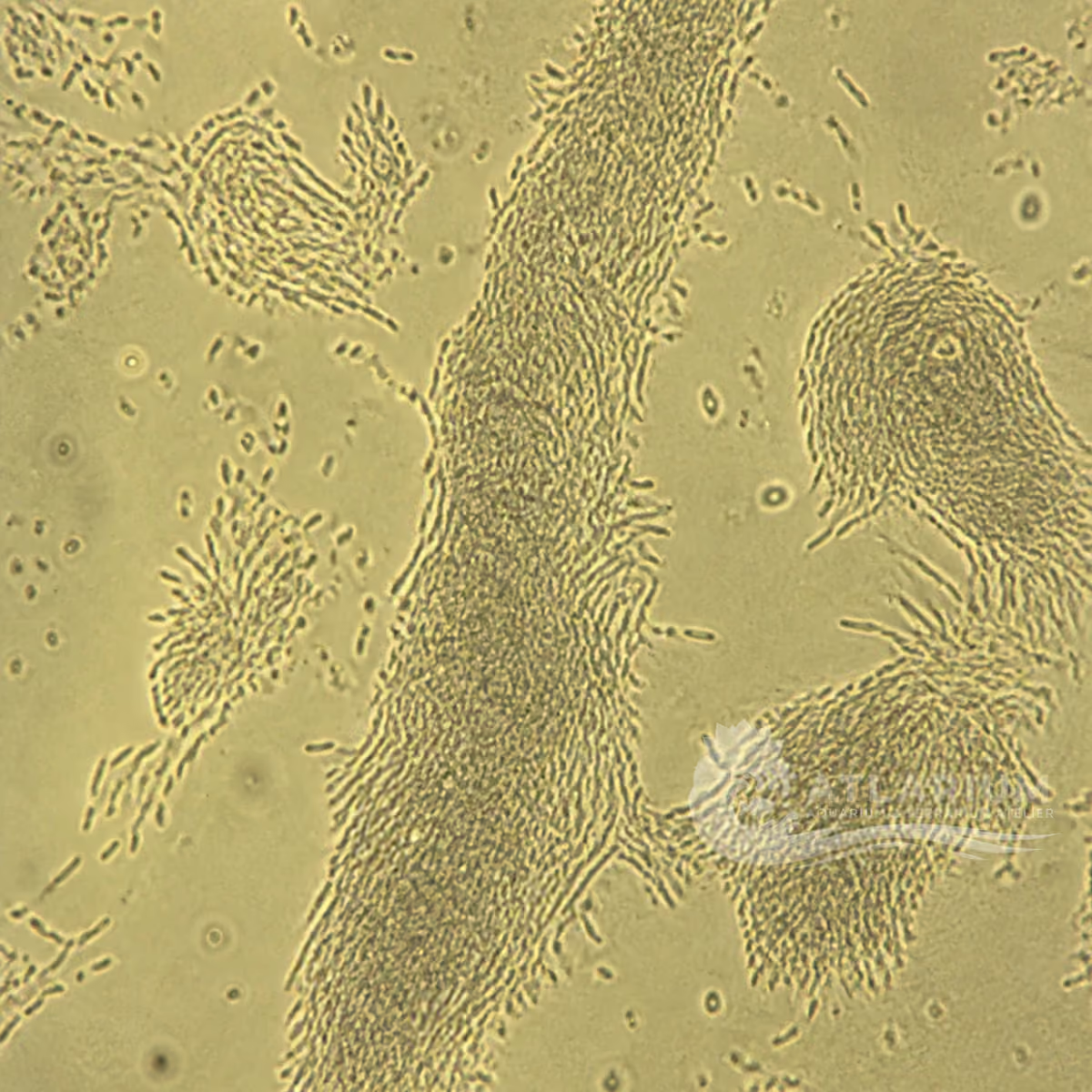
How to observe and identify: Examine fresh intestinal material first at low power, then use about 400× to inspect small motile, symmetric flagellates across several fields. Count and record organisms consistently, but interpret burden with host signs and sample quality. Mucus, debris, other diplomonads and unrelated intestinal organisms remain differentials. Microscopy supports suspicion; species, invasion, co-infection and lesions may need professional assessment.
Immediate management and containment: Separate affected fish or the system when safely practical, avoid sharing nets, water, filter media or feeding equipment, and reduce avoidable handling. Check water quality, diet, stocking and sanitation because chronic infection is associated with crowded or unsanitary conditions. Remove dead fish promptly with dedicated tools and keep a timeline of signs and losses. These steps support welfare and do not substitute for diagnosis.
Treatment and professional limits: Veterinary references retain metronidazole as the available treatment option for confirmed spironucleosis in ornamental fish, with feed use preferred when a fish can eat and baths considered when anorectic. It is not for food fish; legal status, host tolerance and diagnosis matter. This card provides no dose, duration or combination regimen. Use medication only under veterinary direction or according to an authorised label after confirming the clinical context.
Control, follow-up and prevention: Assess response with appetite, condition, feces, husbandry review and repeat examination as directed. Prophylactic medication without diagnostic testing is discouraged. Persistent signs warrant reassessment of burden, co-infections, diet, water, crowding and source fish. Prevention emphasizes quarantine and observation of new fish, clean dedicated equipment, appropriate stocking and rapid correction of environmental stressors.
Risks, biosecurity and limits: Do not diagnose Spironucleus, a contagious outbreak or “hole in the head” from a photo alone. Avoid transferring suspect fish, water or tools between aquariums and use product safety measures if treatment chemicals are prescribed. Seek professional input for severe weight loss, anorexia, neurological signs, ulcers or mortality. The genus and syndrome association remain conditional until evidence and alternatives agree.

Geographic origin and distribution
Origin
North America

Identification and observation data
- Record type
- Genus
- This is a genus-level record for Spironucleus. The name describes a group of diplomonad flagellates, not a species diagnosis and not a replacement for the historical label Hexamita. Fish-associated species can differ in host range and clinical behavior. External “hole in the head” lesions are not proof of this genus; the supported resolution comes from a relevant fresh intestinal sample and compatible clinical context.
- Recognition confidence
- Low
- Fresh intestinal wet mounts can support a prudent genus-level suspicion when small motile symmetric flagellates are present, but morphology overlaps with mucus, debris and other intestinal protists. Inspect several fields, record the site and burden, and do not infer species or causation from one moving cell. Veterinary or laboratory assessment is appropriate when disease is progressive, mortality occurs or external lesions need a differential diagnosis.
- Biological group
- Fornicata
- Spironucleus belongs to the order Diplomonadida within Fornicata. The protist-and-infusoria navigation label is functional, not a claim that ciliates, amoebae and flagellates are equivalent. Its biological group helps explain the motile intestinal finding, while taxonomic resolution remains genus-level. A taxon-specific phylogeny recovered non-monophyletic marine, freshwater and terrestrial clades, so it does not support one origin scalar for the genus. The label must not merge Spironucleus with every historical Hexamita report or every flagellate seen in aquarium feces.
- Ecological functions
- Parasite, Potential pathogen
- The recorded roles are parasite and potential pathogen in compatible fish. Pathogenicity is variable and linked to burden, host condition and husbandry. Some fish may carry low numbers without the same clinical effect seen in a stressed or heavily affected individual. The record therefore supports sampling, containment and differential diagnosis, not a blanket assertion that any positive wet mount explains every symptom in a tank.
- Aquarium impact
- Context-dependent
- The aquarium impact is context-dependent. A high burden together with weight loss, anorexia, pale feces or lethargy warrants timely fish-health assessment, but an external lesion or a low-level finding alone is insufficient. Crowding, transport, water quality, diet and co-infections can alter outcome. Responsible action begins with isolation, diagnostic material and husbandry review rather than prophylactic medication or a universal parasite label.
- Culture and management
- Not cultured
- No culture or propagation protocol is provided because Spironucleus is a fish-associated parasite of biosecurity concern. Diagnostic handling belongs with qualified veterinary or laboratory services. Do not transfer suspect fish, water, feces, filter media, plants or shared tools between aquariums. An observation should be documented and contained, never treated as starter material or a household culture experiment.
- Typical size
- 5 µm – 20 µm
- The 5–20 μm range is a broad observation guide for small Spironucleus-like forms. Veterinary references describe typical forms around 9 μm, but size varies with preparation, orientation and the organism actually present. Measure fresh material with a calibrated scale, identify the sample site and compare multiple fields. Dimensions alone cannot distinguish a diplomonad or establish a disease-causing burden.
- Visible to the naked eye
- No, not as an individual
- Individual Spironucleus cells are not visible or identifiable with the naked eye. Stringy feces, poor body condition or a head lesion can be visible clinical clues, but none is a direct view of a named parasite. A relevant fresh wet mount is needed to observe candidate flagellates, and diagnostic confidence still depends on the sample, burden, host signs and exclusion of alternatives.
- Useful starting magnification
- 400× to begin observation
- Start at low power to locate representative fresh intestinal material, then use about 400× to inspect motile flagellates, symmetry and surrounding debris across several fields. Record field counts consistently. This magnification supports a genus-level orientation but does not resolve every species or cause of disease. Laboratory methods or professional assessment may be needed for consequential treatment and diagnosis.

Links to Aquarium SOS

Microworld ecological network
Links based on documented kinship, food webs, biofilms, and ecological functions.