Water mould
Saprolegnia
Saprolegnia is a genus of freshwater oomycetes that decomposes organic material and can opportunistically colonize eggs or damaged animal tissue. Cotton-like growth is not a diagnosis by itself. Review the affected host, injury and water conditions, use qualified veterinary or laboratory support when disease is suspected, and apply any treatment only in its documented host and product context.
Water type
Freshwater
Biological group
Oomycetes
Record type
Genus
Recognition confidence
Low
Ecological functions
Decomposer, Potential pathogen
Aquarium impact
Potentially harmful
Culture and management
Not cultured
Typical size
5 µm – 50 µm
Visible to the naked eye
Yes, as an individual
Useful starting magnification
100× to begin observation

Identity, habitat, and ecological role
Identity and diagnostic scope: Saprolegnia is a genus of oomycetes, not a true fungus, though its growth is often called water mould. It includes more than one species, so a genus name does not automatically describe the host range or behaviour of one isolate. Cotton-like material on an egg, fish, amphibian or debris is compatible with several causes. A reliable conclusion needs the relevant host, lesion and sample context; colour, a photograph or a generic disease label cannot establish species, source or severity.
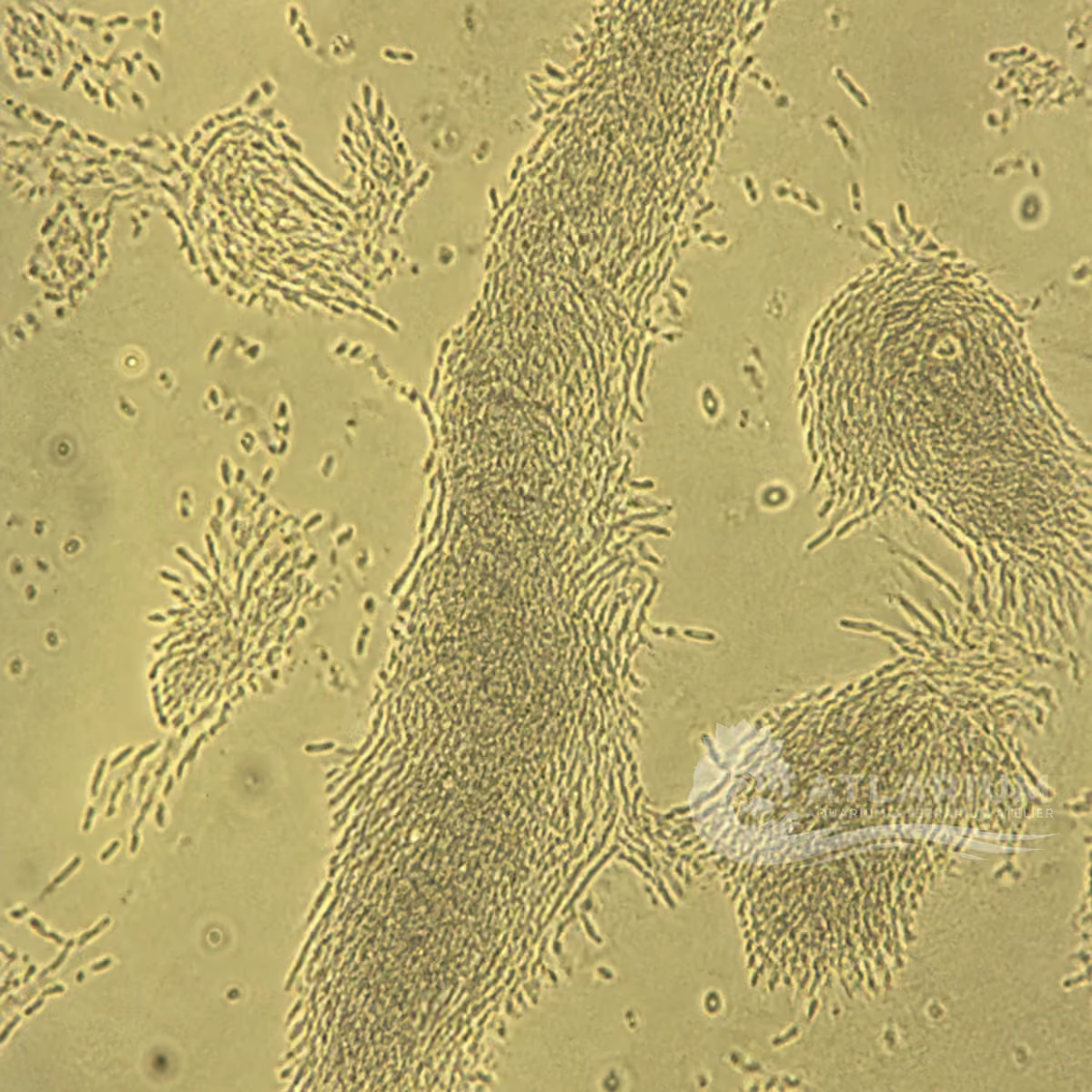
Structure, scale and visibility: Filaments and reproductive structures can occur within an observed size range of 5–50 µm, with size varying by structure, life stage, preparation and species. A cottony colony can be noticed without magnification, but the visible mat is not diagnostic. At around 100×, the observer can document broad filaments and distinguish material from bare debris, but cannot identify Saprolegnia, prove viability or show tissue invasion. Note magnification, location and preparation with every image.
Ecology, hosts and water context: Members of the genus can use organic material as decomposers and can opportunistically colonize compromised eggs or injured animal tissue, especially when host defences or husbandry are unfavourable. Water, egg surfaces, lesions, filters and decaying material are different sample contexts; a finding in one does not describe an entire aquarium. Poor water quality, crowding, handling injury or a concurrent disease may be relevant risks, but none proves the cause of a particular patch of growth.
Health relevance and limits: In fish or amphibians, a cotton-like lesion warrants assessment of injury, parasites, bacterial disease or environmental stress rather than visual diagnosis. Egg losses also need the egg species, water conditions and handling history considered. Veterinary or laboratory interpretation can distinguish a compatible oomycete finding from a confirmed cause. Do not infer that every visible colony needs the same product, or extrapolate treatment between host species, life stages or jurisdictions.

Observation, culture, and ecological relationships
First response and documentation: Note the affected species, life stage, number of eggs or animals, onset, water measurements, handling and recent additions before changing several variables. Photograph the material with scale where possible and preserve the distinction between a visible patch and a confirmed cause. Remove dead organic material with dedicated tools, but avoid scraping healthy tissue or spreading suspect material. Progressive lesions, mortality or egg losses justify aquatic veterinary or laboratory support.
Control while the cause is assessed: Improve the documented basics that support host health: stable, appropriate water quality, suitable oxygenation, hygiene, nutrition and low-stress handling. Isolate affected animals or eggs only when that can be done without additional harm, and avoid sharing nets, containers, siphons or water between systems. These steps reduce opportunities for transfer and address common risk contexts; they do not prove that Saprolegnia is present or guarantee elimination of an established disease.
Diagnosis before targeted treatment: A cotton-like lesion can accompany injury or other infections, so treatment choices should follow host examination and, where needed, sampling by a qualified professional. The relevant evidence is the exact taxon, affected tissue or egg stage, product label, water chemistry, welfare risk and local rules. Do not use a visual resemblance, an internet photograph or an observation to select an unlabelled chemical. Do not attempt home culture or susceptibility testing from lesion material.
Treatment: evidence and limits: Veterinary references describe treatment options for external, diagnosed Saprolegnia infections in particular fish or egg contexts, but suitability is conditional. An intervention must be selected and supervised for the confirmed host, diagnosis and product instructions, with attention to toxicity, filtration, invertebrates and legal restrictions. No dose or prescription is provided. Untreated injury, poor water quality or another disease can make treatment ineffective or harmful.
Prevention and cleaning: Prevention centres on reducing injury and stress, appropriate quarantine of new animals, good water quality and removal of dead eggs or organic material without cross-contamination. Clean, dry or disinfect equipment with a method appropriate to the material, system and local safety guidance; organic debris can reduce disinfectant performance. Use dedicated tools and careful cleaning to limit transfer between tanks. Do not assume one household product is safe or effective for every system.
Follow-up and specialist referral: Reassess the host and water conditions after any change, documenting whether lesions, egg losses or mortality improve, persist or spread. Seek aquatic veterinary advice for rapidly advancing lesions, recurring outbreaks, breeding groups or uncertainty about treatment. Laboratory help is useful when visual findings conflict with the clinical picture. Keep notes on observations, testing, product use and cleaning so that a later decision is based on evidence, not an assumed species name.

Identification and observation data
- Record type
- Genus
- Identification is limited to the genus Saprolegnia rather than one identified species. Genus-level evidence can describe the group, but disease risk, host range and useful diagnostic characters can vary among species. Cotton-like material on an egg, animal or organic debris is not a genus diagnosis. Use the name only at the taxonomic resolution actually supported by the sample and method. The published taxon-specific evidence supports the diagnostic scope of this genus, but it does not establish a single reliable native geographic origin.
- Recognition confidence
- Low
- A household microscope can show broad, non-septate-looking filaments and reproductive structures in suitable material, but appearance alone does not establish Saprolegnia or prove that it caused disease. Similar growth can involve other oomycetes, fungi, mixed biofilm or debris. Confirmation of a health-relevant finding needs an appropriate sample, host context and qualified diagnostic assessment; retain uncertainty when those are absent.
- Biological group
- Oomycetes
- Saprolegnia belongs to the oomycetes, a lineage distinct from true fungi despite its familiar cottony, filamentous appearance. Because of that appearance, it is often discussed alongside fungi in aquarium contexts, although the two are not biologically identical. Freshwater observations, host material and reproductive structures all affect interpretation. A filament in water is not enough to identify a species or a disease process.
- Ecological functions
- Decomposer, Potential pathogen
- The genus can act as a decomposer on organic material and as an opportunist on damaged tissue or eggs. Those roles are context-dependent: a presence on decaying material does not prove animal disease, while a compatible lesion does not prove its cause. Injury, handling, water conditions and other infections can change susceptibility. Treat ecological observation and health assessment as related but distinct evidence questions.
- Aquarium impact
- Potentially harmful
- Saprolegnia can be potentially harmful when it colonizes susceptible eggs or compromised animals, but a cotton-like patch is not automatically an emergency or a confirmed diagnosis. The practical risk depends on the host, lesion, extent, water conditions and alternative causes. Avoid reacting with a universal medication. Assess affected animals promptly and correct documented husbandry problems while diagnostic context is gathered.
- Culture and management
- Not cultured
- Home culture from lesion material is not appropriate. Do not deliberately propagate growth from lesions, eggs or unknown aquarium material, or move it between systems to test an identification. Diagnostic isolation and any treatment evaluation belong to qualified veterinary or laboratory settings. Dedicated tools, sensible cleaning and avoiding transfer of suspect material are safer than attempting to maintain or enrich an unconfirmed organism.
- Typical size
- 5 µm – 50 µm
- The listed 5–50 µm range is a working microscopic scale for relevant hyphal or reproductive structures, not a fixed measurement for every species or life stage. Dimensions depend on the structure examined, growth conditions and sample preparation. Scale can help document an observation, but cannot identify Saprolegnia, prove viability or distinguish disease from environmental colonization. Note magnification, sample source and preparation with images.
- Visible to the naked eye
- Yes, as an individual
- Cotton-like colonies or mats can sometimes be visible to the naked eye on eggs, tissues or decaying material, but the visible mass is not an identification by itself. Individual diagnostic structures require microscopy and suitable sampling. Visibility cannot determine species, severity, source or whether an animal has an infection. Document the location and change over time instead of assigning a cause from colour or texture alone.
- Useful starting magnification
- 100× to begin observation
- At about 100×, the observer can inspect filamentous growth and note broad structures; higher-quality microscopy and diagnostic context may be needed for meaningful interpretation. Magnification cannot prove that visible filaments are Saprolegnia, identify the species, establish invasiveness or select a treatment. Compare the sample with its host and environment, and use veterinary or laboratory support when eggs or animals are affected.

Links to Aquarium SOS

Microworld ecological network
Links based on documented kinship, food webs, biofilms, and ecological functions.