Brooklynella hostilis
Brooklynella hostilis is a marine fish-associated external ciliate, but mucus, respiratory distress and skin damage are not species proof. Wet mounts of affected tissue provide diagnostic context. Its family remains unresolved between competing specialist placements, and available treatment records do not justify a universal regimen. Contain suspect material, protect water quality and seek qualified fish-health guidance for progressive disease or mortality.
Water type
Marine
Biological group
Phyllopharyngea
Record type
Species
Recognition confidence
Medium
Ecological functions
Parasite, Potential pathogen
Aquarium impact
Potentially harmful
Culture and management
Not cultured
Typical size
No value supported by reliable evidence
Visible to the naked eye
No, not as an individual
Useful starting magnification
No universal threshold supported by reliable evidence

Identity, habitat, and ecological role

Identity and diagnostic boundary: Brooklynella hostilis is an accepted marine ciliate name associated with external disease in fish, especially skin and gill involvement. It is not a label that can be assigned from mucus, rapid breathing, flashing, skin loss or mortality alone. A finding needs the affected host, fresh tissue site and an appropriate wet-mount context; unrelated parasites, bacteria and environmental injury can produce overlapping signs.
Taxonomy with an explicit limit: The higher placement is deliberately cautious. Specialist phylogeny supports a Phyllopharyngea and Dysteriida context, but places Brooklynella between Dysteriidae and Hartmannulidae and allows that it may represent a separate family. Older material uses Hartmannulidae. This card therefore does not retain Brooklynellidae as settled taxonomy or pretend that one source resolves the disagreement.
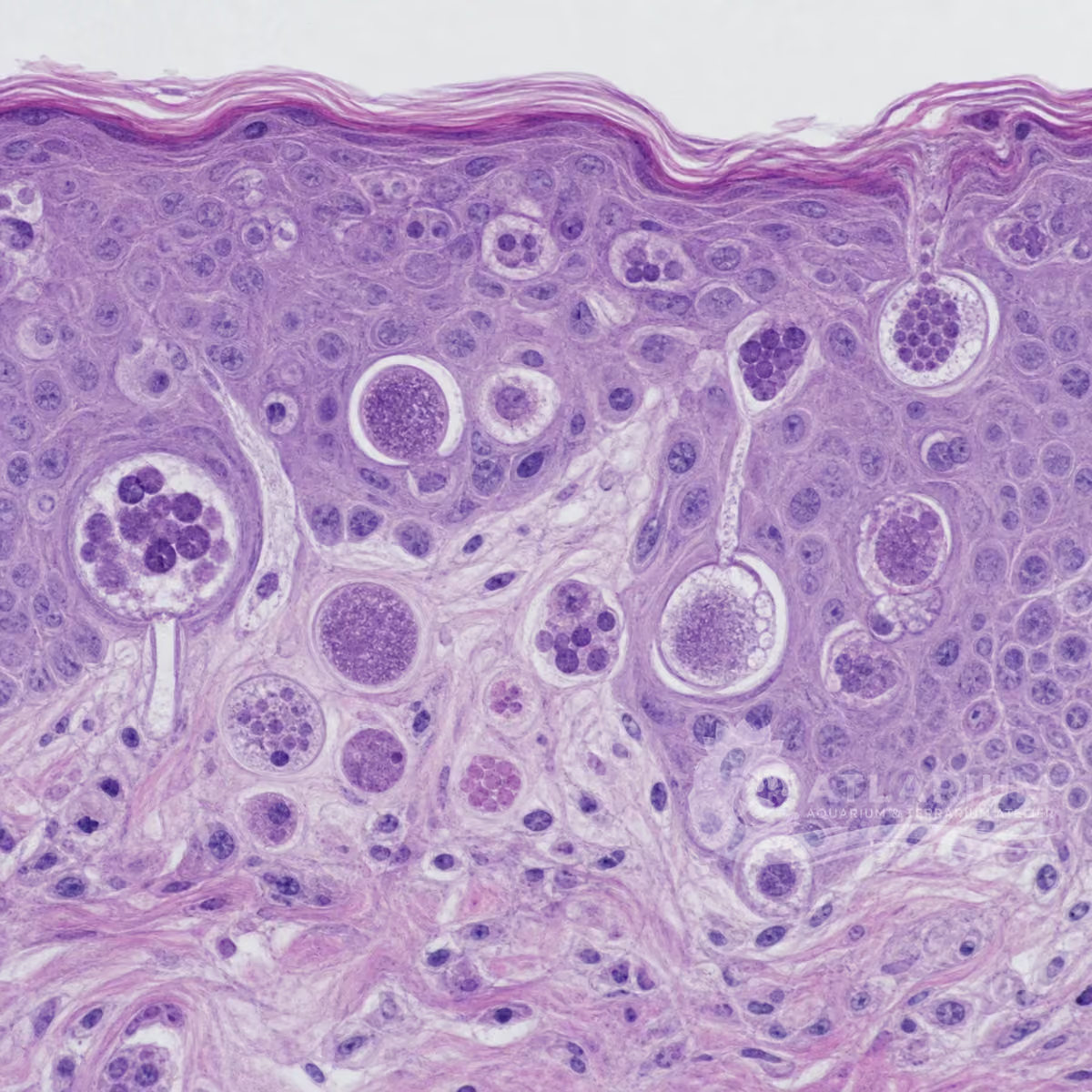
Host tissue and observed signs: The original description documents severe disease in marine-fish gills, including inflammation, tissue damage, haemorrhage, desquamation and lamellar fusion. Veterinary material also lists excess mucus and respiratory signs in a saltwater Brooklynella context. These observations matter clinically, but they still require a live-host, tissue and differential assessment. A ciliate found only after a fish dies is not automatically the initiating cause.
Distribution and record scope: Available sources record marine-fish, shipment and checklist contexts rather than one native origin or a complete global range. A named host or locality is useful provenance, not a map for all tropical marine aquariums. The card keeps MARINE as the environmental scope and leaves origin unfilled. It also separates a confirmed species record from an unidentified blue-grey mucus event or a broadly Brooklynella-like ciliate.
Observation, culture, and ecological relationships

Sampling before intervention: When compatible disease is suspected, document the fish, onset, affected skin or gill site, behaviour, mortality pattern and water conditions before changing several variables at once. A fresh sample from affected tissue can be more informative than old water or a dead-fish surface smear. Keep the sample site and preparation with the result. Do not move suspect fish, water, nets or shared equipment into another system while assessment is underway.
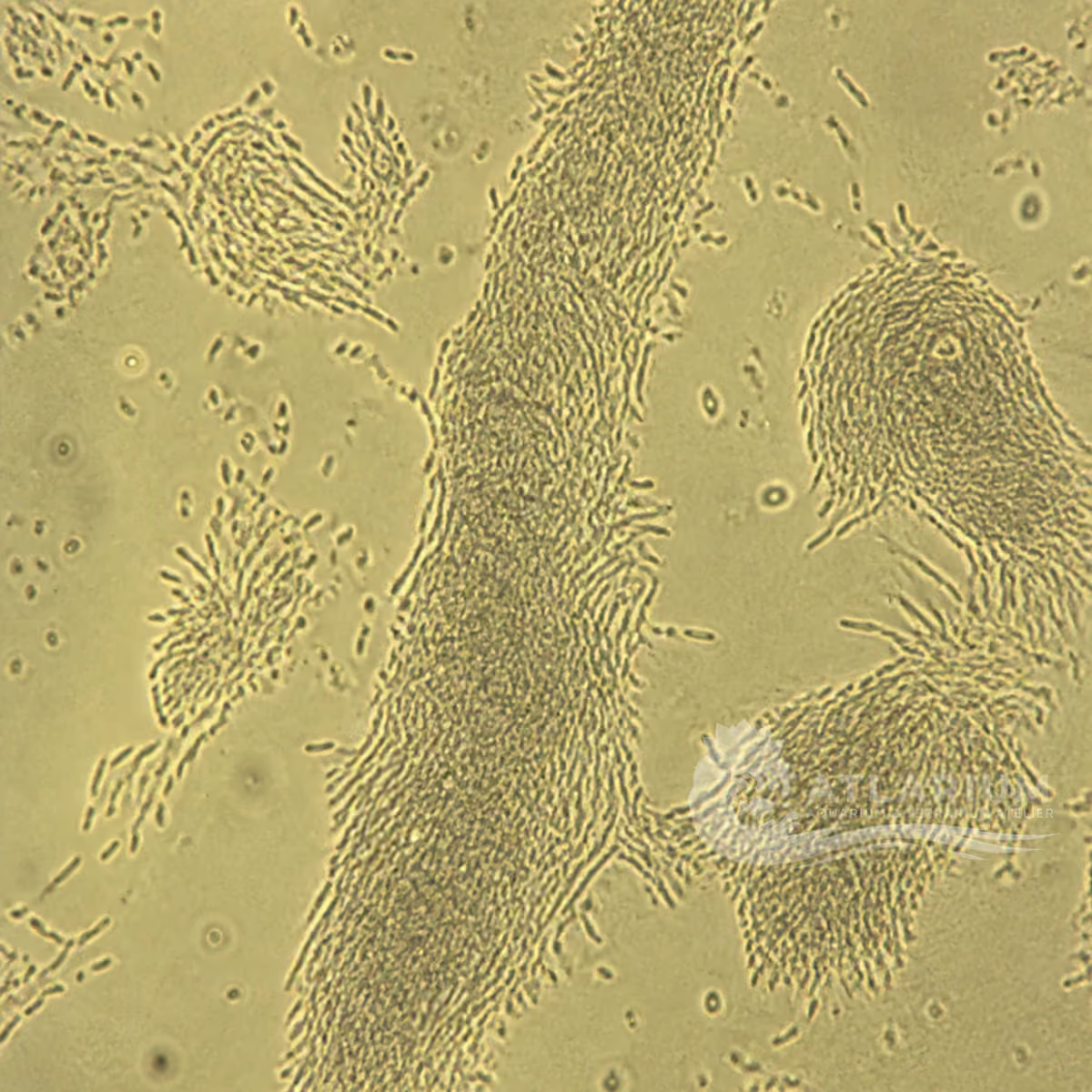
Observation and diagnostic limits: A wet mount can provide useful context for a compatible external ciliate, but it does not make a species diagnosis by itself. Compare several fields, record scale and sample preparation, and interpret any organism alongside host condition and competing causes. Mucus, respiratory distress and tissue change are host responses, not visible parasites. The card seals no universal size range or magnification threshold because neither is a sufficient identity test.
Immediate containment and support: Containment means reducing unnecessary transfer while preserving fish welfare and diagnostic value. Keep equipment dedicated, avoid sharing water or animals, and maintain stable oxygenation and water quality appropriate to the system. These are prudent actions during an unresolved event, not evidence that B. hostilis is present. Do not turn containment into a fixed fallow, disinfection or isolation schedule: the reviewed sources do not establish one for every marine system.
Treatment evidence and limits: Merck lists broad saltwater Brooklynella treatment categories, whereas a historical B. hostilis review reports copper ineffective in its own setting. Their scope, timing and regimen differ, so the records cannot be converted into a universal recommendation. This card gives no product, dose, concentration, duration, freshwater procedure or outcome promise. Treatment choice requires an aquatic veterinarian or qualified fish-health professional after an appropriate diagnostic assessment.
Prevention without false guarantees: Cautious introduction of marine fish, attention to avoidable stressors and separation of uncertain material are sensible risk-reduction principles. They do not certify a fish as infection-free or prove that a particular quarantine length, prophylactic chemical or routine will prevent every case. Keep source, arrival date, signs and system changes traceable. If a source differs on taxonomy, treatment or distribution, preserve that limit rather than turning it into a certainty.
Escalation and biosafety: Progressive respiratory distress, rapid decline or mortality warrants prompt fish-health or veterinary escalation. Provide the host history, photographs, water data and details of any sample or prior intervention; that context can change interpretation. Wear suitable protection for damaged skin, clean dedicated tools and dispose of clinical material responsibly. Do not culture, share or deliberately propagate an unidentified ciliate. Observation is not authorization to create a pathogen culture.
Geographic origin and distribution
Origin

Cosmopolitan or introducedNorth America
Identification and observation data
- Record type
- Species
- This is a species-level card for Brooklynella hostilis, an accepted marine ciliate name associated with external disease in fish. The name does not turn excess mucus, a sick anemonefish or a ciliate-like wet mount into confirmation. Keep the host, affected tissue, sample quality and diagnostic method attached to every observation.
- Recognition confidence
- Medium
- Identification confidence is limited by overlapping clinical signs and by the limits of morphology in a single preparation. Wet mounts of affected tissue can support a compatible finding, but mucus, respiratory difficulty and tissue damage have other causes. Record several fields, scale and sample context, then seek qualified fish-health support when the result changes welfare or treatment decisions.
- Biological group
- Phyllopharyngea
- Brooklynella is treated here as a marine ciliate in the Phyllopharyngea and Dysteriida context. Its family is deliberately unresolved: specialist phylogeny places the genus between Dysteriidae and Hartmannulidae and allows a distinct family, while older material uses Hartmannulidae. The group label does not make all ciliates similar in host range or management.
- Ecological functions
- Parasite, Potential pathogen
- Parasite and pathogen describe documented marine-fish contexts, not an automatic role for every ciliate finding. Gill and skin disease can be severe, but facultative parasitism and post-mortem findings require caution about cause and sequence. Interpret a compatible organism with the host, tissue site, burden, water conditions and differential diagnoses rather than with a name or sign alone.
- Aquarium impact
- Potentially harmful
- Impact is potentially harmful when an appropriately supported infection affects marine fish, because gill and epithelial damage can progress quickly. Visible mucus or abnormal behaviour still does not prove Brooklynella. Contain suspect material carefully, support stable water quality and obtain diagnostic help before exposing all fish, invertebrates or biofiltration to an unverified chemical response.
- Culture and management
- Not cultured
- This ciliate is not cultured at home. A wet mount is diagnostic observation, not a propagation method, and neither the cited pathology nor veterinary material authorizes hobby culture. Keep suspect fish, water and equipment separate while assessment is arranged. Qualified laboratories use suitable containment; do not retain, share or intentionally multiply clinical material.
- Typical size
- No value supported by reliable evidence
- No taxon-specific size scalar is sealed for this card. The reviewed exact sources do not substantiate a universal 40–100 µm range, and size can vary with preparation and overlaps other external protists. A measured organism must retain its scale, tissue site and preparation. Size alone cannot identify B. hostilis, establish pathogenicity or select treatment.
- Visible to the naked eye
- No, not as an individual
- An individual Brooklynella cell is not identifiable with the naked eye. Aquarists may notice excess mucus, dull colour, flashing, respiratory effort or tissue change, but these are host responses with several possible causes. Record the affected fish and time course, then use an appropriate fresh sample and qualified interpretation. A visible patch or film does not prove the responsible organism.
- Useful starting magnification
- No universal threshold supported by reliable evidence
- No universal magnification scalar is sealed. Wet mounts can contribute diagnostic context, but no reviewed exact source makes 400× or another number a species-confirmation threshold. Use enough observation to document morphology, preparation and several fields, then stop at the supported level. Specialist morphology, laboratory methods or veterinary review may be needed for a consequential identification.