Camallanus spp.
Camallanus
Camallanus is a genus-level entry for intestinal nematodes relevant to compatible freshwater aquarium fish. A blood-red worm near the anus can be an orientation clue, but does not confirm a species or diagnosis. The documented cycle can involve fecal larvae, a copepod or other crustacean intermediate host and an appropriate fish host. Treatment, containment and prevention need fish-health assessment rather than a universal home protocol.
Freshwater
Chromadorea
Genus
Low
Parasite, Potential pathogen
Potentially harmful
Not cultured
No value supported by reliable evidence
No value supported by reliable evidence
No universal threshold supported by reliable evidence

Identity, habitat, and ecological role

Observation, culture, and ecological relationships

Geographic origin and distribution
Origin

Identification and observation data
- Record type
- Genus
- This is a genus-level entry for Camallanus, not a species diagnosis. Camallanus contains intestinal nematodes whose host association, life-cycle detail, measurement and clinical impact can vary among species and stages. A blood-red worm near an anus may orient a fish-health examination, but cannot identify the species from colour alone. Retain the genus boundary unless intact diagnostic characters and qualified parasitology or fish-health assessment support a more specific conclusion.
- Recognition confidence
- Low
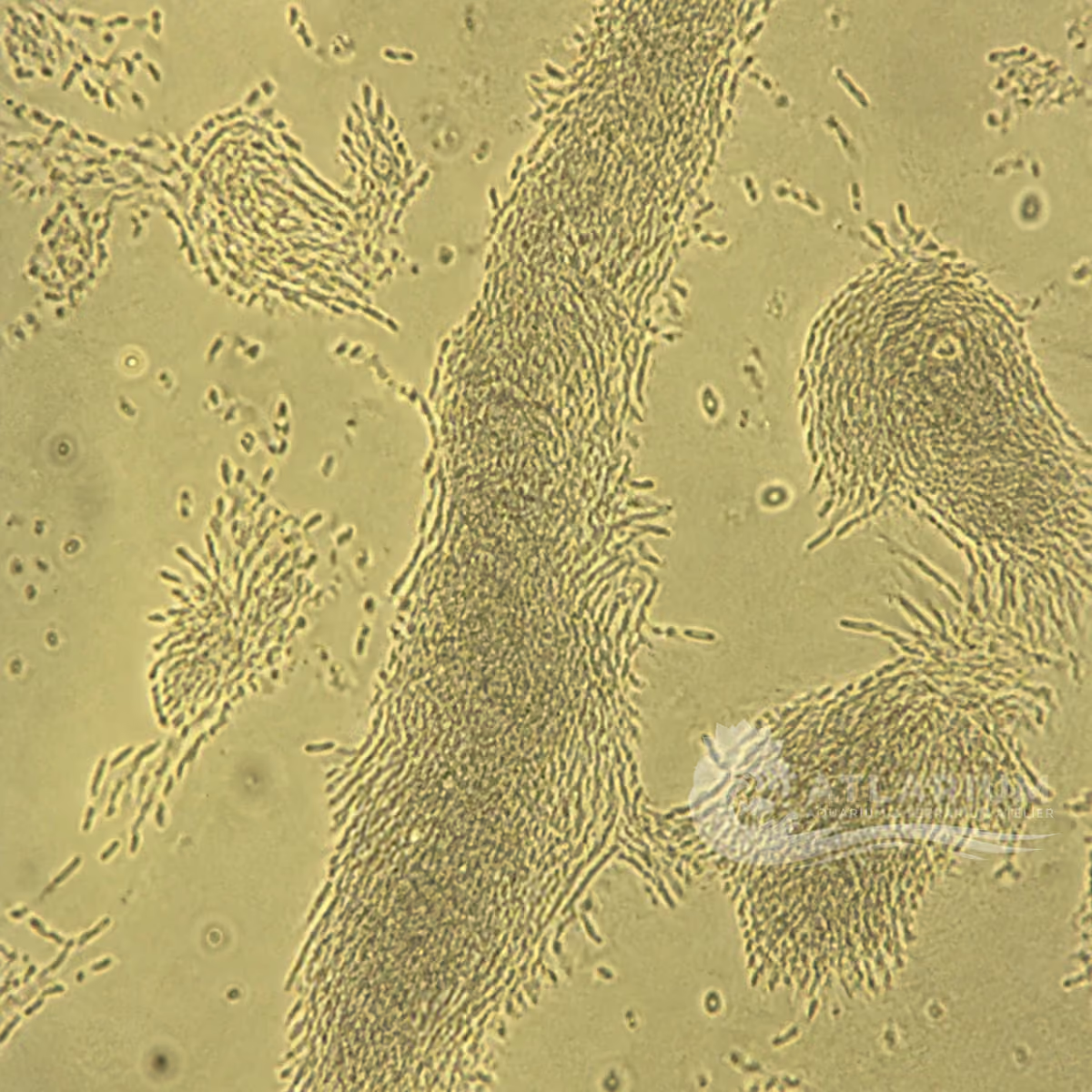
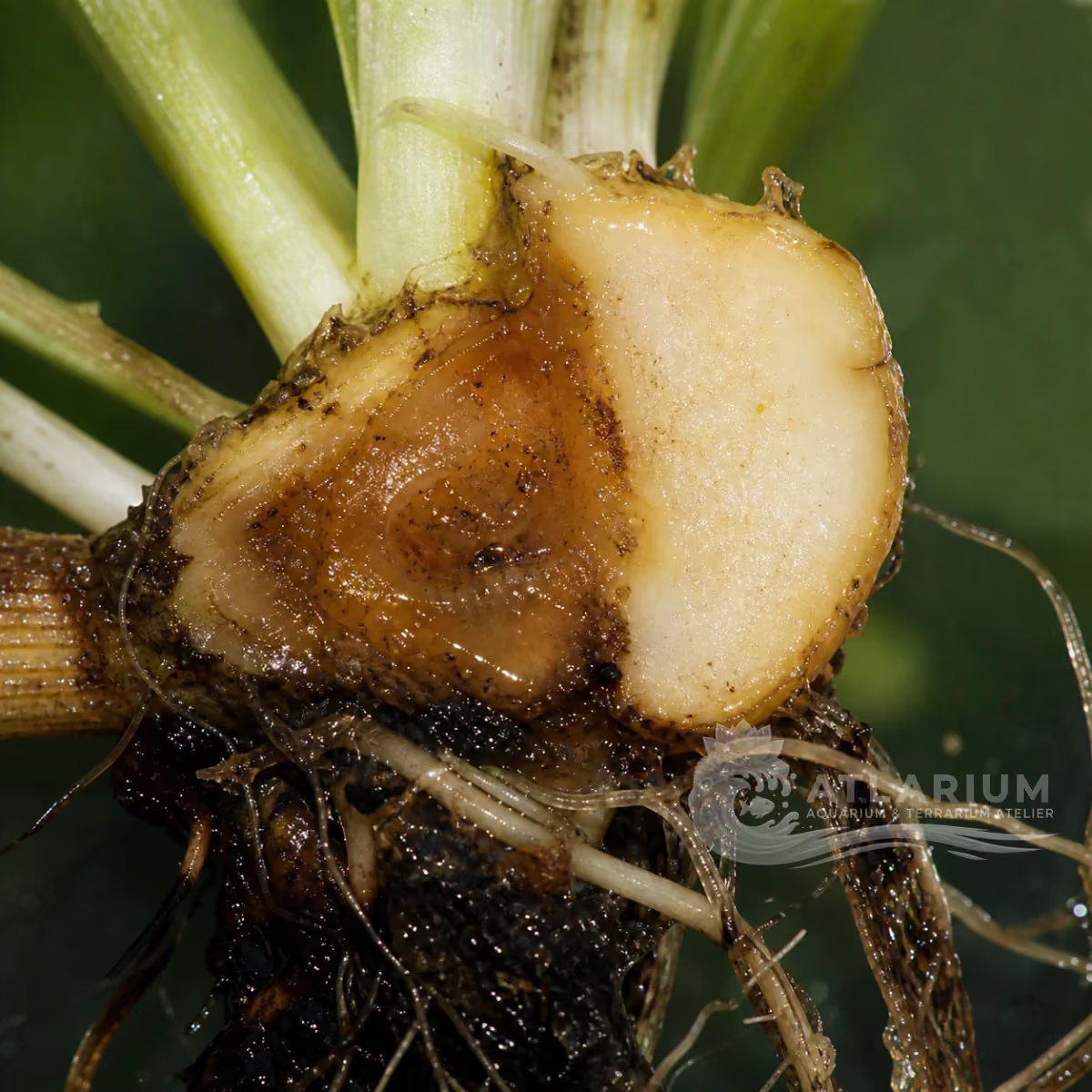
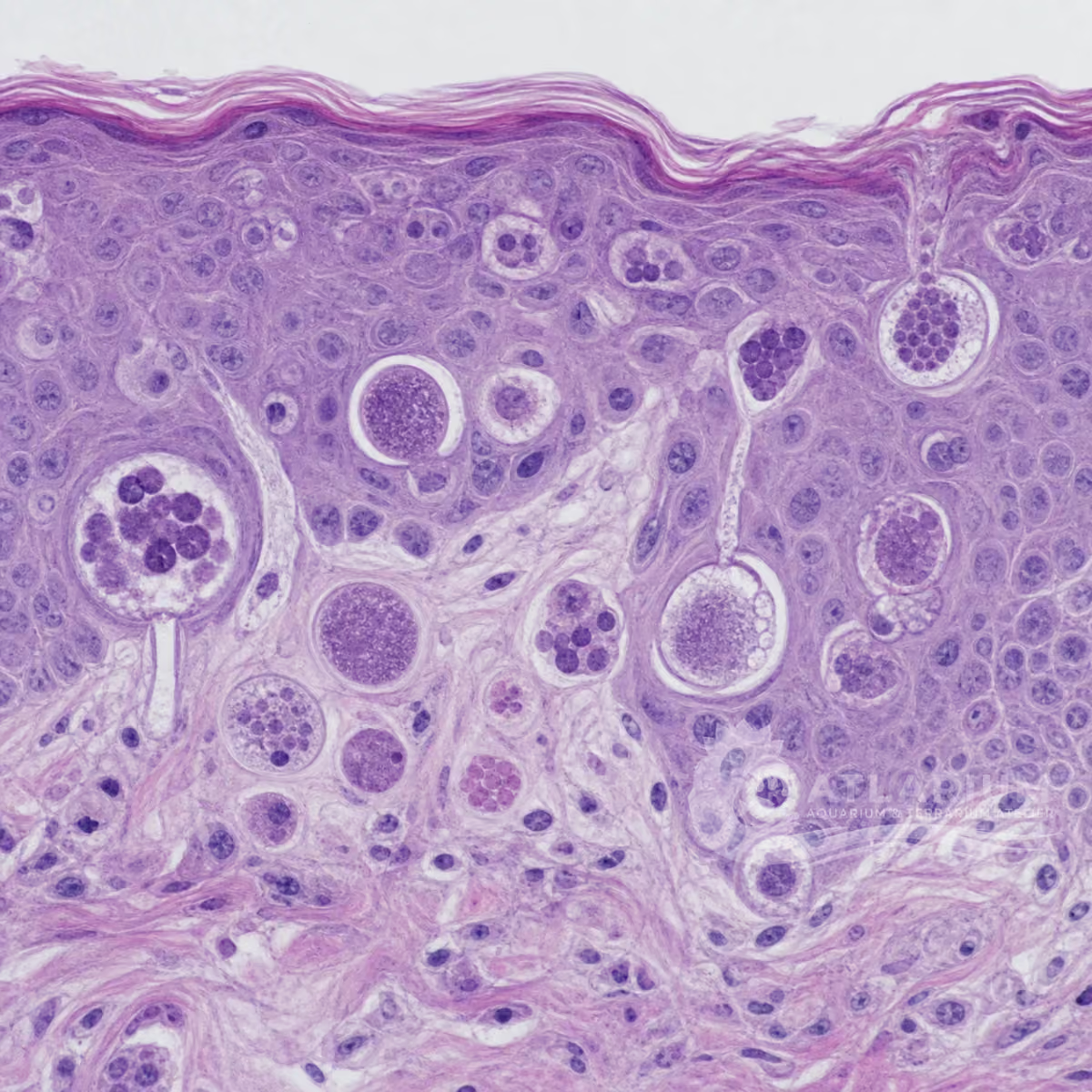
- Identification confidence is low from an external observation. Red worms near the posterior intestine or anus are a useful clue in an affected compatible fish, but other material and organisms can resemble them. Buccal-capsule and gravid-female characters may contribute to a diagnosis when a suitable specimen and qualified examination are available. Do not convert one photograph, fecal strand, colour or magnification into a species name, an infection burden or a treatment decision.
- Biological group
- Chromadorea
- The profile uses benthic microfauna as an aquarium navigation group, while Camallanus is a genus of Camallanidae nematodes. That group label does not mean a free-living detritivore or a harmless aquarium worm. The documented concern is a conditional fish-host relationship: larvae can involve a copepod or other crustacean intermediate host before an appropriate fish host. Use the group to organise observation and prevention context, never to replace genus or species identification.
- Ecological functions
- Parasite, Potential pathogen
- Parasite and pathogen are conditional roles for compatible fish infections. The documented indirect cycle can run from larvae shed with feces through a copepod or other crustacean intermediate host to an appropriate fish host. That direction does not prove that every fish, copepod or red filament is involved, and it cannot establish source or disease outcome alone. Host identity, stage, burden and qualified diagnosis remain necessary before ecological evidence is turned into a clinical conclusion.
- Aquarium impact
- Potentially harmful
- The impact is potentially harmful because compatible fish can have pathogenic Camallanus infection. A suspected finding still is not proof of infection throughout an aquarium, a species diagnosis or an automatic medication target. Read the observation with host signs, trend and plausible exposure, while keeping suspect material from moving between systems. Weight loss, progressive illness or mortality calls for qualified fish-health assessment; a red filament alone does not decide the cause, urgency or safe response.
- Culture and management
- Not cultured
- Camallanus is not cultured as a domestic organism or live food. The card supplies no propagation, breeding, manual-extraction or home isolation method because an intestinal parasite and its possible intermediate-host route require biosecurity. If a sample needs diagnostic handling, retain its host and site context and use qualified fish-health or laboratory support. Do not transfer worms, feces, water, fish, equipment or live crustacean material from a suspect system to create an observation or test a life cycle.
- Typical size
- No value supported by reliable evidence
- No single typical-size range is stored. The earlier 500–20,000 µm display value was not reattested by a retrieved exact-genus source across species and life stages. A measured specimen can still be documented with a calibrated scale, intactness, host and sample site, but size does not establish Camallanus, a species, reproductive state, infection burden or medical need. Treat any measurement as observation context and combine it with suitable diagnostic characters and qualified assessment.
- Visible to the naked eye
- No value supported by reliable evidence
- No universal naked-eye visibility value is stored. Some adult infections can show a blood-red worm in a compatible fish's posterior intestine or protruding anus, whereas other stages and samples are not comparably visible. Visibility is an orientation clue, not taxonomic confirmation or a measure of infection burden. Observe without pulling a protruding structure or injuring the fish, record host context and signs, and seek qualified identification when the observation affects fish-health decisions.
- Useful starting magnification
- No universal threshold supported by reliable evidence
- No fixed magnification value is stored because the retrieved evidence does not make 40×, or another setting, a universal observation or diagnostic threshold. Magnification can document how a specimen or fecal sample was examined, but it cannot itself identify a Camallanus species, establish a causal diagnosis or choose treatment. Use an intact specimen where available, record preparation and host site, and obtain appropriate parasitology or fish-health support when identification changes management.

Links to Aquarium SOS

Microworld ecological network
Links based on documented kinship, food webs, biofilms, and ecological functions.