Aquatic cyanobacteria
Aquatic cyanobacteria are a group-level observation, not a confirmed species or toxin result. These photosynthetic bacteria occur in fresh, estuarine and marine waters and can be ordinary primary producers or form conspicuous mats and blooms. Colour or a film can guide sampling, but cannot prove the organism, a cause, toxicity or a treatment need. Interpret repeat observations with the sampled site, water conditions and affected organisms.
Freshwater / Brackish / Marine
Cyanophyceae
Taxonomic group
Low
Primary producer, Potential nuisance
Potentially harmful
Passive aquarium growth
No value supported by reliable evidence
Varies by taxon or life stage
400× to begin observation

Identity, habitat, and ecological role

Observation, culture, and ecological relationships

Geographic origin and distribution
Origin

Identification and observation data
- Record type
- Taxonomic group
- Cyanobacteria are a taxonomic group, not one identified species, strain or toxin producer. The name can describe broad shared features, but taxonomy, dimensions, ecology and aquarium relevance vary within the group. Keep an observation at the resolution supported by its sample and method. A familiar colour, film or functional label cannot become a species-level name without the required diagnostic evidence.
- Recognition confidence
- Low
- Confidence is low beyond a cautious group-level orientation. Microscopy can document broad morphologies, but it cannot by itself establish every species, strain, metabolic activity, toxin result or causal role. Record sample origin, water type, preparation and scale. Use suitable specialist methods when a conclusion could influence animal health or a significant management decision.
- Biological group
- Cyanophyceae
- Cyanobacteria are photosynthetic bacteria, historically called blue-green algae. The name describes a broad biological group, not a substitute for formal identification. Related-looking observations can differ in their ecology, while unrelated material may share a visible form. Water type, microhabitat and method constrain what can responsibly be inferred from one sample.
- Ecological functions
- Primary producer, Potential nuisance
- Primary production is a possible group role, and some cyanobacteria can fix nitrogen; neither statement describes every visible sample. Excessive growth can be management-relevant, and some taxa can produce cyanotoxins. These are conditional ecological possibilities, not a guarantee of activity, toxin production, nuisance status or food-web effect in an aquarium.
- Aquarium impact
- Potentially harmful
- Potentially harmful is a caution flag, not evidence that a particular film is toxic, diseased, causal or in need of treatment. Biomass, taxon, setting and associated conditions all matter. Compare repeat observations with the affected location, water measurements and organisms. Do not use an assumed group name to justify indiscriminate chemicals or a transfer between aquariums.
- Culture and management
- Passive aquarium growth
- Passive context management concerns observation and maintenance, not a home-culture recipe for aquatic cyanobacteria. Keep observation and maintenance separate from deliberate propagation, and do not transfer unknown material between systems. A verified collection strain has a different evidentiary status from material that appeared in an aquarium. No general culture, inoculation or preventive practice is supplied here.
- Typical size
- No value supported by reliable evidence
- No single size range is assigned because individual cyanobacteria vary substantially and this is a broad group. The intentional absence of a single range reflects that no reliable group-level endpoints were accepted, not that size is irrelevant to every organism. Preserve a scale reference and material source, because dimensions alone cannot establish taxonomy, viability, toxin production or ecological function.
- Visible to the naked eye
- Varies by taxon or life stage
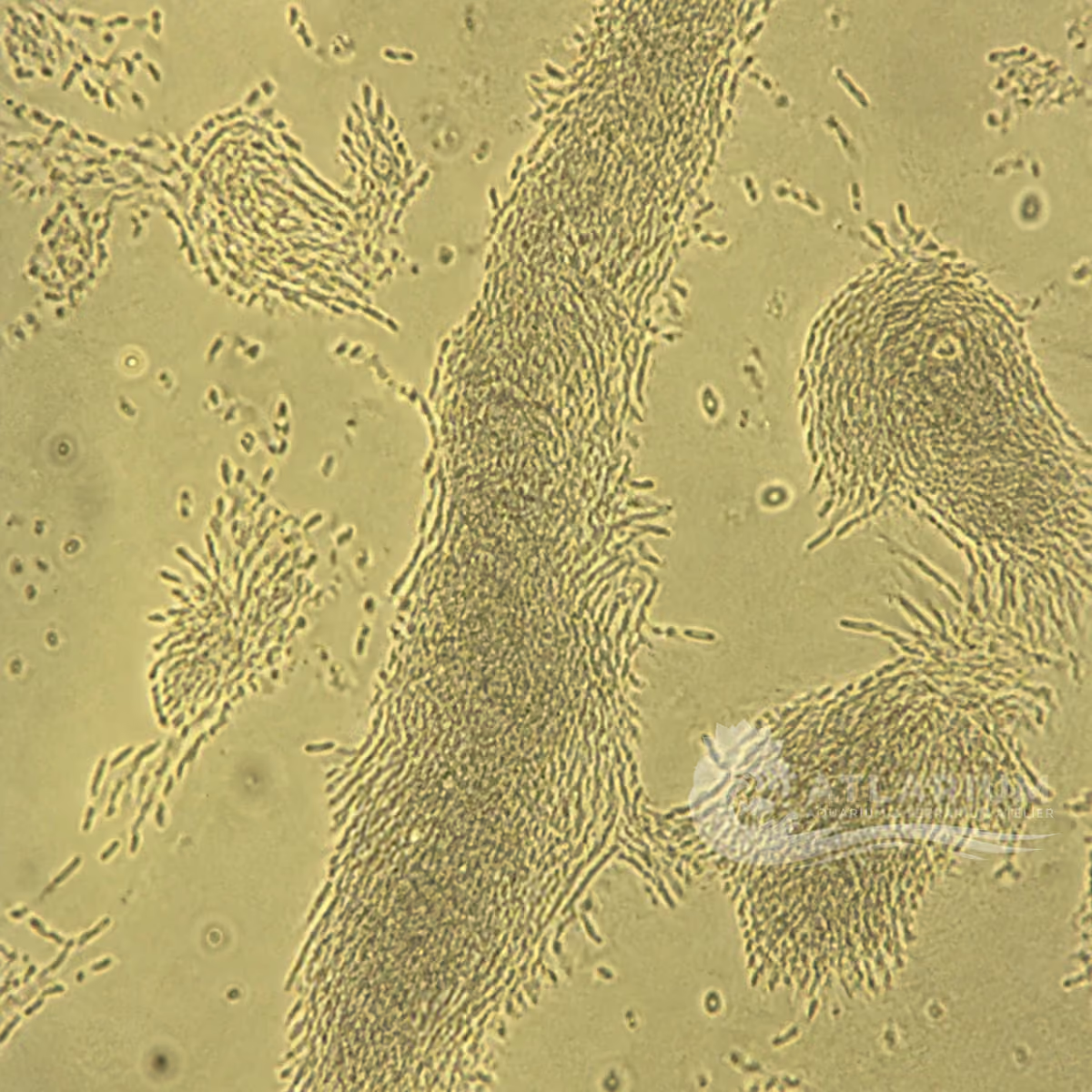
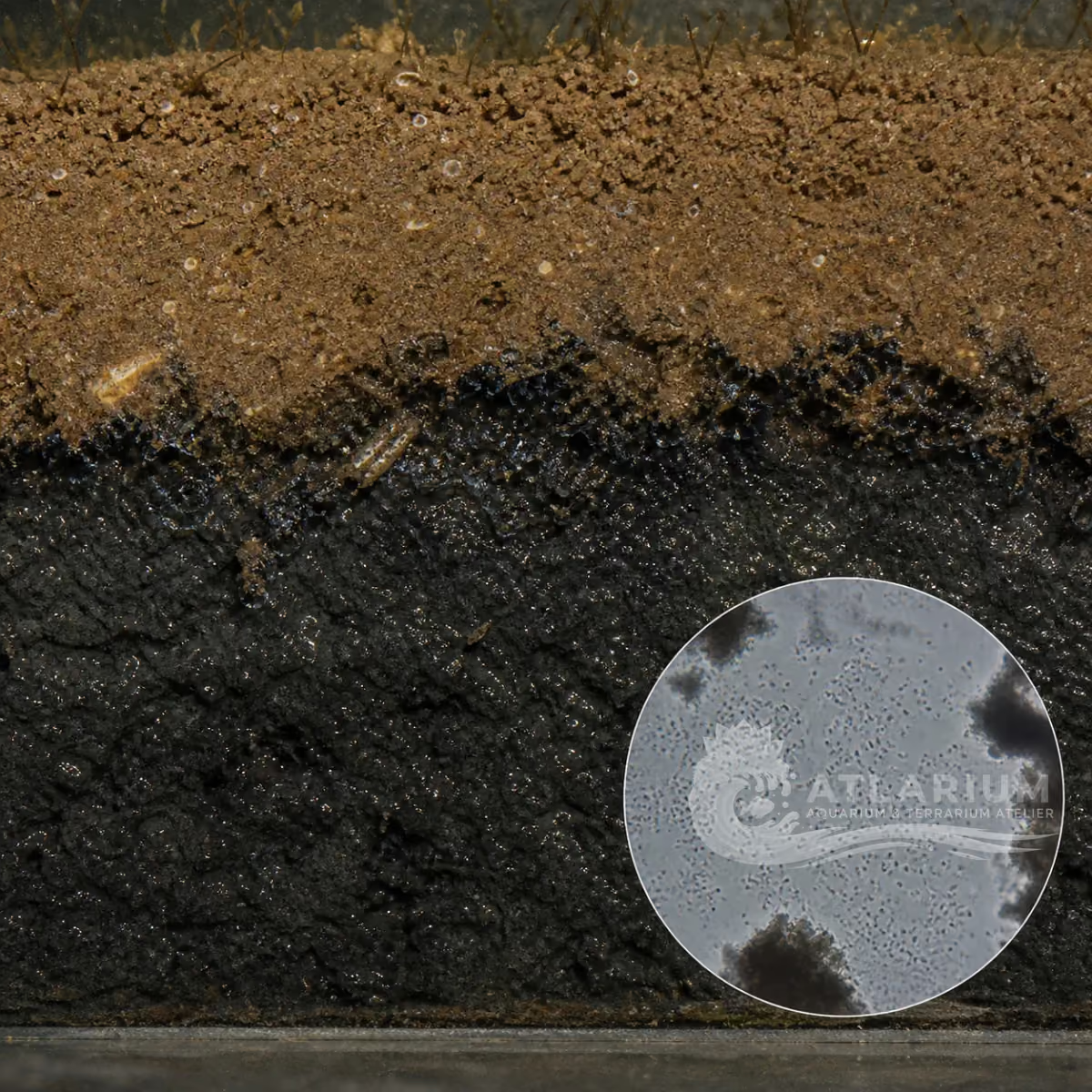
- Mats, films and scums can be visible, but the observed material is aggregate biomass rather than a diagnostic identity. Individual cells or filaments require suitable microscopy and preparation. Visibility cannot establish source, toxin production, health relevance or a response for a particular aquarium. Use a visible feature to document and sample a location, never as a toxin or treatment test.
- Useful starting magnification
- 400× to begin observation
- Around 400× can document cells and filaments for a broad orientation, but it is not a species, strain, toxin or causal threshold. Examine more than one field and retain the sample context, scale and preparation. A conclusion beyond routine morphology requires a method appropriate to the specific taxonomic, functional or safety question rather than greater confidence from magnification alone.

Links to Aquarium SOS


Microworld ecological network
Links based on documented kinship, food webs, biofilms, and ecological functions.