Nichols' Dwarf Mouthbrooder
Pseudocrenilabrus nicholsi
The 'Jewel of the Congo' (8 cm). A breathtaking dwarf riverine cichlid, with neon colors (blue, red and gold). Extraordinarily beautiful, but endowed with an intra and extra-specific aggressiveness disproportionate to its size. For conscious aquarists.
Water Temperature
23 - 26 °C
pH Value
6.5 - 7.5
Water type
Freshwater
Tank level
Bottom
Adult size
8 cm
Minimum tank volume
>= 100 L
Minimum group
>= 1
GH
5 - 15 dGH
KH
2 - 7 dKH
TDS
95 - 295 ppm
Conductivity
148 - 461 uS/cm

Species description
Geographical Origin and Habitat: Congo River hydrographic basin, in particular the depression and lakes of Upemba (Democratic Republic of the Congo). Lives in small streams, lagoons and river margins rich in riparian aquatic vegetation, often among emerging rocks and mazes of fallen branches in relatively clear waters but protected by fronds.
Taxonomy and Morphology: Like the Egyptian cousin (P. multicolor), it has a robust, stocky and compact body. Dimensions are contained: the male touches 8 cm (3.1 inches, rarely 9 cm), the female stops at 6 cm (2.4 in). The head is powerful, with a rounded profile and prominent jaws created to intimidate or fight furiously if necessary.
Social Behavior: The "Little Tyrant". Absolute prevaricator ethology. Does not tolerate in the least the presence of other males of its species or related species (would persecute them until killing them or making them die of starvation due to extreme stress). Even towards females outside the reproductive period it is ruthless, forcing them to hide in very small ravines so as not to be brutally torn and asphyxiated in deadly pursuits.
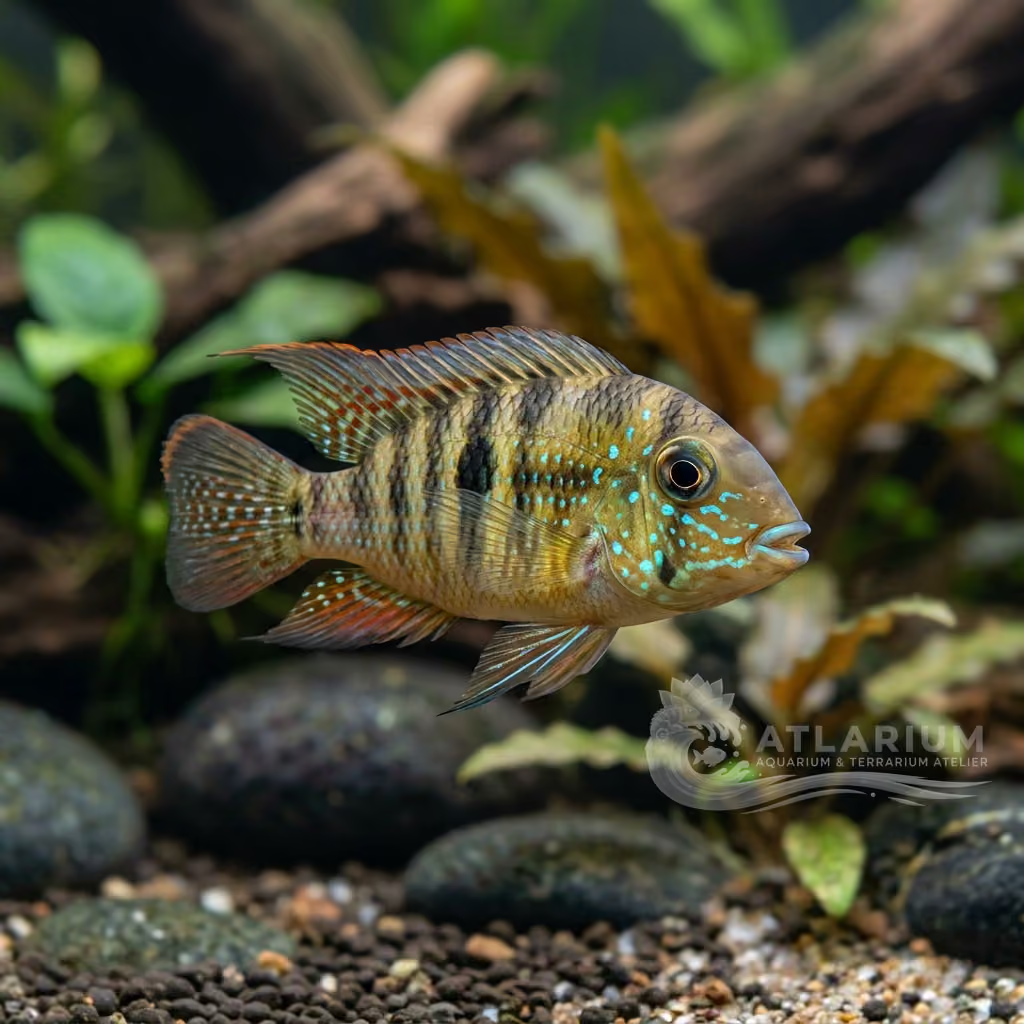
Coloration and Sexual Dimorphism: Hypnosis spectacle. The displaying male is stunning: the body shines with an intense neon ELECTRIC BLUE covered with horizontal dark maculations. On the belly and sides it shows off bright saffron GOLD reverberations. The fins blaze with coral red streaks, gold and magic asymmetrical blue dotting. But the supreme detail are the impressive iridescent BRIGHT BLUE LIPS and the blood red throat. The female is dull, opaque silvery-brown (sand-colored) with colorless fins.

Care, breeding and tankmates
Aquarium Setup: FishBase records Pseudocrenilabrus nicholsi as freshwater, demersal, and tropical. Its recorded distribution extends from the vicinity of Yangambi in the middle Congo basin to the Upemba lakes in the upper basin, Democratic Republic of the Congo.
Feeding and Diet: This recovery makes no source-backed statement about feeding or diet beyond the facts cited above.
Water Quality: FishBase gives pH 6.0–8.0, hardness 9–19 dH, and temperature 22–25 °C in its natural environment.
Compatibility and Coexistence: This recovery makes no source-backed statement about compatibility or coexistence beyond the facts cited above.
Aquarium Breeding: FishBase describes the species as a maternal, ovophilic, agamous mouthbrooder without pair-bond formation.
Risks and Disease: This recovery makes no source-backed claim about risks or disease beyond the facts cited above.

Geographic origin and distribution
Congo River hydrographic basin, in particular the depression and lakes of Upemba (Democratic Republic of the Congo). Lives in small streams, lagoons and river margins rich in riparian aquatic vegetation, often among emerging rocks and mazes of fallen branches in relatively clear waters but protected by fronds.
Origin
Africa and MadagascarEurope, Mediterranean, and West Asia

Fish profile
- Temperament
- Semi-aggressive
- They have a highly aggressive and combative temperament, particularly the males. They will vigorously defend their territory against any perceived threat, regardless of the intruder's size. Visual barriers made of rocks and plants are essential to reduce line-of-sight aggression.
- Diet
- Omnivore
- They are primarily carnivorous in the wild, feeding on small crustaceans, insects, and larvae. In captivity, they require a meaty diet comprising frozen bloodworms, brine shrimp, and high-quality cichlid pellets. Occasional vegetable matter or spirulina should be offered for dietary balance.
- Life expectancy
- 6-7 years
- Adult size
- 8 cm
- Sex ratio
- Harem
- They must be kept in a harem of one male to several females (at least three or four). The male's breeding aggression is intense and will easily kill a single female if her attention is not divided. Multiple males should never be kept together unless the aquarium is exceptionally large.
- Feeding frequency
- Twice daily
- Feeding them one to two times daily is recommended to maintain their health and vibrant colors. They are greedy eaters and will actively compete for food. Avoid overfeeding to maintain water quality, as uneaten food will quickly foul the tank.
- Bioload
- Low to Medium
- Nichols' Mouthbrooder creates a moderate bioload that requires efficient biological and mechanical filtration. Their constant sifting of the sand can stir up detritus, demanding good mechanical filters. Regular water changes are important to maintain stable water parameters.
- Flow
- Stagnant
- They prefer calm to moderately flowing water, simulating their natural habitat in shallow, vegetated streams and pools. High flow environments will cause them unnecessary stress and impede their breeding efforts. Gentle filtration is perfectly adequate.
- Jump risk
- Yes
- There is a moderate risk of jumping, usually resulting from aggressive chasing between conspecifics. A tightly fitting aquarium cover is necessary to ensure their safety. Dimmed lighting and floating plants can make them feel more secure.
- Reproduction
- Oviparous
- They are maternal mouthbrooders; the female incubates the eggs and protects the fry in her buccal cavity. The male creates a shallow pit in the substrate where spawning takes place. Breeding is common in captivity, but the male must be monitored as he can become violently aggressive post-spawning.
- Compatibility & tankmates
- Species only
- They are highly aggressive and territorial, especially for their size. They are best kept in a species-only tank or with fast-moving, robust dither fish. Keeping them with bottom-dwelling species like Corydoras is highly discouraged as they will be severely attacked.
- Tank level
- Bottom
- They are primarily bottom-dwellers, constantly interacting with the substrate and lower rockwork. They will excavate sand to create breeding pits and territories. They require a soft, sandy substrate and plenty of caves to establish boundaries.

Scientific Parameters & Models
FishBase
Window to the official scientific data of the species
FishBase v25.04Data synced on: 06/15/2026
- Trophic level
- 3.4 ± 0.5 se
- Resilience
- High (less than 15 months)
- Phylogenetic uniqueness (PD50)
- 0.5625
- Bayesian Length-Weight
- a = 0.01445, b = 2.99
- VulnerabilityLow vulnerability (10 / 100)

Related species
Recommendations grouped by close relatives, companion choices, and similar care.