Lionhead Cichlid / Blockhead
Steatocranus casuarius
The bizarre King of the Rapids. A unique Congo cichlid with a heavily reduced swim bladder, causing it to 'hop' or scurry across the tank bottom like a Goby. Males grow an enormous, almost cartoonish fatty lump (nuchal hump) on their heads. Demands highly oxygenated, fast-flowing river setups.
Water Temperature
24 - 28 °C
pH Value
6.5 - 7.5
Water type
Freshwater
Tank level
Bottom
Adult size
11 cm
Minimum tank volume
>= 100 L
Minimum group
>= 1
GH
5 - 15 dGH
KH
2 - 7 dKH
TDS
95 - 295 ppm
Conductivity
148 - 461 uS/cm

Species description
Geographical Origin and Habitat: Highly specialized. Strictly endemic to the torrential rapids of the lower Congo River Basin, particularly the raging Livingstone Falls. It is a 'rheophilic' (current-loving) species: its natural habitat is an intensely turbulent, hyper-oxygenated washing machine of water crashing over smooth river boulders.
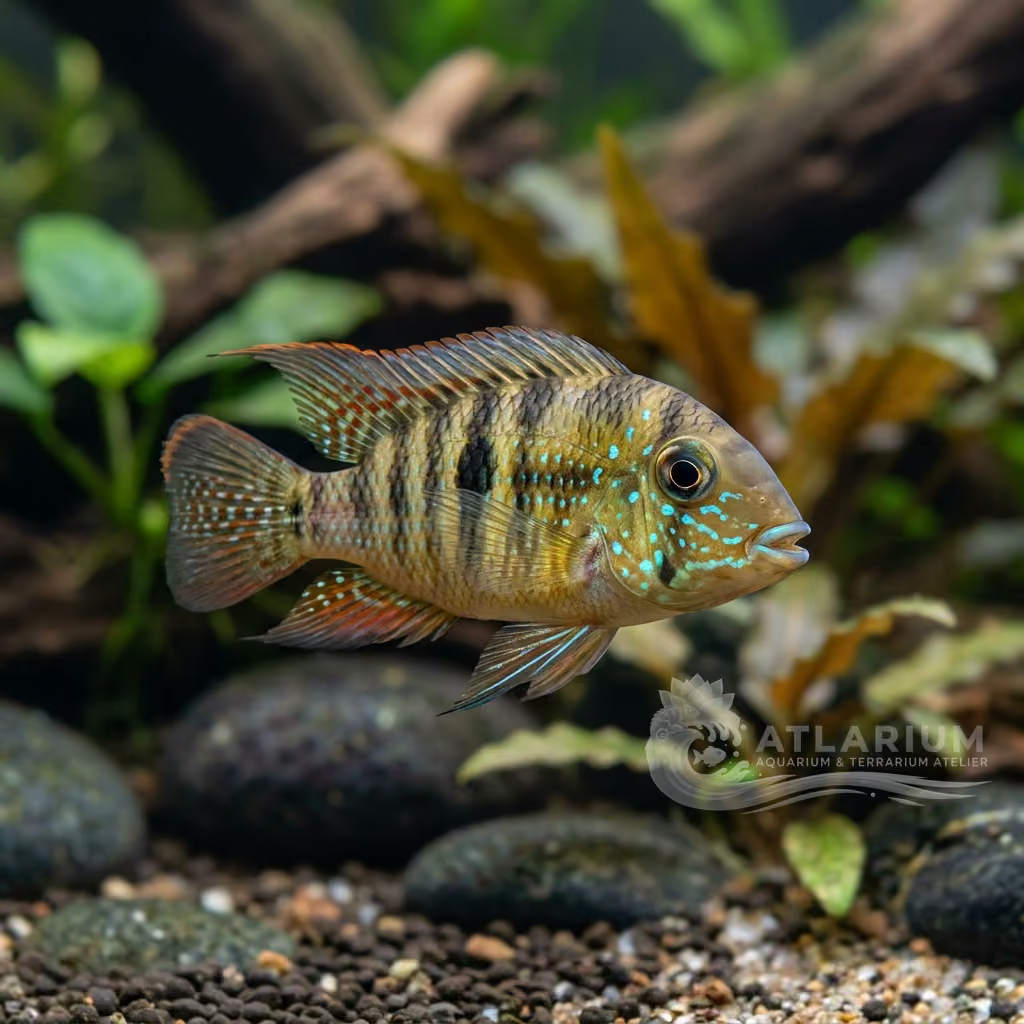
Taxonomy and Morphology: A very unusual Cichlidae. Reaches 11-12 cm (4.5 inches) for males, 8 cm for females. The body is elongated and ventrally flattened (flat belly) so the fish can hug the rocks without being swept away. The evolutionary marvel: its swim bladder is severely atrophied. It cannot float mid-water like normal fish; it sinks like a stone. It moves via sudden, powerful jerky 'hops' from rock to rock. Its signature feature is the massive, bulbous fatty tissue (nuchal hump) that develops on the forehead of adult males, resembling an exaggerated Lion or Block shape.
Social Behavior: Goby-like behavior. Spends hours perched motionlessly on top of high, smooth boulders like a gargoyle, surveying its territory and resisting the strong current. It darts out instantly to snap up passing food and rushes back to its cave. They form fierce, monogamous pairs. They are highly intolerant of any bottom-dwelling fish near their rock pile, but ignore fish swimming high above them.
Coloration and Sexual Dimorphism: Extremely drab and rugged camouflage. Base color is a muddy slate-grey, dark violet-black, or olive-brown. No flashy colors. The scales are thickly outlined in dark margins. The sexual dimorphism is comical: the male is noticeably longer and sports the colossal, overgrown head hump. The female remains smaller and her head is mostly flat or has only a tiny bump.

Care, breeding and tankmates
Aquarium Setup: Requires a highly specialized 'Hillstream / Rapids' biotope. Minimum tank length 100 cm (40 inches). MANDATORY: You must install strong external powerheads or wavemakers. The water must have extremely vigorous, visible turbulence and massive surface agitation for hyper-oxygenation. Substrate must be sand (to avoid scraping their bellies). Decor MUST be a colossal pile of smooth, heavy, water-worn river boulders stacked to form dozens of deep crevices and caves. Standard delicate plants will be destroyed by the current; use tough Anubias jammed tightly between rocks.
Diet and Feeding: Benthic Omnivore/Micro-Predator. Feeds aggressively in the current. Because they sink, food MUST reach the bottom quickly: use sinking cichlid pellets, frozen daphnia, bloodworms, and chopped mysis shrimp. In the wild, they graze 'aufwuchs' (algae and bugs on rocks), so you MUST include spirulina/algae wafers 2-3 times a week to prevent fatal bloat.
Water Quality: Adaptable to soft or medium hardness. pH 6.0-7.5. Temp 24-28°C (75-82°F). THE MOST CRITICAL FACTOR IS OXYGEN. Because they come from roaring rapids, they have a high oxygen demand. If placed in a still, warm, stagnant standard community tank, they will suffocate and die very quickly.
Compatibility and Cohabitation: Perfect if tankmates stay off the bottom. House them with robust, fast-swimming mid/top-water schooling fish that love currents: Congo Tetras, Giant Danios, African Barbs, and African Squeaker Catfish (Synodontis). ABSOLUTELY AVOID: Plecos, Corydoras, or bottom-dwelling Dwarf Cichlids (Kribensis), as the Blockheads will violently batter them to death for invading their rocks. Keep ONLY a single bonded pair.
Aquarium Breeding: Once a pair bonds (they are famously faithful for life), they spawn deep inside the darkest rock crevices. They lay around 50 massive eggs. The fry hatch heavy and sink, 'hopping' around exactly like the parents. The parents are incredibly ferocious defenders of their young.
Risks and Diseases: 1. DEATH BY ASPHYXIATION if kept in a still, low-flow tank without powerheads (requires massive oxygen). 2. Brutal murder of bottom-dwelling tankmates (like Corydoras). 3. Fatal intestinal bloat if fed an exclusively meat-heavy diet lacking vegetable/algae matter.

Geographic origin and distribution
Highly specialized. Strictly endemic to the torrential rapids of the lower Congo River Basin, particularly the raging Livingstone Falls. It is a 'rheophilic' (current-loving) species: its natural habitat is an intensely turbulent, hyper-oxygenated washing machine of water crashing over smooth river boulders.
Origin
Africa and Madagascar

Fish profile
- Temperament
- Semi-aggressive
- The overall temperament of the Blockhead Cichlid can be best described as territorial especially when breeding. Their disposition makes them a unique addition to the appropriate aquatic community, provided their specific needs are respected. Stressful conditions, such as poor water quality or overcrowding, can drastically alter their typical behavioral patterns. A quiet environment and a stable routine will bring out the most confident and engaging personality from this species.
- Diet
- Omnivore
- This species is known to be a benthic omnivore in its natural habitat, requiring a varied diet in captivity. To ensure optimal health and coloration, provide high-quality prepared foods alongside live or frozen options like brine shrimp or bloodworms. It is essential to match the food particle size to the fish's mouth structure to facilitate easy consumption. Regular rotation of dietary items will prevent nutritional deficiencies and keep the fish highly active.
- Life expectancy
- 5-10 years
- Adult size
- 11 cm
- Sex ratio
- Group
- Maintaining an appropriate sex ratio is vital, and a balanced distribution of males and females often works best for the Blockhead Cichlid. In many cases, keeping a ratio heavily skewed towards females can help disperse male aggression during the breeding season. It is important to monitor the group dynamics closely to quickly identify and isolate any bullied individuals. A well-structured environment with plenty of visual barriers will support a harmonious mixed-sex group.
- Feeding frequency
- Twice daily
- To mimic its natural foraging behavior, the Blockhead Cichlid should be fed small portions two to three times a day. Overfeeding can lead to severe health issues and quickly degrade the water quality. It is crucial to only provide an amount of food that the fish can consume within a few minutes. Adjusting the feeding frequency based on the fish's age and activity level is a best practice for long-term care.
- Bioload
- Low to Medium
- Maintaining this freshwater species requires understanding its moderate to high bioload profile. The Blockhead Cichlid will thrive when the filtration system is carefully matched to its specific waste production. Frequent testing of the water chemistry is highly recommended to ensure no dangerous spikes occur. Excellent water quality is the foundation for preventing disease and promoting a vibrant, active fish.
- Flow
- Stagnant
- Providing a strong current is highly recommended for the overall well-being of the Blockhead Cichlid. Adequate water circulation not only mimics their natural ecosystem but also ensures high dissolved oxygen levels throughout the aquarium. Hobbyists should avoid creating localized dead spots where debris might accumulate. Adjusting the filtration output angle can help achieve the perfect balance between steady circulation and calm resting areas.
- Jump risk
- Yes
- Due to its energetic nature, the Blockhead Cichlid carries a low probability of jumping out of an open-top aquarium. It is highly advised to secure the perimeter of the tank with a glass canopy or custom netting. Instances of leaping often happen at night or during sudden lighting changes, making a gentle sunrise/sunset lighting schedule beneficial. Maintaining exceptional water quality further discourages attempts to escape the enclosure.
- Reproduction
- Oviparous
- The reproductive strategy of the Blockhead Cichlid involves being a cave spawner. Breeding this species in captivity can be a rewarding challenge that requires dedicated conditioning of the broodstock. Specific triggers such as changes in temperature, diet, or water chemistry are often necessary to induce spawning. Once breeding occurs, specialized care for the fry, including appropriately sized live foods, is critical for their survival and development.
- Compatibility & tankmates
- Semi-aggressive
- The Blockhead Cichlid is known to be good with fast moving mid-water fish when integrated into a carefully planned setup. They tend to exhibit the best colors and natural behaviors when kept with species of a similar temperament. Aquarists must be cautious to provide enough visual barriers if housing them with semi-aggressive tankmates. Overall, a well-thought-out stocking plan will yield a beautiful, drama-free aquatic display.
- Tank level
- Bottom
- This species is predominantly a bottom dweller within the aquarium setup. Providing the appropriate spatial layout with open swimming areas or dense vegetation where they feel secure is highly beneficial. By understanding their preferred depth, aquarists can carefully select complementary species that occupy other regions of the tank. This spatial separation helps to reduce competition for food and minimizes unnecessary territorial disputes.

Scientific Parameters & Models
FishBase
Window to the official scientific data of the species
FishBase v25.04Data synced on: 06/15/2026
- Trophic level
- 3.3 ± 0.4 se
- Resilience
- High (less than 15 months)
- Phylogenetic uniqueness (PD50)
- 0.5039
- Bayesian Length-Weight
- a = 0.01445, b = 2.99
- VulnerabilityLow vulnerability (10 / 100)

Related species
Recommendations grouped by close relatives, companion choices, and similar care.