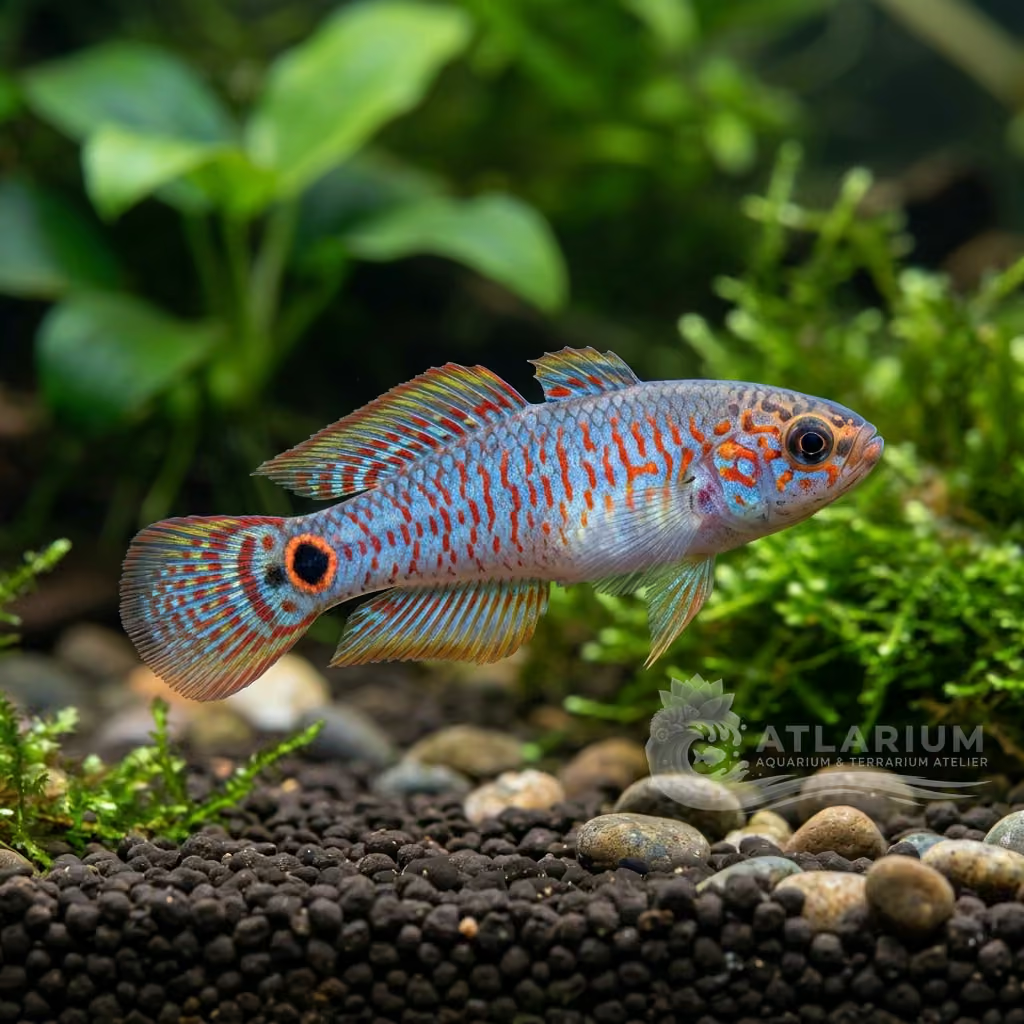
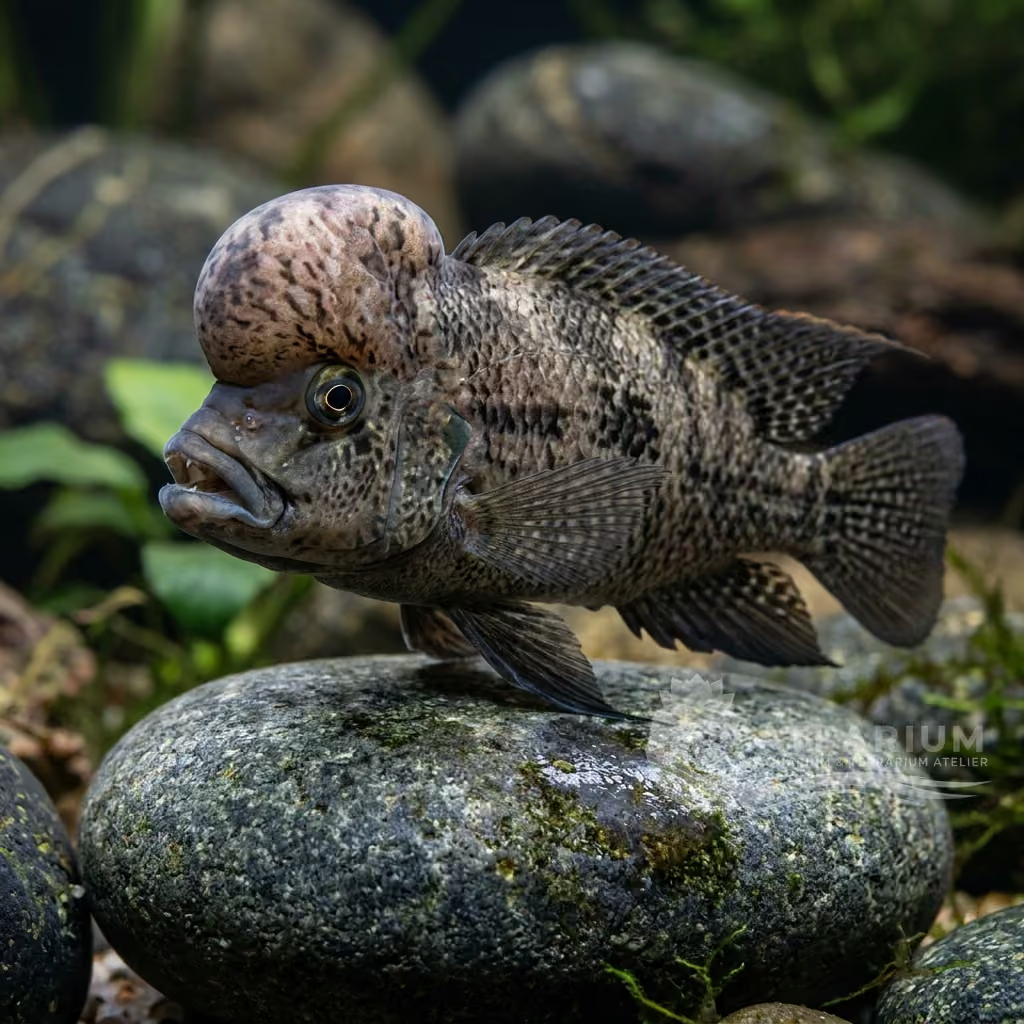
Myers' Hillstream Loach
Pseudogastromyzon myersi
A marvel of Asian evolution. Often mistaken for a tiny stingray or a plecostomus, this disc-shaped Hillstream Loach uses its aerodynamic body to suction onto rocks in raging rapids.
Water Temperature
20 - 24 °C
pH Value
6.5 - 8
Water type
Freshwater
Tank level
Bottom
Adult size
6 cm
Minimum tank volume
>= 60 L
Minimum group
>= 1
GH
5 - 15 dGH
KH
2 - 7 dKH
TDS
95 - 295 ppm
Conductivity
148 - 461 uS/cm

Species description
Geographical Origin and Habitat: Endemic to the Pearl River basin and numerous mountainous coastal rivers in Guangdong province and Hong Kong, southern China. Inhabits exclusively crystalline mountainous 'hillstreams', where water flows immensely fast forming freezing rapids, and where the rocks are covered by a velvety carpet of 'Aufwuchs' (algae and associated microorganisms).
Taxonomy and Morphology: Gastromyzontidae family. Its body (about 5.5 - 6 cm / 2.2-2.4 inches) is the pinnacle of hydrodynamics: it is flattened into a lens or disc shape, with enormous pectoral and pelvic fins expanded laterally to form a giant 'suction cup'. This seals its body to flat stones, allowing it to withstand terrifying water flows without wasting muscular energy.
Social Behavior: Not a tight schooling fish, but requires aggregation (groups of 4-6) for interactions. Highly territorial over food patches. Males challenge each other in hilarious, bloodless rocky 'pancake fights': they lift each other up, trying to peel the opponent off the stone by covering its back. Totally peaceful toward fish swimming in the upper water column.
Coloration and Sexual Dimorphism: Camouflage yellowish-brown/olive base color, studded with a dense network of black and brown spots or specks on the back and fins. The dorsal fin is distinctive: a deep scarlet red margin framed in black. Females are noticeably plumper and wider when viewed from above; males develop showy breeding tubercles (little 'horns') along the fleshy snout and pectoral fins.

Care, breeding and tankmates
Aquarium Setup: Demands a specialized aquarium, the famous 'River-Manifold' or 'Hillstream Setup'. Minimum size 80-90 cm (32-36 inches). Background and floor composed of massive, smooth, flat river pebbles. EXCEPTIONALLY STRONG lighting to promote the growth of soft green algae and diatoms on the stones (their pasture). An oversized additional powerhead (e.g. 2000 l/h) sweeping the rocks with a linear, roaring flow is indispensable.
Diet and Feeding: Aufwuchs grazers. Their flat belly and tiny half-moon ventral mouth equipped with horny 'teeth' serve to scrape epilithic algae and biofilm from smooth stones. In sterile, new aquariums, they will starve to death. They require natural green algae, supplemented by Repashy bottom-scratcher gel (smeared on stones and allowed to dry), spirulina wafers, and small thawed bloodworms.
Water Quality: TEMPERATE/SUBTROPICAL FISH. HEAT SUFFOCATES THEM. The ideal temperature is 20-24°C (68-75°F) (tolerates short summer spikes only with monstrous aeration). They have microscopic gills and depend on violent currents to push oxygen through. They do not need soft Amazonian water: pH 6.5 - 8.0 and medium hardness (GH 5-15) are perfect. Zero pollutants tolerated.
Compatibility and Cohabitation: Perfect roommates for a cold hillstream aquarium with White Cloud Mountain Minnows, Zebra Danios, other river loaches (Sewellia, Gastromyzon), or Rhinogobius. Absolutely NOT to be kept with classic Plecostomus or Ancistrus (Bristlenose plecos), which, due to their size, would eat all the algae, starving the Hillstream Loaches.
Aquarium Breeding: Possible in mature tanks. The male digs a small spawning crater under a rounded stone by displacing fine gravel. If the water flow is excellent for oxygenation, some juveniles will mysteriously appear weeks later.
Risks and Diseases: 1. Lethal thermal suffocation if placed in typical stable tropical tanks at 28°C (82°F) without water movement. 2. Lethal starvation in pristine, design-perfect aquariums lacking mature algal slime.

Geographic origin and distribution
Endemic to the Pearl River basin and numerous mountainous coastal rivers in Guangdong province and Hong Kong, southern China. Inhabits exclusively crystalline mountainous 'hillstreams', where water flows immensely fast forming freezing rapids, and where the rocks are covered by a velvety carpet of 'Aufwuchs' (algae and associated microorganisms).
Origin
East Asia

Fish profile
- Temperament
- Semi-aggressive
- They are peaceful, active, and fascinating to watch as they flutter over surfaces. They may engage in minor territorial squabbles with conspecifics, which involve harmless 'dancing' displays. They are completely oblivious to other fish species in the aquarium.
- Diet
- Omnivore
- They are specialized aufwuchs grazers that feed heavily on benthic algae and the associated micro-organisms. The aquarium must have smooth river rocks covered in a healthy biofilm and green algae. They will also accept high-quality sinking algae wafers and repashy gel foods.
- Life expectancy
- 5-8 years
- Adult size
- 6 cm
- Sex ratio
- Group
- They are highly social and should be kept in groups of at least five or more. They establish a very peaceful, complex social hierarchy through harmless displays. Keeping them in large groups makes them much more active and interesting to observe.
- Feeding frequency
- Twice daily
- They graze continuously throughout the day and night. If the tank lacks sufficient natural algae growth, supplementary sinking foods should be provided daily. Proper lighting is essential to encourage the continuous growth of their natural algal food source.
- Bioload
- Low
- Myers' Hillstream Loach has a very low bioload. They are small and produce minimal waste. However, they require impeccably clean, highly oxygenated water to survive, meaning powerful filtration is still strictly necessary.
- Flow
- Stagnant
- They are highly adapted to extreme water flow in fast-moving hill streams. They require a specialized 'river manifold' setup or powerful powerheads to create strong, unidirectional, and highly oxygenated current. Without this intense flow, they will slowly suffocate and die.
- Jump risk
- Yes
- They are adept climbers and can occasionally scale the wet glass above the waterline. While they are not traditional jumpers, they can easily escape an open tank by crawling out. A tight-fitting lid is absolutely required to keep them safely inside the aquarium.
- Reproduction
- Oviparous
- They reproduce by digging small pits in gravel substrate where eggs are laid and fertilized. The strong water flow helps oxygenate the eggs hidden within the gravel. While they have been bred in captivity, it requires a meticulously designed river-tank setup.
- Compatibility & tankmates
- Semi-aggressive
- They are incredibly peaceful and completely safe for community aquariums. They should be kept with other small, peaceful, flow-loving fish like danios or white cloud mountain minnows. They will not bother shrimp or snails, making them excellent cleanup crew members.
- Tank level
- Bottom
- They are exclusively bottom dwellers that cling tightly to smooth rocks, glass, and broad-leaved plants. Their specialized body shape acts like a suction cup, allowing them to stay anchored in torrential flow. They almost never swim freely in the open water column.

Scientific Parameters & Models
FishBase
Window to the official scientific data of the species
FishBase v25.04Data synced on: 06/15/2026
- Trophic level
- 2 ± 0 se
- Phylogenetic uniqueness (PD50)
- 0.5001
- Bayesian Length-Weight
- a = 0.00646, b = 3.11
- VulnerabilityLow vulnerability (10 / 100)

Related species
Recommendations grouped by close relatives, companion choices, and similar care.