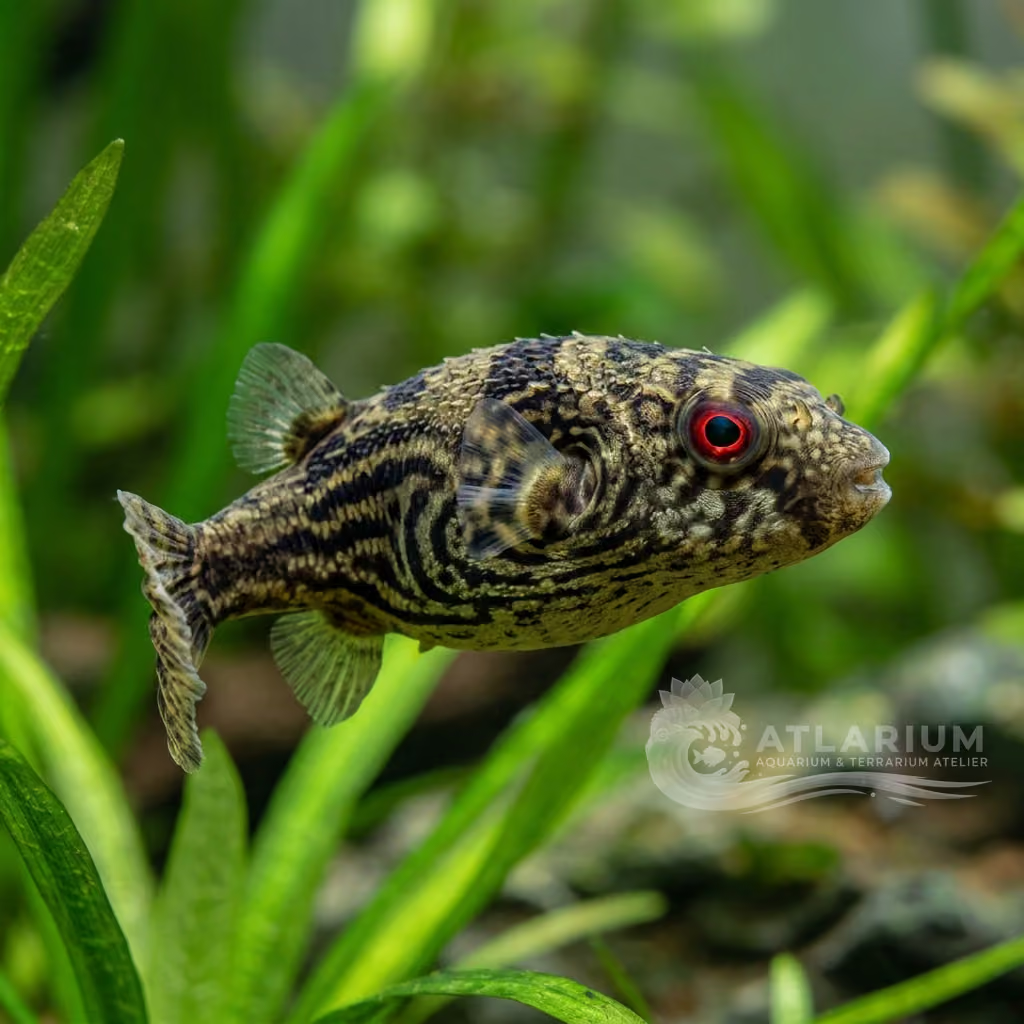
Chinese Hillstream Loach (Beaufortia)
Beaufortia leveretti
Aesthetically resembles a miniature rhombus or ray, with expanded lateral wings to cling to rocks. Extremely specialized for frigid, fast-flowing rivers, it is a magnificent algae eater but difficult to acclimatize.
Water Temperature
18 - 24 °C
pH Value
6.5 - 7.5
Water type
Freshwater
Tank level
Bottom and middle
Adult size
12 cm
Minimum tank volume
>= 100 L
Minimum group
>= 1
GH
4 - 12 dGH
KH
2 - 6 dKH
TDS
80 - 240 ppm
Conductivity
125 - 375 uS/cm

Species description
Geographical Origin and Habitat: Endemic to the Red River basin (southern China and northern Vietnam) and Hainan Island. Like its cousin kweichowensis, it populates the rocky beds of mountain streams amidst waterfalls and very strong currents.
Taxonomy and Morphology: Leverett's Hillstream Loach (Beaufortia leveretti). A larger and more tapered "Butterfly Loach" than B. kweichowensis. The snout is more pointed and the adhesive disk formed by the fins is exceptionally powerful.
Social Behavior: Peaceful but exhibitionist. Constant competitions occur between males for the highest rock or the one richest in algae, raising themselves halfway and showing their dorsal coloration to the rival without ever injuring each other.
Coloration and Sexual Dimorphism: Presents a pattern with broader and more irregular bands or spots compared to the small polka dots of kweichowensis. The background color is an ocher or rusty brown. Females are noticeably more voluminous and wider when viewed from above compared to the aerodynamic line of males.

Care, breeding and tankmates
Aquarium Setup: Specialized "River Tank" (min. 100 cm / 40 inches given the size). Very strong directional water flow. Place smooth river stones right under the pump outlet to create their favorite "resting spots". No need for fine plants which would be uprooted by the current.
Diet and Feeding: Aufwuchs grazer. In addition to the indispensable encrusting algae on the stones, its size allows it to more willingly accept live mosquito larvae, frozen bloodworms and slices of blanched cucumber anchored to the bottom.
Water Quality: Strictly cool and temperate water fish (18-24°C / 64-75°F). Absolutely NOT compatible with 27°C (81°F) tropical tanks. High temperature lowers dissolved oxygen, leading them to gasp at the surface until they die in a few days.
Compatibility and Cohabitation: Insert exclusively in temperate Asian biotope aquariums. Fantastic together with Pethia conchonius (Rosy Barb), Tanichthys (White Cloud Mountain Minnow), Balitorids and Gastromyzon. Does not bother anyone but flees if annoyed by large bottom fish.
Aquarium Breeding: Very difficult. They are "digging" spawners: they build a cradle by moving the gravel under the stones where the flow brings oxygenated water to the eggs. Feeding the newly emerged larvae requires a tank flooded with microscopic natural algae.
Risks and Diseases: They easily climb the glass and explore pipes; without sponge protectors on the filter intakes or a sealed lid, you will find them sucked into the impellers or dried on the floor.

Geographic origin and distribution
Endemic to the Red River basin (southern China and northern Vietnam) and Hainan Island. Like its cousin kweichowensis, it populates the rocky beds of mountain streams amidst waterfalls and very strong currents.
Origin
Tropical oceans and reefsSouth and Southeast AsiaEast Asia

Fish profile
- Temperament
- Semi-aggressive
- Beaufortia leveretti is a peaceful species that poses no threat to other tankmates, making them excellent candidates for community aquariums. However, males can exhibit territorial behavior toward their own species, engaging in harmless pinning or flashing contests to establish dominance. These interactions are non-injurious and are a natural part of their social structure when provided with enough space. They are generally active during the day, scurrying across stones and decor in search of food.
- Diet
- Omnivore
- Primarily herbivorous and detritivorous, Beaufortia leveretti feeds heavily on aufwuchs, which is the biofilm and micro-organisms growing on rocks in fast-flowing water. In the aquarium, they require a well-established tank with plenty of natural algae growth and biofilm to sustain themselves. Their diet should be supplemented with high-quality sinking algae wafers, spirulina tablets, and occasional small portions of frozen foods like daphnia or bloodworms. They will not thrive in a pristine, newly set up tank devoid of organic biofilm.
- Life expectancy
- 5-8 years
- Adult size
- 12 cm
- Sex ratio
- Group
- While they do not have strict mating pairs, keeping Beaufortia leveretti in groups of at least three to six individuals is highly recommended. Stocking them in groups helps to disperse territorial disputes and allows them to exhibit natural social behaviors. In smaller numbers or solitary settings, they can become shy or display heightened stress. Providing enough space and multiple feeding areas will ensure that minor dominance behaviors within the group remain harmless.
- Feeding frequency
- Twice daily
- In captivity, Beaufortia leveretti should be fed once or twice daily with supplementary commercial foods. However, they are continuous grazers that will spend the majority of daylight hours scraping biofilm and algae off rocks and glass. It is important to ensure there is a constant natural food source within the aquarium by allowing algae to grow on decor. Providing food in small amounts that can be consumed quickly helps prevent water quality degradation while supporting their grazing nature.
- Bioload
- Low to Medium
- Beaufortia leveretti produces a relatively low amount of waste due to its diet and small size, but it is extremely sensitive to nitrogenous pollutants. To maintain the pristine water quality they require, high-turnover filtration is essential, aiming for a turnover rate of 10 to 15 times the tank volume per hour. Excellent water clarity and clean conditions are paramount, as organic buildup can quickly lead to health issues or decline. Regular water changes and frequent maintenance of filter media are necessary to ensure toxins like ammonia and nitrate remain near zero.
- Flow
- Stagnant
- Replicating a strong, turbulent water flow is one of the most critical aspects of keeping Beaufortia leveretti successfully. They are native to mountain torrents and rapids, meaning they require highly oxygenated water with strong currents. Using powerful filters, powerheads, or river manifold systems is necessary to mimic their natural habitat. High flow rates not only simulate their natural environment but also ensure that dissolved oxygen levels remain saturated, which is vital for their respiration.
- Jump risk
- Yes
- Although they do not jump in the traditional sense, Beaufortia leveretti is an excellent climber and can easily scale the aquarium glass or filter pipes. If there are gaps in the lid, they can crawl out of the water and escape the tank, leading to fatal dehydration. Therefore, a tightly fitting cover or lid is absolutely mandatory to prevent any accidental escapes. Particular care should be taken to secure areas around filter tubes and power cords where they might find a way out.
- Reproduction
- Oviparous
- Breeding Beaufortia leveretti in home aquariums is considered highly difficult and is rarely achieved by casual hobbyists. Successful spawning requires a dedicated breeding setup with cool, clean, and extremely high-flow water. During spawning rituals, males perform elaborate display dances, and once a female accepts, the pair will dig a shallow nest in the gravel substrate or lay eggs among pebbles. The fry are exceptionally small and demand microfoods like infusoria or natural biofilm to survive their initial stages.
- Compatibility & tankmates
- Peaceful
- Beaufortia leveretti is highly compatible with other peaceful, cool-water species that share their preference for rapid currents. Ideal tankmates include small cyprinids such as White Cloud Mountain Minnows, danios, and other hillstream loach species like Gastromyzon or Sewellia. They should not be housed with aggressive, large, or slow-moving warm-water fish that cannot tolerate strong flows. Their peaceful nature ensures they will not bother other inhabitants, provided their specialized environmental needs are met.
- Tank level
- Middle/Bottom
- This species primarily occupies the bottom and lower-middle zones of the aquarium, clinging to flat surfaces such as smooth stones, glass, and driftwood. Their specialized suction-cup-like fins are evolutionary adaptations designed to hold them in place against fast currents, meaning they are rarely seen swimming in open water. They will actively crawl along the aquarium glass and decorations to graze on algae and biofilm. Consequently, a layout with plenty of broad, smooth rocks placed in these lower areas is highly beneficial for their activity.

Scientific Parameters & Models
FishBase
Window to the official scientific data of the species
FishBase v25.04Data synced on: 06/15/2026
- Trophic level
- 2.6 ± 0.2 se
- Phylogenetic uniqueness (PD50)
- 0.5001
- Bayesian Length-Weight
- a = 0.00646, b = 3.11
- VulnerabilityLow vulnerability (10 / 100)

Related species
Recommendations grouped by close relatives, companion choices, and similar care.