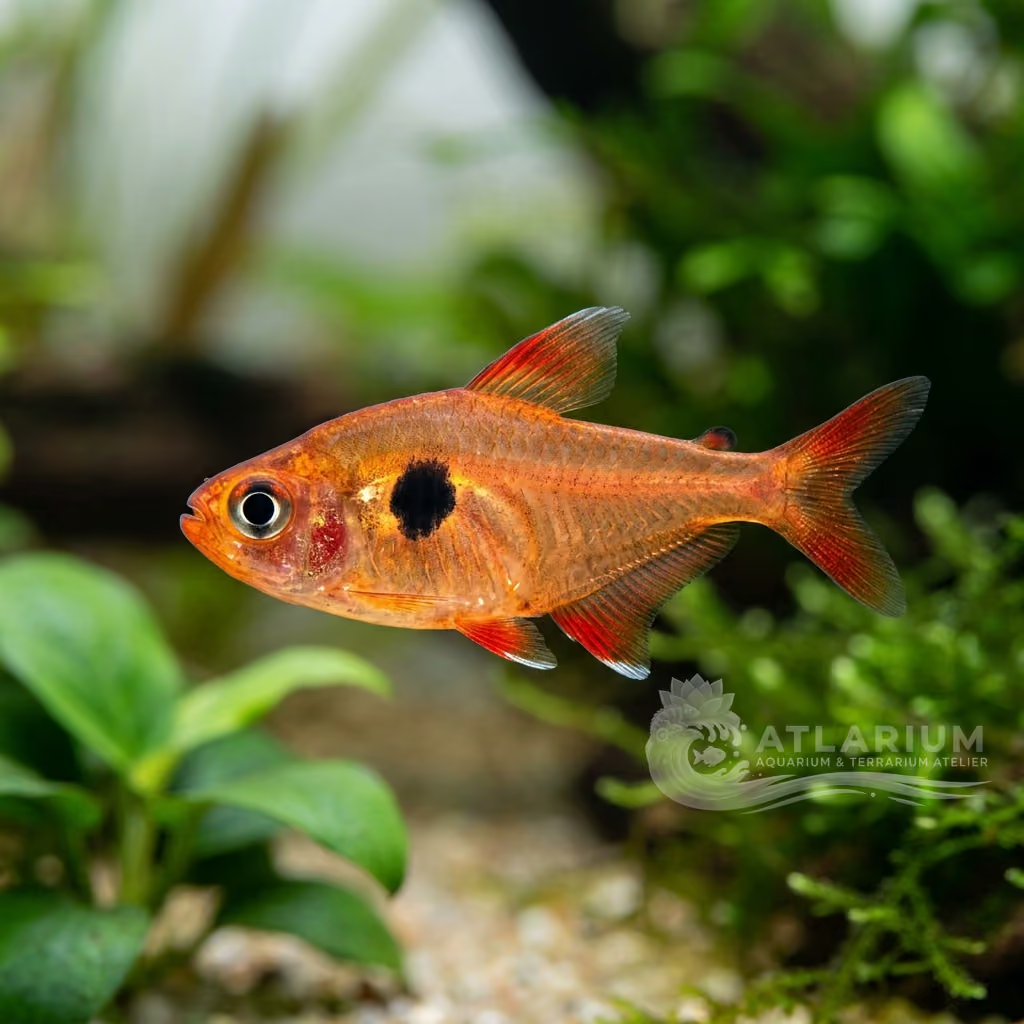
Borneo Sucker
Gastromyzon ctenocephalus
Cute, compact, peaceful sucker loach. Black with tiny blue stars and bright blue/red fins. Great glass cleaner that requires less extreme water flow than Sewellias.
Water Temperature
20 - 24 °C
pH Value
6 - 7.5
Water type
Freshwater
Tank level
Bottom
Adult size
4.5 cm
Minimum tank volume
>= 60 L
Minimum group
>= 1
GH
2 - 12 dGH
KH
1 - 6 dKH
TDS
40 - 240 ppm
Conductivity
63 - 375 uS/cm

Species description
Geographical Origin and Habitat: Endemic to Borneo (Malaysia and Indonesia). Populates only very fast mountain and hill streams ("hillstream"), rich in waterfalls and smooth boulders strongly illuminated by the sun, in cold and oxygen-saturated waters.
Taxonomy and Morphology: Borneo Sucker or Hillstream Loach (Balitoridae). Flat sucker fish. Hydrodynamic body, pectoral and pelvic fins fused together to form a suction disk capable of adhering to rocks in flooded rivers without being swept away. Measures barely 4 cm (1.5 inches).
Social Behavior: Peaceful, busy and territorial only for the best "grazing" stones. Spends its existence browsing the algal biofilm (aufwuchs) from the stones. Males engage in "fights" covering each other, but they never get hurt.
Coloration and Sexual Dimorphism: Camouflaged on the rocky bottom: dark or opaque black body with magnificent dense golden-yellow or white stippling. The fins are striped with intense blue/light blue on the edges. Females seen from above have a wider shape (guitar-shaped), males are more angular.

Care, breeding and tankmates
Aquarium Setup: Specifically requires a "Hillstream manifold aquarium": very strong unidirectional water pushed by wavemakers (flow 15-20 times the volume of the tank). Smooth gravel bottom and mountains of large bare river pebbles for algal development.
Diet and Feeding: Feeding is the critical point. They do not survive on dry flakes. Must have unlimited access to stones covered with slimy green algae and diatoms (to be cultivated separately). Supplement with frozen bloodworms, spirulina tablets or vegetable and fishmeal-based gel.
Water Quality: Very strict thermal tolerance: 20-24°C (68-75°F), strictly not over. Warm water reduces dissolved oxygen leading to suffocation. Neutral or acidic pH (6.0-7.5). Huge weekly water changes and impeccable filter maintenance (No3 < 10ppm).
Compatibility and Cohabitation: Ideal companion for White Cloud Mountain Minnows (Tanichthys), Danios (Zebra, Pearl), other Balitorids (Sewellia, Beaufortia) and Stiphodon. Not recommended for all Amazonian or Asian slow warm-water fish, which would hate the violence of the flow and the cold.
Aquarium Breeding: Difficult but possible in a dedicated setup with coarse gravel and gaps between the pebbles (where the eggs fall safe from the adults). Males dig nests in the sand near the stones and the tiny fry feed on microorganisms sheltered in the gravel.
Risks and Diseases: Wild-caught fish: they arrive chronically undernourished and parasitized. The use of medicines containing copper or malachite is deadly as they are scaleless fish. They die suddenly if placed in normal warm and oxygen-poor tanks (summer hypoxia).

Geographic origin and distribution
Endemic to Borneo (Malaysia and Indonesia). Populates only very fast mountain and hill streams ("hillstream"), rich in waterfalls and smooth boulders strongly illuminated by the sun, in cold and oxygen-saturated waters.
Origin
Tropical oceans and reefsEurope, Mediterranean, and West AsiaSouth and Southeast Asia

Fish profile
- Temperament
- Semi-aggressive
- They are delightful, entirely peaceful fish that focus almost exclusively on grazing algae. They will engage in minor territorial battles with conspecifics, which involve harmlessly covering each other with their fins. They are completely safe to keep with dwarf shrimp and other delicate tank mates.
- Diet
- Omnivore
- Their diet in nature consists entirely of the biofilm, microalgae, and tiny organisms growing on submerged rocks. An established, mature aquarium with smooth, algae-covered stones is required before introducing them. You should supplement their diet with high-quality sinking wafers and blanched vegetables like cucumber.
- Life expectancy
- 2-4 years
- Adult size
- 4.5 cm
- Sex ratio
- Group
- Mature females are typically noticeably plumper and wider across the body than males when viewed from above. Males can sometimes be distinguished by slight differences in their head shape and more frequent territorial displaying. Keeping a group of at least five individuals naturally balances the sex ratio and reduces stress.
- Feeding frequency
- Twice daily
- Because they are continuous grazers, they rely heavily on the tank's natural algae production throughout the day. Targeted feeding of sinking foods should be done once daily to ensure they receive adequate nutrition. Observing them during feeding helps ensure they are actually consuming the offered supplements.
- Bioload
- Low
- The Spiny-headed Hillstream Loach generates a very light bioload, but they are incredibly sensitive to degrading water conditions. Oversized biological filtration and excellent water clarity are absolute necessities for this species. Strict adherence to a weekly water change schedule is required to prevent any buildup of nitrogenous waste.
- Flow
- Stagnant
- They demand an exceptionally strong, unidirectional water flow that replicates the fast-moving streams of Borneo. Using a specialized river-manifold system is the best way to ensure the current is sufficiently strong and highly oxygenated. They will quickly decline in health if kept in standard, slow-moving community tanks.
- Jump risk
- Yes
- They are not prone to jumping, but their specialized fins allow them to easily climb wet surfaces. A secure, well-fitted lid is necessary to prevent them from crawling up the glass and out of the tank. Care should be taken to cover any openings around the filter and heater cords.
- Reproduction
- Oviparous
- There are practically no verified records of this specific species breeding in home aquariums. It is highly likely that they require complex, seasonal changes in water temperature and flow dynamics to initiate spawning. They are presumed to scatter their eggs in the crevices between smooth river rocks.
- Compatibility & tankmates
- Peaceful
- They are completely peaceful and suitable only for specialized setups with other rheophilic (current-loving) species. Good companions include white cloud mountain minnows, stiphodon gobies, and other peaceful hillstream loaches. Avoid any aggressive bottom-dwellers like certain territorial cichlids or plecos that will outcompete them.
- Tank level
- Bottom
- They spend 100% of their time on the bottom, utilizing their flattened bodies to grip smooth surfaces. They prefer aquariums heavily hardscaped with large, smooth river cobbles and minimal intricate driftwood. Broad-leaved plants like Anubias provide excellent resting spots in areas of slightly lower flow.

Scientific Parameters & Models
FishBase
Window to the official scientific data of the species
FishBase v25.04Data synced on: 06/15/2026
- Trophic level
- 2.4 ± 0.1 se
- Phylogenetic uniqueness (PD50)
- 0.5
- Bayesian Length-Weight
- a = 0.00646, b = 3.11
- VulnerabilityLow vulnerability (10 / 100)

Related species
Recommendations grouped by close relatives, companion choices, and similar care.