Pigeon Blood Discus
Symphysodon discus
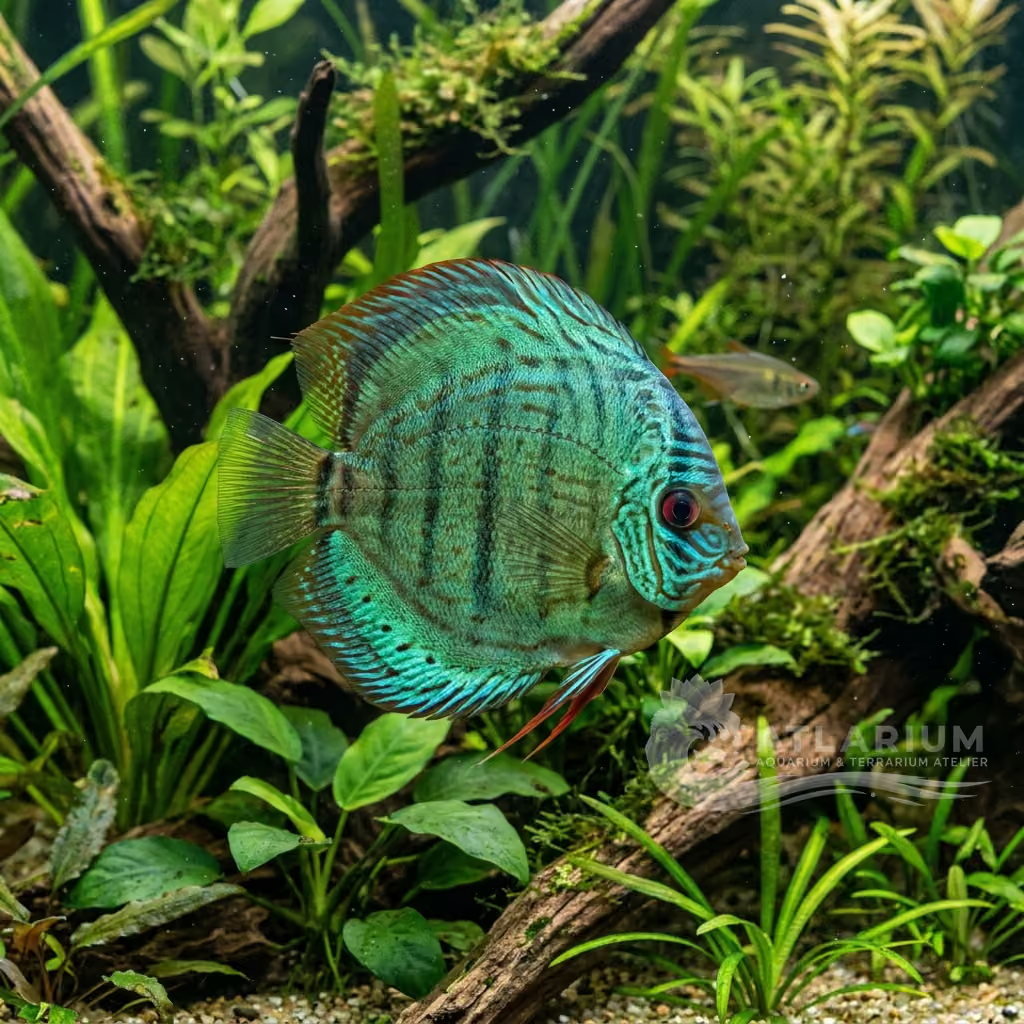
The Pigeon Blood is a revolutionary genetic mutation born in Asia. This Discus lacks the vertical black bars that indicate stress in normal Discus, always appearing bright, with orange/yellow bases and irregular striations. Unfortunately, melanin is distributed randomly in the form of "peppering" (black freckles or soot spots), a severe aesthetic defect that worsens if the fish is stressed or kept on dark substrates. The mutation has also made them terrible parents, lacking the vital skin mucus to feed the fry, making their natural breeding almost impossible in aquariums.
28 - 32 °C
6 - 7.5
Freshwater
Middle
20 cm
>= 300 L
>= 5
2 - 12 dGH
1 - 6 dKH
40 - 240 ppm
63 - 375 uS/cm

Species description

Care, breeding and tankmates

Geographic origin and distribution
Origin

Fish profile
- Temperament
- Peaceful
- They are majestic, calm, and interactive fish that often learn to recognize their owners. While less sensitive than wild-caught specimens, they still require a peaceful, stable environment to thrive. Sudden loud noises or aggressive tank mates will quickly cause them to become timid and reclusive.
- Diet
- Carnivore
- They are omnivorous and require a rich, varied diet to maintain their bright orange and red coloration. High-quality Discus pellets should be supplemented with frozen beef heart, bloodworms, and brine shrimp. Proper nutrition is critical during their juvenile stage to ensure they reach their full, impressive adult size.
- Life expectancy
- 10-15 years
- Adult size
- 20 cm
- Sex ratio
- Pair
- They should be kept in a group of at least six individuals to allow for natural socialization and pair formation. Within the group, a natural pecking order will form, distributing any mild aggression. Once a pair bonds, they may become slightly territorial during spawning, but generally remain peaceful.
- Feeding frequency
- Twice daily
- Adults should be fed a high-quality diet two to three times a day. Juveniles require intense feeding regimens, often four to six times daily, to support rapid growth. Any uneaten food must be siphoned out quickly to maintain the pristine water conditions they demand.
- Bioload
- Medium to High
- Like all Discus, the Pigeon Blood variety produces a heavy bioload that requires strict management. Their high-protein diet results in significant waste, demanding excellent biological and mechanical filtration. Copious water changes, often multiple times a week, are mandatory to prevent nitrate accumulation and stunting.
- Flow
- Stagnant
- They prefer very gentle water movement that mimics the calm, slow-flowing Amazonian tributaries. High flow rates force them to expend unnecessary energy and cause considerable stress. Filter returns should be baffled or directed towards the glass to ensure the main swimming area remains relatively still.
- Jump risk
- Yes
- While they are generally calm, they can be easily spooked by sudden movements or lighting changes, prompting them to jump. A secure aquarium lid or glass canopy is essential to prevent accidental losses. Keeping the aquarium in a low-traffic area helps minimize the risk of sudden frights.
- Reproduction
- Oviparous
- Pigeon Blood Discus are somewhat easier to breed than wild types, but still require pristine water and a dedicated breeding cone. Like other Discus, the parents produce a nutritious slime coat that the newly hatched fry feed upon. The trait for heavy 'peppering' (black spots) is often seen when they are stressed or kept in dark environments.
- Compatibility & tankmates
- Community
- They are peaceful, gregarious cichlids that prefer the company of gentle, warm-water species. Excellent companions include Corydoras catfish, Rummy-nose tetras, and small, peaceful plecos. Fast-moving or aggressive fish will outcompete them for food and cause them to hide, leading to extreme stress.
- Tank level
- Middle
- They are elegant mid-level swimmers that spend their time gliding through the open spaces of the aquarium. They appreciate vertical structures like Amazon sword plants or driftwood, which provide shelter and mimic their natural habitat. They will pick at food on the bottom but rarely linger at the very surface.

Scientific Parameters & Models
Window to the official scientific data of the species
- Trophic level
- 2.9 ± 0.33 se
- Resilience
- High (less than 15 months)
- Phylogenetic uniqueness (PD50)
- 0.625
- Bayesian Length-Weight
- a = 0.02692, b = 3.02
- VulnerabilityLow vulnerability (10 / 100)

Related species
Recommendations grouped by close relatives, companion choices, and similar care.