Blue Neon Cichlid
Paracyprichromis nigripinnis
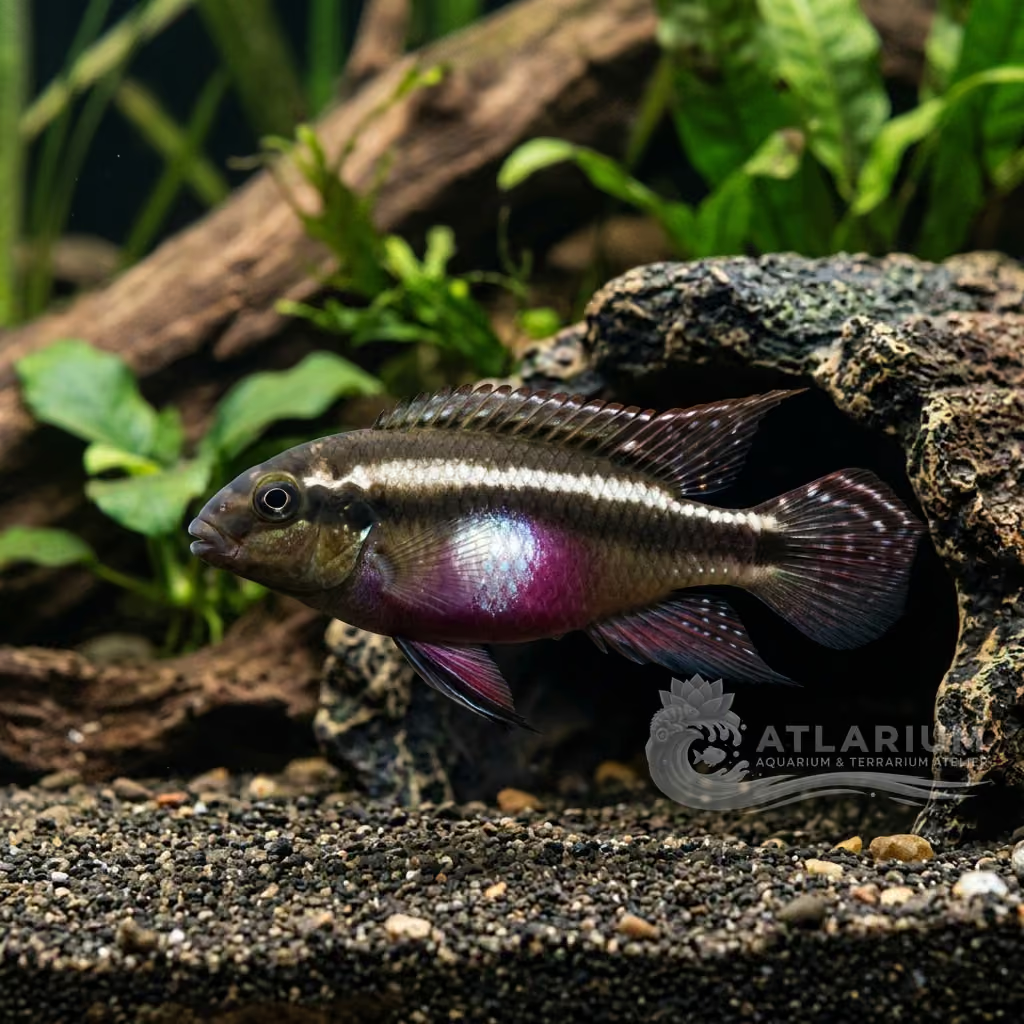
The 'Blue Neon' of Tanganyika (10 cm). Elegant pelagic schooling cichlid that hovers motionless upside down along vertical rocky walls. Peaceful, it provides magnificent neon glows in tall aquariums.
Water Temperature
24 - 27 °C
pH Value
8 - 9
Water type
Freshwater
Tank level
Middle
Adult size
10 cm
Minimum tank volume
>= 100 L
Minimum group
>= 1
GH
10 - 25 dGH
KH
5 - 12 dKH
TDS
200 - 495 ppm
Conductivity
313 - 773 uS/cm

Species description
Geographical Origin and Habitat: Lake Tanganyika, essentially steep rocky coasts that plunge into the deep blue. Despite being a pelagic (open water) cichlid unlike its cousins *Cyprichromis*, the *Paracyprichromis* is intimately tied to the rock: it never strays into the ocean of water, but stations at very high altitude visually resting against the mastodontic vertical cliffs at tens of meters deep, safe from aerial predators and in the comfortable penumbra.
Taxonomy and Morphology: A jewel of hydrodynamic engineering. Fusiform body, extremely tapered and slender, born for static suspension and fast sprint. Measures around 10 centimeters (4 inches). Large eyes to catch light, but the most stunning trait lies in the fins which in males extend into sinuous and very long pointed filaments (especially the asymmetrical lyre tail).
Social Behavior: Placid gregarious and formidable master of gravity. They group in peaceful swarms. Its ethology is unmistakable: it spends its time in a stationary and "relaxed" manner often swimming upside down belly up under the overhangs, or oblique, or even upside down vertically in perfect synchrony with the profile of the cliff, following ascensional currents. Very shy, detests blinding lights and will flee disoriented in bare tanks of high shelters.
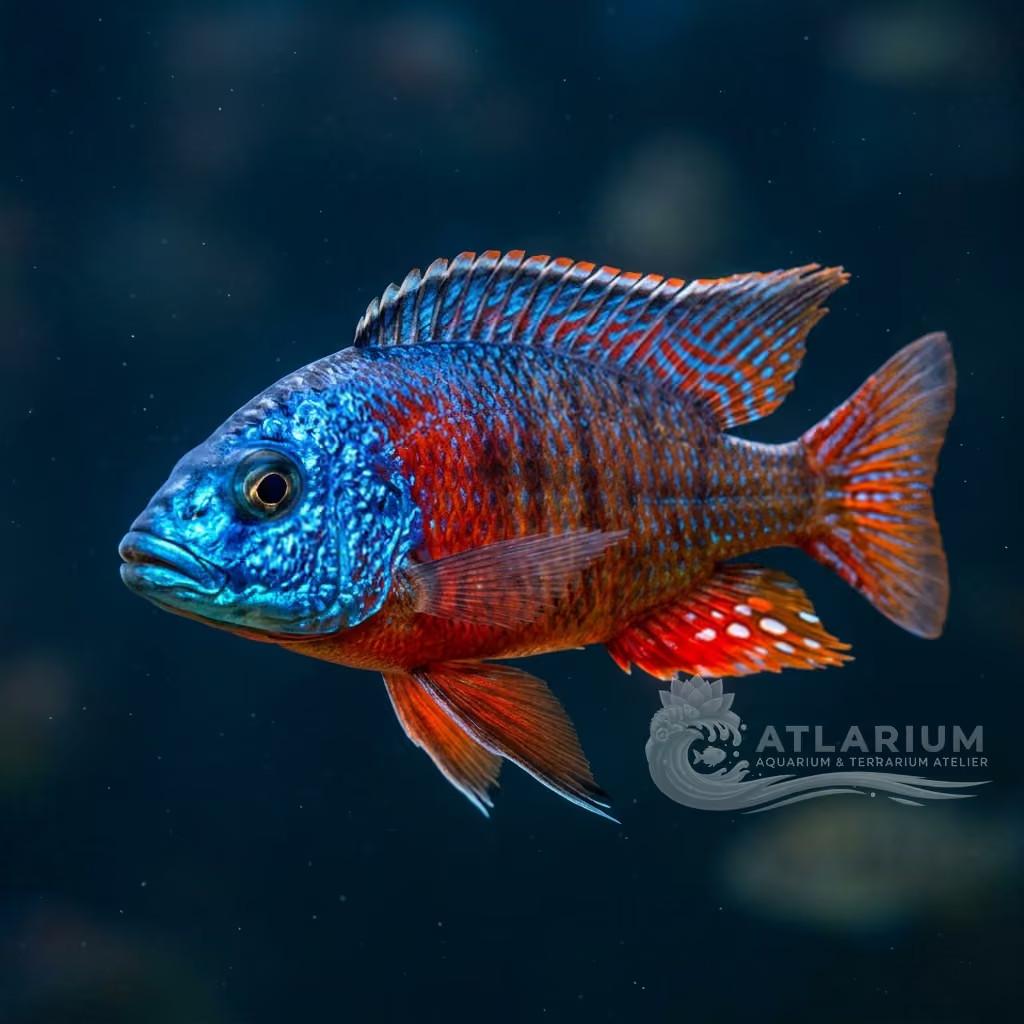
Coloration and Sexual Dimorphism: Pyrotechnic spectacle in dark water. Alpha males have a breathtaking livery: on a compact dark chocolate or rust color base, two vivid and blazing horizontal bands of pure brilliant NEON BLUE light up, parallel on flanks and back, which literally make it glow in the dark. The fins show turquoise lacquers. Females are modest: brown or grayish, with a slight or non-existent hint of neon, smaller and lacking the long lyre caudal filaments.

Care, breeding and tankmates
Aquarium Setup: Demands an aquarium developed in HEIGHT (minimum 100 cm / 40 inches in length but vital the height of the water column of 50-60 cm / 20-24 inches). Golden rule: set up one or more huge vertical rocky pillars, slate slabs or dark 3D backgrounds that reach from the bottom almost touching the surface of the water, recreating a shady overhang. It is there, virtually leaning against these towers in penumbra, that they will spend their existence. Leave empty space for free swimming. Dim or muffled light: under blazing lamps colors fade and the fish are terrified on the bottom.
Diet and Feeding: Planktivore and zooplankton hunter (Micro-Carnivore). Swallows in suspension in the blue. Provide fine and light protein food that rains down gently: crushed premium flakes, brine shrimp nauplii, cyclops, daphnia and mini bloodworms. Detests feeding from the bottom, if the food falls and touches the sand, it usually ignores it entirely.
Water Quality: Hyper-orthodox Tanganyika: Crystalline, very hard (12-25 GH) and extremely alkaline water (pH always between 8.0 and 9.0). They suffer atrociously from turbid or stagnant water: they demand a portentous filter but beware of too turbulent movement pumps that would force them to exhausting upstream swims exhausting them. Excellent a strong surface oxygenation that drops deeply without cyclonic turbulence mid-tank.
Compatibility and Cohabitation: Inclusion model for the high zone. Ideal tank mates (Tanganyika Dither Fish) for the quiet bottom shell-dwellers or the small rocky Julidochromis or the mysterious Neolamprologus buescheri. CATEGORICALLY PROHIBITED to mix them with aggressive or nervous rocky *Mbuna* of Malawi, *Tropheus* (who would stress them with their hyperactivity or furious opposite diets) and with the predator Frontosa or Lepidiolamprologus who would thank them for the expensive neon breakfast.
Aquarium Breeding: Species with very particular maternal mouthbrooding (Spawning in mid-water or on the wall). They do not make holes in the sand. The female and the male mate upside down parallel to the vertical slab; the female expels very large golden eggs and, with a lightning acrobatics before they touch the ground, steps back catching them on the fly in her mouth to then be fertilized by the trembling partner. Isolated in the school, she broods in her mouth up to a month. They do not cannibalize the children, who will come out already in huge format (1.5 cm) and independent to soon associate with the group at the edges of the rock in total tolerance of the flock of peaceful uncles.
Risks and Diseases: Lethality deriving from light stress or absence of vertical walls: in flat or low or over-illuminated aquariums, they crash against the glasses out of pure panic at the first reflection, refusing food, darkening into sick opaque brown from habitat asphyxiation depression to die. Bloat risk and severe lethargy if force-fed with leathery vegetable large granules that their delicate plankton apparatus does not dissolve fatally intoxicating them.

Geographic origin and distribution
Lake Tanganyika, essentially steep rocky coasts that plunge into the deep blue. Despite being a pelagic (open water) cichlid unlike its cousins *Cyprichromis*, the *Paracyprichromis* is intimately tied to the rock: it never strays into the ocean of water, but stations at very high altitude visually resting against the mastodontic vertical cliffs at tens of meters deep, safe from aerial predators and in the comfortable penumbra.
Origin
Tropical oceans and reefsAfrica and Madagascar

Fish profile
- Temperament
- Semi-aggressive
- They are exceptionally peaceful for cichlids and generally ignore others. Males will display beautifully to females and lightly spar. They are easily intimidated by aggressive tank mates.
- Diet
- Omnivore
- In the wild, they are specialized zooplankton feeders. In the aquarium, they thrive on small pellets and frozen cyclops. Frozen daphnia and baby brine shrimp are excellent dietary staples.
- Life expectancy
- 5-8 years
- Adult size
- 10 cm
- Sex ratio
- Group
- Keep a larger ratio of females to males to disperse aggression. A group with two males and several females is ideal. This keeps the social structure stable and females unstressed.
- Feeding frequency
- Twice daily
- They have small stomachs and should be fed small portions. Offering meals two or three times a day is ideal. Ensure food reaches them in the middle of the water column.
- Bioload
- Low to Medium
- They produce a moderate bioload compared to other cichlids. A robust biological filter is required to process their waste. Clean, highly oxygenated water is essential for long-term health.
- Flow
- Stagnant
- They prefer a gentle, steady water flow throughout the aquarium. Too much turbulence can stress these deep-water fish. Gentle movement helps keep their tiny food suspended.
- Jump risk
- Yes
- They can be skittish and prone to jumping when startled. A tight-fitting lid is absolutely required to prevent accidents. Sudden outside movements can trigger a jumping response.
- Reproduction
- Oviparous
- They are maternal mouthbrooders that spawn in the water column. The female catches the eggs in her mouth immediately. She will carry the developing fry for several weeks.
- Compatibility & tankmates
- Peaceful
- They are peaceful Tanganyikan cichlids for community setups. Good tank mates include peaceful shell-dwellers or Cyprichromis. They should not be kept with aggressive or boisterous species.
- Tank level
- Middle
- They are an open-water species inhabiting the middle and upper levels. They love to hover parallel to vertical rock structures. They rarely spend significant time exploring the bottom substrate.

Scientific Parameters & Models
FishBase
Window to the official scientific data of the species
FishBase v25.04Data synced on: 06/15/2026
- Trophic level
- 3.4 ± 0.45 se
- Resilience
- High (less than 15 months)
- Phylogenetic uniqueness (PD50)
- 0.75
- Bayesian Length-Weight
- a = 0.01445, b = 2.99
- VulnerabilityLow vulnerability (10 / 100)

Related species
Recommendations grouped by close relatives, companion choices, and similar care.