Back to atlas
FishFreshwaterExpert

Encyclopaedia

Jaguar Cichlid

Parachromis managuensis (precedentemente Nandopsis, Cichlasoma)

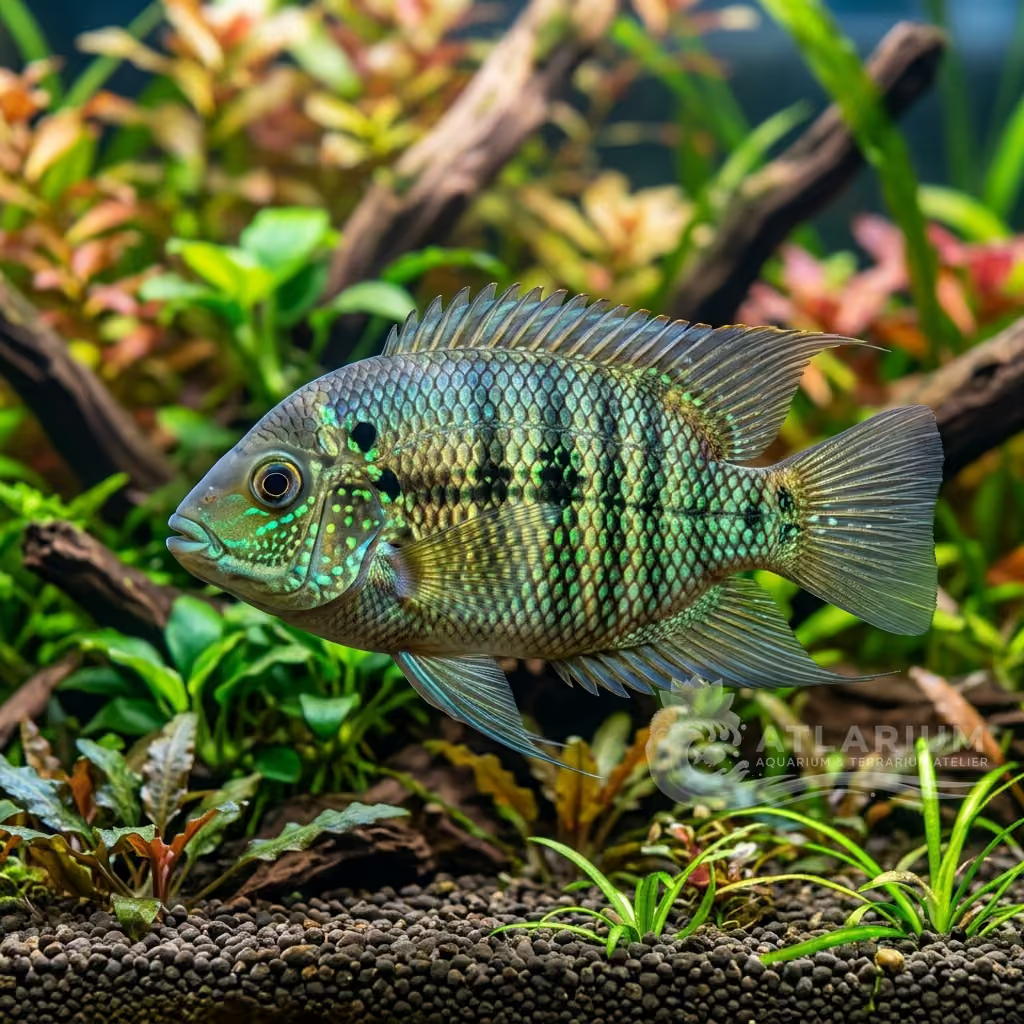
The Jaguar Cichlid (*Parachromis managuensis*), also known as 'Guapote Tigre', is one of the absolute apexes of the food chain of Central American freshwaters. More than an ornamental fish, it is a true aquatic predator (extreme piscivore), capable of exceeding 35 cm (14 inches) (in some wild specimens up to 40 cm / 16 inches). Its name derives from the spectacular coat of the male: a long and muscular golden silver/bronze body, entirely covered by an explosive tangle of blackish broken spots that exactly resemble the coat of a Jaguar. It is a primordial beast, endowed with a strongly prominent lower jaw, bristling with canine-like teeth visible when the mouth is closed, created for a single biological purpose: setting ambushes in the murky water, extending the mouth by protruding it and swallowing large whole fish in a fraction of a second.

Family
Cichlidae
Origin
Centro America (Fiumi a lento scorrimento, laghi caldi, dal bacino del fiume Ulua in Honduras fino al Costa Rica)
Origin
Cosmopolitan or introducedExtra-Amazon South AmericaCentral America and CaribbeanNorth America
Tank use
Used in 0 tanks

Share

Species challenges
Temperature

24 °C - 28 °C

pH

7 - 8

Water type

Freshwater

Tank level

All levels

Adult size

35 cm

Description

Geographic Origin and Biotope: Broadly distributed throughout Central America (from the Ulua River in Honduras, down to the Matina River basin in Costa Rica, and prominently in Lake Managua, Nicaragua). Thrives in fiercely hot, turbid or clear waters, ranging from oxygen-depleted stagnant swamps to immense lakes, acting as an apex ambush predator lurking silently among muddy, tangled roots and submerged timber.

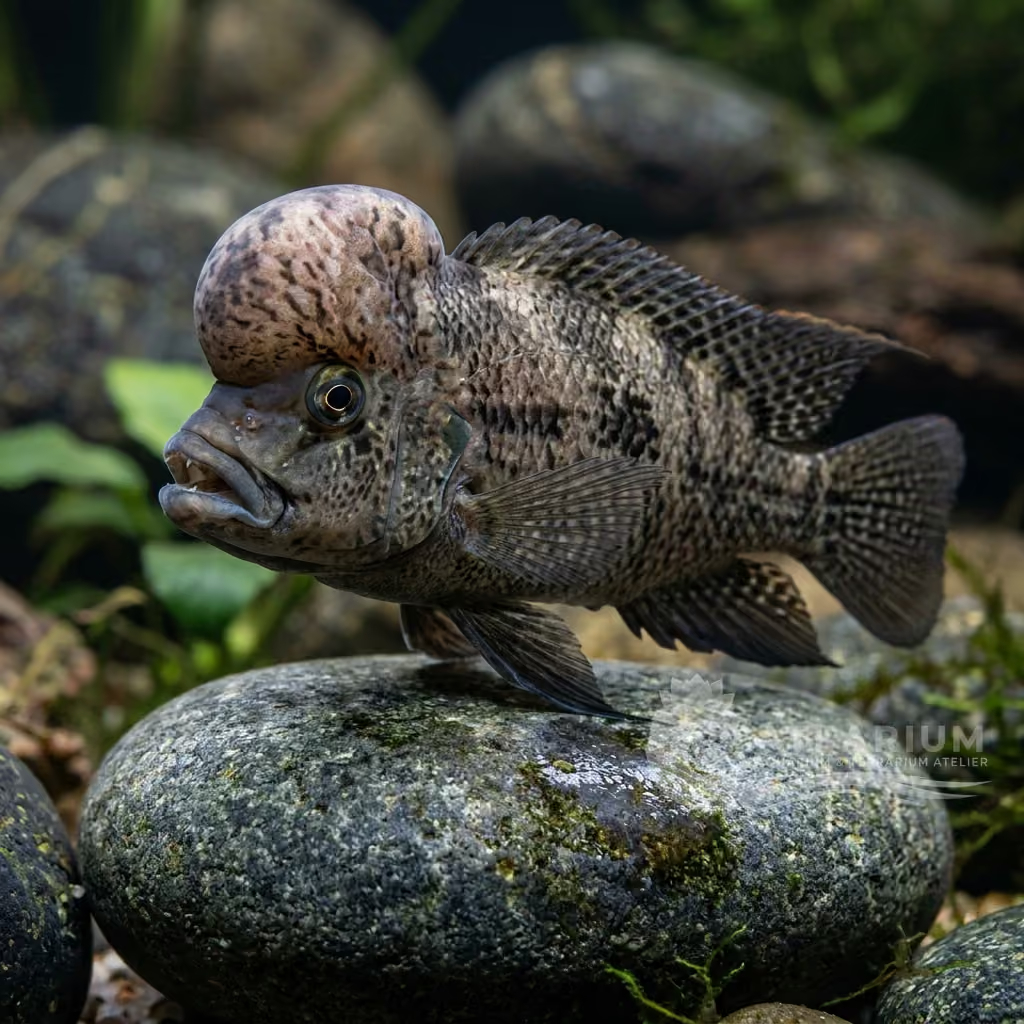
Taxonomy and Morphology: Renowned and rightfully feared in the hobby as the Jaguar Cichlid, Guapote Tigre, or Managuense. It is a genuine freshwater monster. It features a head and mouth of titanic, disproportionate size. The highly protrusible jaws are lined with large, razor-sharp "canine" teeth (clearly visible even when the mouth is closed), perfectly evolved to impale struggling prey. Easily reaches 40-50 cm (16-20 inches) in the aquarium, weighing well over three pounds.

Social Behavior: An Apex Predator at the absolute top of the food chain. Extremely aggressive, completely fearless, and hyper-territorial. The Jaguar does not constantly patrol or swim nervously; it prefers to hover ominously in ambush or slowly cruise its domain. It will systematically attack and kill (often swallowing whole) any fish that fits in its cavernous mouth, and will brutally dismantle those that don't. It habitually and viciously bites the hands and arms of its owner during tank maintenance.

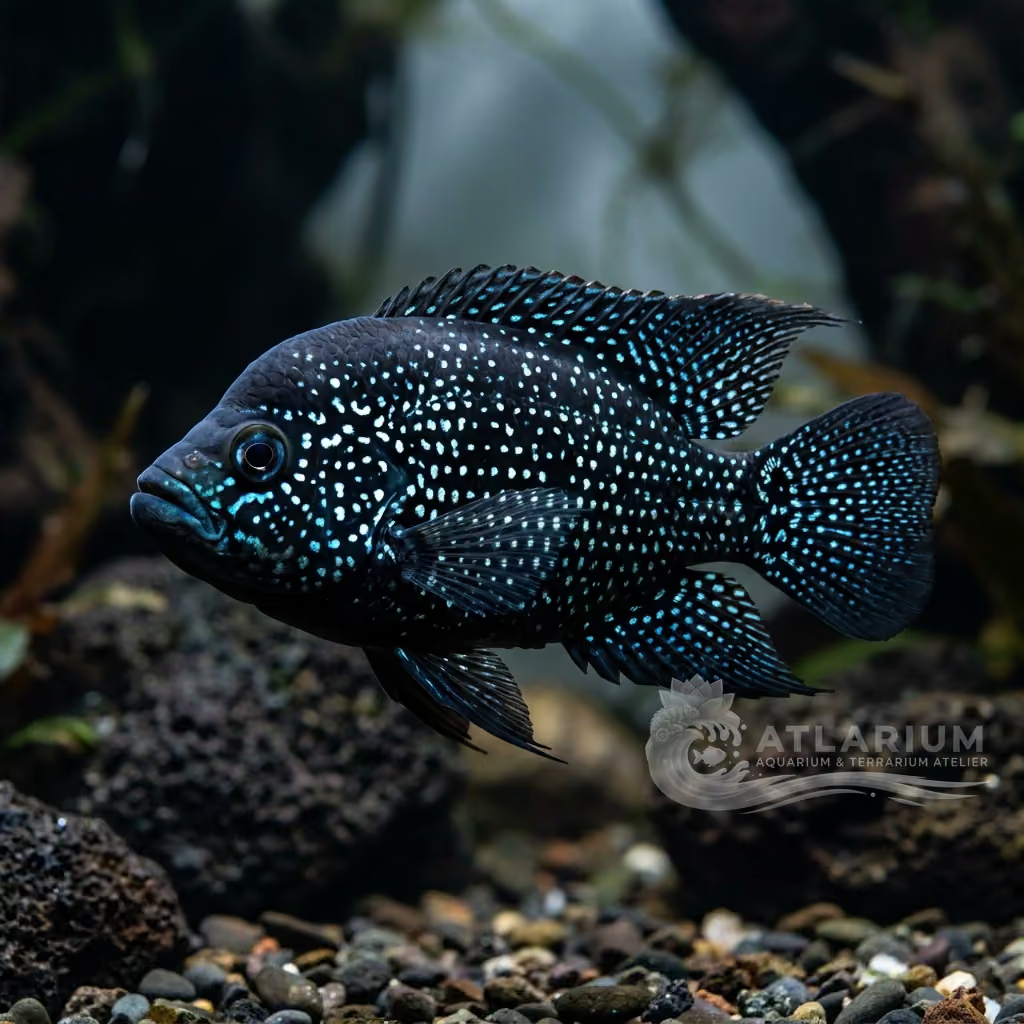
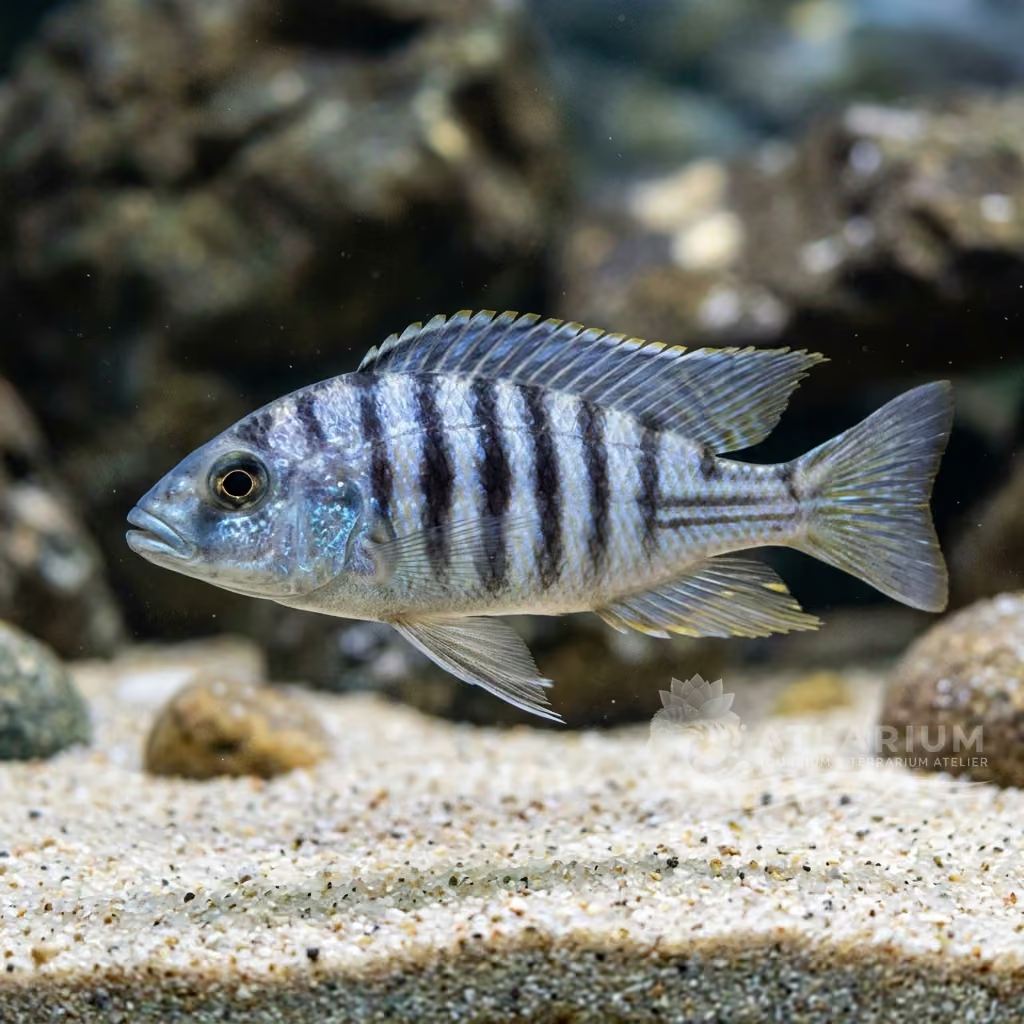
Coloration and Sexual Dimorphism: Frighteningly beautiful and mesmerizing. The background color ranges from a pale yellowish-cream to metallic gold. Juveniles exhibit thick, dark vertical bands and a solid horizontal stripe. As it matures into an adult, this pattern completely shatters into a spectacular, broken mosaic of jagged, pitch-black spots and blotches that flawlessly mimic the rosette pattern of a Jaguar's pelt. **Male:** Massively larger (approaching half a meter), covered in highly concentrated, dense spotting, developing impressive trailing streamers on the dorsal and anal fins, and occasionally a nuchal hump. **Female:** Noticeably smaller (max 30 cm / 12 inches), and retains a darker, less-spotted, more horizontal "broken bar" pattern reminiscent of the juvenile phase.

Care and observations

Tank Setup: Housing an adult Jaguar (or worse, a breeding pair) requires an enclosure most people simply do not own: an absolute minimum of 200 cm (6.5 - 7 feet) long (600-800 liters to 1000+ liters / 180-250+ Gallons). The tank must be "bomb-proof." Heaters, filters, and intake tubes should ideally be housed in an external sump because this fish will literally shatter glass heaters by throwing rocks at them or crushing them with its jaws. Provide a deep sand substrate (gravel will be spat forcefully at the glass). Decorate with colossal, heavy tree stumps resting directly on the bottom glass. Plants are laughable.

Feeding and Diet: Macro-Piscivore (Fish-eater). In the wild, its diet consists almost entirely of other fish and large invertebrates. In captivity, it must be fed heavily (but infrequently to avoid catastrophic water pollution given the massive waste output). Feed high-quality "Jumbo" cichlid sticks, whole shell-on market shrimp/prawns, chunks of white fish fillet (tilapia/cod), giant earthworms (nightcrawlers), and thawed frogs. **NEVER feed mammalian/avian meat** (beefheart, chicken) as it permanently destroys the liver, and **STRICTLY AVOID "feeder fish"** (goldfish/minnows) due to the extreme risk of fatal disease transmission and lack of nutrition.

Water Quality: Built like a battle tank. It survives in the worst, most putrid, oxygen-deprived swamps of Nicaragua, making it exceptionally tolerant of poor water quality. However, in an enclosed aquarium, the monumental amount of feces it produces will cause severe Nitrate poisoning and Hexamita if neglected. Keep the water extremely warm (25-30°C / 77-86°F). Prefers neutral to alkaline water (pH 7.0 - 8.5) and moderate hardness (GH 10-20). Mandatory 50% weekly water changes are required in anything under 300 Gallons.

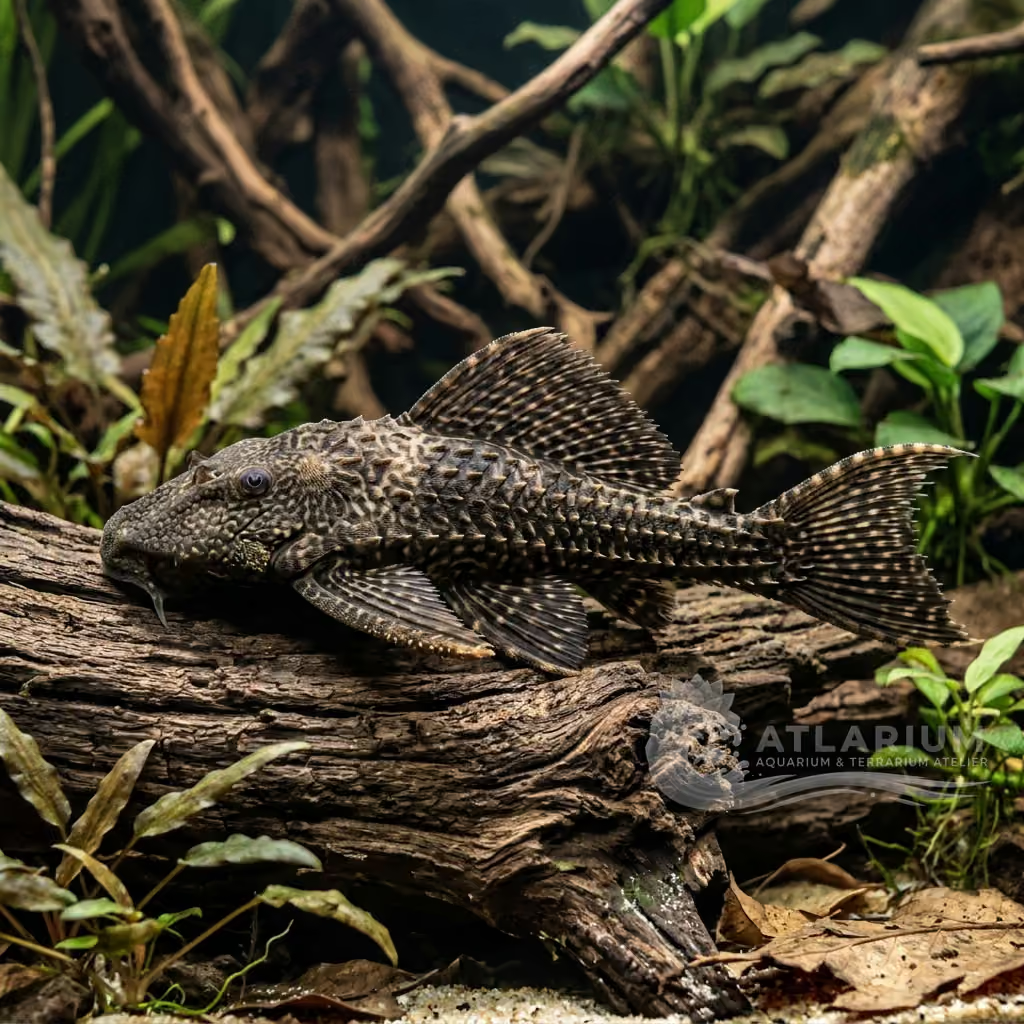
Compatibility: A born killer. Absolutely, categorically unfit for conventional community aquariums. The golden rule is: "If it fits in the mouth, it is food. If it does not fit, it is a mortal enemy to be crushed." It can only be housed in gigantic "Monster Fish" setups (over 400 Gallons) alongside equally armored, psychotic brawlers: massive Oscars (Astronotus), Midas Cichlids, giant armored Plecostomus, and huge Pacu. Frequently, the safest and most rewarding way to keep a Jaguar is as a solitary "Wet Pet" – the sole, beloved ruler of a 125-150 Gallon tank.

Reproduction in Captivity: A monogamous, bi-parental cave/substrate spawner. Forming a pair is the most dangerous phase: a male whose advances are rejected will trap and rip the female to shreds in hours (a heavy egg-crate divider is mandatory for introductions). Once bonded, they lay an astonishing 2,000 to 3,000 adhesive eggs. Parental care is an act of "total war": they will defend the wriggling fry by violently attacking the aquarist's face or hands through the glass, and they will 100% exterminate any other living creature sharing the tank.

Risks and Diseases: 1. The Demolition Expert: it lifts rocks weighing several pounds in its jaws and slams them against the glass, or crushes heaters; industrial-grade equipment is required. 2. Tank Extermination Hazard: a 200-Gallon tank holding a breeding pair of Jaguars is destined to hold ONLY that pair; all other tankmates will be murdered, mutilated, or dismembered without fail. 3. Human Injury: as an adult, the jaw power and razor-sharp canine teeth of a Jaguar Cichlid can easily slice deeply into an unwary owner's fingers or hands during tank maintenance, causing severe bleeding.

Fish profile

Temperament
Supremo Predatore Aggressivo. Non è un frenetico nuotatore né un iperattivo attaccabrighe gratuito come il Midas, ma è un predatore tattico e letale. Si rintanerà immobile nel suo territorio e non esiterà ad eliminare con micidiale precisione chirurgica qualsiasi pesce superi le "sue" barriere immaginarie o che sia passibile di essere divorato.
Diet
Carnivoro Stretto / Piscivoro. In natura si ciba primariamente di altri pesci o enormi insetti acquatici. In acquario va abituato da piccolo al pellet carnivoro per grossi ciclidi (stick XXL ad alto contenuto proteico). Necessita di massicce integrazioni di carne acquatica cruda: cozze col guscio rotto, pesciolini argentati surgelati, lombrichi di terra interi (puliti) e grossi crostacei col carapace. I mammiferi (cuore di bue) vanno banditi pena fegato grasso fatale.
Tank level
All levels
Minimum group
1
Adult size
35 cm
Minimum tank
600 L
GH
10 dGH - 20 dGH
KH
n/a
TDS
n/a
Conductivity
n/a
Sex ratio
Singolo 'Wet Pet' o Coppia Fissa Estrema. Le femmine restano sensibilmente più piccole (spesso intorno ai 25 cm) e presentano macchie più larghe e fuse tra loro (più nerastre rispetto all'oro scintillante maculato finemente del maschio). Creare una coppia è pericolosissimo e i due genitori uniti per l'accoppiamento uccideranno (spesso smembrandolo) QUALSIASI altropesce lasciato in un acquario di 2 metri, anche i giganteschi pulitori.
Feeding frequency
1 volta al giorno, o a giorni alterni da adulti giganteschi (per simulare i cicli di caccia prolungati). Iper-vorace. Ingoia enormi volumi di cibo sporcando in modo pazzesco l'acqua dai residui maciullati tra le branchie.
Bioload
Altissimo (Produzione di scorie impressionante, ammoniaca alle stelle se i filtri si intasano coi residui di carne/pesce).
Flow
Corrente da Moderata a Debole. Specie palustre centramericana; detesta le rapide, ama l'acqua lenta, molto ben ossigenata.
Jump risk
Covered tank required
Reproduction
Substrato-deponenti biparentali aperti. La fecondità del Giaguaro è terrificante: una grande femmina può produrre oltre 3000 uova a covata, difese con una follia genocida. Durante le cure parentali, morderanno e faranno sanguinare copiosamente anche le mani dell'allevatore che si accingesse a pulire il vetro o fare manutenzione.
Compatibility
Vasca 'Monster Fish' Dedicata. La sopravvivenza in comunità si basa solo ed unicamente sul rapporto di taglia: qualsiasi essere vivente che possa fisicamente passare attraverso l'ampia apertura mascellare del Giaguaro, cesserà di esistere la prima notte. Condivisibile solo in vasche faraoniche (oltre 800-1000L) con giganti titanici e corazzati sudamericani come il Pacu gigante, Oscar massicci o enormi Loricaridi spinosi che non possono essere né ingoiati né scalfiti.

Image gallery

Licensed images linked to the species or, when marked, to the closest representative taxon.

Jaguar Cichlid — Parachromis managuensis (precedentemente Nandopsis, Cichlasoma) | Atlarium