Encyclopaedia

FishFreshwaterIntermediate
©AI Generated·Proprietary

Zebra otocinclus

Otocinclus cocama

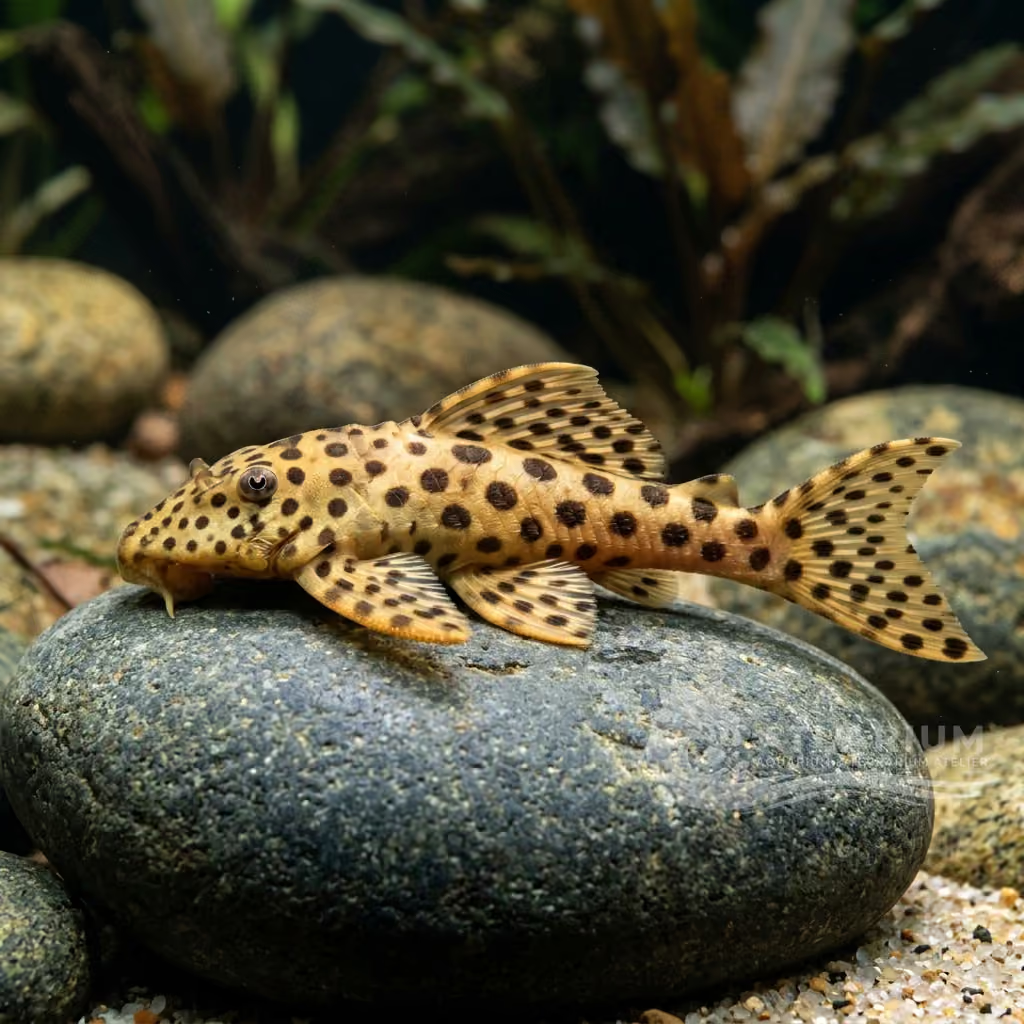
The 'designer' version of Otocinclus: the body is adorned with alternating dark vertical bands and light zones giving it the look of a miniature zebra — the most decorative of algae-cleaning fish. Like all Otos, it is a specialized algae grazer that feeds incessantly on surfaces. Extremely peaceful and gregarious: must be kept in groups of at least 6. Critical: never add to new tanks — requires mature tanks with established biofilm and soft algae. Often arrives malnourished from trade: immediate food access is vital. Copper-sensitive.

Taxonomy
Class:Actinopteri
Order:Siluriformes
Family:Loricariidae
Subfamily:Hypoptopomatinae
Genus:Otocinclus
Species:Otocinclus cocama

Share

Check out Zebra otocinclus on Atlarium

PracticeRecognition quizzesPhotos, names, origins, and puzzles to review Atlas species.Open quizzes
Water Temperature

0 - 27 °C

pH Value

5 - 7

Water type

Freshwater

Tank level

Bottom and middle

Adult size

4.4 cm

Minimum tank volume

>= 40 L

Minimum group

>= 6

GH

0 - 27 dGH

KH

1 - 13 dKH

TDS

10 - 535 ppm

Conductivity

16 - 836 uS/cm

Species description

Geographical Origin and Habitat: Endemic exclusively to the lower Ucayali and Marañón river basins in the Peruvian Amazon. Otocinclus cocama (the Zebra Otocinclus) is a highly specialized, delicate species restricted to clearwater and blackwater tributaries. It naturally colonizes marginal zones heavily shaded by overhanging jungle canopies. These specific micro-habitats are characterized by moderate to fast-flowing water running over sandy substrates completely choked with complex, submerged tangles of driftwood and massive accumulations of dead leaves, which provide surface area for specialized algae growth.
Taxonomy and Morphology: Scientifically classified within the Loricariidae family (the armored suckermouth catfishes), it is one of the most highly sought-after members of the Otocinclus genus. Taxonomically, its specific name "cocama" honors the Cocama indigenous people native to the region of its discovery. Morphologically, it possesses the classic Otocinclus shape: a flattened ventral (belly) profile, an underslung suckermouth equipped with specialized scraping teeth, and a body armored in bony plates (scutes) rather than scales.
Social Behavior: They are exceptionally peaceful, extremely timid, and strictly obligate schooling catfish. In the wild, they are found in massive shoals grazing on submerged wood. In captivity, they absolutely rely on a group (minimum 6-8, ideally 10+) for psychological security. When kept in inadequate numbers, they suffer chronic anxiety, refuse to eat, and rapidly waste away. Within a group, they exhibit fascinating behavior, constantly "leapfrogging" over each other as they graze collectively on plant leaves and aquarium glass.
Coloration and Sexual Dimorphism: Sexual dimorphism is extremely subtle; fully mature females are slightly broader and significantly plumper across the belly when viewed from above, while males remain highly streamlined. The coloration is what makes this species legendary and heavily demanded. Unlike the plain olive-brown of standard Otocinclus, O. cocama features a brilliant, starkly contrasting pattern of thick, vertical black stripes (zebra-like bars) over a glowing, silvery-white or pale golden base body.

Care, breeding and tankmates

Aquarium Setup: The aquarium architecture must perfectly cater to their need for biofilm-rich surfaces and pristine water. A mature, heavily established tank (running for at least 6 months) is absolutely mandatory; they will starve to death in a brand-new, sterile aquarium. The layout MUST feature dense thickets of broad-leaved plants (like Amazon Swords or Anubias) and extensive branching driftwood (spider wood). The wood and plant leaves act as crucial grazing pastures for the soft green algae and microscopic biofilms they depend on.
Diet and Feeding: This is the single most critical and difficult aspect of their care. They are obligate herbivores and biofilm grazers. In captivity, they rarely accept standard commercial foods. They constantly rasp soft green algae, diatoms, and aufwuchs from surfaces. You MUST intentionally cultivate algae on smooth river stones or the aquarium glass. To prevent starvation, their diet MUST be heavily supplemented with blanched organic vegetables (zucchini, spinach, cucumber) and high-quality Spirulina-based sinking wafers.
Water Quality: Originating from pristine Peruvian tributaries, they demand exceptional water quality and high oxygen saturation. They prefer tropical temperatures (22-26°C) and thrive in very soft, slightly acidic to neutral water (pH 6.0 - 7.2). They absolutely require a moderate to strong, unidirectional water flow created by powerheads to simulate their river biotope and maintain high oxygen levels. They have absolute zero tolerance for ammonia or nitrites, and are highly sensitive to elevated nitrates.
Compatibility and Cohabitation: They are the absolute ultimate, peaceful algae-eaters for community aquariums. Because they possess no defensive capabilities other than their bony scutes, they must be housed with small, entirely peaceful species. Excellent tankmates include peaceful Tetras (Neon Tetras, Rummy-nose), dwarf cichlids (Apistogramma), small Rasboras, and Pygmy Corydoras. They are 100% safe with all dwarf shrimp (Neocaridina). You MUST completely avoid any aggressive, fast-swimming, or large predatory fish.
Aquarium Breeding: Breeding is exceptionally rare and considered a major achievement in the hobby. They are egg-scatterers. A conditioned pair in a pristine, heavily planted tank may engage in a high-speed pursuit before assuming a "T-position" (typical of Corydoras). The female deposits a few highly adhesive eggs individually on the underside of broad plant leaves or aquarium glass. The adults generally ignore the eggs. The microscopic fry require heavily established tanks filled with infusoria and soft diatoms to survive.
Risks and Diseases: The absolute greatest physical risk is starvation during the first month of acclimation. Because virtually all specimens are wild-caught, they frequently arrive emaciated with severely compromised gut bacteria. Never purchase specimens with sunken bellies. Medically, they are incredibly sensitive to poor water quality, massive parameter swings, and all copper-based medications. An uncycled or sterile tank will result in a 100% mortality rate within weeks.

Geographic Origin and Distribution

Endemic exclusively to the lower Ucayali and Marañón river basins in the Peruvian Amazon. Otocinclus cocama (the Zebra Otocinclus) is a highly specialized, delicate species restricted to clearwater and blackwater tributaries. It naturally colonizes marginal zones heavily shaded by overhanging jungle canopies. These specific micro-habitats are characterized by moderate to fast-flowing water running over sandy substrates completely choked with complex, submerged tangles of driftwood and massive accumulations of dead leaves, which provide surface area for specialized algae growth.

Origin

Amazon, Orinoco, and GuianasEast Asia

Fish profile

Temperament
Peaceful
They exhibit a very timid and shy temperament. They rely on camouflage and hiding to feel secure. Providing plenty of hiding spots reduces their stress significantly.
Diet
Herbivore
They are primarily strict herbivores. Biofilm and soft algae make up their main diet. Supplemental feeding with blanched vegetables is highly recommended.
Sex ratio
School
A specific sex ratio is not strictly necessary. They thrive best in large mixed groups. Keeping at least six individuals promotes natural schooling behavior.
Feeding frequency
Continuous
They should have constant access to food. Algae grazing occurs naturally throughout the entire day. Supplemental foods can be offered a few times weekly.
Bioload
Low
This species produces a very small bioload. It contributes minimal waste to the water column. Filtration requirements are relatively low for this fish.
Flow
Strong
They prefer moderate to high water flow. Good oxygenation is strictly required for their health. A small powerhead can help simulate their natural streams.
Jump risk
No
Reproduction
Oviparous
Breeding in captivity is generally very rare. They require heavily planted environments to induce spawning. Eggs are usually deposited on broad plant leaves.
Compatibility & tankmates
Community
It is highly peaceful and excellent for community tanks. Best kept with small, non-aggressive species. Large or boisterous fish should be completely avoided.
Tank level
Middle/Bottom
They predominantly occupy the bottom and middle levels. You will often find them resting on plant leaves. They also cling to the aquarium glass frequently.

Window to the official scientific data of the species

Data synced on: 06/15/2026

Scientific Parameters & Models

Phylogenetic uniqueness (PD50)
0.5
Bayesian Length-Weight
a = 0.00977, b = 3.06
VulnerabilityLow vulnerability (10 / 100)

Image gallery

Licensed images linked to the species or, when marked, to the closest representative taxon.

Related species

Recommendations grouped by close relatives, companion choices, and similar care.

Variants and close relatives

Same atlas type, nearby scientific identity, genus, or family.

Hoppe's otocinclus

Hoppe's otocinclus

Otocinclus hoppei

View details->
Otocinclus (Oto Macrospilus)

Otocinclus (Oto Macrospilus)

Otocinclus macrospilus

View details->
Otocinclus (Oto Vittatus)

Otocinclus (Oto Vittatus)

Otocinclus vittatus

View details->
White Seam Bristlenose (L059)

White Seam Bristlenose (L059)

Ancistrus hoplogenys

View details->
Demini Angel Pleco (L136)

Demini Angel Pleco (L136)

Hypancistrus sp. L136

View details->
Candy Stripe Pleco (L015)

Candy Stripe Pleco (L015)

Peckoltia vittata

View details->
Butterfly Pleco

Butterfly Pleco

Dekeyseria picta

View details->
Hypancistrus sp. (L450)

Hypancistrus sp. (L450)

Hypancistrus sp. L450

View details->
Common Bristlenose Pleco

Common Bristlenose Pleco

Ancistrus cf. cirrhosus

View details->
Bristlemouth Pleco

Bristlemouth Pleco

Peckoltia multispinis

View details->
Magdalena Sand Whiptail

Magdalena Sand Whiptail

Crossoloricaria cephalaspis

View details->
Bristlenose Pleco (Ancistrus)

Bristlenose Pleco (Ancistrus)

Ancistrus cirrhosus

View details->
Lyretail Pleco

Lyretail Pleco

Acanthicus hystrix

View details->
Blue Panaque (L239)

Blue Panaque (L239)

Baryancistrus beggini

View details->
Snowball Pleco

Snowball Pleco

Hypancistrus inspector

View details->
Big-Eyed Ancistrus (L144a)

Big-Eyed Ancistrus (L144a)

Ancistrus macrophthalmus

View details->

Recommended companions

Compatible cards from coherent ecosystems with matching parameters.

Acorus gramineus
Plant

Acorus gramineus

Acorus gramineus

View details->
Amblystegium serpens
Plant

Amblystegium serpens

Amblystegium serpens

View details->
Aldrovanda vesiculosa
Plant

Aldrovanda vesiculosa

Aldrovanda vesiculosa

View details->
Anubias gracilis
Plant

Anubias gracilis

Anubias gracilis

View details->
Amblystegium riparium
Plant

Amblystegium riparium

Amblystegium riparium

View details->
Amblystegiaceae sp. "Manaus"
Plant

Amblystegiaceae sp. "Manaus"

Amblystegiaceae sp. "Manaus"

View details->
Anubias barteri var. nana 'Petite' ('Bonsai')
Plant

Anubias barteri var. nana 'Petite' ('Bonsai')

Anubias barteri var. nana 'Petite'

View details->
Aegagropila linnaei
Plant

Aegagropila linnaei

Aegagropila linnaei

View details->
Barbula sp.
Plant

Barbula sp.

Barbula sp.

View details->
Aciotis acuminifolia
Plant

Aciotis acuminifolia

Aciotis acuminifolia

View details->
Anubias "nangi"
Plant

Anubias "nangi"

Anubias "nangi"

View details->
Anubias barteri var. angustifolia
Plant

Anubias barteri var. angustifolia

Anubias barteri var. angustifolia

View details->
Anubias barteri var. barteri
Plant

Anubias barteri var. barteri

Anubias barteri var. barteri

View details->
Anubias barteri var. caladiifolia
Plant

Anubias barteri var. caladiifolia

Anubias barteri var. caladiifolia

View details->
Anubias barteri var. coffeifolia
Plant

Anubias barteri var. coffeifolia

Anubias barteri var. coffeifolia

View details->
Anubias barteri var. glabra
Plant

Anubias barteri var. glabra

Anubias barteri var. glabra

View details->

Similar care

Cards with similar requirements, difficulty, habitat, and husbandry profile.

Pitbull pleco

Pitbull pleco

Parotocinclus jumbo

View details->
Twig Catfish (Farlowella)

Twig Catfish (Farlowella)

Farlowella acus

View details->
Starlight Bristlenose Pleco (L183)

Starlight Bristlenose Pleco (L183)

Ancistrus dolichopterus

View details->
Skunk cory

Skunk cory

Corydoras arcuatus

View details->
Salt and pepper cory

Salt and pepper cory

Corydoras habrosus

View details->
Smudge Spot Cory

Smudge Spot Cory

Corydoras similis

View details->
Adolfo's cory

Adolfo's cory

Corydoras adolfoi

View details->
Royal Pleco (L190)

Royal Pleco (L190)

Panaque nigrolineatus

View details->
Twig Catfish

Twig Catfish

Farlowella vittata

View details->
Orinoco Twig Catfish

Orinoco Twig Catfish

Farlowella mariaelenae

View details->
Agulha Tetra

Agulha Tetra

Hyphessobrycon agulha

View details->
Flag Acara (Smiling Cichlid)

Flag Acara (Smiling Cichlid)

Laetacara curviceps

View details->
Gold Marble Bristlenose (LDA08)

Gold Marble Bristlenose (LDA08)

Ancistrus claro

View details->
Tentacle Lasiancistrus

Tentacle Lasiancistrus

Lasiancistrus tentaculatus

View details->
Blackline Tetra

Blackline Tetra

Hyphessobrycon scholzei

View details->
Blueberry Tetra

Blueberry Tetra

Hyphessobrycon wadai

View details->
Last updated: 06/30/2026