Encyclopaedia

FishFreshwaterBrackishEasy
©AI Generated·Proprietary

Indian glassfish

Parambassis lala

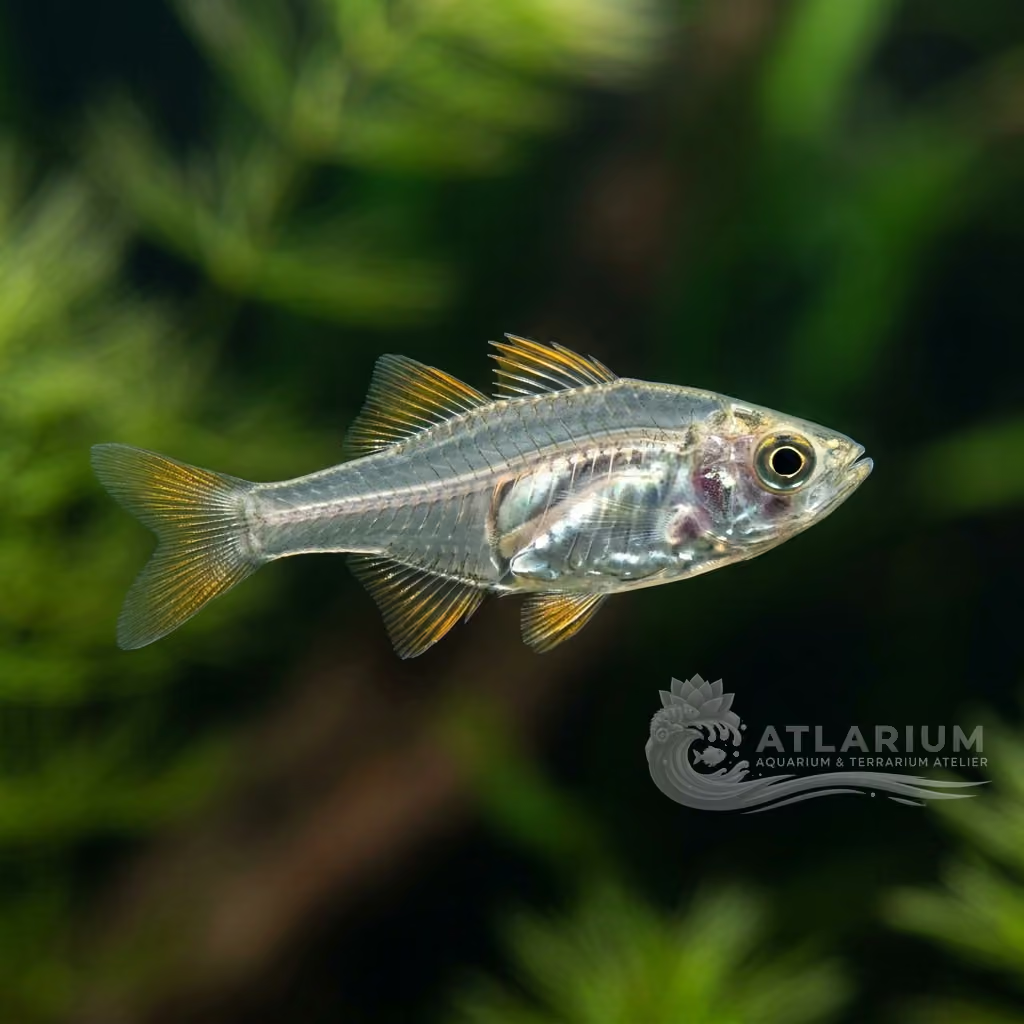
A completely transparent fish: through the glassy body you can see the skeleton, internal organs and swim bladder — a living anatomy lesson effect. Native to India and Southeast Asia. Small (2.5–3 cm) and gregarious, must be kept in groups of 6–8+. Strictly freshwater (the brackish water myth is false). Micropredator: almost always refuses dry food — live or frozen food diet mandatory. WARNING: never buy artificially 'colored' specimens — the dyeing is a painful and lethal practice.

Taxonomy
Class:Actinopteri
Order:Perciformes
Family:Ambassidae
Genus:Parambassis
Species:Parambassis lala

Share

Check out Indian glassfish on Atlarium

PracticeRecognition quizzesPhotos, names, origins, and puzzles to review Atlas species.Open quizzes
Water Temperature

21 - 30 °C

pH Value

6 - 8

Water type

Freshwater / Brackish

Tank level

Middle

Adult size

4 cm

Minimum tank volume

>= 40 L

Minimum group

>= 6

GH

0 - 14 dGH

KH

0 - 7 dKH

TDS

0 - 280 ppm

Conductivity

0 - 438 uS/cm

Species description

Geographical Origin and Habitat: Endemic to a broad geographical range across the heavily vegetated, sluggish freshwater systems, slow-moving rivers, flooded agricultural plains, and intensely stagnant, shallow ponds of the Ganges and Brahmaputra river basins in India, Bangladesh, and Myanmar. Parambassis lala (universally known as the Indian Glassy Fish or Highfin Glassy Perchlet) natively colonizes heavily shaded, highly structured micro-habitats. These environments are characterized by massive tangles of submerged roots, dense aquatic vegetation, and water that is frequently turbid (muddy) but completely devoid of strong currents.
Taxonomy and Morphology: Scientifically classified within the Ambassidae family (the Asiatic Glassfishes), it is a spectacular, biologically fascinating, and completely transparent micro-predator. Morphologically, fully mature adults reach roughly 3.5 to 4.0 centimeters (1.4-1.6 inches) in length. It possesses a deeply compressed, highly elevated, and almost disc-like body profile. Its absolute defining, astonishing anatomical feature is its complete lack of pigmentation: its body is entirely transparent, allowing the viewer to clearly see its skeletal structure, spine, ribs, and internal organs (enclosed in a silvery sac).
Social Behavior: They are highly active, entirely peaceful, and absolutely obligate shoaling micro-fish. Unlike larger, predatory glassfishes, Parambassis lala are highly gregarious and deeply timid. They strictly MUST be kept in a sizable group (absolute minimum 6, but 10-15+ is required to alleviate their intense shyness and encourage them to swim in the open). In the aquarium, they spend their entire day hovering nervously and darting through the middle levels of the water column, relying entirely on their transparency for camouflage against predators.
Coloration and Sexual Dimorphism: Sexual dimorphism is distinct and visually striking when mature. While both sexes possess the iconic, completely transparent, glass-like body, mature males are the undisputed stars: their immensely enlarged dorsal and anal fins develop a spectacular, highly contrasting black or deep blue border, heavily edged with bright metallic blue or silvery-white. Females remain almost entirely transparent and lack the intense black and blue fin edging. Crucial Note: This species is frequently subjected to the barbaric practice of artificial "dye-injection" (painting) in the trade; avoid neon-colored specimens.

Care, breeding and tankmates

Aquarium Setup: The aquarium architecture MUST flawlessly replicate a tranquil, heavily planted, and deeply structured Indian river margin. A minimum 60-liter (15-gallon) tank (at least 60 cm long) is required. The absolute most critical requirement is overwhelming, dense vegetation and line-of-sight breaks to alleviate their intense nervousness. The tank MUST be densely packed with tall background plants (like Vallisneria or Cryptocoryne) and massive tangles of branching driftwood. They require open swimming space in the center, flanked by dense cover. A dark substrate enhances their subtle fin coloration.
Diet and Feeding: They are highly specialized, intensely deliberate micro-predators (carnivores). They are notoriously picky and will frequently categorically reject standard commercial dry flakes or pellets. You MUST feed them a heavily varied, high-protein meaty diet. They hunt by hovering and suddenly striking at tiny suspended prey. Daily, heavy offerings of live or high-quality frozen foods are absolutely mandatory: massive amounts of Daphnia, Cyclops, newly hatched Artemia (brine shrimp), and small bloodworms. Failure to provide live or frozen food will rapidly result in lethal starvation.
Water Quality: Originating from the sluggish freshwater basins of India, they strictly demand highly stable, immaculate, and moderately hard water. They thrive in warm tropical temperatures (23-28°C / 73-82°F). Crucially, they strictly require moderately hard to hard water (GH 8-15) and a slightly alkaline pH (7.0 - 7.5). They possess absolute zero tolerance for dissolved organic waste; rigorous weekly water changes are absolutely mandatory. The water flow MUST be extremely gentle and heavily diffused; strong, turbulent currents will violently exhaust them and cause severe stress.
Compatibility and Cohabitation: Compatibility is strictly limited by their incredibly fragile nature, tiny size, extreme shyness, and requirement for slow-moving, hard water. They are the perfect, completely peaceful mid-level fish for a dedicated Asian biotope. Excellent companions include peaceful, hard-water tolerant micro-fish (like small Rasboras or Danio species), and peaceful bottom-dwellers. They MUST NEVER be housed with fast, aggressive, or large predatory fish (like Angelfish, Tiger Barbs, or large Cichlids) that will easily swallow them whole or bully them relentlessly.
Aquarium Breeding: Breeding is exceptionally difficult, highly rewarding, and requires a dedicated, pristine, hard-water spawning tank. They are continuous egg-scatterers that provide zero parental care. Breeding is triggered by heavy conditioning with live foods and a slight temperature increase. A male with intensely darkened fin edges will aggressively display, driving the female into dense tangles of fine-leaved mosses, where they scatter hundreds of microscopic, adhesive eggs. The adults are relentless egg-eaters; the parents MUST be completely removed immediately after spawning. The microscopic fry require infusoria.
Risks and Diseases: The absolute greatest physical risk is lethal starvation; they are strict micro-predators and will categorically starve to death if forced onto an exclusively dry-flake diet. A constant supply of live or frozen food is strictly mandatory. The second major risk is severe stress and physiological collapse caused by keeping them in bright, sparsely decorated aquariums with strong currents; massive plant cover and stagnant water are strictly required. Finally, NEVER purchase artificially dyed (painted) specimens, as they suffer from compromised immune systems and die prematurely.

Geographic Origin and Distribution

Endemic to a broad geographical range across the heavily vegetated, sluggish freshwater systems, slow-moving rivers, flooded agricultural plains, and intensely stagnant, shallow ponds of the Ganges and Brahmaputra river basins in India, Bangladesh, and Myanmar. Parambassis lala (universally known as the Indian Glassy Fish or Highfin Glassy Perchlet) natively colonizes heavily shaded, highly structured micro-habitats. These environments are characterized by massive tangles of submerged roots, dense aquatic vegetation, and water that is frequently turbid (muddy) but completely devoid of strong currents.

Origin

South and Southeast AsiaEast Asia

Fish profile

Temperament
Peaceful
They are generally timid, peaceful, and somewhat sensitive fish. They thrive when kept in groups of their own kind. If kept solitary, they will hide constantly and easily succumb to stress.
Diet
Carnivore
They are naturally micropredators feeding on small insects and crustaceans. They prefer live or frozen foods like bloodworms and daphnia. With patience, they can typically be trained to accept high-quality flakes.
Sex ratio
School
They are schooling fish and the exact sex ratio is relatively unimportant. Keeping a mixed group of at least six provides the best social structure. Males may occasionally display without causing harm.
Feeding frequency
Twice daily
They should be offered small meals once or twice a day. Ensure that boisterous tank mates do not outcompete them. Monitoring their feeding is essential to make sure they get enough nutrition.
Bioload
Low
They have a relatively moderate bioload but require very clean water. Effective biological filtration is necessary to keep nitrate levels low. Regular water changes are critical to maintain their delicate immune systems.
Flow
Strong
They prefer moderate water flow that mimics their natural riverine habitats. A gentle current from a canister filter provides an oxygenated environment. Make sure there are calm resting spots among plants.
Jump risk
No
Reproduction
Oviparous
Breeding in captivity is quite rare and moderately difficult. They are egg scatterers that lay eggs among fine-leaved aquatic plants. Parents exhibit no care and will eat the eggs if not removed.
Compatibility & tankmates
Peaceful
These are peaceful schooling fish that do well in community aquariums. They can be safely kept with peaceful loaches and small rasboras. Avoid keeping them with aggressive or fin-nipping species.
Tank level
Middle
They predominantly occupy the middle and lower-middle levels of the water column. They enjoy hovering together in loosely organized schools. Dense planted areas give them a sense of security.

Window to the official scientific data of the species

Data synced on: 06/15/2026

Scientific Parameters & Models

Trophic level
3.2 ± 0.4 se
Resilience
High (less than 15 months)
Phylogenetic uniqueness (PD50)
0.5
Bayesian Length-Weight
a = 0.01259, b = 2.95
VulnerabilityLow vulnerability (10 / 100)

Image gallery

Licensed images linked to the species or, when marked, to the closest representative taxon.

Related species

Recommendations grouped by close relatives, companion choices, and similar care.
Recommended companions

Compatible cards from coherent ecosystems with matching parameters.

Bacopa sp. "Japan"
Plant

Bacopa sp. "Japan"

Bacopa sp. "Japan"

View details->
Bolbitis heteroclita
Plant

Bolbitis heteroclita

Bolbitis heteroclita

View details->
Ammannia sp. 'Bonsai'
Plant

Ammannia sp. 'Bonsai'

Ammannia sp. 'Bonsai'

View details->
Anubias
Plant

Anubias

Anubias barteri

View details->
Anubias nana
Plant

Anubias nana

Anubias barteri var. nana

View details->
Anubias barteri var. nana 'Round Leaf'
Plant

Anubias barteri var. nana 'Round Leaf'

Anubias barteri var. nana 'Round Leaf'

View details->
Anubias congensis
Plant

Anubias congensis

Anubias congensis

View details->
Anubias gigantea
Plant

Anubias gigantea

Anubias gigantea

View details->
Anubias lanceolata
Plant

Anubias lanceolata

Anubias lanceolata

View details->
Anubias minima
Plant

Anubias minima

Anubias minima

View details->
Bucephalandra pygmaea "Bukit Kelam / Sintang"
Plant

Bucephalandra pygmaea "Bukit Kelam / Sintang"

Bucephalandra pygmaea "Bukit Kelam / Sintang"

View details->
Bucephalandra pygmaea "Kapit"
Plant

Bucephalandra pygmaea "Kapit"

Bucephalandra pygmaea "Kapit"

View details->
Bucephalandra sordidula
Plant

Bucephalandra sordidula

Bucephalandra sordidula

View details->
Bucephalandra sp. "Bodok"
Plant

Bucephalandra sp. "Bodok"

Bucephalandra sp. "Bodok"

View details->
Bucephalandra sp. "Braun-rot narrow"
Plant

Bucephalandra sp. "Braun-rot narrow"

Bucephalandra sp. "Braun-rot narrow"

View details->
Bucephalandra sp. "Braun-rot" ("Serimbu")
Plant

Bucephalandra sp. "Braun-rot" ("Serimbu")

Bucephalandra sp. "Braun-rot"

View details->

Similar care

Cards with similar requirements, difficulty, habitat, and husbandry profile.

Checker Barb

Checker Barb

Oliotius oligolepis

View details->
Smudge Spot Cory

Smudge Spot Cory

Corydoras similis

View details->
Skunk cory

Skunk cory

Corydoras arcuatus

View details->
Rosy Barb

Rosy Barb

Pethia conchonius

View details->
Cherry Barb

Cherry Barb

Puntius titteya

View details->
Desana Corydoras

Desana Corydoras

Corydoras desana

View details->
Gold Ring Danio

Gold Ring Danio

Danio tinwini

View details->
Siamese fighting fish

Siamese fighting fish

Betta splendens

View details->
Plakat Betta

Plakat Betta

Betta splendens var. Plakat

View details->
Balbus Tetra

Balbus Tetra

Hyphessobrycon balbus

View details->
Black Phantom Tetra

Black Phantom Tetra

Hyphessobrycon megalopterus

View details->
Bronze cory

Bronze cory

Corydoras aeneus

View details->
Glowlight Danio

Glowlight Danio

Celestichthys

View details->
Blackline Tetra

Blackline Tetra

Hyphessobrycon scholzei

View details->
Black Ruby Barb

Black Ruby Barb

Pethia nigrofasciata

View details->
Salt and pepper cory

Salt and pepper cory

Corydoras habrosus

View details->
Last updated: 06/30/2026



