Leopard Pleco (Sailfin Pleco)
Pterygoplichthys gibbiceps
The Pterygoplichthys gibbiceps is the fake "cleaner fish" par excellence. Sold small for 60-liter tanks, it quickly becomes a 50-centimeter Leviathan, armored and very heavy. It is not an algae eater for small aquariums: it is a mammoth omnivore that requires bathtub-sized tanks (minimum 600 liters). In small aquariums it will fatally pollute the water due to the monstrous amount of feces it produces, and will destroy any plant or decoration with a simple flick of its tail.
Water Temperature
22 - 28 °C
pH Value
6 - 8
Water type
Freshwater
Tank level
Bottom
Adult size
45 cm
Minimum tank volume
>= 600 L
Minimum group
>= 1
GH
5 - 20 dGH
KH
2 - 10 dKH
TDS
95 - 400 ppm
Conductivity
148 - 625 uS/cm

Species description
Geographical Origin and Habitat: Widely distributed throughout the Amazon (Brazil) and Orinoco (Venezuela, Colombia) basins. Inhabits floodplains, oxbow lakes, slow rivers, and swampy zones, often thriving in oxygen-poor waters near the muddy bottom.
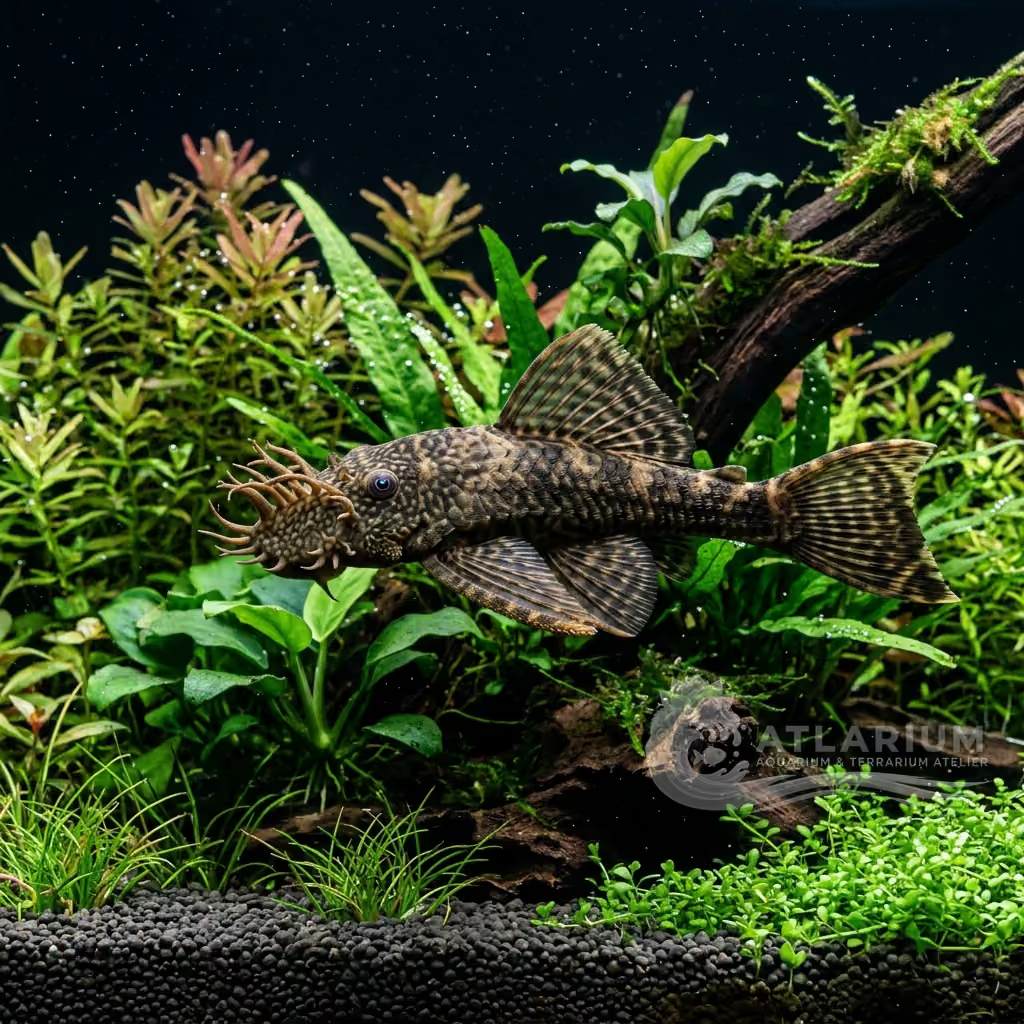
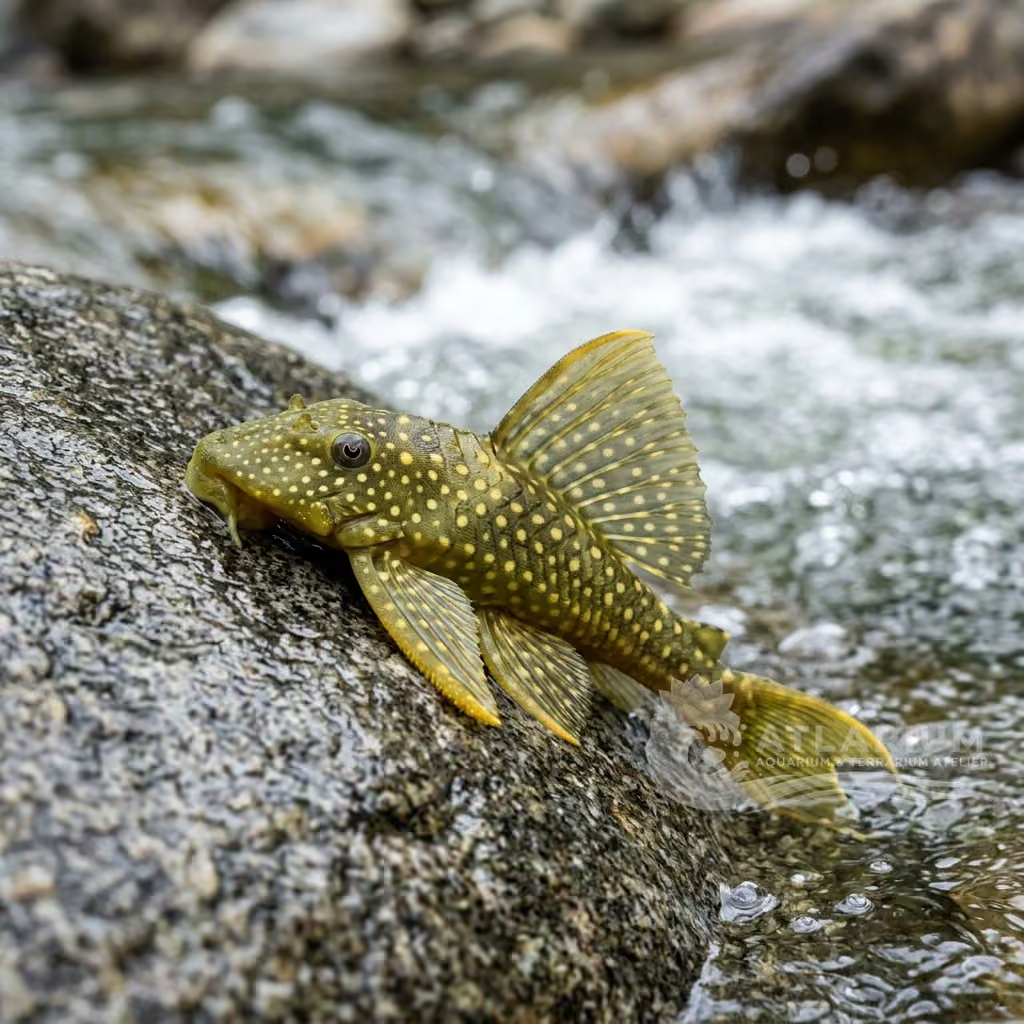
Taxonomy and Morphology: Universally known as the "Leopard Sailfin Pleco". Its most imposing morphological feature is the majestic, enormous dorsal fin, which contains 12 to 14 soft rays (unlike standard Hypostomus which have 7 or 8) and rises like the sail of a galleon. The body is heavily armored, broad, and grows to a monstrous 50 cm (20 inches) in length.
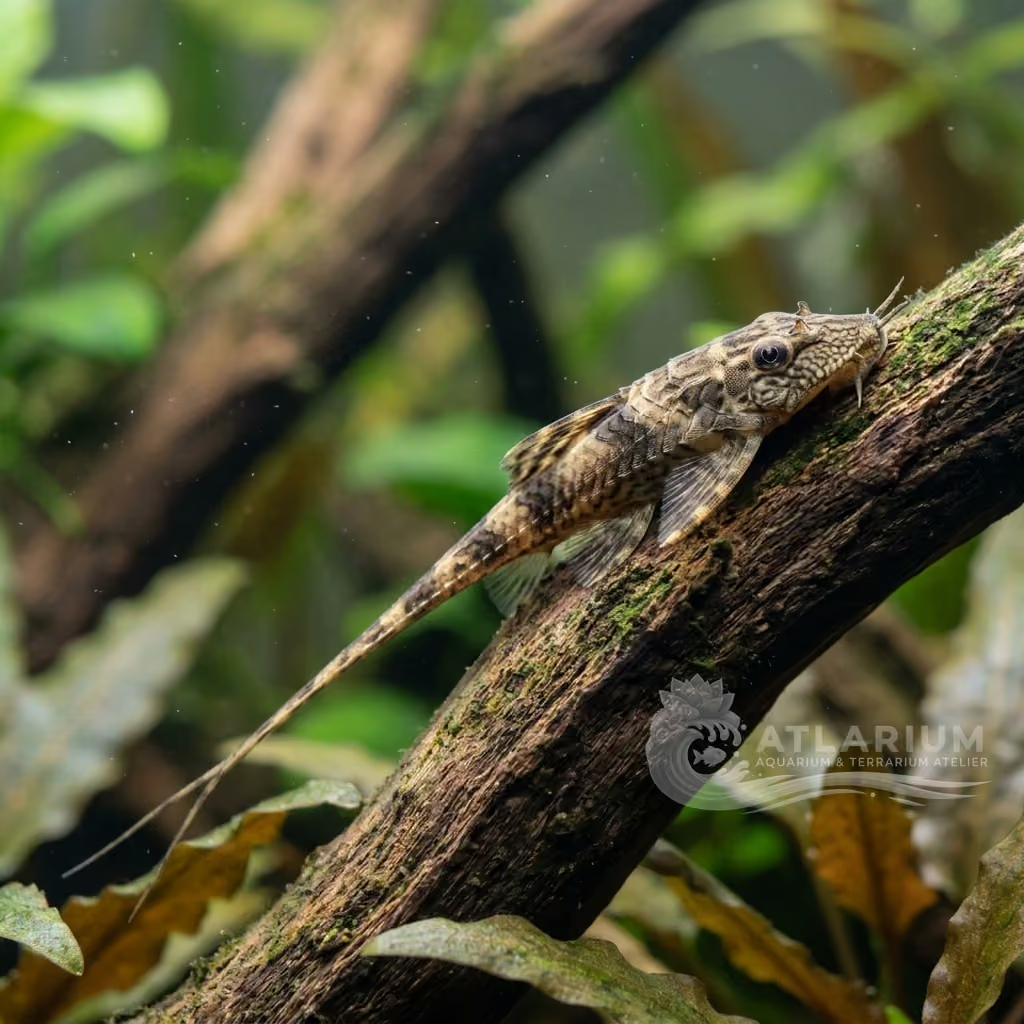
Social Behavior: Lazy, slow, and placid as an adult. Spends the vast majority of its day "anchored" to the bottom or a massive log. Can become moderately territorial (using heavy body slams) to defend its favorite cave or during feeding. Strictly nocturnal, it will literally bulldoze the tank decor, pushing rocks and wood aside with its immense muscle mass.
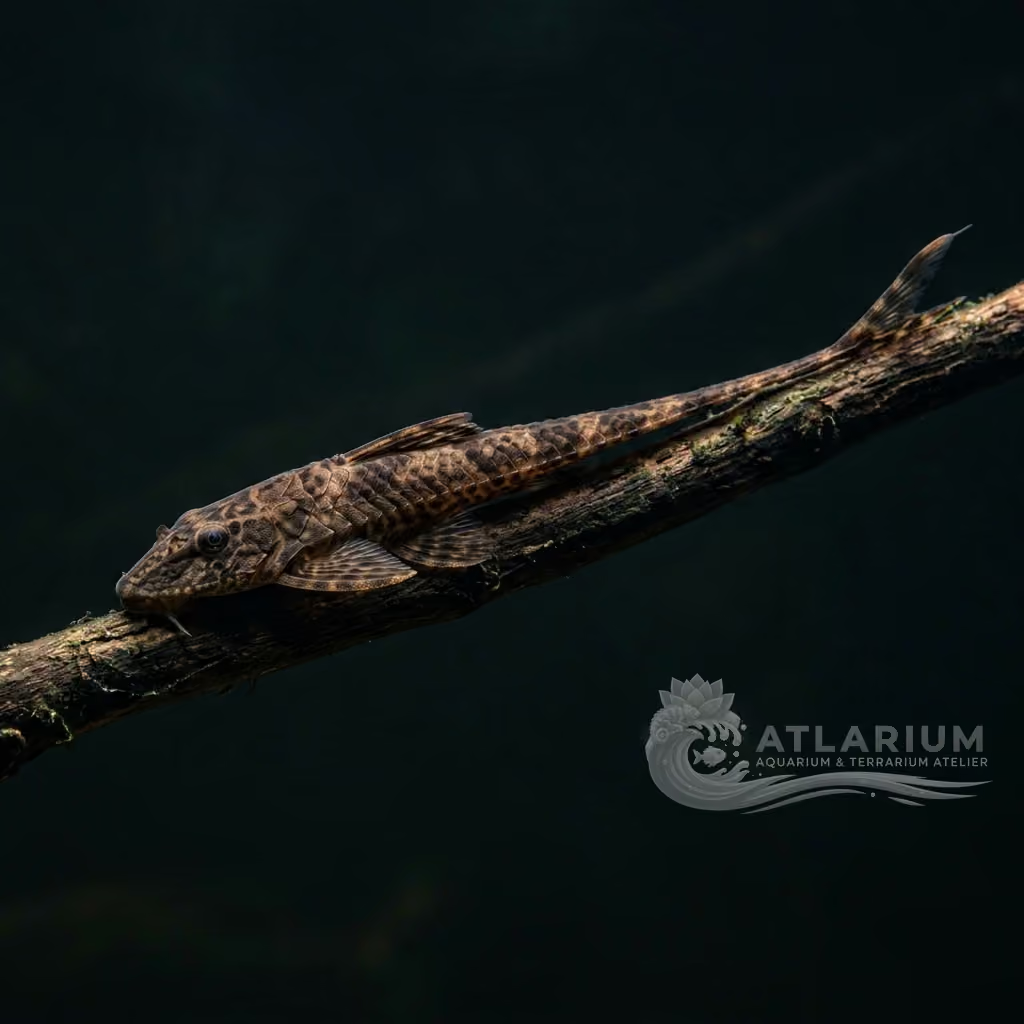
Coloration and Sexual Dimorphism: Spectacular "leopard" pattern: an intricate maze of large, irregular dark spots (dark brown or black) separated by a fine golden, beige, or pale yellow reticulated web. This pattern covers the entire body seamlessly, including the belly and the massive sail fin. Sexual dimorphism is invisible to the naked eye.

Care, breeding and tankmates
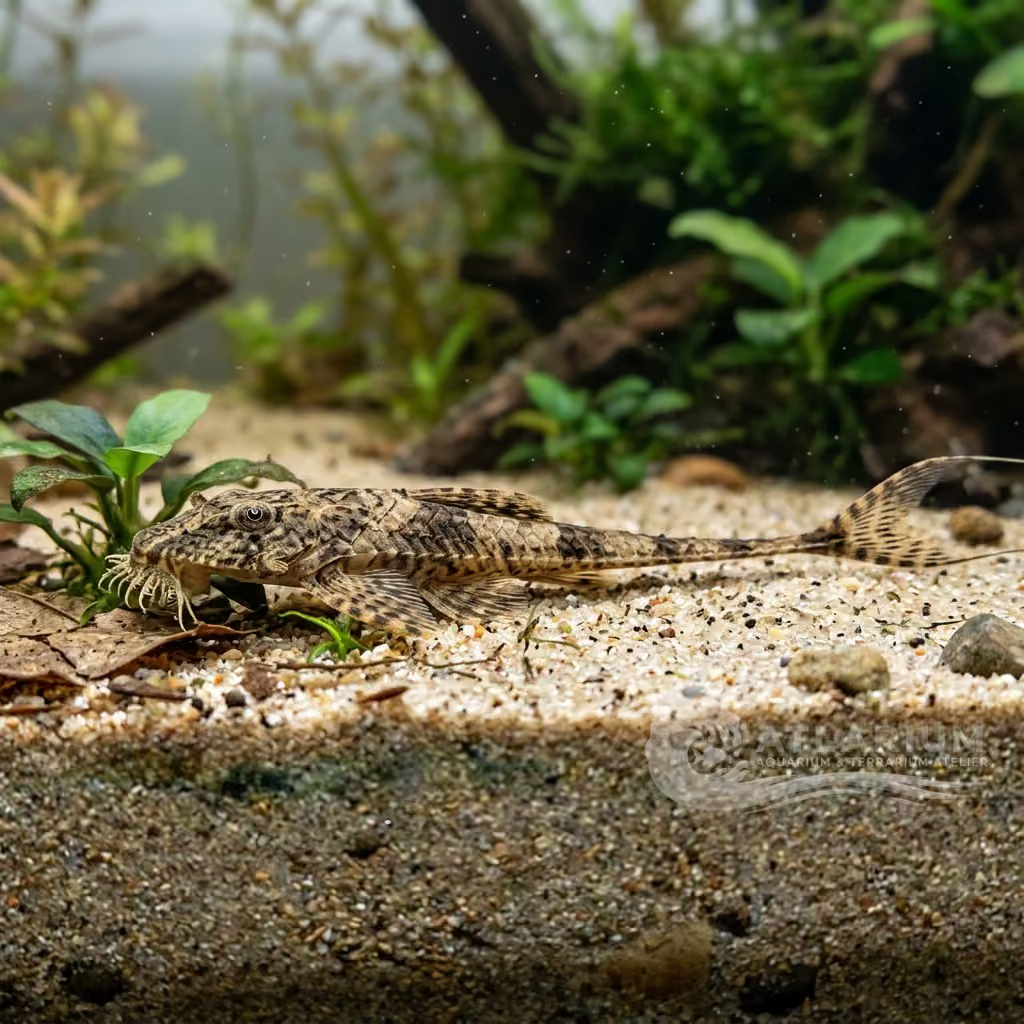
Aquarium Setup: Demands literally monumental tanks (over 180-200 cm / 6-7 feet long) once fully grown. The tank should feature a sandy bottom, zero delicate plants (it will uproot them simply by swimming over them), and incredibly heavy decor. Use massive driftwood stumps and giant PVC pond pipes; otherwise, it will feel vulnerable and cause damage thrashing around for cover.
Diet and Feeding: A formidable macro-scavenging omnivore. Unlike the tiny Otocinclus, the Sailfin Pleco is a bulldozer. Devours massive quantities of sunken food. It must have constant access to large, soft driftwood to rasp essential lignin. Requires giant sinking wafers, carnivore pellets, and above all, half a raw zucchini or large chunks of melon every other day.
Water Quality: Unfortunately for the fish, it is practically immortal. Withstands deplorable water conditions (pH 6.0-8.0, temps 22-30°C / 71-86°F) and can breathe atmospheric air in emergencies by swallowing it into its vascularized stomach. Produces a continuous, monumental amount of waste. Without vastly oversized filtration (like pond filters or massive sumps), the water will turn to sewage in 48 hours.
Compatibility and Cohabitation: The standard "janitor" for monster fish tanks holding large predators or massive cichlids (Arowanas, Oscars, Midas Cichlids). NEVER house with slow, flat-sided fish (like Discus or large Angelfish); if underfed, it will develop a pathological habit of latching onto their flanks at night, literally sucking their skin and slime coat off, causing fatal ulcers.
Aquarium Breeding: Impossible in a home aquarium. Occurs only in large mud ponds or the wild, where they excavate deep tunnels (up to a meter deep) into the muddy riverbanks to lay giant egg masses guarded by the male. Commercially mass-produced in outdoor mud ponds in Asia.
Risks and Diseases: 1. Unmanageable adult size: 99% of buyers purchase them at 5 cm (2 inches) for a tiny 50L (10G) tank, totally unaware they will become half-meter dinosaurs in just a few years. 2. Severe Invasive Threat: recklessly released by desperate aquarists into local lakes, they survive and devastate local riverbanks and devour native fish eggs. 3. Mutilating flat tankmates.

Geographic origin and distribution
Widely distributed throughout the Amazon (Brazil) and Orinoco (Venezuela, Colombia) basins. Inhabits floodplains, oxbow lakes, slow rivers, and swampy zones, often thriving in oxygen-poor waters near the muddy bottom.
Origin
Amazon, Orinoco, and GuianasNorth America

Fish profile
- Temperament
- Territorial
- They are nocturnal and possess a very relaxed temperament. They ignore mid-water fish entirely during their activities. They can be incredibly destructive to delicate planted aquascapes.
- Diet
- Omnivore
- They are heavily herbivorous wood-eating scavengers naturally. Driftwood must be present for their digestive health. Algae wafers and fresh vegetables are dietary staples.
- Life expectancy
- 15-20 years
- Adult size
- 45 cm
- Sex ratio
- Solitary
- They are best kept as solitary bottom-dwelling centerpieces. Keeping multiples requires an incredibly large aquarium footprint. Territorial disputes between males can be highly destructive.
- Feeding frequency
- Twice daily
- They should be fed heavily once daily, preferably nocturnally. They graze continuously on wood and algae biofilms. Uneaten vegetables must be removed promptly.
- Bioload
- Extreme
- This massive Pleco produces an extraordinarily heavy bioload. Massive and frequent water changes are completely mandatory. Only highly robust filtration systems can handle them.
- Flow
- Stagnant
- They prefer moderate to strong water flow conditions. Good oxygenation is critical for their large bodies. Powerheads help simulate their natural river habitats.
- Jump risk
- No
- Reproduction
- Oviparous
- Breeding them in home aquariums is virtually impossible. They require deep mud banks to dig spawning tunnels. Commercial breeding occurs entirely in large outdoor ponds.
- Compatibility & tankmates
- Solitary
- They are generally peaceful towards other fish species. They may become aggressive towards other large bottom-dwellers. They occasionally rasp on the slime coat of slow fish.
- Tank level
- Bottom
- They are strict bottom dwellers and surface rasping fish. They spend their days hidden under large driftwood. They emerge at night to forage along the substrate.

Scientific Parameters & Models
FishBase
Window to the official scientific data of the species
FishBase v25.04Data synced on: 06/15/2026
- Trophic level
- 2 ± 0 se
- Resilience
- Low (4.5 - 14 years)
- Phylogenetic uniqueness (PD50)
- 0.5
- Bayesian Length-Weight
- a = 0.01995, b = 2.95
- VulnerabilityModerate vulnerability (40 / 100)

Related species
Recommendations grouped by close relatives, companion choices, and similar care.