Ruby fairy wrasse
Cirrhilabrus rubeus
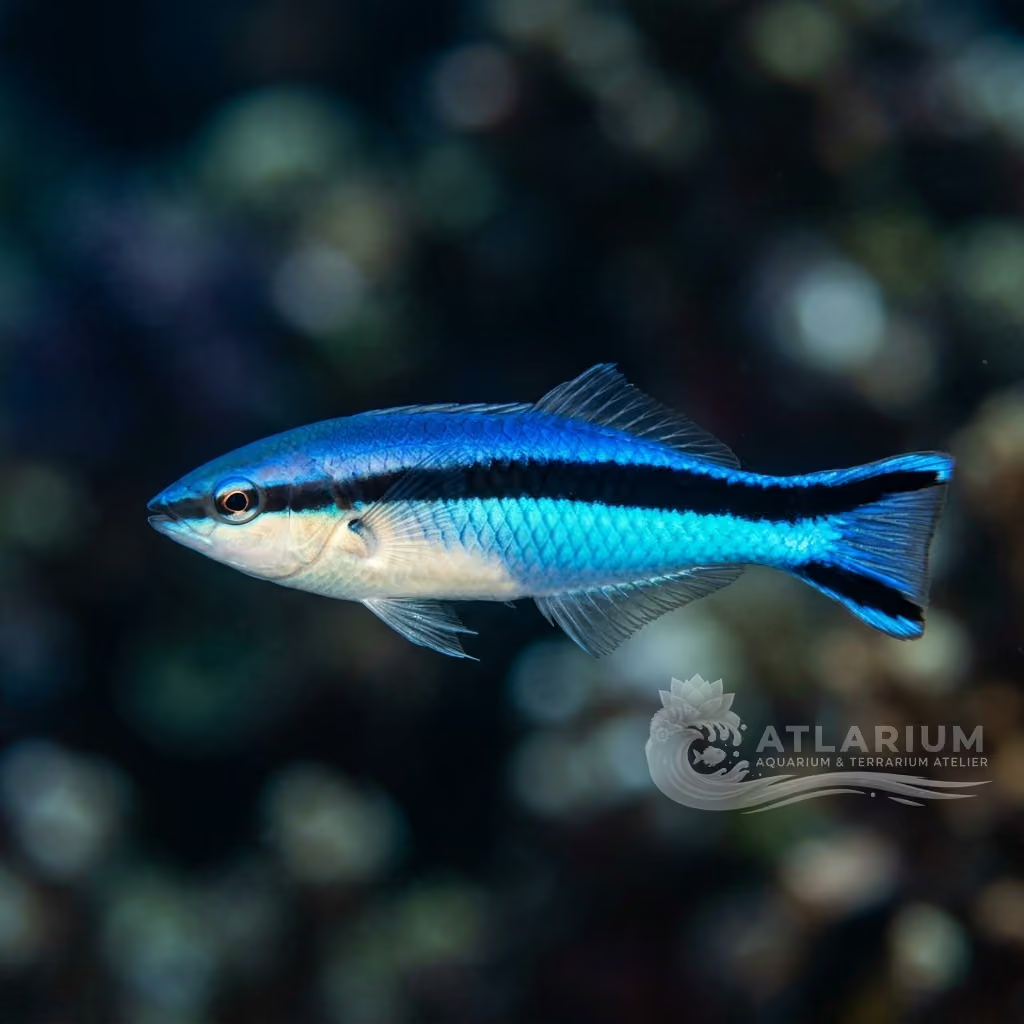
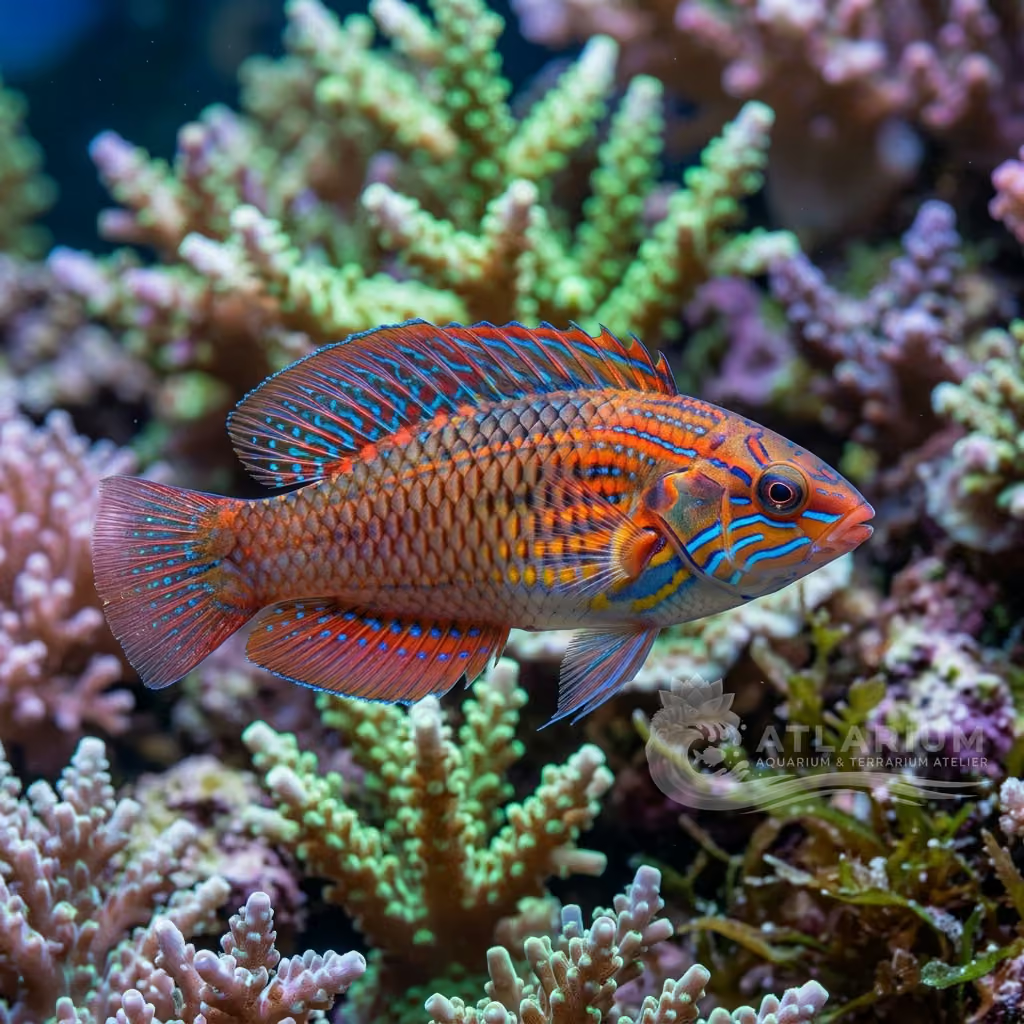
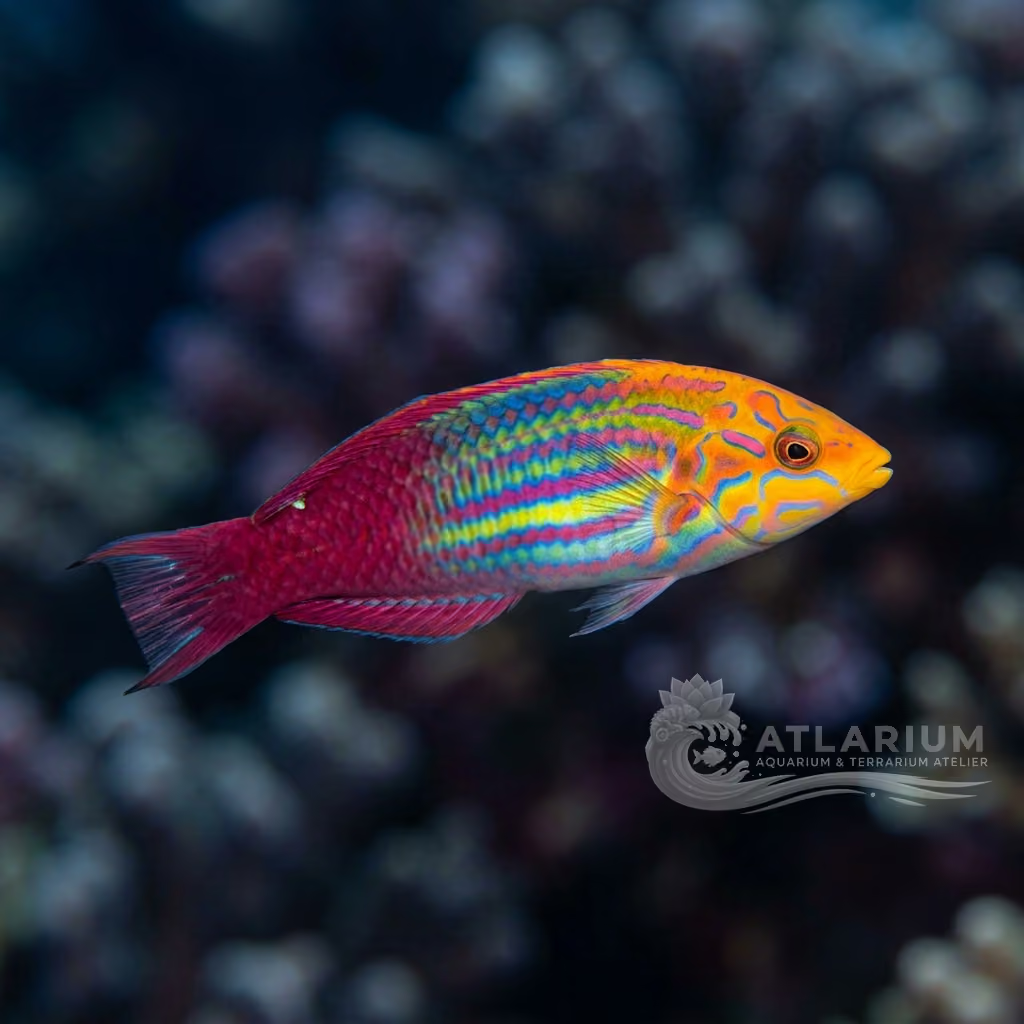
The Ruby Fairy Wrasse from the Indian Ocean features a brilliant ruby-red body and iridescent blue fins. An active, reef-safe planktivore that is highly prone to jumping.
Water Temperature
22 - 27 °C
pH Value
8.1 - 8.4
Water type
Marine
Tank level
Bottom and middle
Adult size
8 cm
Minimum tank volume
>= 150 L
Minimum group
>= 1
KH
8 - 12 dKH

Species description
Geographical Origin and Habitat: Cirrhilabrus rubeus is native to the warm tropical waters of the north-central Indian Ocean, with populations primarily concentrated around the Maldives and Sri Lanka. It inhabits the outer slopes of coral reefs, mixed rubble zones, and deep seagrass or macroalgae beds at depths typically ranging from 20 to 50 meters. This species swims in loose schools above the substrate, utilizing moderate to strong ocean currents that carry abundant zooplankton.
Taxonomy and Morphology: Belonging to the family Labridae, this species is classified under the genus Cirrhilabrus, commonly known as fairy wrasses. It features a slender, elongated, and laterally compressed body. Its eyes are relatively large and possess a specialized double cornea that enhances its ability to detect tiny planktonic crustaceans in dim, deep water. Adults reach a maximum length of 7-8 cm, with males developing larger fins.
Social Behavior: This wrasse is peaceful, active, and highly social. In the wild, it lives in harems dominated by a single male and several females. It displays constant swimming behavior in the midwater column. It shows no aggression toward other reef fish, though adult males can engage in territorial skirmishes if housed together in small tanks. Newly introduced specimens can be shy and require time to adjust.
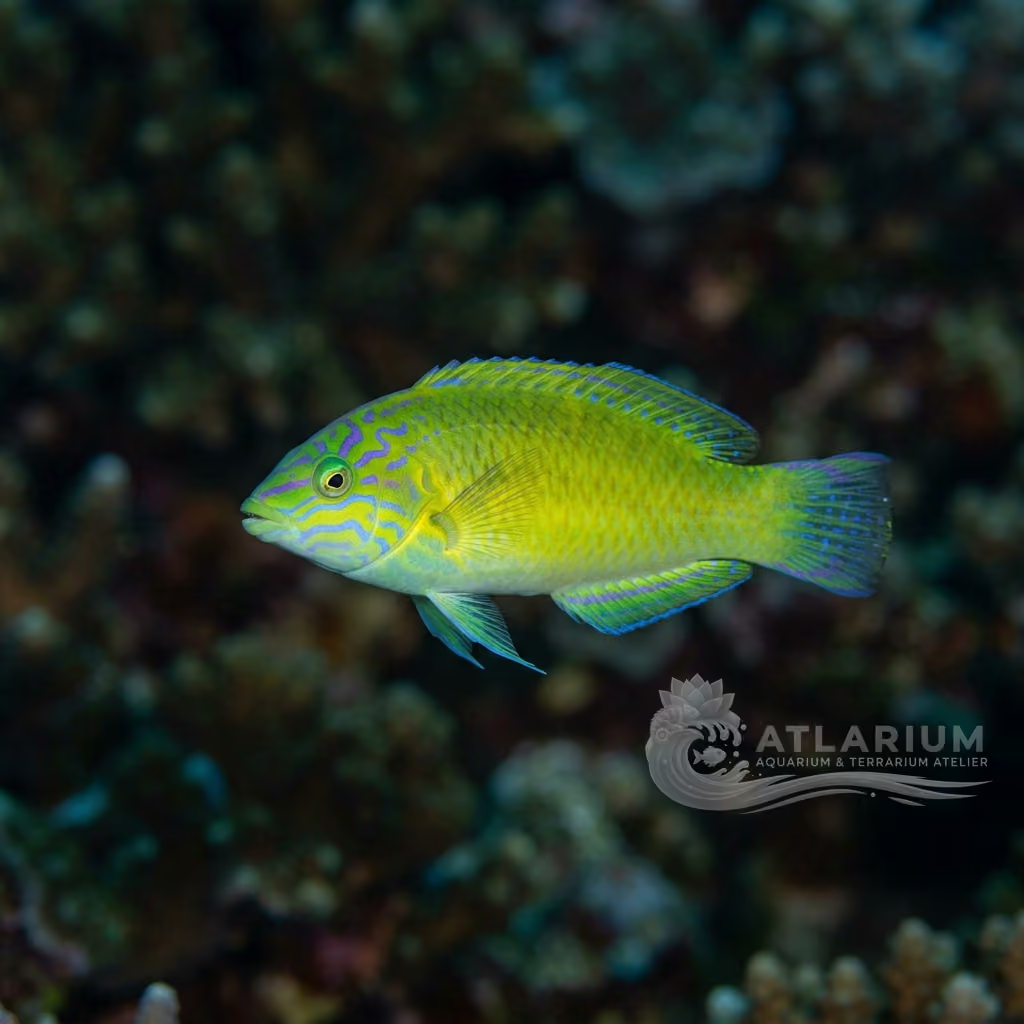
Coloration and Sexual Dimorphism: The coloration of adult males is spectacular: the upper body displays a brilliant ruby-red or magenta hue that transitions to pink or white on the belly. The dorsal, anal, and caudal fins are decorated with iridescent electric blue, violet, and neon green patterns. Females are less colorful, showing a mostly reddish-orange body with shorter fins and lacking the metallic reflections of the males.

Care, breeding and tankmates
Aquarium Setup: Requires a marine aquarium of at least 150 liters with plenty of open swimming space. It is absolutely critical to equip the tank with a tight-fitting lid or a fine mesh screen, as all members of the genus Cirrhilabrus are exceptional jumpers, capable of leaping through very small openings when startled or during the night.
Diet and Feeding: Feeding must be of high quality and offered multiple times a day due to the fish's active nature. It feeds primarily on zooplankton. In captivity, it readily accepts frozen foods such as mysis shrimp, brine shrimp, copepods, and finely chopped krill. Over time, it easily acclimates to high-quality dry pellets or flakes enriched with vitamins and fatty acids.
Water Quality: Water quality must be pristine: temperature between 23 and 26 °C, pH stable at 8.1-8.4, specific gravity at 1.020-1.025, and KH 8-12. Strong biological filtration and an efficient protein skimmer are required to keep ammonia and nitrites at zero. It appreciates moderate to strong water flow to simulate its natural reef channel habitat.
Compatibility and Cohabitation: This species is 100% reef safe and does not bother corals, clams, or ornamental invertebrates like shrimp and snails. It can be housed with a wide variety of peaceful reef fish, such as anthias, gobies, clownfish, and other peaceful wrasses. Avoid keeping it with highly aggressive or territorial fish (like dottybacks or dominant surgeonfish).
Aquarium Breeding: Breeding in home aquariums is extremely difficult. They are protogynous hermaphrodites, meaning all individuals are born female and the dominant ones transition to males. In the wild, they are pelagic spawners, releasing eggs into the water column during a vertical spawning run. Rearing the larvae requires specialized commercial aquaculture protocols.
Risks and Diseases: Primary health risks include jumping out of the tank and stress during acclimation. If startled, the fish may injure itself by colliding with rockwork or the glass. It is also susceptible to internal parasites and skin infections under stressful conditions. A quiet, dimmed quarantine tank is recommended during the first week.

Geographic origin and distribution
Cirrhilabrus rubeus is native to the warm tropical waters of the north-central Indian Ocean, with populations primarily concentrated around the Maldives and Sri Lanka. It inhabits the outer slopes of coral reefs, mixed rubble zones, and deep seagrass or macroalgae beds at depths typically ranging from 20 to 50 meters. This species swims in loose schools above the substrate, utilizing moderate to strong ocean currents that carry abundant zooplankton.
Origin
Tropical oceans and reefsSouth and Southeast Asia

Fish profile
- Temperament
- Active
- Cirrhilabrus rubeus is an active, bold, and social fish once settled, spending the day swimming in the middle levels of the aquarium. They can be shy initially, hiding in caves for the first few days, but they quickly adapt to open-water swimming. Keeping them in a harem setup (one male with several females) encourages the male to display his intense courtship colors.
- Diet
- Carnivore
- This species is a carnivore that primarily feeds on suspended zooplankton in the water column. In an aquarium, they should be fed high-quality frozen foods, including mysis shrimp, vitamin-enriched brine shrimp, copepods, and lobster eggs. They will also acclimate to high-quality dry pellets and flakes over time. A diverse diet is crucial for preserving the brilliant, iridescent ruby-red color of the males.
- Life expectancy
- 5-8 years
- Adult size
- 8 cm
- Sex ratio
- Harem
- Solitary or in harem (one male, multiple females).
- Feeding frequency
- Twice daily
- Fairy wrasses like Cirrhilabrus rubeus have a high metabolic rate and require feeding two to three times daily. Offering small portions that are consumed quickly prevents excess food from decaying and raising nutrient levels in the water. Providing food at consistent intervals keeps their energy levels high and helps mitigate food-related aggression. Automated feeders are a great tool for maintaining this schedule.
- Bioload
- Low to Medium
- The Ruby Fairy Wrasse is a voracious eater that burns through calories very quickly as it patrols the tank. To keep their vivid colors and energetic behavior, they must be fed multiple times a day, which subsequently increases their waste output. They contribute a moderate bioload to the aquarium, making a solid biological filter and protein skimmer essential.
- Flow
- Strong
- Cirrhilabrus rubeus prefers moderate to strong water flow, reflecting the current-swept outer reef slopes of their Maldivian and Sri Lankan habitats. Active water motion encourages their natural swimming behavior and helps keep suspended foods in the water column. Nonetheless, the aquascape should feature calm areas and rock overhangs where they can rest and sleep safely at night.
- Jump risk
- Yes
- Like other fairy wrasses, the Ruby Fairy Wrasse possesses a highly sensitive startle reflex that sends it shooting toward the surface in panic. Whether intimidated by tankmates or sudden environmental changes, they are severe jump risks. An enclosure without a carefully secured, jump-proof lid will quickly result in the loss of this fish.
- Reproduction
- Oviparous
- Cirrhilabrus rubeus is a protogynous hermaphrodite, with the dominant female transitioning into a male as dictated by the group's social hierarchy. They are pelagic spawners that broadcast eggs and sperm into open water after quick, vertical courtship dashes. Spawning in home aquariums is undocumented and very difficult, as rearing the microscopic pelagic larvae requires specialized live food and culture systems.
- Compatibility & tankmates
- Peaceful
- This wrasse is peaceful, 100% reef-safe, and will not damage corals, clams, or ornamental invertebrates. It is compatible with other peaceful reef species like firefish, anthias, and small gobies. However, males can be territorial toward other male fairy wrasses of similar size or coloration. A tight-fitting screen lid is mandatory to prevent them from jumping out of the tank when startled.
- Tank level
- Middle/Bottom
- Mid-water column.

Scientific Parameters & Models
FishBase
Window to the official scientific data of the species
FishBase v25.04Data synced on: 06/15/2026
- Trophic level
- 3.3 ± 0.4 se
- Resilience
- High (less than 15 months)
- Phylogenetic uniqueness (PD50)
- 0.5
- Bayesian Length-Weight
- a = 0.01072, b = 3.03
- VulnerabilityLow vulnerability (10 / 100)

Related species
Recommendations grouped by close relatives, companion choices, and similar care.