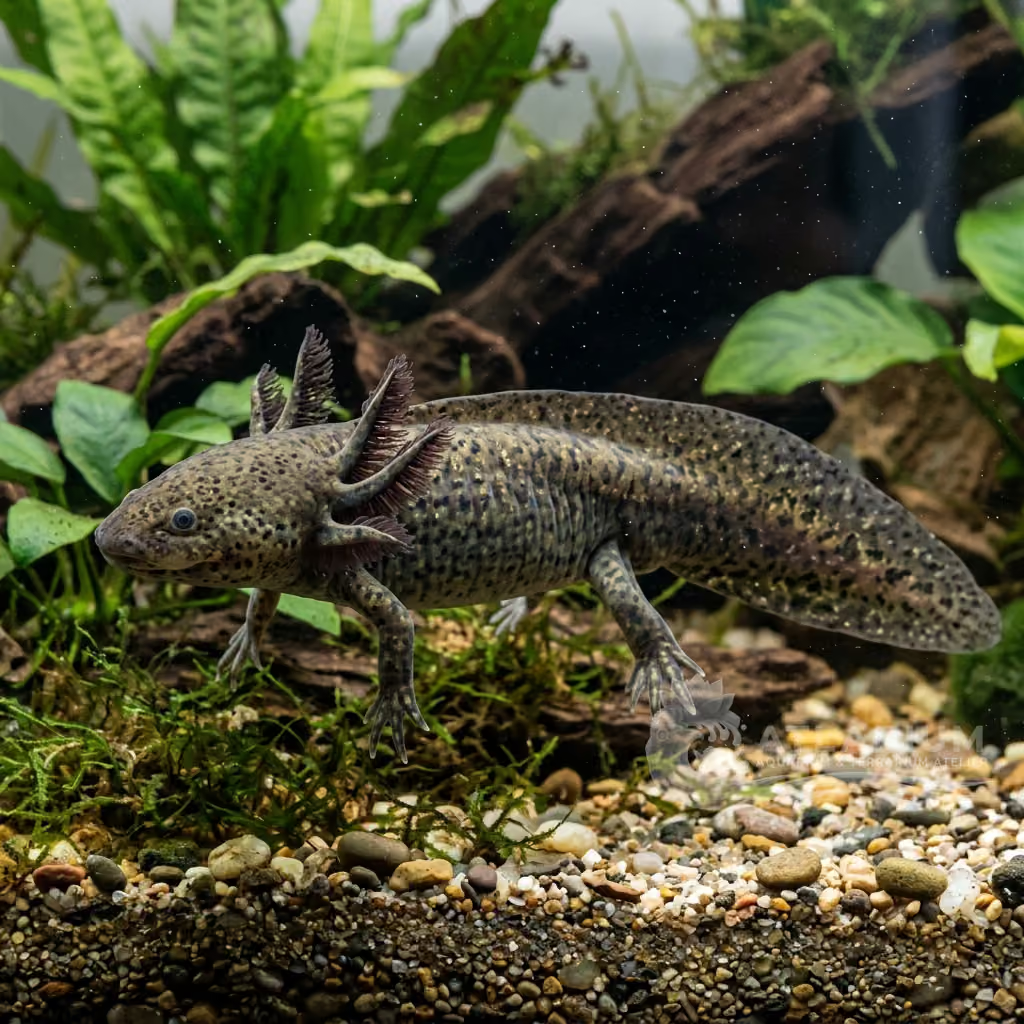
Axolotl — Leucistic
Ambystoma mexicanum
Completely pink-white with bright red external gills and black eyes. The most iconic color morph in the hobby, resembling a baby dragon.
Environment
Terrestrial
Humidity
100 %
Day temperature
16 - 20 °C
Night temperature
14 °C
Ambient temperature
16 - 20 °C
Minimum enclosure
>= 45 L

Species description
Geographical Origin and Habitat: Originally endemic to the high-altitude lake and canal system of the Valley of Mexico (specifically Lake Xochimilco). In the wild, they lived in cold, muddy-bottomed waters surrounded by dense aquatic plants and chinampas (artificial islands). Now critically endangered in the wild.
Taxonomy and Genetics: A neotenic salamander that reaches sexual maturity and an adult size of up to 30 cm while retaining larval characteristics, including external feathery gills and a finned tail. The "Leucistic" morph is characterized by a translucent pinkish-white body with contrasting dark eyes and vibrant red or pink gills.
Behavior and Habits: Peaceful and mostly sedentary, spending long periods resting on the bottom. They are solitary and have no schooling behavior. Because they lack eyelids and have poor vision, they swallow prey using suction, and will attempt to eat anything small enough, including tankmates.
Morphology: Sexual dimorphism is visible in adult specimens: mature males exhibit a highly swollen cloacal area at the base of the tail, while adult females are typically broader, rounder, and heavier due to carrying eggs.

Care, breeding and tankmates
Terrarium Setup: Strictly aquatic. Requires a large aquarium (at least 80–100 cm in length). Maintain very low water flow using spray bars, as strong currents cause severe stress. Use fine aquarium sand or keep the tank bottom bare; gravel or small stones can be swallowed, causing fatal impaction.
Lighting and Heating: Cold water is critical. Ideal temperature range is 16–20°C; temperatures above 24°C cause severe stress and fatal fungal infections. Aquarium chillers are mandatory in warm climates. Keep lighting dim using floating plants, as they have no eyelids.
Humidity and Hydration: Fully aquatic. Require hard, alkaline, well-oxygenated freshwater. Weekly large water changes and waste siphoning are necessary to control ammonia. Use high-quality water conditioners to remove chlorine and chloramine.
Feeding and Supplementation: Carnivorous. Provide high-quality earthworms, bloodworms, or sinking axolotl pellets. Avoid feeding red meat, mammalian livers, or poultry, which can cause fatty liver disease.
Compatibility: Best kept alone or with axolotls of the exact same size. Larger individuals will nip at or swallow smaller tankmates. Avoid housing them with sucker-mouth catfish (e.g. plecos) which can graze on and damage the axolotl's delicate skin.
Health and Common Diseases: Susceptible to fungal infections (Saprolegnia) at higher temperatures. Treatable with cool temperatures, tea baths, or salt baths. Extremely sensitive to heavy metals (copper, iron) in tap water. Never handle them as skin oils can damage their mucus layer.

Geographic origin and distribution
Originally endemic to the high-altitude lake and canal system of the Valley of Mexico (specifically Lake Xochimilco). In the wild, they lived in cold, muddy-bottomed waters surrounded by dense aquatic plants and chinampas (artificial islands). Now critically endangered in the wild.
Origin
Selective breeding and cultivarsCentral America and CaribbeanNorth AmericaEurope, Mediterranean, and West AsiaEast AsiaCosmopolitan or introduced

Amphibian profile
- Diet
- Carnivore
- Axolotls are carnivorous and rely on a high-protein diet to thrive. In captivity, they eagerly consume earthworms, bloodworms, and specialized sinking pellets. Occasional treats of brine shrimp or daphnia can be offered for variety. They feed by using a vacuum-like suction mechanism to draw prey into their mouths.
- Life expectancy
- 10-15 years
- Adult size
- 25 cm
- Lifestyle/Microhabitat
- Aquatic
- They are fully aquatic amphibians that never undergo complete metamorphosis. They remain in the water their entire lives and require a fully cycled aquarium with gentle filtration.
- Activity cycle
- Nocturnal
- Axolotls are primarily nocturnal, being most active and hunting for food during the night. However, in captivity, they can become conditioned to daytime feeding schedules.
- Sociality
- Solitary
- Axolotls are primarily aquatic and spend most of their time walking slowly along the bottom of their tank or resting in hiding spots. They are generally solitary but can be housed with similarly sized axolotls if sufficient space is provided. They are largely nocturnal, becoming more active during the evening and night.
- Reproduction
- Oviparous
- Breeding axolotls requires a period of cooler water temperatures to simulate seasonal changes. The male deposits spermatophores on the substrate, which the female then picks up. After fertilization, the female lays hundreds of eggs on aquatic plants or decorations. The eggs hatch into miniature, free-swimming larvae after a few weeks.
- Toxicity
- Harmless
- They are completely non-toxic and do not produce venom. However, they have delicate, permeable skin that can easily absorb harmful chemicals from the water. It is vital to handle them as little as possible, using clean, wet hands or a soft net.
- Life stage
- Neotenic
- Axolotls are famous for neoteny, meaning they retain their larval features, such as external gills, throughout their adult lives. They rarely undergo metamorphosis to become terrestrial salamanders. Their entire life cycle is spent entirely in the aquatic environment.
- Handling tolerance
- Display only
- They are strictly a display-only pet. Their skin and gills are incredibly delicate, and their slime coat is easily damaged. They should never be handled unless absolutely necessary, such as during a tank transfer, using a fine mesh net.
- Brumation
- They do not undergo brumation, but they require cold water temperatures year-round (60-64°F or 15-18°C). Keeping them at warmer temperatures causes severe stress and illness.
- Molting
- Yes
- A scientific review documents routine outer-skin renewal (sloughing) in amphibians and notes that the shed skin is often eaten, but it does not establish a fixed species-specific interval for Ambystoma mexicanum. The scalar is therefore “Yes”, not “Regular”. Repeated conspicuous peeling, a damaged mucus layer or abnormal behaviour should not be dismissed as normal sloughing and warrants an immediate water-quality check and, when persistent, veterinary assessment.

Related species
Recommendations grouped by close relatives, companion choices, and similar care.