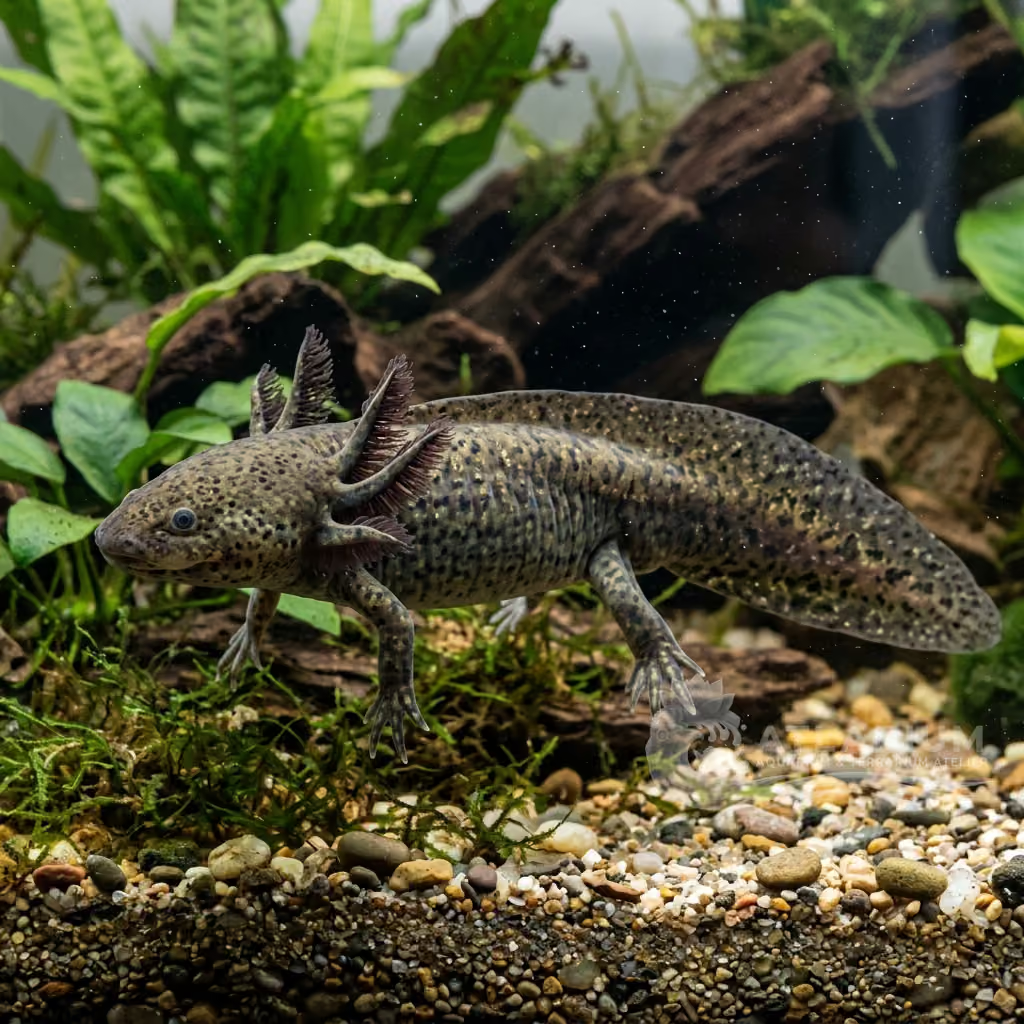
Marbled Salamander
Ambystoma opacum
The marbled salamander is a stout, terrestrial species known for silvery-white crossbands and unique fall breeding. It needs a 75L woodland terrarium with deep, moist substrate for burrowing and an invertebrate diet.
Environment
Terrestrial
Humidity
70 - 80 %
Day temperature
18 - 22 °C
Night temperature
12 - 16 °C
Ambient temperature
18 - 22 °C
Minimum enclosure
>= 40 L

Species description
Geographical Origin and Habitat: Native to deciduous forests, floodplains, and seasonal wetlands of the eastern United States, ranging from southern New England to eastern Texas and northern Florida. Primarily terrestrial, it lives under leaf litter, logs, or rocks in moist environments.
Taxonomy and Genetics: A stocky and robust salamander, reaching 10–12 cm in length. The body is dark, marked with a striking white or silvery-grey marbled pattern. Males have brighter white bands, while females have greyish-white bands. The head is broad and the tail is relatively short and thick.
Behavior and Habits: Solitary, secretive, and highly fossorial. It spends most of its life underground, emerging on cool, rainy autumn nights to hunt or migrate. It is a nocturnal predator feeding on earthworms, insects, and other small invertebrates.
Morphology: Sexual dimorphism is visible during the breeding season: males exhibit bright, contrasting chalk-white dorsal bands and a swollen vent, while females have more muted silvery-grey bands and are wider due to carrying eggs.

Care, breeding and tankmates
Terrarium Setup: Require a terrestrial forest terrarium of at least 60x40x30 cm. Provide a deep, diggable substrate (at least 10–15 cm) of peat moss, coconut fiber, and sphagnum moss. Cover the surface with sterilized oak leaf litter and flat pieces of cork bark or stones for shelters.
Lighting and Heating: Prefer cool, temperate conditions. Ideal temperature range is 15–20°C. They are highly sensitive to heat; temperatures above 24°C can be fatal. A nighttime temperature drop is beneficial. Provide low-level UVB lighting (2–5%) or keep the enclosure shaded.
Humidity and Hydration: Maintain relative humidity at 70–80% with regular misting. The substrate should be moist but never soggy or waterlogged to prevent bacterial infections. Always use dechlorinated water. Provide a very shallow water dish.
Feeding and Supplementation: Voracious predators. Offer live prey such as earthworms, small roaches, and crickets. Dust insects with high-quality calcium and vitamin D3 supplements once or twice a week to support bone structure.
Compatibility: Generally peaceful with their own species and can be kept in small groups if plenty of space and hiding spots are provided. Avoid keeping them with much smaller tankmates, as cannibalism can occur.
Health and Common Diseases: Heat stress is the most critical threat. Do not handle them with bare hands; human skin oils, soap residues, and body heat can damage their respiratory skin and cause fatal shock. Watch for signs of lethargy, skin lesions, or fungal infections.

Geographic origin and distribution
Native to deciduous forests, floodplains, and seasonal wetlands of the eastern United States, ranging from southern New England to eastern Texas and northern Florida. Primarily terrestrial, it lives under leaf litter, logs, or rocks in moist environments.
Origin
North America

Amphibian profile
- Diet
- Carnivore
- The marbled salamander is an opportunistic feeder that consumes a variety of terrestrial invertebrates. Its diet largely consists of earthworms, centipedes, snails, and soft-bodied insects encountered on the forest floor. In captivity, they are ravenous eaters that will easily thrive on a staple diet of earthworms, crickets, and occasional roaches.
- Life expectancy
- 4-11 years
- Adult size
- 10 cm
- Lifestyle/Microhabitat
- Fossorial
- They are predominantly fossorial. Uniquely among mole salamanders, they mate on land in the fall, laying eggs in dry depressions that flood with winter rains.
- Activity cycle
- Nocturnal
- Marbled Salamanders are highly secretive and strictly nocturnal. They only emerge from their underground burrows on rainy nights to forage for small invertebrates.
- Sociality
- Solitary
- Marbled salamanders are highly fossorial, meaning they spend the vast majority of their lives burrowed deep underground. They are nocturnal and secretive, emerging from their burrows only during heavy rains or to forage on exceptionally humid nights. They are solitary creatures outside of the breeding season and prefer solitary setups in captivity to avoid competition.
- Reproduction
- Oviparous
- Unlike most other mole salamanders, they breed in the autumn rather than spring. Females lay their eggs in the dry beds of temporary ponds and aggressively guard the clutch until the seasonal rains fill the depression with water. Once the eggs are submerged, they hatch immediately into aquatic larvae, giving them a head start on spring-breeding species.
- Toxicity
- Harmless
- This species has mild defensive secretions produced by granular glands on their tail and back. While these secretions are unpalatable and mildly toxic to small predators like shrews and snakes, they are virtually harmless to humans. It is still recommended to wash hands after handling them to avoid any potential irritation to the eyes or mouth.
- Life stage
- Metamorphosis
- The larvae hatch into temporary winter pools, growing rapidly by feeding on zooplankton and smaller aquatic insects. They undergo metamorphosis in late spring, leaving the water as fully terrestrial juveniles before the temporary pools dry up. Once on land, they quickly adopt the burrowing lifestyle of the adults and will not return to water until they are ready to breed.
- Handling tolerance
- Display only
- Handling should never occur. Their skin is smooth and completely dependent on an undisturbed mucosal layer to facilitate cutaneous respiration and defend against soil bacteria.
- Brumation
- They aestivate deep underground during the hot, dry summer months and are most active during the cool, wet autumn and early winter when they breed.
- Molting
- Periodic
- Molt occurs underground in damp soil. The humidity must be constantly maintained in their burrowing substrate to prevent the old skin from adhering to their delicate bodies.

Related species
Recommendations grouped by close relatives, companion choices, and similar care.