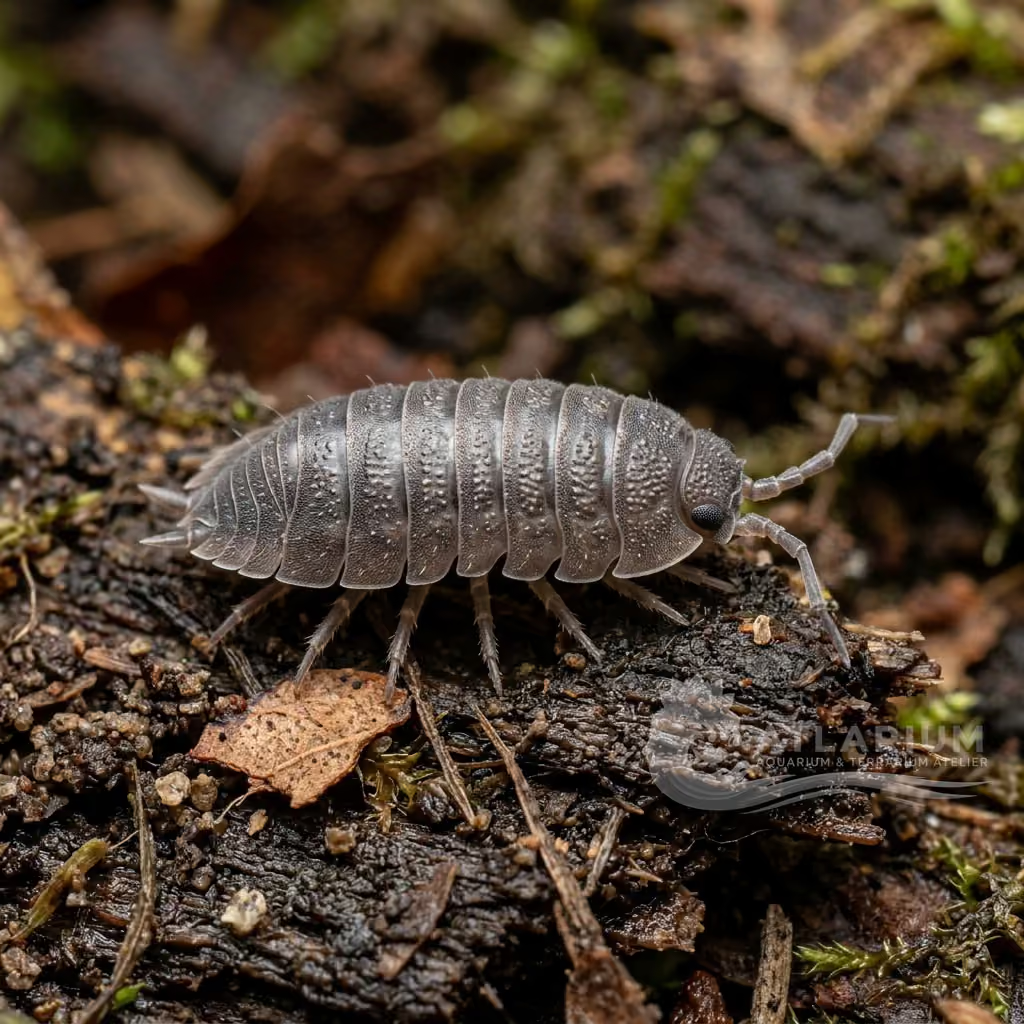
Common Striped Woodlouse
Philoscia muscorum
The Philoscia muscorum, commonly known as 'Common Striped Woodlouse' or 'Fast Woodlouse'. An agile, restless and shiny European isopod (up to 0.4 inches) unmistakable for its dark back with three faded stripes and a marked bright yellow-orange spot on the nape. Unlike armored Asians, this isopod has long slender legs and is capable of furiously fast runs if disturbed. It hates the asphyxiating tropical heat and thrives in temperate terrariums or fresh humid European paludariums, feeding on decomposed leaves.
Environment
Terrestrial
Humidity
60 - 80 %
Day temperature
20 - 25 °C
Night temperature
18 - 21 °C

Species description
Geographic Origin and Habitat: An East Coast Scotland dune-site survey describes Philoscia muscorum as locally distributed in Scotland, mainly on the coast and in river valleys, and often common in coastal grassland and dune vegetation. This is a regional field observation, not a full range account.
Taxonomy and Genetics: This recovery adds no taxonomic or genetic claim beyond the source’s use of the name Philoscia muscorum.
Behaviour and Habits: This recovery adds no behavioural claim.
Morphology and Sexual Dimorphism: This recovery adds no morphological or sexual-dimorphism claim.

Care, breeding and tankmates
Terrarium Setup: In an East Coast Scotland dune-site survey, Philoscia muscorum was described as often common in coastal grassland and dune vegetation. This field observation is not a terrarium specification.
Lighting and Heating: This recovery does not prescribe lighting or heating.
Humidity and Hydration: This recovery does not prescribe humidity or hydration.
Feeding and Supplementation: This recovery does not prescribe feeding or supplementation.
Compatibility and Coexistence: This recovery does not prescribe compatibility or coexistence.
Health and Common Diseases: This recovery does not provide health or veterinary guidance.

Geographic origin and distribution
This species originates from: Europa / Nord America (Specie temperata da sottobosco muschioso).
Origin
North AmericaEurope, Mediterranean, and West Asia

Terrestrial invertebrate profile
- Diet
- Detritivore
- This species thrives on a varied diet rich in decaying organic matter. They primarily consume high-quality leaf litter and soft rotting wood. Supplemental calcium and occasional vegetable scraps are essential for maintaining proper health and a strong exoskeleton.
- Adult size
- 1.1 cm
- Lifestyle/Microhabitat
- Terrestrial
- They are robust terrestrial invertebrates that thrive in a well-maintained terrarium environment. A distinct moisture gradient is crucial to prevent both fatal dehydration and harmful fungal infections. They spend the vast majority of their time navigating the complex microhabitats of the damp forest floor.
- Activity cycle
- Nocturnal
- This species is primarily active during the night and the dimmer crepuscular hours. They typically remain hidden during the peak daylight hours to conserve vital moisture and avoid predators. Providing a natural day-night light cycle helps regulate their natural foraging and resting behaviors.
- Sociality
- Gregarious
- While they will happily coexist in large numbers within the same terrarium, they do not exhibit the same tight congregational behaviors as pillbugs. They are somewhat independent wanderers but will gather in high numbers in microhabitats that offer the perfect balance of moisture and food.
- Reproduction
- Marsupial
- Reproduction occurs consistently throughout the year when kept under optimal terrarium conditions. Females incubate their developing eggs within a specialized ventral brood pouch known as a marsupium. The young emerge as fully formed miniatures and require stable moisture to survive their initial delicate molts.
- Venomous
- No
- Handling tolerance
- Display only
- Handling should be kept to an absolute minimum to avoid causing unnecessary stress. Their incredibly delicate bodies and limbs can be easily injured by improper or forceful grasping. If relocation is absolutely necessary, gently move them by scooping up the bark or leaf they are resting on.
- Brumation
- Not required
- They generally do not require any brumation period when kept in a controlled captive environment. Maintaining stable and appropriately warm temperatures ensures continuous year-round activity and breeding success. It is important to avoid extreme cold to prevent potential and sudden colony crashes.
- Molting
- Periodic
- Molting occurs in two very distinct phases to allow the isopod continuous mobility during the process. Adequate environmental humidity is absolutely essential for them to successfully shed their old exoskeleton without complications. They will usually consume their freshly shed skin in order to rapidly reclaim lost calcium.

Related species
Recommendations grouped by close relatives, companion choices, and similar care.