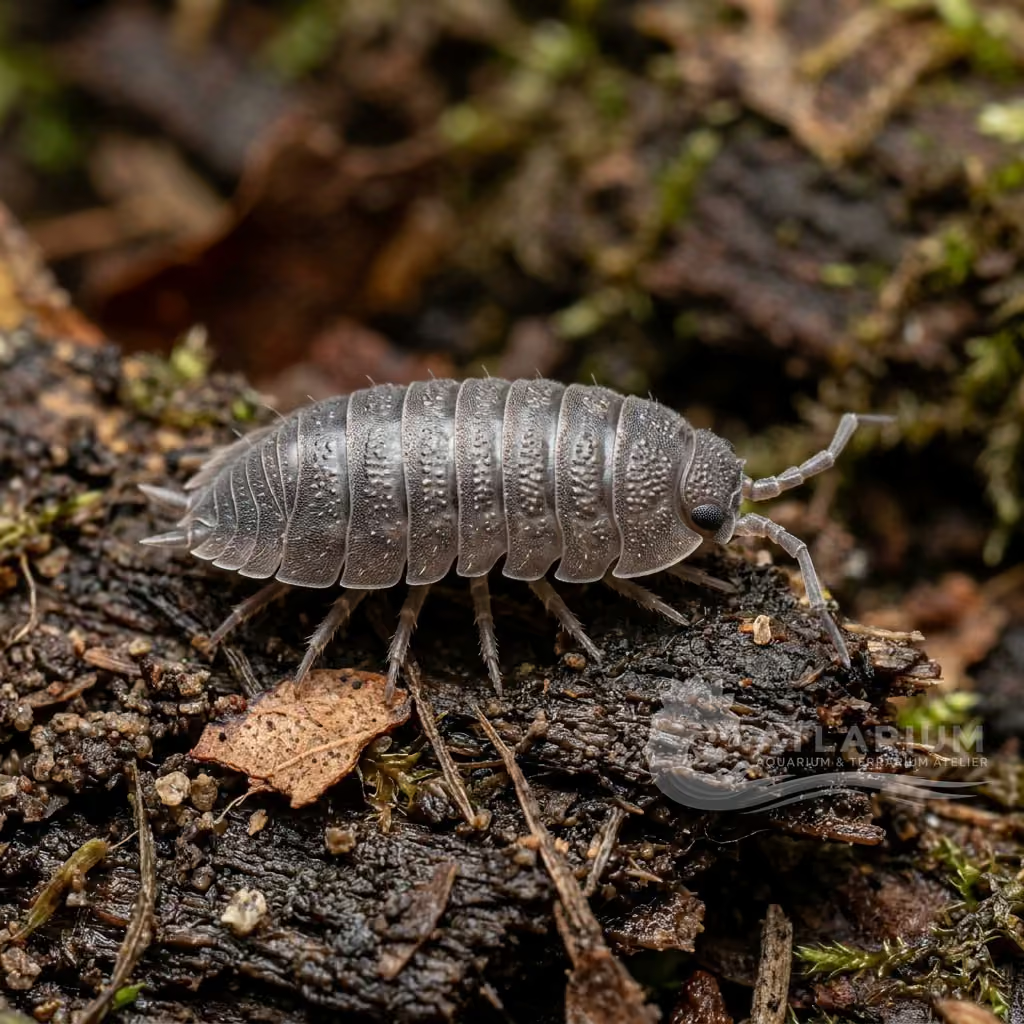
Ghost woodlouse
Porcellio scaber
A beautiful semi-translucent color morph of the common woodlouse. Highly effective as a biological cleanup crew in humid terrariums and very easy to breed.
Environment
Terrestrial
Humidity
50 - 70 %
Day temperature
20 - 25 °C
Night temperature
18 - 22 °C

Species description
Geographical Origin and Habitat: The nominate species Porcellio scaber is native to Europe but has been introduced worldwide. This selected 'Ghost' variant is bred primarily in captivity and is suited to humid forest setups rich in decaying organic matter.
Taxonomy and Genetics: Terrestrial isopod crustacean belonging to the family Porcellionidae. The 'Ghost' variant is a selected genetic mutation that reduces dark pigmentation, producing a semi-translucent, light gray or whitish appearance.
Behavior and Habits: Nocturnal, detritivorous, and fossorial animal. Spends most of its time hidden under bark, leaves, or within the soil. Displays a peaceful social behavior and lives in large colonies dedicated to decomposing organic waste.
Morphology: Oval and flattened body, divided into protective segments (pereon and pleon). The cuticle features a rough texture characteristic of the species. Reaches about 1.5 - 2 cm in length. Unlike other isopods, it cannot roll into a tight ball.

Care, breeding and tankmates
Terrarium Setup: Requires a small plastic enclosure or terrarium with a ventilated lid. The ideal substrate should be at least 5-8 cm deep, consisting of peat, coco fiber, dry oak leaves, and decaying wood, which serve as both shelter and food.
Lighting and Heating: Does not require special lighting; ambient room light is sufficient. The optimal breeding temperature ranges between 18°C and 24°C. Avoid temperatures above 28°C, which can be lethal to the colony.
Humidity and Hydration: Requires a strong humidity gradient. One section of the enclosure must be kept wet by placing constantly damp sphagnum moss, while the other side remains drier. Spray regularly with dechlorinated water.
Feeding and Supplementation: Diet is primarily based on dry leaves and decaying wood. Supplement with vegetables (carrots, zucchini), fish pellet food, and a constant calcium source (cuttlebone or crushed eggshells) crucial for exoskeleton development.
Compatibility: Perfectly compatible with other non-dominant isopods or used as a cleanup crew in bioactive enclosures for amphibians and small reptiles that do not actively hunt them. Displays no aggression.
Health and Common Diseases: The primary risk is dehydration due to dry conditions or poor ventilation that promotes toxic mold growth. Proper air circulation and consistent humidity monitoring prevent colony crashes.

Geographic origin and distribution
The nominate species Porcellio scaber is native to Europe but has been introduced worldwide. This selected 'Ghost' variant is bred primarily in captivity and is suited to humid forest setups rich in decaying organic matter.
Origin
Selective breeding and cultivarsEurope, Mediterranean, and West AsiaTropical oceans and reefsCosmopolitan or introduced

Terrestrial invertebrate profile
- Diet
- Detritivore
- They are enthusiastic and voracious detritivores. A constant supply of decaying hardwood leaves and rotting white wood must be supplemented with a permanent calcium source, such as cuttlebone. They eagerly devour high-protein offerings like fish flakes or dried insects to prevent soft-shell issues.
- Adult size
- 1.7 cm
- Lifestyle/Microhabitat
- Terrestrial
- They maintain a fully terrestrial, active surface-dwelling lifestyle. They show very little inclination to burrow into the soil, preferring to utilize overlapping pieces of cork bark and deep leaf litter for shelter. Providing a structured moisture gradient with good airflow is critical for their health.
- Activity cycle
- Crepuscular
- These semi-translucent, pale isopods display high levels of activity, actively exploring and foraging across the terrarium surface both day and night. Their unique, ghost-like appearance makes them fascinating to observe as they constantly navigate over cork bark and leaf litter in search of food.
- Sociality
- Gregarious
- They are a highly gregarious, communal species that flourishes in large, active colonies. They are completely peaceful toward conspecifics, and a high population density typically leads to highly engaging, intense communal feeding responses whenever fresh, high-value food items are provided.
- Reproduction
- Marsupial
- They are incredibly fast and prolific breeders under optimal environmental conditions. Females carry large broods of developing young in a ventral marsupium. A small starter culture will quickly multiply, causing the population to explode and rapidly fill their enclosure.
- Venomous
- No
- Handling tolerance
- Display only
- While generally hardy enough to withstand brief handling, they are incredibly fast and reactive. When disturbed, they will attempt to sprint away immediately. They should always be handled with extreme care close to the ground or over a catch cup to avoid accidental drops.
- Brumation
- Not required
- This resilient color morph does not require a brumation period and will readily breed and forage year-round if kept at stable, warm room temperatures. While they can tolerate slight seasonal cooling, significant cold exposure will unnecessarily slow their metabolism and drastically reduce reproduction.
- Molting
- Periodic
- Molting occurs in the standard biphasic process typical of the genus, shedding the posterior section first. Ensuring they have uninterrupted access to a localized damp area is absolutely crucial for a successful molt, as dry conditions can cause fatal stuck sheds.

Related species
Recommendations grouped by close relatives, companion choices, and similar care.