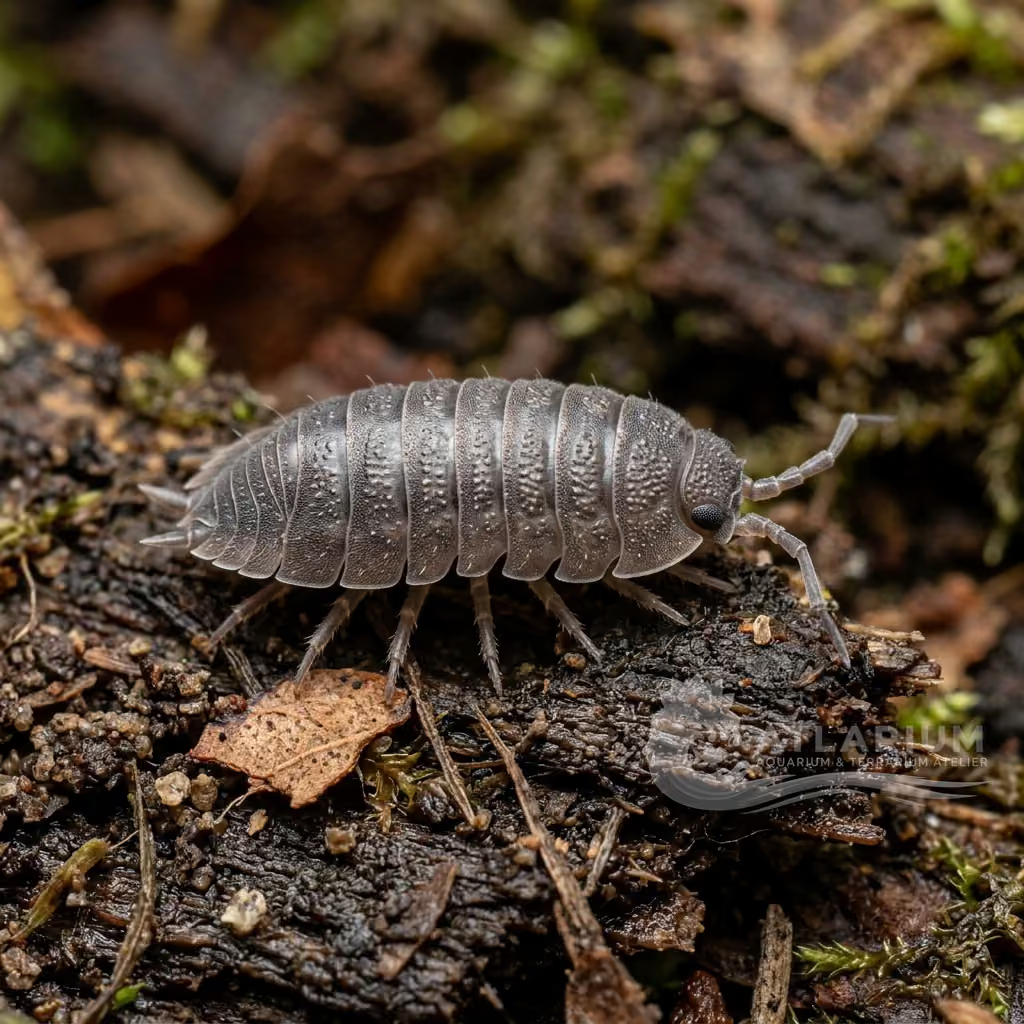
Werner's Pillbug (A. werneri)
Armadillidium werneri
The Greek Decorated Isopod (Armadillidium werneri). One of the largest and most spectacular cousins of the Klugii (up to 0.9 inches). It presents a very shiny dark gray or slate back dominated by two huge bands of blinding white and alternate orange/yellow patches. Unlike the clowns, the werneri is immensely flat and much more. Extremely sensitive to the lack of cross ventilation, it wastes away in 24 hours if kept in asphyxiating boxes.
Environment
Terrestrial
Humidity
50 - 70 %
Day temperature
20 - 26 °C
Night temperature
18 - 22 °C

Species description
Geographical Origin and Habitat: Steep Greek coasts, rocky crevices swept by salty wind and dry stone walls (Greek lime walls).
Taxonomy and Genetics: Family Armadillidiidae. (The Fake Clown). It shares the extreme geographical region with the Porcellio werneri, but belongs to the conglobating 'abacus' bugs. It is the eastern Mediterranean and much flatter version of the Balkan Klugii, with which it is constantly confused by newbies due to the similar Mullerian mimicry (fake poisonous dots).
Behavior and Habits: Painted medals. Incredibly slow, they play dead almost immediately if illuminated (catalepsy). Werneri are exasperatingly: they can remain flattened on the same light limestone stone for 4 days straight waiting for the lichens to grow to graze them by the millimeter. Very low broods and disarming slowness.
Morphology: Extremely wide and depressed dome (Up to 0.9 inches / 2.2 cm). Very smooth opalescent carapace dark lead/shiny slate color. The decoration is wonderful: two or three main rows composed of very large oval patches of bright snow white color alternating intermittently with dull sun yellow or fiery red patches. Very short legs.

Care, breeding and tankmates
Terrarium Setup: GBIF identifies Armadillidium werneri Strouhal, 1927 as a species in Armadillidiidae. This taxonomic record does not provide enclosure dimensions, substrate, ventilation, or other captive-setup requirements.
Lighting and Heating: The cited record does not provide lighting or temperature parameters for captivity.
Humidity and Hydration: The cited record does not quantify humidity, hydration, or a captive moisture target.
Feeding and Supplementation: The cited record does not document diet, feeding frequency, or supplementation for this species.
Compatibility and Coexistence: The cited record does not evaluate cohabitation or provide a compatibility recommendation.
Health and Common Diseases: The cited record does not provide disease, treatment, or veterinary-management evidence.

Geographic origin and distribution
Steep Greek coasts, rocky crevices swept by salty wind and dry stone walls (Greek lime walls).
Origin
Europe, Mediterranean, and West Asia

Terrestrial invertebrate profile
- Diet
- Detritivore
- This species thrives on a varied diet rich in decaying organic matter. They primarily consume high-quality leaf litter and soft rotting wood. Supplemental calcium and occasional vegetable scraps are essential for maintaining proper health and a strong exoskeleton.
- Adult size
- 2.2 cm
- Lifestyle/Microhabitat
- Terrestrial
- They are robust terrestrial invertebrates that thrive in a well-maintained terrarium environment. A distinct moisture gradient is crucial to prevent both fatal dehydration and harmful fungal infections. They spend the vast majority of their time navigating the complex microhabitats of the damp forest floor.
- Activity cycle
- Nocturnal
- This species is primarily active during the night and the dimmer crepuscular hours. They typically remain hidden during the peak daylight hours to conserve vital moisture and avoid predators. Providing a natural day-night light cycle helps regulate their natural foraging and resting behaviors.
- Sociality
- Solitary
- They are a social species that does well in colonies. Providing adequate space and hiding spots is important as the colony grows to prevent stress and promote natural behaviors.
- Reproduction
- Marsupial
- Reproduction occurs consistently throughout the year when kept under optimal terrarium conditions. Females incubate their developing eggs within a specialized ventral brood pouch known as a marsupium. The young emerge as fully formed miniatures and require stable moisture to survive their initial delicate molts.
- Venomous
- No
- Handling tolerance
- Tolerant
- Handling should be kept to an absolute minimum to avoid causing unnecessary stress. Their incredibly delicate bodies and limbs can be easily injured by improper or forceful grasping. If relocation is absolutely necessary, gently move them by scooping up the bark or leaf they are resting on.
- Brumation
- Not required
- They generally do not require any brumation period when kept in a controlled captive environment. Maintaining stable and appropriately warm temperatures ensures continuous year-round activity and breeding success. It is important to avoid extreme cold to prevent potential and sudden colony crashes.
- Molting
- Periodic
- Molting occurs in two very distinct phases to allow the isopod continuous mobility during the process. Adequate environmental humidity is absolutely essential for them to successfully shed their old exoskeleton without complications. They will usually consume their freshly shed skin in order to rapidly reclaim lost calcium.

Related species
Recommendations grouped by close relatives, companion choices, and similar care.