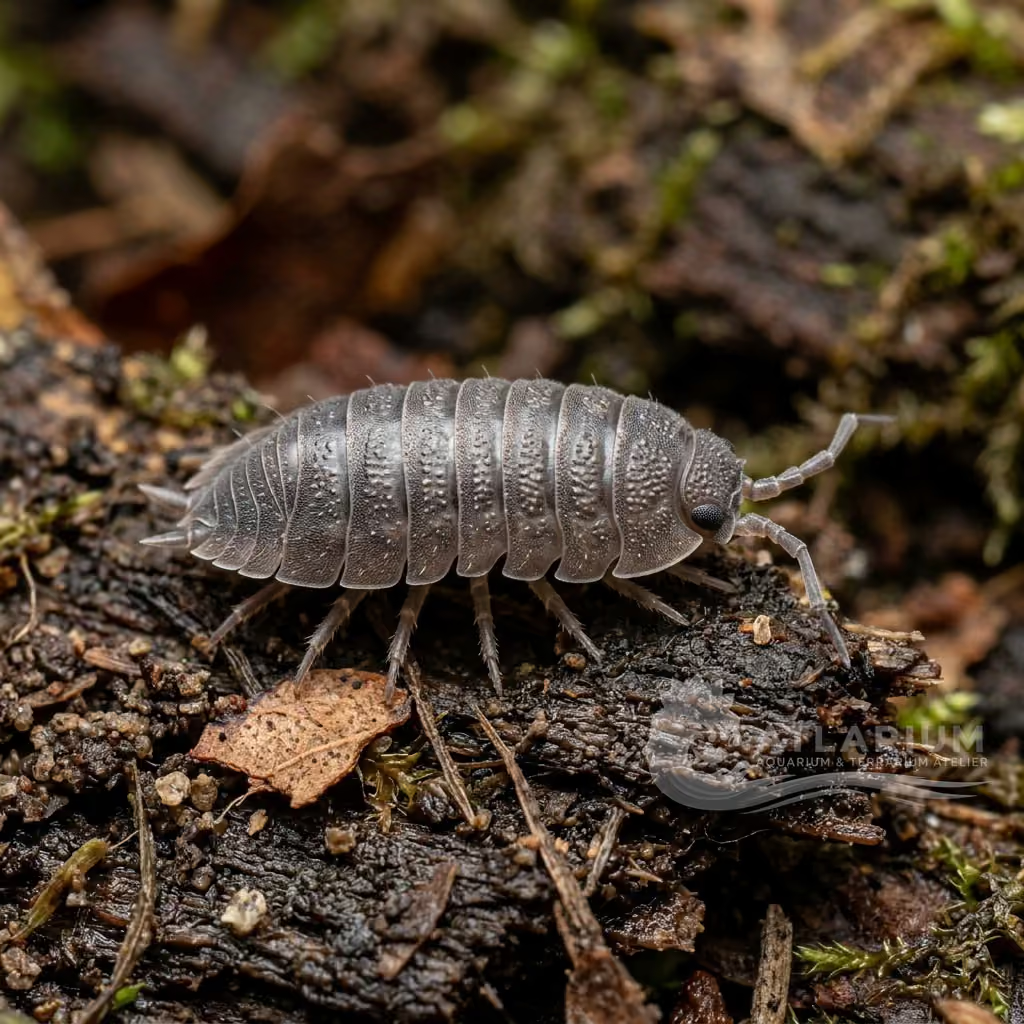
Peracca's Isopod (A. peraccae)
Armadillidium peraccae
Peracca's Isopod (Armadillidium peraccae). A rough Italian jewel (0.6 - 0.7 inches). Very similar to the dome structure of the common vulgare, but completely studded with protruding tubercles that make it scabrous to the touch (Rough pillbug). It exhibits a phenomenal pale asphalt gray or dusted bluish carapace. Very prolific, indestructible to humidity errors and a ravenous devourer of bioactive molds.
Environment
Terrestrial
Humidity
50 - 70 %
Day temperature
20 - 26 °C
Night temperature
18 - 22 °C

Species description
Geographical Origin and Habitat: Humid rocky coasts, wet forest debris and calcareous crevices of the Italian and Greek islands.
Taxonomy and Genetics: Family Armadillidiidae. (The Rough Vulgare). The only 'pillbug' among the common ones to have evolved a densely granular armor. This makes it very rough to the touch, an incredible evolutionary mutation (Tuberculation) developed to retain microscopic water droplets on the shell (dew) or to camouflage with pumice stone.
Behavior and Habits: Invincible and hardworking spiked balls. Incredibly active and prolific (much easier and more prolific than Klugii or Gestroi). They are the perfect 'Clean-up crew' because they spend hours dismantling rotten logs and devouring superficial moldy fungi. If disturbed they close into perfect 'scratching' spheres, offering total shield.
Morphology: Total rounded and very rough dome (Up to 0.7 inches / 1.8 cm). Dull cement gray (Ash gray) or faded pale blue opalescent carapace. The entire upper surface is not smooth or enameled but rippled (Bumpy/rough). Legs totally hidden when conglobated.

Care, breeding and tankmates
Terrarium Setup: STANDARD BINS OR HUMID/MIXED BIOACTIVE TERRARIUMS. They tolerate both extremely spartan tanks and complex jungle terrariums. Thick layer of organic peat (they love to burrow less than the vulgare, they prefer barks on the surface). Insert a lot of stacked cork and chopped foliage.
Lighting and Heating: ABSENCE OF DIRECT LIGHT. Adaptable European heat 64-79°F (18-26°C). Stable temperatures (73°F) cause massive births and demographic explosions. They survive cold winter sudden changes.
Humidity and Hydration: TOLERANT STANDARD GRADIENT (60-85%). Unlike the other arid Armadillidium intolerant to water (like Klugii or flavomarginatus), the Peraccae adore high humidity and forgive irrigation errors (they do not die if sprayed from above, provided there is aeration in the tank). Wet moss is a must to hide the newly born babies.
Feeding and Supplementation: Ravenous Detritivores. They grind everything: Rotting vegetables (raw soft carrot, sweet potato), soggy wood. They really appreciate (and disappear in a flash) weekly integrations of protein fish flakes (without triggering extreme lethal cannibalism of the Laevis). Vital calcium and cuttlefish bone to develop the rigid tubercles of the external armor.
Compatibility: Excellent Universal Cleaning Crew. Incredibly useful for dart frogs, small geckos and tropical bioactive terrariums. Harmless and ultra-productive, they are the best pillbugs (Armadillidium) for glass terrariums where the normal vulgare would drown of humid asphyxia.
Health and Common Diseases: Decay from lack of leaf layer / Calcium ('Molt Stagnation' ). The only risks are extreme total drying and prolonged lack of calcium that prevents the isopod from freeing itself from the old rough harness at the molt (suffocating pierced).

Geographic origin and distribution
Humid rocky coasts, wet forest debris and calcareous crevices of the Italian and Greek islands.
Origin
Selective breeding and cultivarsEurope, Mediterranean, and West Asia

Terrestrial invertebrate profile
- Diet
- Detritivore
- The diet of Armadillidium peraccae consists of specific nutrients. It forages for a variety of food sources. A well-balanced feeding regimen is essential.
- Adult size
- 2 cm
- Lifestyle/Microhabitat
- Terrestrial
- Armadillidium peraccae leads a lifestyle adapted to its niche. It utilizes various elements of its habitat. Providing a complex enclosure is crucial for its enrichment.
- Activity cycle
- Nocturnal
- The activity pattern of Armadillidium peraccae dictates when it is most active. It exhibits periods of rest aligned with light cycles. Understanding these rhythms helps create a suitable schedule.
- Sociality
- Gregarious
- Highly social and gregarious, thriving in dense colonies. They are often seen piled on top of each other while feeding, showing no aggression towards tank mates.
- Reproduction
- Marsupial
- Reproduction for Armadillidium peraccae involves specific mating behaviors. Females seek out appropriate nesting sites. Successful breeding requires mimicking natural conditions.
- Venomous
- No
- Handling tolerance
- Tolerant
- Handling Armadillidium peraccae should be done with care. It is recommended to allow the animal to adjust first. Gentle movements are key when handling is necessary.
- Brumation
- Not required
- Brumation for Armadillidium peraccae is triggered by temperature changes. During this period, its metabolism slows down. Proper preparation is essential to ensure a healthy emergence.
- Molting
- Periodic
- The molting process of Armadillidium peraccae allows it to shed old layers. Adequate humidity is vital for facilitating a smooth shed. Caretakers must regularly check for retained pieces.

Related species
Recommendations grouped by close relatives, companion choices, and similar care.