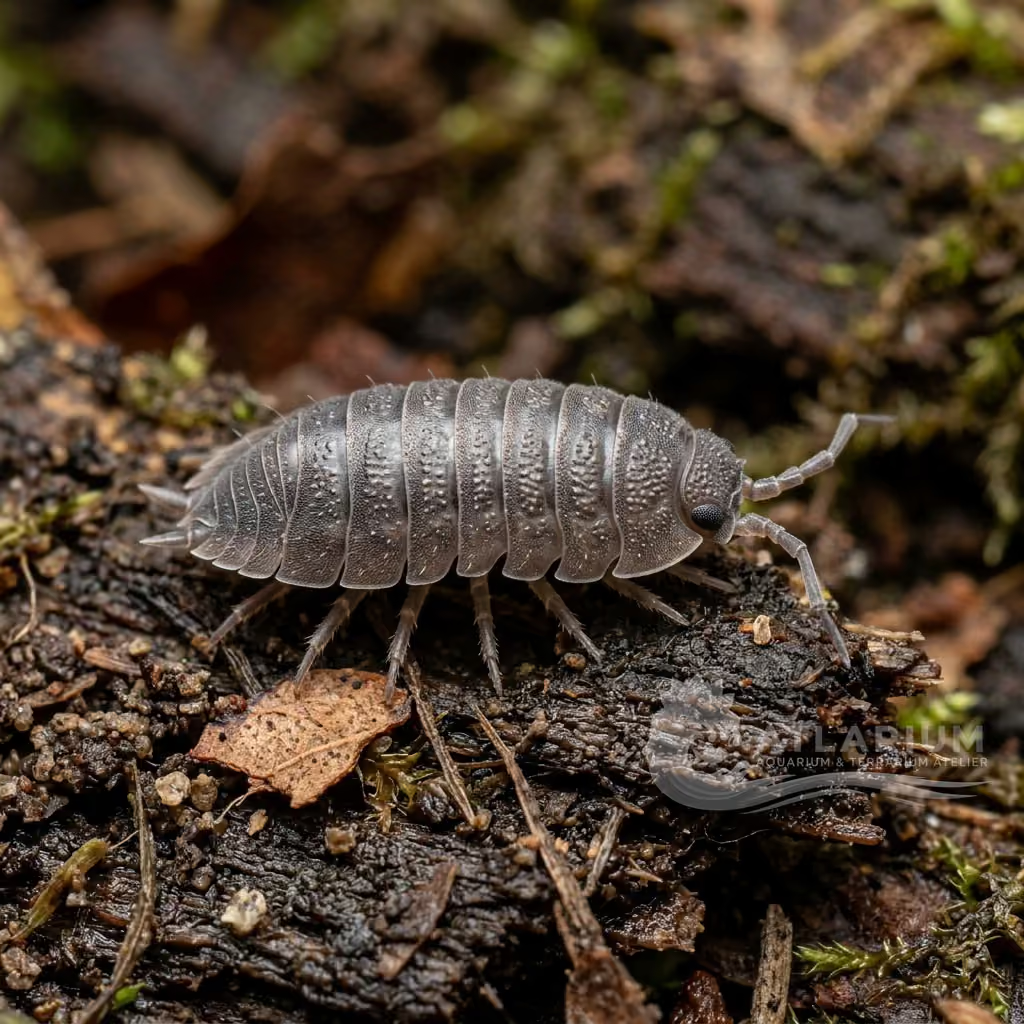
Gestro's Pillbug (A. gestroi)
Armadillidium gestroi
The Giant Woodlouse of Gestro (Armadillidium gestroi). One of the largest European 'rolling' isopods, reaching up to 2.5 cm. A spectacular species featuring large mustard-yellow spots on a dark grey carapace.
Environment
Terrestrial
Humidity
50 - 70 %
Day temperature
20 - 26 °C
Night temperature
18 - 22 °C

Species description
Geographical Origin and Habitat: Endemic to the sunny limestone crevices and dry stone walls of the northwestern Mediterranean coast (southern France, Liguria, and north-tyrrhenian Italy).
Taxonomy and Genetics: Family Armadillidiidae. Named in honor of the Italian entomologist Raffaello Gestro. Distinguished from the common *A. vulgare* by its much larger size and finely granulated, rough carapace surface.
Behavior and Habits: Slow, docile, and nocturnal. Due to their large size, they are clumsy climbers and prefer to remain under heavy cork bark hides. They roll into tight, impenetrable spheres when threatened. Growth is slow, taking up to 1.5 years to reach maturity.
Morphology: Broad, high-domed carapace reaching up to 2.5 cm in length. The surface is matte and granulated. The background color is dark slate-grey to charcoal, adorned with symmetrical rows of bright mustard-yellow spots. Females are typically larger.

Care, breeding and tankmates
Terrarium Setup: Requires a spacious, well-ventilated enclosure. Provide a deep substrate (6-8 cm) of calcium-rich organic soil mixed with leaf litter, as they burrow to molt. Include multiple thick layers of cork bark.
Lighting and Heating: Do not expose to direct light. Maintain temperatures between 22-26°C. They become inactive and stop feeding if temperatures drop below 19°C.
Humidity and Hydration: Requires a distinct moisture gradient (50-75% overall). One side of the enclosure must be kept dry with dry leaf litter, while the other side is kept damp (using moist sphagnum moss) to allow respiration. Constant wetness will cause mortality.
Feeding and Supplementation: Primary decomposers. Feed on decaying hardwood leaves (oak, beech) and rotten wood. Provide a constant source of calcium (cuttlebone) to support the development of their thick, calcified carapace.
Compatibility: Peaceful decomposers. Avoid keeping them with large predators or damp amphibians that might consume them. Best kept in a dedicated culture or with other peaceful invertebrates.
Health and Common Diseases: Calcium deficiency can lead to failed molts (Rubber Shell disease), where the new carapace fails to harden, leading to death. Ensure a constant supply of calcium and dry oak leaves.

Geographic origin and distribution
Endemic to the sunny limestone crevices and dry stone walls of the northwestern Mediterranean coast (southern France, Liguria, and north-tyrrhenian Italy).
Origin
Europe, Mediterranean, and West Asia

Terrestrial invertebrate profile
- Diet
- Detritivore
- The diet of Armadillidium gestroi consists of specific nutrients. It forages for a variety of food sources. A well-balanced feeding regimen is essential.
- Adult size
- 2 cm
- Lifestyle/Microhabitat
- Terrestrial
- Armadillidium gestroi leads a lifestyle adapted to its niche. It utilizes various elements of its habitat. Providing a complex enclosure is crucial for its enrichment.
- Activity cycle
- Nocturnal
- The activity pattern of Armadillidium gestroi dictates when it is most active. It exhibits periods of rest aligned with light cycles. Understanding these rhythms helps create a suitable schedule.
- Sociality
- Gregarious
- They are social detritivores that fare perfectly well in colony environments. Providing ample space, food, and calcium prevents any potential competition and keeps the colony harmonious.
- Reproduction
- Marsupial
- Reproduction for Armadillidium gestroi involves specific mating behaviors. Females seek out appropriate nesting sites. Successful breeding requires mimicking natural conditions.
- Venomous
- No
- Handling tolerance
- Tolerant
- Handling Armadillidium gestroi should be done with care. It is recommended to allow the animal to adjust first. Gentle movements are key when handling is necessary.
- Brumation
- Not required
- Brumation for Armadillidium gestroi is triggered by temperature changes. During this period, its metabolism slows down. Proper preparation is essential to ensure a healthy emergence.
- Molting
- Periodic
- The molting process of Armadillidium gestroi allows it to shed old layers. Adequate humidity is vital for facilitating a smooth shed. Caretakers must regularly check for retained pieces.

Related species
Recommendations grouped by close relatives, companion choices, and similar care.