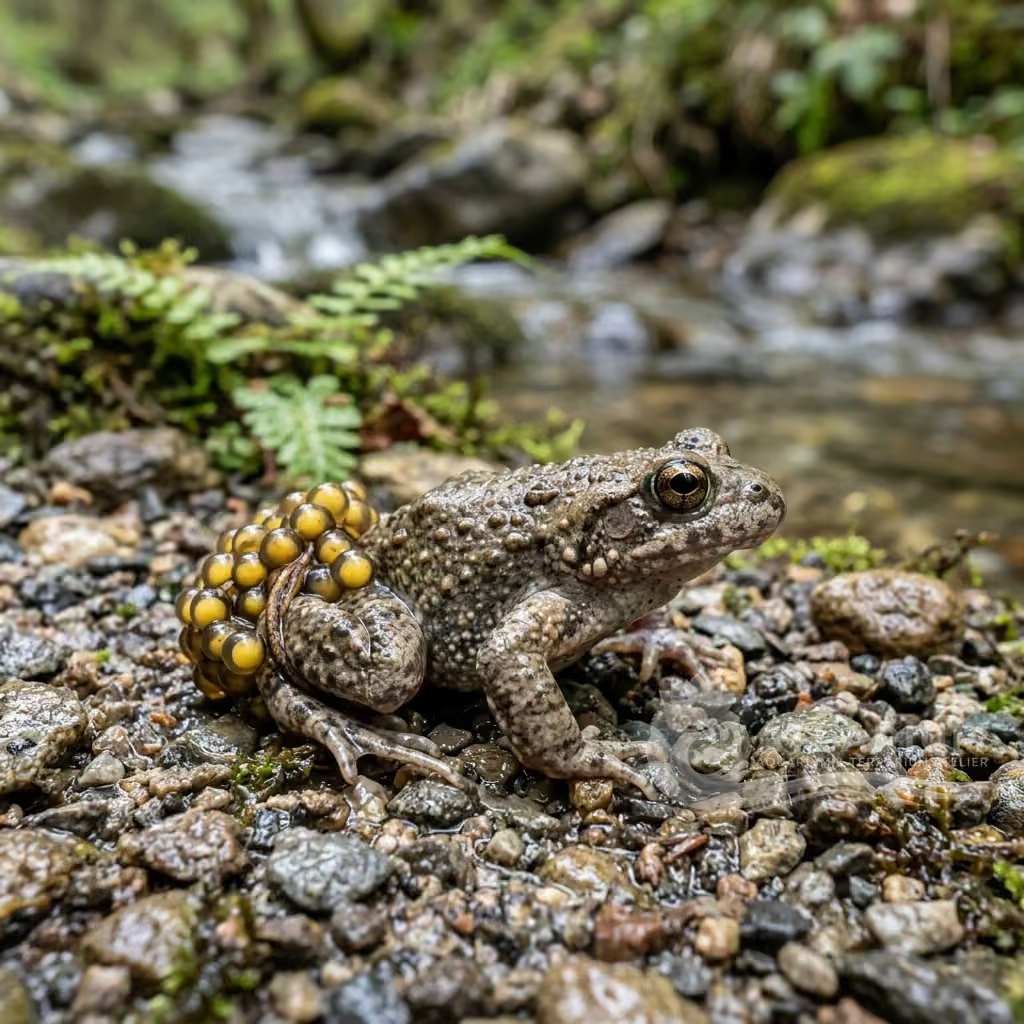
Eastern Spadefoot Toad
Scaphiopus holbrookii
The Eastern Spadefoot is a highly secretive, nocturnal American toad. It possesses distinctive keratinized spades on its hind legs for rapid backward burrowing and requires deep sandy substrate setups.
Environment
Terrestrial
Humidity
50 - 70 %
Day temperature
20 - 26 °C
Night temperature
15 - 20 °C

Species description
Geographical Origin and Habitat: Native to eastern North America, commonly found in the United States, from coastal New England south to Florida and west to Louisiana and Arkansas. It inhabits temperate deciduous forests, pine barrens, dry grasslands, and agricultural areas with sandy or loose soils, ideal for burrowing during dry or cold seasons.
Taxonomy and Genetics: Belongs to the family Scaphiopodidae, genus Scaphiopus. It differs from true toads (family Bufonidae) in several anatomical ways. At the genetic level, it displays unique evolutionary adaptations linked to accelerated larval development in temporary pools, a crucial survival strategy in xeric habitats.
Behavior and Habits: A strictly nocturnal and fossorial amphibian. It spends the vast majority of its life buried underground, emerging only at night to hunt or during heavy spring and summer rains to breed. It uses the keratinized spades on its hind feet to dig backward into the soil, disappearing within seconds.
Morphology: Features a plump, rounded body with relatively smooth, moist skin compared to common toads, scattered with small warts. Length ranges from 5 to 8 cm (2-3 inches). Eyes are large, protruding, and have vertical pupils adapted for night vision. A sharp black keratinized "spade" is present on the underside of each hind foot.

Care, breeding and tankmates
Terrarium Setup: Requires an enclosure measuring at least 60x40x40 cm (24x16x16 inches) for one toad or a pair. The key element is a deep substrate (at least 15-20 cm / 6-8 inches) allowing the amphibian to dig and burrow. A mix of unfertilized peat, coconut fiber, and fine sand, kept damp but not soggy, is ideal. Place cork bark, dried leaves, and shallow hides on the surface.
Lighting and Heating: Does not require intense UVB light due to its fossorial and nocturnal habits, but a low-output UVB lamp (2.0 or 5.0) helps maintain a natural day-night cycle. Keep terrarium temperature between 20°C and 24°C (68°F - 75°F) during the day, with a night drop to 16-18°C (60°F - 64°F). Avoid intense heat sources that dry the soil.
Humidity and Hydration: Humidity must be kept around 60-70%. Regularly mist the substrate with dechlorinated water to keep lower layers damp while letting the surface dry slightly. Provide a shallow, dechlorinated water dish on the surface where the toad can absorb moisture through its skin.
Feeding and Supplementation: Insectivorous. Feeds on crickets, roaches, mealworms, small earthworms, and fruit flies. Feed at night when they are active. Dust prey with pure calcium at every feeding for juveniles and twice weekly for adults, adding vitamin D3 and multivitamins once a week.
Compatibility: A peaceful animal that can be kept in small groups of the same species, provided there is enough space and substrate for all. Do not house with other amphibians or reptiles to avoid pathogen transmission and stress. Minimize handling to protect their sensitive, permeable skin.
Health and Common Diseases: Bacterial or fungal skin infections (such as chytridiomycosis) are the primary risks, promoted by poor hygiene or waterlogged, stagnant substrate. Dehydration is a major threat if soil dries out. Metabolic Bone Disease (MBD) can occur without proper calcium and D3 supplementation.

Geographic origin and distribution
Native to eastern North America, commonly found in the United States, from coastal New England south to Florida and west to Louisiana and Arkansas. It inhabits temperate deciduous forests, pine barrens, dry grasslands, and agricultural areas with sandy or loose soils, ideal for burrowing during dry or cold seasons.
Origin
North America

Amphibian profile
- Diet
- Insectivore
- The Eastern Spadefoot Toad is a nocturnal predator that consumes a variety of ground-dwelling invertebrates. Its natural diet includes beetles, caterpillars, spiders, and earthworms that it encounters while foraging. In a captive setting, they readily eat crickets, waxworms, and small roaches dusted with essential vitamin and mineral supplements.
- Life expectancy
- 5-10 years
- Adult size
- 8 cm
- Lifestyle/Microhabitat
- Fossorial
- Eastern Spadefoots are fossorial amphibians that inhabit areas with loose, sandy soils such as pine barrens and coastal plains. Their entire existence revolves around burrowing, requiring a deep, sandy-loam substrate in captivity. They do not climb and only enter water for breeding purposes during heavy rain events.
- Activity cycle
- Nocturnal
- These toads are strictly nocturnal and highly dependent on significant rainfall to trigger surface activity. During dry periods, they remain dormant deep underground to conserve their body moisture. Captive specimens typically only emerge at night when the terrarium is kept sufficiently dark and humid.
- Sociality
- Gregarious
- They are master excavators, using the sickle-shaped spades on their hind feet to dig backwards into sandy soils. They spend the vast majority of their lives hidden underground, sometimes remaining buried for months. When forced to the surface, they are somewhat clumsy walkers and will quickly attempt to re-bury themselves.
- Reproduction
- Oviparous
- Reproduction is an explosive event triggered entirely by torrential rainstorms and rapidly falling barometric pressure. Hundreds of toads emerge simultaneously to breed in temporary puddles, where males produce loud, mournful calls. Females lay gelatinous bands of eggs that attach to submerged vegetation, initiating an incredibly fast developmental cycle.
- Toxicity
- Harmless
- They possess skin glands that secrete a mild toxin smelling faintly of peanut butter when the toad is stressed. This secretion makes them unappealing to predators and can cause sneezing or allergic reactions in sensitive individuals. Handlers must wash their hands thoroughly after contact to prevent the toxin from irritating their eyes or mouth.
- Life stage
- Metamorphosis
- The eggs are laid in temporary rain pools and hatch rapidly into omnivorous tadpoles. The tadpole stage is exceptionally fast, allowing metamorphosis in just a few weeks before the ephemeral pools evaporate. Once metamorphosed, the toadlets take on their adult form and develop the hard, keratinous 'spades' on their hind feet.
- Handling tolerance
- Display only
- Handling should be strictly avoided unless absolutely necessary to minimize stress and protect their permeable skin. If handling is required, it must be done with moistened hands or gloves, scooping them gently from below. Prolonged handling can cause them to excrete their protective toxins and may result in rapid dehydration.
- Brumation
- Required
- In their northern range, they undergo a long brumation period, burrowing below the frost line to survive the winter. During this time, their metabolism slows drastically and they do not eat. To simulate this in captivity and encourage breeding, a controlled cooling period with reduced humidity is typically required.
- Molting
- Regular
- Shedding is a vital process that allows the toad to grow and removes parasites from its skin. The toad will arch its back and rub its limbs over its body to loosen the dead skin layer. They will invariably ingest the shed skin as it peels off, a behavior common to most amphibians to conserve energy.

Related species
Recommendations grouped by close relatives, companion choices, and similar care.