Eastern Narrow-mouthed Toad
Gastrophryne carolinensis
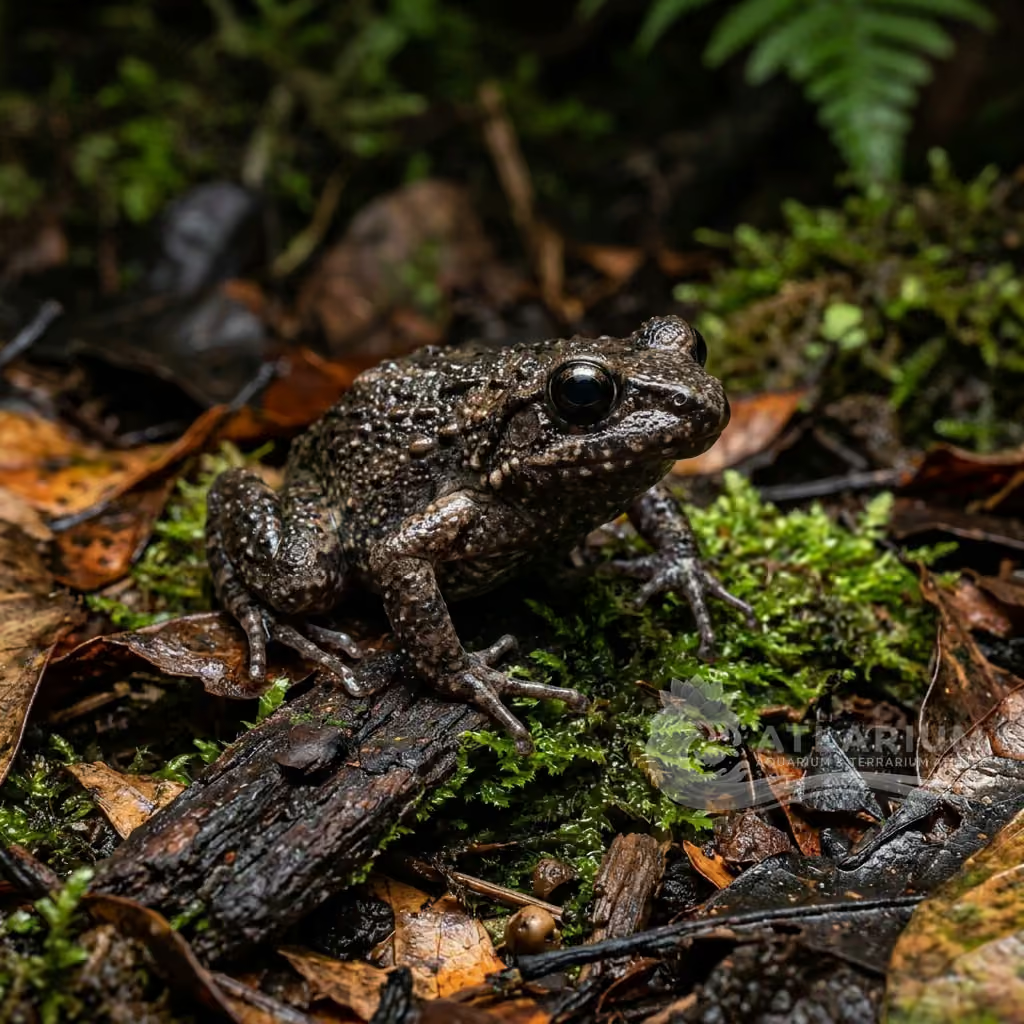
The Eastern Narrow-mouthed Toad is a tiny, teardrop-shaped frog from North America. Known for its unique symbiotic relationships, it often lives alongside large tarantulas or inside massive ant colonies.
Environment
Terrestrial
Humidity
50 - 80 %
Day temperature
24 - 27 °C
Night temperature
18 - 20 °C
Ambient temperature
24 - 27 °C
Minimum enclosure
>= 45 L

Species description
Geographical Origin and Habitat: A shy, tiny, and secretive species native to the eastern and southeastern United States, ranging from Maryland to Florida and west to Texas. This terrestrial micro-toad inhabits damp leaf litter, rotting logs, wetlands, and open forests, staying hidden beneath ground cover.
Taxonomy and Genetics: A member of the family Microhylidae, commonly known as the Eastern Narrow-mouthed Toad. This tiny amphibian (2-4 cm in adult length) has a plump, teardrop-shaped body with a remarkably small, pointed wedge-like head and a narrow mouth adapted for feeding on ants and termites. Unlike typical toads, the skin is smooth and leather-like without warts. Dorsal coloration ranges from gray and brown to reddish-brown or charcoal, often with lighter, irregular lateral bands.
Behavior and Habits: A highly secretive, terrestrial species. During the day, they remain buried under damp soil, leaf litter, or rotting wood. At night, they emerge to forage. Instead of leaping, they move with rapid, short, scurrying runs. During the breeding season, males produce a high-pitched nasal call resembling the bleat of a sheep, typically calling from the edges of temporary pools.
Morphology: Sexual dimorphism is present. Adult females are slightly larger and rounder, while adult males are smaller, more slender, and develop a dark throat patch during the breeding season.

Care, breeding and tankmates
Terrarium Setup: Requires a horizontal terrestrial enclosure (minimum 45x45x30 cm). The key setup element is a deep layer (8-10 cm) of loose, moisture-retaining substrate like coconut coir or peat moss, covered with a thick layer of leaf litter (oak or magnolia leaves) and flat cork bark pieces. Provide a very shallow water dish, as they are poor swimmers and can drown in deep water.
Lighting and Heating: Maintain moderate daytime temperatures of 24-27°C, with a night drop to 18-20°C. They are sensitive to extreme heat; temperatures above 30°C can be fatal. A low-intensity 5% UVB light source is highly recommended to prevent metabolic bone disease and support skeletal health.
Humidity and Hydration: Maintain high humidity levels of 60-80% by misting the terrarium daily with dechlorinated or reverse osmosis water. The substrate must remain damp but not waterlogged. Good ventilation is critical to prevent stagnant, bacteria-friendly conditions that can cause Red Leg Syndrome.
Feeding and Supplementation: Specialized insectivores. Due to their extremely small mouths, they can only ingest micro-prey. Suitable foods include fruit flies (*Drosophila melanogaster* and *hydei*), springtails, and pinhead crickets. Dust all prey items with high-quality calcium and vitamin D3 supplements regularly.
Compatibility: Extremely peaceful and tolerant of conspecifics. They can be safely housed in small groups if ample space and hiding places are provided. Do not mix them with other amphibian or reptile species to avoid chemical stress or disease transmission.
Health and Common Diseases: Generally hardy, but their skin secretions are highly irritating to human mucous membranes and toxic to other animals. Always wash hands thoroughly after maintenance and avoid touching eyes or mouth. They are highly susceptible to skin infections and sepsis if kept on dirty or dry substrate.

Geographic origin and distribution
A shy, tiny, and secretive species native to the eastern and southeastern United States, ranging from Maryland to Florida and west to Texas. This terrestrial micro-toad inhabits damp leaf litter, rotting logs, wetlands, and open forests, staying hidden beneath ground cover.
Origin
North America

Amphibian profile
- Diet
- Insectivore
- The Eastern Narrow-mouthed Toad possesses a highly specialized diet that consists almost entirely of ants and termites. Their small, pointed heads and uniquely folded mouths are perfectly adapted for delving into ant hills and termite mounds. Because of their strict dietary preferences, keeping them in captivity requires a steady and reliable supply of tiny insects.
- Life expectancy
- 5-10 years
- Adult size
- 3 cm
- Lifestyle/Microhabitat
- Fossorial
- They are highly secretive and fossorial, spending almost all of their lives hiding under leaf litter, decaying logs, or burrowed into the soil.
- Activity cycle
- Nocturnal
- Eastern Narrow-mouthed Toads are largely nocturnal, creeping about the forest floor at night to feed exclusively on small insects like ants.
- Sociality
- Solitary
- These amphibians are secretive and nocturnal, spending the vast majority of their lives hidden under logs, leaf litter, or underground. They are capable burrowers, often found sharing the tunnels of small mammals or even residing near active ant colonies. If disturbed, they tend to make short, erratic hops or rapidly scramble away to find cover.
- Reproduction
- Oviparous
- Breeding typically aligns with warm, heavy rains during the late spring and summer months. Males float in temporary pools or flooded ditches, producing a high-pitched, bleating call that sounds remarkably like a distressed sheep. Females lay small surface-floating egg masses that hatch quickly, yielding tiny, specialized tadpoles.
- Toxicity
- Toxic
- The Eastern Narrow-mouthed Toad can exude a noxious, sticky secretion from its skin when threatened by predators or biting insects. This defensive mucus is particularly effective at protecting them from the bites and stings of the ants they feed upon. While harmless to humans, the secretion can cause severe irritation if it gets into the eyes or mouth.
- Life stage
- Metamorphosis
- After hatching, the tadpoles feed entirely by filtering microorganisms and suspended organic particles from the water column. They lack the horny beaks typical of many tadpoles, utilizing a complex system of branchial filters instead. They undergo metamorphosis in about a month, emerging as minuscule, fully-formed froglets ready to seek out their first ant meal.
- Handling tolerance
- Display only
- Strictly display only. They are extremely small and skittish, making handling practically impossible without causing severe stress or injury.
- Brumation
- They typically brumate during the colder winter months across their native North American range, burying themselves deeply.
- Molting
- Regular
- They shed frequently as they grow. The high humidity maintained by damp leaf litter and soil is necessary for a successful molt.

Image gallery
Licensed images linked to the species or, when marked, to the closest representative taxon.

Related species
Recommendations grouped by close relatives, companion choices, and similar care.