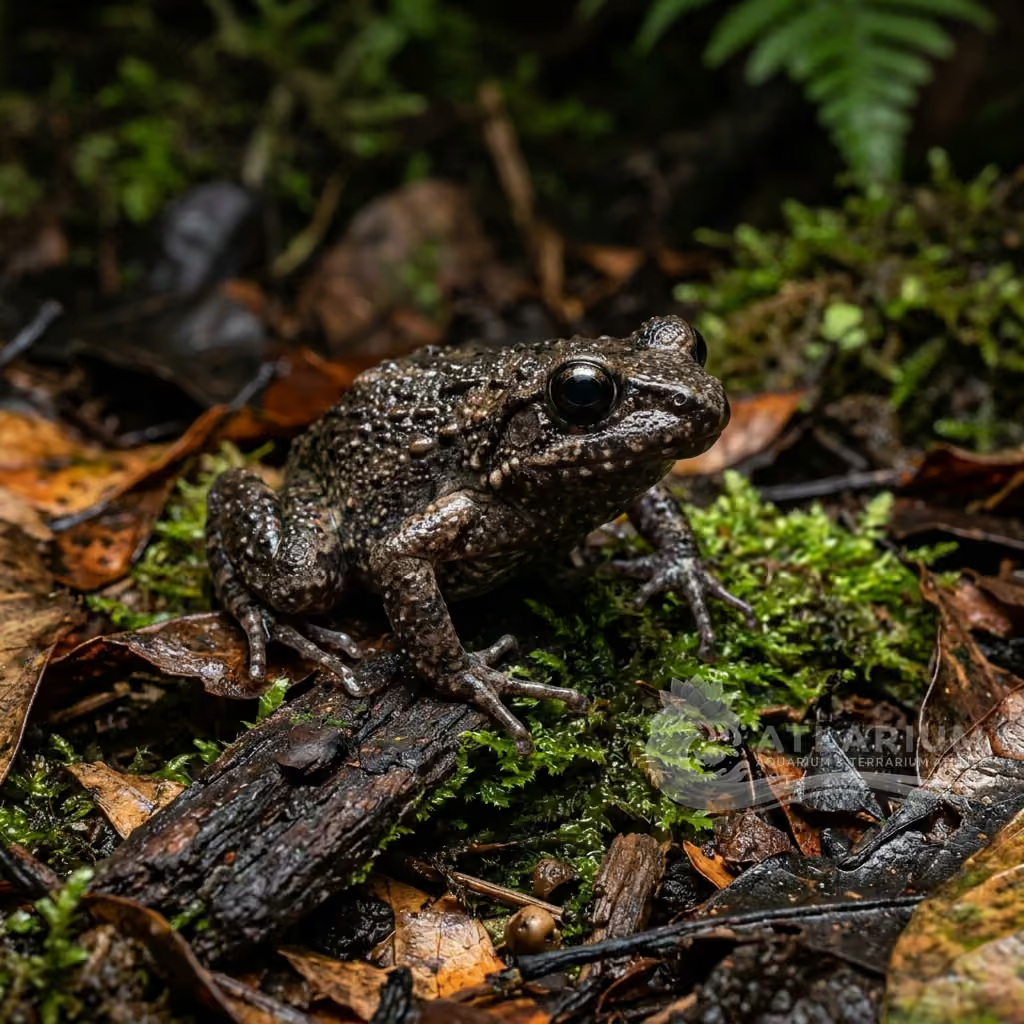
Catanduanes Narrow-mouthed Frog
Kaloula kokacii
A specialized microhylid frog (4.0 cm) native to Philippines (Catanduanes and Luzon Islands). Characterized by its rounded shape and the characteristic sticky defensive skin secretion and fossorial, leaf-litter dwelling habits.
Environment
Terrestrial
Humidity
60 - 80 %
Day temperature
24 - 28 °C
Night temperature
20 - 24 °C

Species description
Geographical Origin and Habitat: Native to Philippines (Catanduanes and Luzon Islands). It primarily occurs in lowland tropical rainforests, sheltering in rotting logs and forest floor soil. It lives mostly concealed within leaf litter or burrowed inside moist soils.
Taxonomy and Genetics: Belongs to the Microhylidae family, genus Kaloula. This group consists of narrow-mouthed frogs highly adapted to specific fossorial or semi-arboreal microhabitats.
Behavior and Habits: Primarily nocturnal and secretive. It spends the daytime hours buried under the substrate or hidden beneath leaf litter, emerging to forage and breed during heavy seasonal rains.
Morphology: Features a plump, rounded body reaching about 4.0 cm. Skin texture ranges from smooth to warty with cryptic colors. Males are smaller than females and exhibit distinct vocal sacs during the breeding season.

Care, breeding and tankmates
Terrarium Setup: Provide a horizontal terrarium with a deep (10-15 cm) layer of loose, damp substrate such as coconut fiber and sterile peat moss. Add cork bark hides, dry leaves, and flat shelters to create shaded spots.
Lighting and Heating: Maintain daytime temperatures around 26.0°C and night temperatures at 22.0°C. Provide a 12-hour light cycle; a low-intensity UVB source is recommended to support general health.
Humidity and Hydration: Maintain relative humidity between 70.0% and 85.0%. Mist regularly with dechlorinated water and supply a very shallow water dish to prevent drowning risks.
Feeding and Supplementation: Strictly insectivorous. Offer gutloaded crickets, roaches, fruit flies, and small worms. Dust prey with high-quality calcium and vitamin D3 twice a week to support skeletal structure.
Compatibility: Best kept in a species-specific setup. Small groups of similar size can cohabitate, avoiding competition or accidental cannibalism.
Health and Common Diseases: Highly susceptible to bacterial skin infections (red leg disease) if ventilation is poor or the substrate is soiled. Regularly check skin condition and hydration levels.

Geographic origin and distribution
Native to Philippines (Catanduanes and Luzon Islands). It primarily occurs in lowland tropical rainforests, sheltering in rotting logs and forest floor soil. It lives mostly concealed within leaf litter or burrowed inside moist soils.
Origin
South and Southeast Asia

Amphibian profile
- Diet
- Insectivore
- Kaloula kokacii has a specialized diet consisting primarily of small insects and invertebrates found in its natural habitat. It actively hunts for prey during its peak activity hours, utilizing its agile movements to capture food. Nutritional supplementation is often required in captivity to maintain its health and vitality. Caretakers should ensure a varied diet to prevent nutritional deficiencies and promote natural feeding behaviors.
- Life expectancy
- 5-8 years
- Adult size
- 3.5 cm
- Lifestyle/Microhabitat
- Fossorial
- Kaloula kokacii leads a specialized lifestyle adapted to the unique challenges of its native ecosystem. Its daily routine revolves around securing adequate nutrition, avoiding natural predators, and maintaining optimal body temperature. The species has evolved specific morphological traits that aid in its distinct way of living, whether arboreal, terrestrial, or aquatic. Understanding its lifestyle is fundamental to providing a suitable and enriching captive environment.
- Activity cycle
- Nocturnal
- The activity pattern of Kaloula kokacii is distinctly regulated by its circadian rhythm and the ambient temperature of its environment. It may exhibit nocturnal, diurnal, or crepuscular habits depending on its specific evolutionary adaptations. These patterns are essential for thermoregulation, predator avoidance, and efficient foraging within its habitat. Caretakers should carefully provide appropriate lighting and heating cycles to match these natural rhythms.
- Sociality
- Solitary
- Kaloula kokacii exhibits a fascinating array of behaviors that are closely tied to its ecological niche and survival strategies. It is known to display territorial behaviors, especially during the breeding season or when competing for limited resources. Social interactions can vary significantly, ranging from solitary habits to complex group dynamics depending on the context. Observing these behaviors provides valuable insights into its overall well-being and environmental suitability.
- Reproduction
- Oviparous
- The reproductive cycle of Kaloula kokacii is highly dependent on environmental cues such as temperature and humidity changes. Mating typically occurs during specific seasons when environmental conditions are optimal for the survival of offspring. Courtship behaviors are distinct and play a crucial role in successful mating and fertilization. Breeders must replicate these natural conditions carefully to encourage reproduction in a captive setting.
- Toxicity
- Mildly toxic
- They do not possess toxic skin secretions and are completely harmless to humans. They rely on their cryptic, mottled patterning to avoid predators in the leaf litter. Normal hand washing after maintaining their enclosure is entirely sufficient.
- Life stage
- Metamorphosis
- Tadpoles develop rapidly in temporary, rain-filled depressions to avoid desiccation. After metamorphosis, the tiny froglets adopt a secretive, terrestrial lifestyle. They mature over the course of a year into robust, round-bodied adults.
- Handling tolerance
- Display only
- Handling should be avoided as it disrupts their deeply ingrained burrowing instincts. Unearthing them causes severe stress and can damage their delicate skin. If they must be moved, they should be scooped gently along with surrounding soil.
- Brumation
- Not required
- They undergo estivation deep underground during the harsh dry season. In captivity, a simulated dry period can be offered to encourage natural cycles. The substrate must never dry out completely, as this will lead to fatal desiccation.
- Molting
- Periodic
- Shedding is a necessary process to maintain the health and permeability of their skin. They molt within the safety of their burrows, pushing the dead skin toward their mouth. The shed skin is immediately consumed to recycle vital nutrients.

Related species
Recommendations grouped by close relatives, companion choices, and similar care.