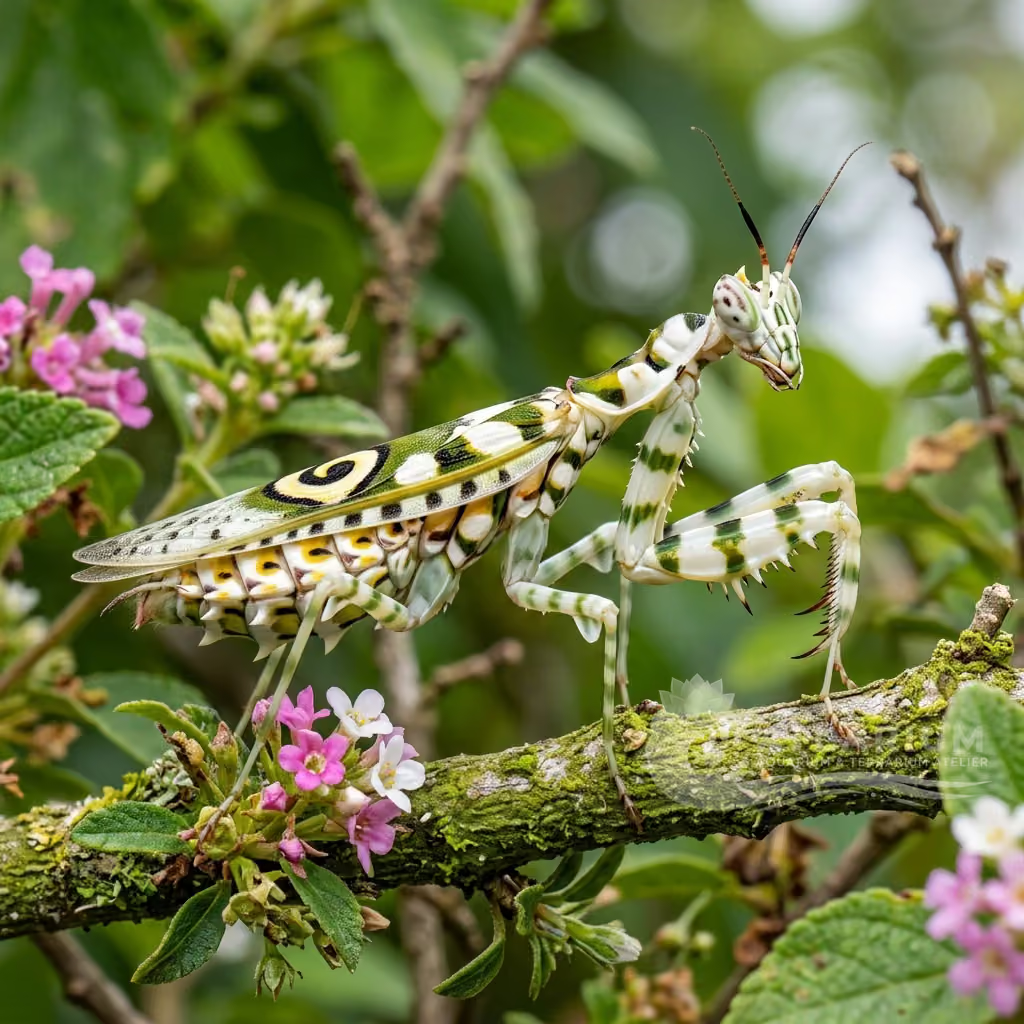
Orchid Mantis
Hymenopus coronatus
Orchid Mantis. A stunning, delicate predatory insect that mimics orchid flowers (pink/white) to lure pollinators. Requires high humidity and excellent ventilation.
Environment
Terrestrial
Humidity
60 - 80 %
Day temperature
25 - 28 °C
Night temperature
20 - 24 °C

Species description
Geographical Origin and Habitat: Native to the warm, humid rainforests and valleys of Southeast Asia (Malaysia, Indonesia). Found on flowers and bushes.
Taxonomy and Genetics: Family Hymenopodidae. Famous for aggressive mimicry; they look more attractive to pollinators than real flowers. They feature walking leg lobes resembling petals. Extreme sexual dimorphism: females reach 7 cm; males are tiny (2.5 cm), brown, short-lived, and often cannibalized.
Behavior and Habits: Diurnal ambush predator. Remains motionless pretending to be a flower. They capture flying insects using spined raptorial forelegs. They avoid aggressive ground insects.
Morphology: Pearly white body with translucent pink, yellow, or light brown shades depending on humidity and lighting. Leg lobes resemble flower petals.

Care, breeding and tankmates
Terrarium Setup: Vertical mesh or glass-mesh enclosure (minimum 20x20x30 cm for a female). High humidity must be balanced with excellent ventilation. Stagnant air leads to fatal fungal infections. Decorate with climbing twigs and fake or real orchids.
Lighting and Heating: Keep daytime temperatures stable at 25-30°C. Do not expose to direct sunlight. Maintain high humidity (65-85%) by misting daily (avoid spraying the insect directly). If humidity is too low, molts will fail, causing limb loss.
Humidity and Hydration: Keep humidity high but ensure quick drying. Stagnant wet setups cause black vomit (bacterial infection).
Feeding and Supplementation: Strictly specialized in flying insects. Feed fruit flies (Drosophila) to nymphs, and houseflies or bluebottle flies to adults. Avoid feeding crickets, which can harbor pathogens or stress the mantis.
Compatibility: Solitary. Keep separate. Males are easily eaten by females.
Health and Common Diseases: Very fragile. Do not handle; limbs break easily. High humidity must be paired with high airflow.

Geographic origin and distribution
Native to the warm, humid rainforests and valleys of Southeast Asia (Malaysia, Indonesia). Found on flowers and bushes.
Origin
South and Southeast Asia

Terrestrial invertebrate profile
- Diet
- Insectivore
- Their diet primarily consists of flying insects, particularly pollinators that are drawn to their flower-like appearance. In captivity, fruit flies are perfect for nymphs, while adults thrive on bluebottle flies, moths, and small butterflies. Crickets are generally not recommended as a staple, as they can cause digestive issues or harbor harmful bacteria.
- Adult size
- 7 cm
- Lifestyle/Microhabitat
- Arboreal
- This mantis leads an arboreal, highly specialized lifestyle focused entirely on ambush predation. They are master mimics, evolving to resemble an orchid flower to attract pollinating insects. They spend most of their time remaining completely still on vegetation or flowers, waiting for the perfect moment to strike at passing prey.
- Activity cycle
- Diurnal
- The Orchid Mantis is primarily diurnal, using daylight hours to hunt for prey. They rely heavily on visual cues to spot flying insects, making active use of their remarkable camouflage to remain undetected by both predators and potential meals as they lie in wait on brightly colored flowers.
- Sociality
- Solitary
- Orchid Mantises are strictly solitary and highly cannibalistic. They must be housed individually from a very early instar stage to prevent them from eating one another. The only exception is during carefully monitored mating sessions, where the female poses a significant threat to the smaller male.
- Reproduction
- Oviparous
- Reproduction is notoriously difficult due to extreme sexual dimorphism; females are significantly larger and take longer to mature than males. Breeders often have to stagger the growth rates by altering temperatures to ensure both sexes are mature at the same time. The female will deposit a foamy ootheca from which dozens of nymphs will emerge.
- Venomous
- No
- Handling tolerance
- Display only
- Handling should be minimal and extremely gentle, as they are fragile insects, especially the delicate males. It is best to let them voluntarily walk onto your hand rather than grabbing them. Avoid sudden movements that might startle them, which could result in a fall that might cause severe or fatal injuries.
- Brumation
- Not required
- Native to the tropical rainforests of Southeast Asia, the Orchid Mantis does not undergo brumation. They require a warm, stable, and highly humid environment throughout the entire year. Any significant drop in temperature or humidity can lead to lethargy, refusal to eat, and eventually death.
- Molting
- Periodic
- Proper molting requires a consistently high humidity level and plenty of vertical space. Before a molt, the mantis will stop eating and hang upside down. Do not disturb them during this process or leave live prey in the enclosure, as a fall or an attack while their new exoskeleton is soft can be instantly fatal.

Image gallery
Licensed images linked to the species or, when marked, to the closest representative taxon.

Related species
Recommendations grouped by close relatives, companion choices, and similar care.